Culture

Culture

The closest look yet at David Bowie’s mind and imagination

What would David Bowie say? The much-missed musician – dead a decade next January – is the beneficiary of a new, bespoke space inside the Victoria & Albert Museum’s East Storehouse outpost. Although Bowie is by no means Britain’s most commercially successful rock star, he is surely its most interesting – and certainly the most chameleonic, making his legacy ripe for serious re-evaluation. Now, thanks to the David Bowie Centre, the curious public can get its closest look yet into the artist’s mind and imagination. And as a bonus, it’s free, too. The space is composed of one room with nine rotating displays showing about 200 items.

fashion

New York Fashion Week’s shimmer feels noticeably dimmed

Crossing streets with lattes in hand, camera lights flashing, perfectly curated outfits meant to be noticed, and a crisp chill in the air means one thing: New York Fashion Week has arrived. The September Fashion Week has long stood as the pinnacle of American fashion prestige. As the leaves turn red and brown, style photographers capture eclectic ensembles in motion, A-listers march through the streets and assistants carefully place nameplates on front-row seats beside pristine runways. But this year the week’s shimmer feels noticeably dimmed. The big names still show up – Michael Kors, Calvin Klein, Tory Burch. But in recent years they’ve been eclipsed by smaller, edgier and distinctly New York-based designers.

Spinal Tap

Spinal Tap II is an amusing, honorable successor to the original film

The story of the made-up English heavy-metal band Spinal Tap is, in every way but its particulars, the story of Joe Biden. Consider the parallels: a group of not-very-bright Baby Boomers – or, in Biden’s case, a single not-very-bright old man – manage, through sheer dumb luck, to reach the peak of their professions – selling out stadiums, in the case of Spinal Tap, or being elected to assorted high offices, in the case of Biden. Essential to the film’s success is the characters’ persistent ignorance of their own deficits in intelligence and logic Then, as time marches on, neither the band nor the politician acquires wisdom or sagacity but merely becomes older, weaker, and ever more enfeebled.

What can we expect from the Simpsons sequel?

It is now more than three decades since President Bush the First declared that American families should be “more like the Waltons, and less like the Simpsons.” In this, as in so many other things, Bush was to be disappointed. Thirty-three years after he made his remarks, the Waltons are now barely discussed in popular culture, if at all, while the exploits of America’s most famous yellow-skinned family have now moved into their 37th season with a further three, at least, planned. This is a degree of longevity that is unparalleled in any live-action sitcom equivalent, and the show’s creator Matt Groening could be forgiven for doing a victory lap.

Will Trump’s tariffs trash the film industry?

One feature of President Trump’s second term in office is that when he says he’ll do something, he usually does it, no matter how outlandish or cockamamie it might seem. So it has proved with his threat to impose 100 percent tariffs on any films that have been filmed outside the United States. He first said that he would do this in May, and many industry pundits rushed to say that his scheme was impractical, unworkable, etc. Yet veteran Trump watchers would know that once he has an idea, it will not rest. He has now repeated himself, with greater vigor, writing on Truth Social that “our movie making business has been stolen from the United States of America, by other Countries, just like stealing ‘candy from a baby.

tariffs

Is Slow Horses slowing down?

Since it launched in 2022, Slow Horses has been one of the most reliable television treats for all its four seasons. Based on the excellent novels by Mick Herron, it has focused on a group of “misfits and losers,” as none other than Mick Jagger sings over the credits, who have all been semi-exiled from MI5 for various misdeeds. They have ended up in the purgatory of Slough House, where they are stuck doing various soul-destroying administrative tasks until they quit. The joke is that most of them are good at their jobs (although not without some seriously challenging interpersonal issues), led by Gary Oldman’s superspy Jackson Lamb, whose belching, flatulent and deeply unhygienic exterior belies a razor-sharp mind and a keen grasp of human nature.

You can’t get rid of Kanye West

Amid the hullaballoo that surrounded Charlie Kirk’s memorial service last weekend, seemingly virtually every figure associated in any way with the MAGA movement appeared – yes, even Elon Musk, who was filmed shaking hands with President Trump in one of the more unexpected rapprochements of the year. But one man who many might have expected to be present was nowhere to be seen. The rapper, producer and professional controversialist Kanye “Ye” West, who might have added a certain grim luster to the predominantly Christian music played at the memorial, was absent, and so the potential for the carefully choreographed event being thrown into chaos was avoided. It might sound unlikely that West would ever have been invited, but a new documentary about him, In Whose Name?

Kimmel

Kimmel makes the case for free speech

After a few days in politically-induced time out that felt like a decade, Jimmy Kimmel made a triumphant return to late night TV on Tuesday. “I’m not sure who had a weirder 48 hours,” he said. “Me, or the CEO of Tylenol.” Given that Tylenol is a brand name and has no actual CEO, let’s say Kimmel, who Disney/ABC pulled off the air last week under political pressure from station ownership and the chairman of the FCC after he made a bad-taste joke about Charlie Kirk’s assassin.  Kimmel suddenly became the most famous man in America not named Donald Trump, and his audience met his return with a roaring standing ovation, chanting “Jimmy! Jimmy! Jimmy!

Trump is right to take on the Smithsonian

The last time Republicans were this mad at the Smithsonian Institution was in 1991. Then as now, America’s national museum system was gearing up to celebrate a major date: in that case, the quincentenary of the discovery of the Americas by Christopher Columbus. Senators threatened spending cuts, accusing Smithsonian officials of having a “political agenda” with their representations of race and immigration in exhibitions. Thirty-four years later, on the eve of the semiquincentennial of the Declaration of Independence, Republicans are saying the same things. Donald Trump reworded his predecessors’ criticisms in his own style, suggesting on Truth Social that the Smithsonian museums focus too much on the negative, too little on the positive.

Smithsonian
McCartney

Eyes of the Storm revisits an era

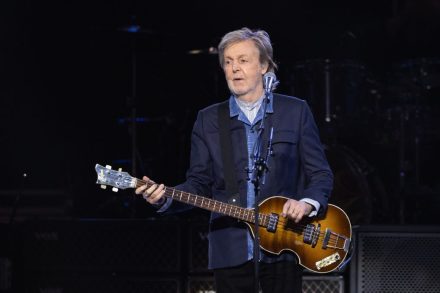
At Eyes of the Storm, the de Young Museum’s exhibition of photographs taken by Paul McCartney, mainly on the Beatles’ first American visit, the typical viewer will be surprised to find herself empathizing more with the rock stars than the audience. In early photos, the crowds – and the band members – are eager, curious and frank. But through the months and the cities and photoshoots, the Beatles learn to pose. They soon find themselves flattened by a camera’s gaze in a way all too familiar to just about everyone today. The collection opens with the Beatles’ British tour in 1963 and residency in Paris in early 1964. “We were just wondering at the world,” McCartney writes, “just excited about all these little things that were making up our lives.

Drake

Nick Drake’s explosive creativity

Nick Drake’s debut album Five Leaves Left (1969) had so much going for it. Supported by tasteful string arrangements and a cast of noteworthy musicians, Drake (1948-74) sang with a delicate croon that sounded like Chet Baker if he’d gone to Eton, and he played some of the finest acoustic guitar this side of Segovia. Joe Boyd, the impresario who’d launched Pink Floyd and Fairport Convention, produced the album, and it bore the imprimatur of Island Records, London’s hippest label. On the cover, Drake cut a shy but handsome figure, nonchalantly clad in blue jeans and blazer, gazing wistfully out the second-story window of an abandoned house in Wimbledon.

Viola's Room

Viola’s Room is beguiling

What is theater? For most people it’s live performance, whether solo or in a troupe. Punchdrunk, the immersive theater company led by Felix Barrett, is not most people. Take its latest iteration now on at the Shed: Viola’s Room features no real-time actors. There is no stage and no seated audience. In this creepy gothic fairy tale, the story is narrated through headphones; the audience moves (sometimes walking, sometimes crawling) through a maze of spaces and the senses – including touch, smell, sight and sound – are as central as the script. Viola’s Room is intimate, small and contained. Every detail, every sound, every object feels intentional. Indeed, much of what makes Viola’s Room so beguiling is the rare sensation of giving up control.

Over the Moon

Over the Moon renders the present with an eye toward the timeless

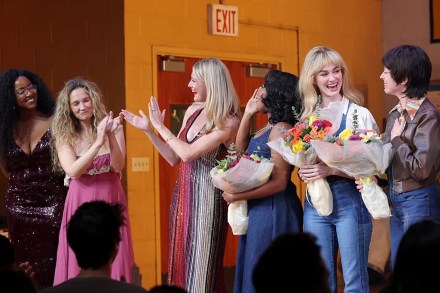
Audiences are hard to please. Give us too much of modern life in a work of art, and we find it shallow. Give us too little, and we are prone to call it stuffy and academic. There is a sweet spot between realist exposé and classically restrained theater. This is the case with Over the Moon, a new play written and directed by Matthew Gasda. In the witty, self-undercutting, and absurdly clinical language that is the contemporary speech of the young, the play’s Generation Z and millennial protagonists navigate the confusing vagaries of love. The action remains in one place: the shared uptown Manhattan apartment of 20-something cousins Eden (Lilly Brown) and Cody (Spencer Cramer). They recently moved in together after breaking up with their boyfriends.

Jason Bateman breaks bad in Black Rabbit

When Bryan Cranston staggered on-screen in the opening scene of Breaking Bad in 2008, stumbling out of a crashed RV dressed only in his underpants, and addressed the camera with, “My name is Walter Hartwell White…to all law enforcement entities, this is not an admission of guilt,” he immediately changed perceptions of who he was as an actor. Previously, he was best known for being the goofy dad in Malcolm in the Middle, and despite some effective straight performances, most thought of him as a comedic performer, rather than the star of what became the most talked-about crime drama series since The Wire. Jason Bateman would, one presumes, like to follow Cranston’s lead.

Don’t cry for Jimmy Kimmel

The defenestration of the supposed talk show host Jimmy Kimmel, for the inflammatory remarks that he made during the monologue in his show on Monday night about Charlie Kirk, is both an unexpected and deeply predictable development. It was unexpected because Kimmel clearly believed that he was, like Lehman Brothers, “too big to fail,” and was therefore within his rights to make such comments as how “We hit some new lows over the weekend with the MAGA gang trying to characterize this kid who killed Charlie Kirk as anything other than one of them and doing everything they can to score political points from it.” And it was deeply predictable because Kimmel now becomes the latest scalp that the right have seized this year, and perhaps the most high-profile yet.

Kimmel

Splitsville defends monogamy

The new comedy Splitsville amusingly diagnoses several urgent social ills. The film mocks those who treat marriage not as an expression of solemn vows but as a ticket to unfettered happiness to be discarded at the first sign of discontent; it also excoriates those who view the institution as so meaningless – just a piece of paper – as to persist in the midst of openly acknowledged affairs, romances and one-night stands. In its own coarse, fumbling way, Splitsville has an instinctive sense of how human beings long for monogamy and order even while they court freedom and licentiousness. Splitsville stars Kyle Marvin and Adria Arjona as Carey and Ashley, a young couple who, 14 months after getting hitched, find themselves with different notions about the success of their union.

The superficial edginess of the Emmys and The Studio

When I previewed the 2025 Emmys in July, I wrote “it must feel pretty good to be Seth Rogen today.” His Hollywood satire, The Studio, had been nominated for a mighty 23 Emmy awards, and Rogen himself was up for acting, writing and directing. Well, today it must feel even better to be Seth Rogen. The show trampled over its competition to win a hugely impressive 13 awards – the most ever won by a comedy in a single season, let alone a debuting one – and Rogen himself won Best Actor, Best Director (for the self-consciously tricksy one-shot episode "The Oner”) and shared the Best Writing award with Evan Goldberg, Peter Huyck, Alex Gregory and Frida Perez.

emmys

Please let this be the end of Downton Abbey

The third and supposedly final Downton Abbey picture released in American cinemas this Friday. Ominously subtitled The Grand Finale – oh how I wish, given the residual camp elements within the show, that it had instead been called The Final Curtain! – it supposedly wraps up the story of the Grantham family, the privileged idlers who inhabit the eponymous grand house, and their unusually devoted and long-serving staff, all of whom converse with their superiors on easy and intimate terms that bear precisely no relation to how the English upper classes have ever spoken (or been spoken to) by their servants in history. Still, if you’re looking for historical accuracy from Julian Fellowes’ Downton, you are not going to find it.

Stephen King, The Long Walk and Charlie Kirk

Under normal circumstances, the author Stephen King should have been feeling pretty good about things and himself at the moment. The latest film of one of his works, Francis Lawrence’s horror-thriller The Long Walk, opened in American cinemas this weekend and has been met with almost unanimously rave reviews, many of which have called it a more socially aware, darker Hunger Games. He recently published a Maurice Sendak-illustrated retelling of Hansel and Gretel, which brings his trademark dark and macabre sensibilities to the age-old fairytale. And his last novel, Never Flinch, was, naturally, a bestseller – as all his books have been since he first published Carrie, over half a century ago in 1974.

Why Jane Austen is still the queen of romance

Jane Austen was born in Hampshire on December 16, 1775, the seventh child of a poor country rector. Despite being red-cheeked and a good dancer, she never married. And despite the handful of novels she wrote under the byline “A Lady,” she was always considered by her family less promising than her older sister. She died of a painful illness at 41. Her books found a readership that included the Prince Regent, but she had some prominent detractors. Charlotte Brontë scorned them: “I should hardly like to live with her ladies and gentlemen in their elegant but confined houses.” Where were the windswept moors, the big feelings? In the next century, D.H. Lawrence dismissed Austen as “mean” and “snobbish.

Austen
Esther

How Esther inspired the imagination of Rembrandt

If you attended Sunday or Hebrew school, you know the story. There once lived in the ancient Persian city of Susa a King Ahasuerus and his Jewish wife, Queen Esther. At first she hid her Jewish identity from the king, only revealing it in order to foil the plot hatched by Haman, her husband’s Jew-hating second-in-command, to exterminate all who shared her faith. In doing so, Esther saved her people from destruction – and earned a volume in the Hebrew Bible named for her. Less well-known is that centuries later, in the Amsterdam of Rembrandt van Rijn (1606-69), Esther’s valor also made her a heroine to the citizens of the predominantly Protestant Dutch Republic.

Heathers

The problem with Heathers: The Musical

There is a euphoric moment in Heathers: The Musical, based on the cult 1989 film of the same name, when anything seems possible. It happens when 17-year-old Veronica – facing ostracism from the popular clique for barfing on the group’s tyrannical leader, Heather Chandler – climbs through the bedroom window of her crush, J.D. He’s in bed, asleep. As she mounts him, she sings the sassy, come-hither “Dead Girl Walking.” She’ll be toast come Monday morning, she’s “hot and pissed and on the pill,” and J.D. is her “last meal on death row.” Cue the boldest sex scene I’ve ever seen on stage. Veronica straddles J.D. and takes charge, ripping open her shirt to reveal her bra.

Anderson

The Phoenician Scheme is Wes Anderson at his most transparent

My name is Curtis. I’m a GenXer. I love Wes Anderson. I also like IPAs. Sometimes it’s OK to be a cliché. The Phoenician Scheme is not Wes Anderson’s best movie (that would be The Life Aquatic with Steve Zissou), or even his second-best. It may be his most transparent, though. Wes Anderson is certainly our auteuriest of major auteurs. A Wes Anderson film knows it’s a Wes Anderson film and doesn’t mind that at all. As a monarchist, I always point to auteur theory as a micro-reflection of my crackpot political theories. If it were possible for corporations to make movies by committee, it would certainly be done that way. But it isn’t. Instead, even the most hackneyed superhero sequel has a director – just as even the cheapest taquería has a chef.

Is Hilma af Klint overrated?

At the corner of Manhattan’s Tenth Avenue and 22nd Street, there is a mural by the Brazilian artist Eduardo Kobra. Situated over the landmark Empire Diner, Kobra's painting reimagines Mount Rushmore as a paean to art stardom or, depending on how one looks at these things, the tragically hip and perpetually overrated.  Kobra supplants George Washington, Thomas Jefferson, Abraham Lincoln and Theodore Roosevelt with the graffiti artists Keith Haring and Jean-Michel Basquiat, the Mexican fabulist Frida Kahlo and the melanin-deprived panjandrum of Pop, Andy Warhol. These cultural icons loom over the crowds supping on blistered shishitos and tuna tartare inside the diner.

The Paper is really, really bad

Making a spin-off of a spin-off is the trickiest task on television, not least because it assumes that the audience is sufficiently fond of the original and the reinvention alike to be happy to go steady with the third round, too. In all fairness, the new workplace-themed sitcom (although on the evidence of this first season, comedy-drama is probably a more accurate designation) The Paper is only a callback to the US The Office, in that its premise is that the same documentary crew that captured the bewildering banality of life at Dunder Mifflin has headed to Toledo, Ohio, there to follow the travails of a once-proud, now-flailing newspaper, the Toledo Truth-Teller.

Is Austin Butler a movie star?

In the old days of Hollywood, stars and starlets alike were anointed as “It” girls and men. Nobody was ever quite sure what “It” denoted – star quality, sex appeal, charisma, a willingness to sleep with studio executives – but when they were told they had “It,” their careers appeared made, for the present time at least. Today, however, with Marvel and superhero films largely making the idea of the movie star irrelevant, the concept of “It” is ever decreasing. I am sure that David Corenswet, this year’s Superman, is a lovely man, but I would struggle to recognize him if I passed him on the street without his Super-costume on. Tom Cruise and Brad Pitt aside, it seems as if the era of the old-school male leading man is past us now.

The Rockefeller Wing reopens

Of the 1,800 objects on display at the newly reopened Michael C. Rockefeller Wing at The Metropolitan Museum of Art, the funerary poles of the Asmat people stick out.  At 15 feet tall, they tower above the swarm of visitors and nearly touch the newly rendered, gorgeously curved ceilings. The poles, decorated with carvings of haunted-looking faces and bodies, were traditionally made to mark a violent death. Once that death was avenged, the poles were removed to the woods, where they were left to decay.  These particular poles have further meaning, though, beyond their eerie beauty and the symbolism they confer of the cycle of life. They were collected by Nelson Rockefeller’s son, Michael, on a trip to spend time with the Asmat in New Guinea in 1961.