Culture

Culture

Downsizing throws away its brilliant premise

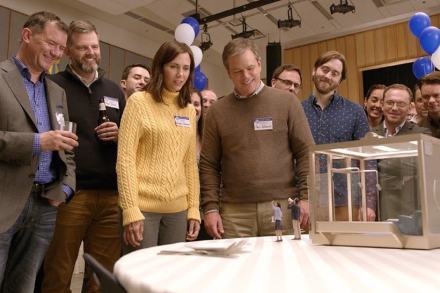
Downsizing is a film with the most brilliant premise. What if, to save the planet, we were all made tiny? What if we only took up a tiny amount of space and flew in tiny planes and produced tiny amounts of rubbish? And what if we could live in the sort of mansions that would cost millions if they were regular-sized? What if, what if, what if, what if… but most crucially: what if this film had run with the premise rather than throwing it away? Could it have avoided becoming just another dumb ‘white saviour’ movie? And this, alas, is the ‘what if’ that must preoccupy us today. This is a film by Alexander Payne, otherwise known for Sideways and Nebraska and About Schmidt, so there may just be no explaining it.

In praise of French women

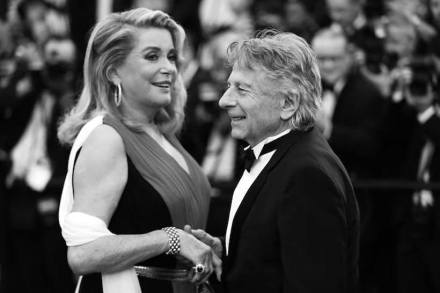
I spent the better part of two sunny days indoors writing about authenticity for a Greek magazine, a strange subject in view of how inauthentic politics are in that Brussels-run south-eastern outpost dotted with islands. Mind you, what is taking place in the West makes Greek politics seem ideal by comparison. The witch hunt is on and it’s as phoney as the one that burnt those poor women in Salem long ago. Thank God for the French actress who injected some badly needed truths into Hollywood’s bullshit. Catherine Deneuve signed an open letter published in Le Monde attacking the wave of ‘puritanism’ sparked by the allegations against Harvey and co.

Deneuve

Hamilton: America 1776? Or Britain 2016?

I know this because I saw it in New York two years ago, just before Britain’s EU referendum. And I was struck by the way it captured — not always intentionally, I suspect, given the impeccable liberal credentials of the cast and writers — the political mood in America and over here: revolution, uncertainty, unrest, the falling of old orders and rising of new. In particular, it’s the inspiring story of a nation full of talent and fizzing with energy that’s shackled to a greedy, unelected elite across the sea; belittled and derided by self-appointed rulers, yet willing nonetheless to take a risk in the name of freedom and self-determination. America, 1776 — or Brexit Britain, 2016?

Andrew Roberts’s guide to Churchill on screen

Gary Oldman has joined a long list of actors who have portrayed Winston Churchill — no fewer than 35 of them in movies and 28 on television. He is one of the best three. ‘I knew I didn’t look like him,’ Oldman has said. ‘I thought that with some work I could approximate the voice. The challenge in part was the physicality, because you’re playing someone whose silhouette is so iconic.’ We all have our own mind’s-eye view of what Churchill should look and sound like, and his personality was so strong and sui generis that it is almost impossible for an actor to impose himself on the role. He is therefore almost always left with either mere impersonation or caricature. Oldman avoided this in Darkest Hour through research.

You just can’t argue against Hanks and Streep: The Post reviewed

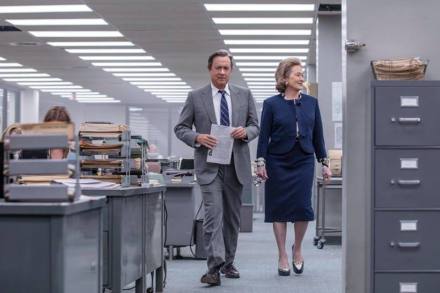
Steven Spielberg’s The Post, which dramatizes the Washington Post’s publication of the Pentagon Papers in 1971, doesn’t exactly push at the frontiers of storytelling. It’s told straight and in a familiar way. Here are the journalists furtively working through top-secret government papers in a smoke-choked room for the public good. (There were no empty pizza boxes in this instance, but there could have been, if you get my drift.) Here’s the government trying to stop them. Here’s the newspaper rolling off the press, and everyone clapping. And so on. But it does star Tom Hanks and Meryl Streep, engaged in a kind of dance as the paper’s editor and proprietor, and you just can’t argue against Tom Hanks and Meryl Streep.

Three Billboards is a hoot and a blast, which I never thought I’d say about a rape movie

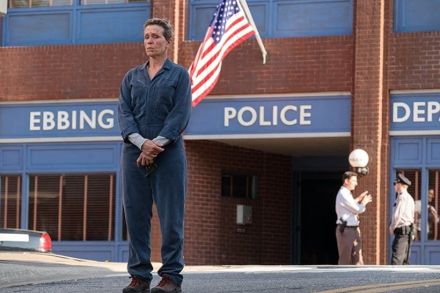
Three Billboards Outside Ebbing, Missouri does, indeed, feature three billboards outside Ebbing, Missouri. They have been placed at the roadside on the outskirts of town by Mildred Hayes (Frances McDormand), a middle-aged woman whose teenage daughter had been raped and murdered seven months earlier. The billboards read: ‘Raped While Dying’; ‘And Still No Arrests’; ‘How Come, Chief Willoughby?’ Mildred is grieving, in pain and a ball of fury. But not your regular, everyday ball of fury. She is a ball of fury of the most magnificent, unstoppable kind. If only she could go after every rapist from now on. I’d certainly sleep better in my bed.

Indulgent rather than stinging satire: Brad’s Status reviewed

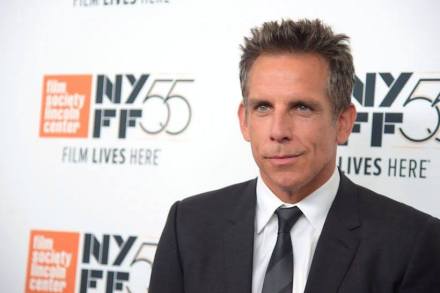
Brad’s Status is a midlife crisis film starring Ben Stiller as a nearly 50-year-old man whose status anxiety is through the roof, poor thing. My heart bleeds and all that. I’ll tell you what Brad’s status should be: face well and truly slapped. The film is written and directed by Mike White (Beatriz at Dinner; Enlightened) and in some quarters it has been renamed Mike’s White Privilege, which is fair — no one else gets a look in — but as it’s intended as a satire of white male privilege you can’t exactly blame it for being white, male and privileged. However, while some moments will resonate (who hasn’t ever felt envy, or does not hope for shitty lives behind the shiny Facebook updates?

If this is Aaron Sorkin’s riposte to those who criticise his portrayal of women, God help us

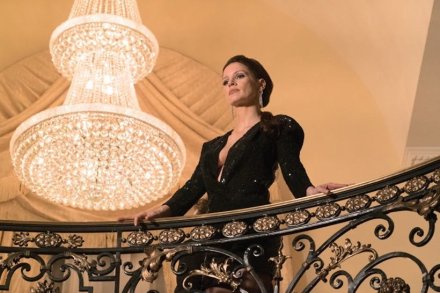
Molly’s Game marks the directorial debut of Hollywood’s most celebrated screenwriter, Aaron Sorkin, and is based on his adaptation of the memoir by Molly Bloom. Nope, me neither, but she’s the one-time Olympic skier who, at the age of 26, started a high-stakes poker game for ‘the richest, the most powerful men in the world’ and ended up with the FBI in her face. Poor Molly, we’re meant to think, when the FBI ends up in her face, but I was delighted. Bang her up! This has been posited as the antidote to all those male-driven, big money Wall Street films, with Sorkin even declaring Ms Bloom a ‘feminist icon’. Well (she says, haughtily), we will see about that.

My favourite frum film of the year – thus far: Menashe reviewed

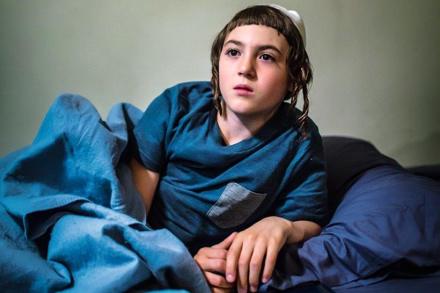
Menashe is a drama set amid Brooklyn’s ultra-orthodox Hasidic community. It is performed entirely in the Yiddish language. It is peopled exclusively by Hasidic non-actors. (Real-life grocer Menashe Lustig plays the title character.) It is small and specific, admittedly, but it also tells a universal story about a father’s struggle to hold on to the son he loves, and it tells this story tenderly, thoughtfully, beautifully. It may even be my favourite frum film of the year. Thus far. (Still a few weeks to go.) This marks the feature debut of director Joshua Z Weinstein (no relation), who made documentaries previously, and who wrote this with Alex Lipschultz and Musa Syeed.

It will amply satisfy all your comeuppance needs: Battle of the Sexes reviewed

Battle of the Sexes recreates the famed, culture-changing 1973 tennis match between 55-year-old Bobby Riggs, a self-proclaimed chauvinist, and 29-year-old Billie Jean King, the world’s top female player who was out to liberate women and herself. (She was just discovering her true sexuality at that time.) Unless you happen to identify with Bobby — ‘Don’t get me wrong. I love women in the bedroom and in the kitchen, but these days they want to be everywhere!’ — this is certainly a great comeuppance film of the kind that will amply satisfy all your comeuppance needs. No complaints, comeuppance-wise.

If Annette Bening isn’t Oscar-nominated, I’ll eat my hat and also yours

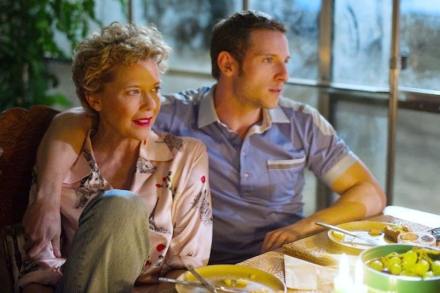
Film Stars Don’t Die in Liverpool is plainly wonderful, and stars Annette Bening, who is plainly wonderful, as Gloria Grahame, a one-time Hollywood movie star who in later life hits on hard times — ‘a big name in black and white. Not doing too well in colour,’ comments her landlady at one point — and embarks on a romance with a young English actor who is 30 years her junior. It is based on a true memoir. It is a love story, told tenderly, bravely, smartly, movingly. And believably. Older women, it seems, can be interesting, complicated, vital, attractive and sexual. Who knew? (But don’t spread the word, or they’ll all want to be like that, and won’t take the shitty bit-parts any more.

The Florida Project never sanctifies or demonises and is absorbing throughout

The Florida Project is a drama set in one of those cheap American motels occupied by poor people who would otherwise be homeless. It’s sad but not depressing, bleak but also joyful, and features one of the best and truest child performances you will ever likely see. Also, it is captivating without ever being condescending — I think. It is always so hard to know, but if you get too hung up on that, cinema will never be allowed to say that poverty exists, or deal with stories that don’t regularly get told, and that’s the end of my lecture for this week, you will be delighted to hear. The movie is written and directed by Sean Baker, whose previous film, Tangerine, about a transgender sex worker, was shot on an adapted iPhone 5 and won many awards.

Chances are you will wish you were dead: Blade Runner 2049 reviewed

Ridley Scott’s original Blade Runner first came out in cinemas 35 years ago, which I was going to say probably makes it older than some readers, although this being The Spectator, perhaps not. It wasn’t successful in its day, but has since become a beloved classic (rightly), whereas this sequel, Blade Runner 2049, will likely do great box office today, but no one will give a fig tomorrow, once all the silly hype has died away. This is Blade Runner as a dull mainstream blockbuster populated by men who are the epitome of masculine cool and women who are needlessly sexualised fembots.

It gets us from A to B but doesn’t dazzle: Borg vs McEnroe reviewed

Borg vs McEnroe is a dramatised account of one of the greatest tennis rivalries of all time — between Bjorn Borg and John McEnroe (the clue was always in the title) — that doesn’t hit nearly as hard as it should. It does the job. It gets us from A to B. But it doesn’t dazzle. It doesn’t have the dramatic smarts to lend either surprising tension or excitement to otherwise familiar events, or shed any new light on them. It’s more the pt-pt-pt-pt of a stolid baseline rally and now, you will be thankful to hear, that’s it with the tennis puns. (I only had two anyhow.) The film stars Sverrir Gudnason as Borg and Shia LaBeouf as McEnroe and it all plays out in the lead-up to their most famous showdown.

Is Darren Aronofsky taking the piss? Mother! reviewed

The film-maker Darren Aronofsky says he wrote Mother! in five days as if in a ‘fever dream’ and, as a general rule, what happens in a fever dream should stay in the fever dream, as the content will be plainly nuts. This is plainly nuts. This is even plainly nuts with an exclamation mark. Plainly nuts! However, it’s never plainly dull, so it does have that going for it. I think. Described as a psychological horror thriller, the set-up has a poet and his younger wife living in a magnificent, isolated house in the countryside that she is doing up. She is Mother (Jennifer Lawrence) and he is Him (Javier Bardem). She is in thrall to Him, and exists only to serve Him, while he is suffering from writer’s block and is distant.

The genius of Stephen King

Stephen King, 69, has sold more than 350 million books, and tries not to apologise for being working-class, or imaginative, or rich. The snobbery has ebbed a little, though; in 2003 he won the National Book Foundation’s Medal for Distinguished Contribution to American Letters, and now the BFI is screening a series of adaptations of his novels, which show how versatile he is. Why can’t you write stories like Rita Hayworth and Shawshank Redemption, a woman asked him once. I did write it, he told her, but she did not believe him. King has published 59 novels, but he is a recovering addict and can’t remember writing them all. Most of Cujo (1981), a story about a rabid dog and adultery, is news to him.

Cheaply mainstream and exploitative: Wind River reviewed

The starting point for Taylor Sheridan’s crime-thriller Wind River is explicitly stated at the end when the following words come up on screen: ‘While missing person statistics are compiled for every other demographic [in the US], none exist for Native American women.’ A shocking fact that has to be worthy of a film, although whether this film is worthy of that fact, and isn’t just another genre melodrama featuring an American White Man coming to the rescue, has to be up for question. Also, it contains a brutal rape scene, just so you know. (I didn’t know. But wish I had, as I’d have likely steered clear.

Difficult and disturbing: Una reviewed

Una is a psychological drama about a woman who was abused by a man when she was 12, and who confronts him 15 years later, and it’s a hoot. I’m toying with you. Of course it isn’t. It’s disquieting. It’s disturbing. It’s difficult. It’s 90 minutes of uncomfortably shifting in your chair and wishing you were at the latest heist caper that doesn’t make sense. But it is also compelling, up to a point, and your responses will be so complicated that you won’t know where to start unpicking them. Or how. The film is based on the play Blackbird by the Scottish playwright David Harrower, which has won multiple awards and starred Jeff Daniels and Michelle Williams on Broadway.