Culture

Culture

The Whale is a story of grace

Auteur director Darren Aronofsky has never made the same film twice. From the grainy mathematical horror of Pi to the romantic fantasy-drama of The Fountain to the sprawling biblical vistas of Noah, each of his films sharply diverges in style and subject matter from the one before it, pressing forward into strange new genres. That said, his movies certainly share some common motifs — particularly a piercing sense of longing for transcendence, for the eternal. Every single film he’s ever directed has this quest at its center. Almost as ubiquitous across his work, though, are ferocious depictions of the body in pain, pressed to its limits and beyond in pursuit of the infinite’s perfection.

Lady Chatterley’s Lover in an era of free speech

"Sexual intercourse began in nineteen sixty-three… between the end of the Chatterley ban and the Beatles’ first LP." So wrote Philip Larkin in his much-quoted poem "Annus Mirabilis." Sixty years later, while the Beatles’ Please Please Me is not entirely synonymous with matters sexual, there is still a fascination with DH Lawrence’s most famous book, Lady Chatterley’s Lover. It remains both a boundary-pushing erotic landmark and, now that the controversy behind it has long passed, a deeply affecting novel that is both romantic and Romantic in its reach.

Art history is now ‘Islamophobic’

At a private liberal arts college in Minnesota, art history is now Islamophobic. In October, an art history professor at Hamline University was teaching Islamic art, a segment that included two depictions of the Prophet Mohammed in fourteenth- and sixteenth-century paintings with significant historical value. The professor alerted her students beforehand, careful to ensure that observant Muslims who object to the depiction of their prophet would not have to see him on screen. It seems that the professor had done everything right: providing images of famous paintings for her students’ edification but allowing students to opt out of viewing them if doing so ran contrary to their religious beliefs. But who are we kidding? This is a liberal arts college in the twenty-first century.

Quaran

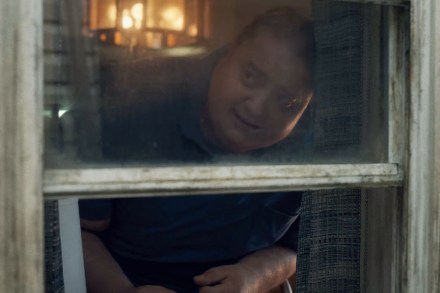
The Whale is meant to hurt you

The screen begins on black; a slow reverse zoom reveals that we're looking at a laptop screen during a Zoom meeting. We think we’re watching a film reflecting the realities of Covid. But it’s 2016, and the black screen in the middle (reading “instructor” in the lower right-hand corner) belongs to our protagonist, Charlie (Brendan Fraser). He’s teaching an online English class, going through the motions of a job that means very little to him. His world is dark and painful; he doesn’t want to let anyone in. After he logs off, we see his enormous body masturbating to gay porn. His orgasm triggers a heart attack that feels like the punchline to a cruel joke, but it plays as anything but that.

Ebony and ivories

In the early going of The Piano Lesson (1987) there’s mention of a merchant buying up musical instruments in the black neighborhoods of 1930s Pittsburgh. When offers for the titular family piano are rejected by its current proprietor, Berniece, her brother Boy Willie, who has arrived from the south, hopes to sell it to him behind her back. It’s a coy reference to that great Broadway salesman of band equipment, Meredith Willson’s Music Man (1957), and the reversal gives you some idea of playwright August Wilson’s method. Where Meredith built a full musical around a musical zero (Harold Hill is tone-deaf), August composed a stage play from the music of the blues, which he called the “sacred book” of black literature.

piano
titanic

Titanic was the original White Lotus

When James Cameron’s Titanic sailed into US theaters twenty-five years ago, smashing box office records in the process, it subversively made the argument that the villain in the film was not the iceberg, but its first-class passengers. While it wasn't a satire like The White Lotus, Cameron's film feels like one of the pioneers of the over-the-top "eat the rich" criticism that produced the viral "send them to White Lotus" memes. One of those memes should have included the cartoonishly repellent Cal Hockley, played perfectly by Billy Zane — the epitome of bourgeois arrogance.

Joyce Carol Oates intellectualizes Yellowstone

A neo-Western drama set on a vast ranch in Montana run through with trashy romance plot lines and violent disputes about land and legacy — "who owns the West?" — has made Yellowstone the most-watched TV series in America. The season four finale drew over 11 million viewers. And yet, while millions of Americans are lapping up the epic sprawl of violence, lust, family and wilderness, many — particularly the coastal intelligentsia — don’t watch it. One vocal exception is Joyce Carol Oates, the Pulitzer-nominated author of fifty-nine novels and one of the great chroniclers of the last American century.

Ancient Apocalypse and the end of history programs

For those with a love of history who remember what the History Channel once was, its current state is a travesty. What was once populated with interesting documentaries is now home to Ancient Aliens and Swamp People. Despite the channel being quite literally called the History Channel, history was not bringing in the dough. Now Netflix is joining the party. In early November 2022, the streaming platform released Graham Hancock’s eight-episode series, Ancient Apocalypse. Hancock believes that there was an advanced civilization that was destroyed at the end of the last Ice Age, around 10,800 BC. Its members supposedly circumnavigated the globe, built wondrous feats of architecture, and may have left signs for future civilizations warning of coming catastrophes.

The Whitney Houston biopic is a big, gay masterpiece

Half an hour or so into the new Whitney Houston biopic, I Wanna Dance with Somebody, two bros sitting next to me asked, “Why is gay Whitney in Black Panther?” They were in the wrong movie, but based on the other audience members screaming at the screen, the lone straight men weren’t alone in finding director Kasi Lemmons’s new film shocking. Sony promoted I Wanna Dance with Somebody as the feel-good biopic of the year. The trailer starts with the hook of the titular song and goes on to show Houston (Naomi Ackie) dancing to “How Will I Know” and singing her iconic rendition of the “Star-Spangled Banner” at the Super Bowl. Houston rarely speaks, but when she does, she talks about music: “My dream,” she purrs, “sing how I want to sing.

whitney houston

Confessions of a Sight and Sound voter

As a film critic and historian who's written for Sight and Sound since 2011, I like to think that the greatest films of all time are always on my mind, but, in truth, they were particularly on my mind last summer. Last July, I received the official word that I was among the select group of critics picked to partake the Sight and Sound critics' poll to decide the greatest films ever made; a survey the British magazine first convened in 1952 and has repeated on a once-per-decade basis ever since. In the weeks before my deadline to vote, I meditated on what constituted a great film with unusual intensity and self-reflection.

sight and sound

Babylon is a gloriously magnificent and bloated epic

Quiet in the feature film world since the 2018 release of First Man, Damien Chazelle returns to the Hollywood-centric beat that brought him success in La La Land for Babylon, perhaps his most ambitious film yet. Opening in a raucous Hollywood party at the height of the Roaring Twenties, through a series of tracking shots, Chazelle introduces us to the three central characters of the film. Manny Torres, played by Diego Calva in his breakout role, attempts to navigate the atmosphere as an aspiring, wide-eyed Mexican immigrant who dreams of leaving his lowly assistant work to become something more. This allows Manny to serve as the surrogate for the audience.

An ingloriously dumb adaptation

There’s always been a market for nostalgia. Keats, the huckster of Greek glories, put it best: “Heard melodies are sweet, but those unheard are sweeter.” But the peculiar achievement of Lester Bangs, the cantankerous rock critic played by Philip Seymour Hoffman in the film Almost Famous (2000), is to sell us some self-confessedly unsweet music. True rock and roll, the Bangs character tells us, is “gloriously and righteously dumb” and could suffer no worse fate than to become an “industry of cool.” Of course, by his lights, the golden age has passed; all that remains is “the death rattle, the last gasp, the last grope.” If nostalgia is a drug, he has mainlined the stuff. What are you on, man, and where can I get some?

almost famous

Edward Hopper’s America

With a new show at the Whitney, Edward Hopper’s New York; a new documentary film from director Phil Grabsky, Hopper: An American Love Story; and a recent exhibition organized by the Virginia Museum of Fine Arts and the Indianapolis Museum of Art, the work of one of the most popular yet seemingly inscrutable American artists of the twentieth century is receiving a great deal of renewed attention. In his paintings, Hopper’s hard-edged realism, impressionistic plays of light and passages of intensely saturated color compete for attention. What has always captured the public imagination is the relative isolation of the figures that appear in his work. Search for articles about Edward Hopper online, and many will describe his art as an exploration of loneliness.

hopper

Cleopatra still dazzles sixty years later

It’s a dazzlingly staged event that evokes the ancient theater, Italian operas, elaborately choreographed Busby Berkeley films and an open-air spectacle on par with WrestleMania at Caesar’s Palace. I’ve watched it knowing that as a small boy, I tugged on my mother’s blue jeans and asked a question informed purely by cinema: “Is Cleopatra the most beautifulest woman in history?” “No,” replied mother, with a cigarette stuck between her clenched teeth. “Elizabeth Taylor is.” I was, of course, picturing Elizabeth Taylor as Cleopatra. The event I’m referring to isn’t mere cinematic overindulgence; it is a monumental moment — six decades after moviegoers first saw it — which transforms a movie star into a deity.

Cleopatra

Why has Barbie been made?

In 1997, the Swedish pop act Aqua released a novelty single which combined being hugely popular with being even more irritating. Entitled “Barbie Girl,” it was a helium-voiced ode to the wonders of the famous Mattel creation, dusted with just enough ironic detachment to allow the musical connoisseur to believe that they were savoring a joke, while giving the unreconstructed pop lovers everything they could hope for. The lyrics are especially lamentable: the chorus declares “I'm a Barbie girl, in the Barbie world/ Life in plastic, it's fantastic/ You can brush my hair, undress me everywhere/ Imagination, life is your creation.” It was successful for a while, sold a huge number of copies and can, very occasionally, still be heard on the radio.

barbie

Avatar 2: a three-hour-plus video game cutscene

A few years ago, someone on Twitter brought up the fact that Avatar, despite being a massive hit, left little to no cultural imprint on American pop culture. I can’t speak for the rest of the world, but after December 2009, all I ever heard about the movie was that the precious material on alien planet Pandora was called “unobtanium,” and that the script was a lazy ripoff of Pocahontas. Those reviews must have been the first time I read the phrase “white savior narrative,” relatively late for a junior in high school. But beyond that, none of Avatar’s characters, story, themes, concepts or images have broken through into general consciousness. It’s the most obscure success of all time. How did a movie make so much money and leave so little behind?

Angelo Badalamenti, the maestro of mystery

Every film composer hopes that they will have at least one piece of music that they will always be synonymous with. (Some greedy bastards, such as John Williams and Hans Zimmer, have loads.) Whether it’s Henry Mancini’s Pink Panther theme, John Barry’s James Bond epics or, more recently, Howard Shore’s Lord of the Rings majesty, it’s a wonderful thing to have elevated a film or television series single-handedly with one’s scoring. And so it has proved with Angelo Badalamenti, who has died at the age of eighty-five.

angelo badalamenti
jennifer coolidge

The year of Jennifer Coolidge

Pursed lips, eye-squints and a nasally groan. Jennifer Coolidge, best known for playing Stifler’s mom in American Pie, is a recognizable face on the silver screen, but until recently she'd found herself relegated to the background. Over the last few years, however, we have seen a Jenaissance. If you haven’t heard of it, that’s what people are calling Jennifer Coolidge’s epic return after not one but two recent breakout roles that have even seen her win an Emmy.

Is Taylor Swift doomed as a filmmaker?

Any moment now, I expect Taylor Swift to announce a presidential bid, probably for 2028. By then, she’ll have done everything else that someone in the entertainment industry could reasonably be expected to have done. Endless hit records and awards? Check. High-profile spats with leading industry figures who have invariably come off worse? Absolutely. And, next up, her cinematic debut, a yet-untitled project that she will both write and direct? Not long to wait now. The announcement a few days ago that Swift will direct a feature for Searchlight Pictures based on her own screenplay caused much excitement, with appropriate genuflection accompanying the press release.

Taylor Swift attends the "All Too Well" premiere at AMC Lincoln Square on November 12, 2021 in New York. (Photo by ANGELA WEISS/AFP via Getty Images)

Remembering Jean-Luc Godard

In March 2021, during his last major interview, Jean-Luc Godard reiterated a previous point about the coronavirus being a form of communication. “At first, I thought that production was the main aspect of cinema, and I realized distribution was more important, today more than before. Distribution has choked production by pretending to be at the service of the audience...The virus in its own way, distributes. Today, it would be interesting to know how the virus produces, but we only care about what it distributes.

Godard

Could Avatar 2 flop at the box office?

“Who asked for this?” asked the New York Times in November of the coming Avatar sequel, The Way of Water. Not me. I’m not the audience for this film. I did not contribute to Avatar's $2.92 billion global box office. I don’t, for example, post in the "Tree of Souls" forum, which has 2,093 members (a tiny number). Does Avatar have an army of fanatics waiting to be unleashed at the box office? I don't know anyone obsessed with Avatar, do you? Is it as meme-friendly as Minions: The Rise of Gru? No. Will it draw as many teens as an MCU movie? Probably not. Avatar does not have the built-in fanbase you need to carry a franchise. It requires a global audience — it needs mainstream buzz. It needs the press raving that it's a "visual masterpiece." But is that enough?

Violent Night is more than just Christmas carnage

The pitch meeting for Violent Night must have been fun: why not make a big-budget film where Santa Claus himself (David Harbour) must protect a spoiled rich family from a home invasion? It might even settle the age-old debate about whether Die Hard is a Christmas movie: this is what a Die Hard-style Christmas really looks like! Violent Night largely delivers on that premise, serving up high-octane holiday mayhem for the grownup set. Here, we get a disenchanted (and borderline alcoholic) Kris Kringle, who’s grown tired of modern kids requesting only cash and video games and is contemplating hanging up his hat. We’re a long way from the jovial protagonist of The Santa Clause or even the crankier iteration of Elf. Years of munching Christmas cookies haven’t made this Santa soft.

Kirstie Alley, the woman left out in the cold

Towards the end of her life, the Cheers and Look Who’s Talking star Kirstie Alley, who has died of cancer at seventy-one, did something that made her a pariah among her Hollywood associates: she tweeted support for Donald Trump. On October 17, 2020, Alley wrote, "I’m voting for @realDonaldTrump because he’s NOT a politician. I voted for him 4 years ago for this reason and shall vote for him again for this reason. He gets things done quickly and he will turn the economy around quickly. There you have it folks there you have it." The public response was swift and merciless. Writer and director Judd Apatow remarked, "Shelley Long was way funnier than you"; the actress Patricia Arquette announced, "Well my vote for Biden canceled yours out. I have done my civic duty of the day.

An unapologetically Jewish Fiddler on the Roof returns to New York

Fiddler on the Roof is a study of Eastern European Jewry: it is based on Yiddish writer Sholem Aleichem’s short stories and is set in a Yiddish-speaking village in early twentieth-century Imperial Russia. Yet, in the hit musical, which premiered on Broadway in 1964, Sheldon Harnick’s lyrics only feature a handful of Yiddish words. Harnick later confessed that the creators downplayed the Jewishness of the story — something they thought might be too sticky; too specific — in order not to put off American audiences. As scriptwriter Joseph Stein said: “These were stories about characters who just happened to be Jewish.

The cast of Fiddler on the Roof (New World Stages)
meghan trailer

Thank God: Netflix releases Harry and Meghan doc trailer

Sorry for the delay: Cockburn has been busy bleaching his eyes after watching the trailer for Meghan Markle and Prince Harry’s newest venture, a Netflix documentary on "their story." https://twitter.com/netflix/status/1598287753774477312 People magazine claimed, “It's Meghan Markle and Prince Harry like you've never seen them before,” which makes Cockburn question if the publication has had its eyes and ears shut for the last two years. The documentary series, which is composed of six episodes and will premiere in December, includes personal footage of the pair at their wedding reception, on a trip to Africa and while Meghan is pregnant. But what’s a Meghan and Harry venture without the doom? The trailer also includes footage of Meghan wiping away tears. Perfect timing!

Tár is more than a #MeToo story

Life imitated art to a depressingly predictable degree when a clip from Todd Field’s Tár circulated online. It’s part of a scene where the film’s title character, superstar conductor Lydia Tár (played by Cate Blanchett), leads a masterclass at Juilliard. She haughtily dismisses students’ reluctance to learn the classical canon because of their difficulty “identifying” with its composers. To some, Lydia’s monologue was a vindication: a righteous tirade against "wokeness." To others, the speech exemplifies Lydia’s abuse of power, which includes not only dressing down students and mentees but sleeping with many of them and torpedoing their careers.  But oversimplified views of Lydia as a crusader or villain flatten the film’s wrenching complexities.

tar

The Menu serves up clever and tangy social commentary

Several years ago, after I passed the bar exam, my wife and I went to dinner at Pineapple and Pearls — probably Washington, D.C.’s second swankiest restaurant. I recall eating some excellent duck, as well as imbibing a selection of craft cocktails served in ever-more exotic glasses and alembics. But what I remember most was dessert: a single gooseberry lacquered with honey. Yes, a single berry. (We ordered Domino’s when we got home.) The Menu is a lacerating bit of social commentary that doubles as a satire of this kind of fine dining — not all that surprising a blend, given the presence of Adam McKay on the production team.

Is Glass Onion a victim of its own success?

Screen adaptations of Agatha Christie mysteries never go out of style. The problem is that they're so often concerned with literal fidelity that they get bogged down in self-seriousness, so desperate to “update” everything that they veer into the ludicrous. With 2019's Knives Out, Rian Johnson successfully updated the Christie-style whodunit because he had a deep knowledge of its formula and he played it with a pitch-perfect, kooky sensibility. For Knives Out’s sequel, the newly released Glass Onion, Johnson does what you should do when Netflix gives you buckets of money to make a whodunit. There are expensive locales and production design, a bevy of great character actors and a twistier murder plot.

The Oirish Question

Sweeping down and around the Aran Islands, The Banshees of Inisherin begins as any Irish film would. The official trailer had given little away, besides a couple of strong-sounding accents and weak-looking Guinness. Very Irish; too Irish, perhaps. Despite my respect for Martin McDonagh and reverence for In Bruges, even I felt trepidatious. My father, too, had an air of skepticism about him. The line between Irish and Oirish is so fine — so easily and often overstepped — that when the film opened on gray cliffs and green fields, you could be forgiven for fearing the worst. For despite the accelerated evolution of contemporary Irish cinema, Hollywood still speaks fluent Oirish.

inisherin