Culture

Culture

Twenty-five years of Fight Club and American Beauty

Sound the alarm: hypermasc beefcakes all over the world have an anniversary to celebrate! Beware women, children and the effete, this year marks the twenty-fifth birthday of both David Fincher’s notorious psychodrama Fight Club, adapted from the debut novel by Chuck Palahniuk, and Sam Mendes’s equally notorious American Beauty, which has gone from Oscar-winning acclaim to being a punchline on chat shows and animated comedies alike. If you haven’t seen Fight Club, shame on you. Go to Hulu and binge away. Revel in its anarchic ludicrousness and head-to-head carnage; inhale the feculent atmospheres of Lou’s Tavern and Tyler’s dilapidated mansion house, all tied together through Fincher’s iconic desaturated color palette. It is all too easy to taste the blood, sweat and tears.

Fight Club
art

War, one artwork at a time

The chaos of the conflict in Ukraine is difficult to track, let alone to reflect on a human scale. After ten years of destruction and occupation, analyzing the situation from afar is a challenge. For many in Ukraine, art provides a way to communicate about a culture under siege, a sense of identity and a concrete way of engaging with people outside the country. While art can speak for itself, it requires human cultural ambassadors. To this end, Ukrainian nationals and their allies have been working tirelessly to promote the voices of a people under siege through museum exhibitions and events the world over.

Memorial

A classic monument for World War One

I was standing in front of “A Soldier’s Journey,” the centerpiece of the new National World War One Memorial in Washington, DC, chatting with its creator, sculptor Sabin Howard, when I raised a question. “So, are you the new Saint-Gaudens?” I asked. “No! No, God no!” exclaimed Howard. “That guy sucks.” Sabin Howard is nothing if not direct in expressing his opinions, which are refreshingly free of the artspeak that saturates most of the contemporary art world. It’s a frankness that is best appreciated by examining his current commission as well as trying to understand the artist himself.

Where has the erotic film gone?

Sexy time at the cinema is becoming a thing of the past. That’s according to research on the prevalence of vices in top live-action films from film maven Stephen Follows. His study shows that drug taking and violence are as popular on screen as ever in the twenty-first century. Profanity has dipped only slightly, but sex has dropped off a cliff since the year 2000. We used to love what they used to call a steamy blockbuster. I came of age in an era where the “erotic thriller” — 9½ Weeks, Fatal Attraction, Basic Instinct — were the box office draws, in which big stars lost their drawers. Comedies like A Fish Called Wanda, Green Card or When Harry Met Sally relied on frisson and fizz for a large part of their appeal.

erotic

Are politician films really such a good idea, after all?

The news that Ali Abbasi’s Donald Trump drama The Apprentice has flopped in its first weekend at the US box office, taking in a mere $1.6 million from 1,740 locations across the country, may not be as surprising as liberal critics might suspect. The film received decent rather than adulatory reviews, many of which suggested that its portrayal of the young Donald Trump and his relationship with his mentor Roy Cohn was either too generous or unfairly maligned the younger Trump, depending on where your individual politics stood.

apprentice politician films

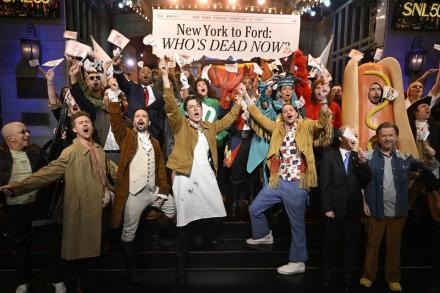
Saturday Night Live is helping Trump

“Me and Vice President Harris are the same!” concluded Saturday Night Live veteran Dana Carvey, in character as Joe Biden, when he returned to NBC’s legendary sketch comedy show for the first episode of its fiftieth anniversary season. After Carvey, who left SNL’s regular ensemble in 1993, uttered those politically unhelpful words, former cast member Maya Rudolph, playing Kamala Harris, nervously gave him the bum rush off stage, only for him to wander back on to smell her hair — one of Biden’s stranger campaign trail moves — before the two delivered the show’s signature, “Live from New York, it’s Saturday night!” line to a cheering studio audience, millions of viewers at home and millions more who (like me) caught it later via social media streaming.

saturday night live

Are we seeing the death of auteur cinema?

To nobody’s very great surprise, the much-anticipated, very expensive Joker sequel, the pretentiously entitled Folie à Deux, has flopped, and then some. The original film opened to a staggering $96 million on its opening weekend in 2019, and went on to earn more than a billion dollars worldwide, eventually winning an Oscar for its lead Joaquin Phoenix. It was that rare movie that appealed as much to cineastes and critics as it did to the Saturday-night popcorn crowd. Never mind that its director Todd Phillips ripped off Martin Scorsese’s The King of Comedy and Taxi Driver so much that it was virtually actionable; it was heralded as a vital, incendiary piece of cinema. Its sequel has not been.

RIP, Dame Maggie Smith

The death of Dame Maggie Smith at the age of eighty-nine represents not just the end of a very English tradition of acting that she exemplified, but a passing of a generation. With the exceptions of Judi Dench and Eileen Atkins, there are no few grand dames of British stage and screen surviving; there is a distinct difference between, say, Smith and Helen Mirren, who pivoted early to the cinema and has largely remained there ever since. Smith was a consummate actress for film — she won two Oscars and was nominated for plenty more — but it was the smaller environs of television and stage where she truly excelled. A misapprehension about Smith is that she was a camp, OTT presence. This impression is largely derived from her latter-period work in Gosford Park (in which she was superb..

maggie smith

The Penguin, Agatha All Along and the perils of spin-offs of spin-offs

Two of the highest-profile show launches of the past month are also two of the least original. If your taste runs to hard-bitten, Sopranos­-accented crime, then you might enjoy the new HBO series The Penguin, with Colin Farrell reprising his role from 2022’s The Batman as Oswald Cobb, the so-called “Penguin,” a Mafioso who is attempting to gain control of Gotham City’s crime underworld following the death of Carmine Falcone. And if you’re more interested in female-driven whimsy, then Marvel’s Agatha All Along, the latest genre-hopping comedy-drama-fantasy-horror on Disney+, will allow Kathryn Hahn ample opportunity to chew the scenery as the witch Agatha Harkness, who forms a new coven after the misadventures of WandaVision.

penguin spin-off

A Very Royal Scandal — a very controversial series?

Now that The Crown has finished (for the time being, at least), production companies are scrabbling about for replacements. Perhaps inevitably, the biggest royal story of the past few years — Prince Andrew’s disastrous 2019 interview with Emily Maitlis on the BBC’s Newsnight program — has now been made into two separate shows this year. The Netflix offering, Scoop, focused on Sam McAlister — and was, far from coincidentally, based on McAlister’s memoir. Now Amazon Prime has entered the fray with a three-part series that follows in the wake of the peerless A Very English Scandal and the lesser A Very British Scandal. Whatever next?

royal scandal

Emmys 2024: Shōgun, shocks and surprises

It was to be the year of Shōgun. In one of the cleanest sweeps since Succession ended, the show won virtually everything at this year’s Emmys, including Best Drama Series, Lead Actress in a Drama for Anna Sawai and, unsurprisingly, Lead Actor in a Drama for the phenomenal Hiroyuki Sanada, who triumphed in a category that had some equally strong choices (Gary Oldman for Slow Horses), as well as some more perplexing ones (Idris Elba for Hijack and, bizarrely, Dominic West for The Crown). Shōgun took a record-breaking eighteen Emmys in total, with showrunner Justin Marks remarking of its makers Hulu and FX, “You guys greenlit a very expensive subtitled Japanese period piece whose central climax revolves around a poetry competition.” It proved to be a good bet.

Caligula’s second wind

Imagine, if you will, that you are a patron of what used to be euphemistically called “blue movies” at the beginning of 1980, during the so-called “Golden Age of Porn.” The previous few years have seen pornography enter the mainstream in the form of such hugely popular pictures as Deep Throat and Debbie Does Dallas, which saw such stars as Linda Lovelace and Marilyn Chambers briefly achieve nearly the fame (or notoriety) of their Hollywood peers, as their films came close to becoming, if not respectable, at least part of the cinematic fabric of the day. Then you hear tell of something truly remarkable: a big-budget Roman epic with an A-list cast, scripted by Gore Vidal and combining intricately recreated scenes of classical debauchery with envelope-pushing sexual content.

Caligula

The world needs more Lars von Triers

In 2009, cinema audiences were faced with a choice between two talking-fox pictures. The first, most obviously user-friendly option was Wes Anderson’s Roald Dahl adaptation Fantastic Mr. Fox, with the eponymous reynard voiced by none other than George Clooney. If your tastes verged on the darker and more perverse, the Danish director Lars von Trier had a treat in store for you with his controversy-laden psychodrama Antichrist. In one key moment, the male protagonist played by Willem Dafoe is approached by a mangy-looking fox — voiced, uncredited, by Dafoe himself — that declares, in maniacal bass tones, “Chaos reigns!” You wouldn’t get that with George Clooney.

von trier

Bud Powell should be a household name

Late one January night in 1945, a young black man stumbled drunkenly toward Broad Street Station in Philadelphia. He was exhausted after playing a long set in a grotty club half a mile away. The naturally nervous musician often used alcohol to settle his unbearable over-excitements and debilitating despairs. On this occasion he had one too many. His awkward gait caught the attention of two policemen. They went to shoo him away, but instead of escorting him peacefully along, something about the twenty-year-old vexed the pair and they began to bash him about the head repeatedly with their truncheons. When the seriousness of his injuries became apparent, after he’d been slung into a frozen cell, he was taken to a hospital to recuperate.

Powell

Böcklin brings out the dead

In the fall, a middle-aged man’s fancy turns to thoughts of death. As shadows lengthen, decay takes root in the raised beds, and the “spooky season” recalls the shortening of our days. It also provides an opportunity to reflect on how one artist embraced this time of year. Much of the life of the Basel-born Symbolist Arnold Böcklin (1827-1901) was haunted by the specter of death. His first fiancée died before they could marry; he himself nearly died of typhus. Of his fourteen children, five died in childhood; three others predeceased him. His daughter Maria was buried in the English Cemetery in Florence, where Böcklin spent much of his life. Scholars believe that the cemetery partly inspired Böcklin’s most famous work, 1880’s eerie “The Isle of the Dead.

Böcklin

Azealia Banks flames Milo Yiannopoulos as they sever professional ties

Milo Yiannopoulos has fallen out with another Trump-supporting musical artist. The right-wing provocateur and one-time intern of Marjorie Taylor Greene had been teasing his intention to start managing Azealia Banks, a rapper and singer as talented as she is controversial best known for her songs "212" and "Anna Wintour." "At Yeezy, I discovered a gift for navigating, protecting and advising mercurial and demanding geniuses," he tweeted ten days ago. "I deliver and close ruthlessly, effectively and efficiently. So I’m moving into artist management full time. Signing my first client in a few days. You will, as they say, gag." Banks retweeted his post. Yet days later, on the eve of Banks's UK tour, the blossoming working relationship appears to have unraveled.

azealia banks

RIP James Earl Jones

The death of the great actor James Earl Jones, at the robust age of ninety-three, has been marked with tributes from every walk of society, not least the acting profession. There were many remarkable things about Jones’s career, from his being the last surviving member of the cast of Kubrick’s Dr. Strangelove to his many and varied Shakespearean roles, all of which he excelled in (save, perhaps, Mark Rylance’s misguided attempt to cast him as a superannuated Benedick in Much Ado About Nothing at the Old Vic in London in 2013, which was critically ridiculed). Yet the reason why he has a fame and repute far beyond just about any other actor of his generation is simple: he was the voice of Darth Vader.

james earl jones

The decline of Tim Burton

Beetlejuice Beetlejuice — so good, they named it twice. At least, that’s what you would have hoped. Unfortunately, Tim Burton’s latest movie is a dismally confused hotchpotch that aims for a curious mixture of comedy, mild horror and the usual Burton wackiness, along with performances from his regular actors including Michael Keaton, Jenna Ortega and Winona Ryder. Sequel to an Eighties curio that was diverting rather than brilliant in the first place, it has nevertheless capitalized on the ever-present vogue for nostalgia that has permeated theaters over the past few years. It made an astonishing $111 million at the US box office last weekend; the original grossed $75 million worldwide during its entire run at movie theaters, albeit the best part of four decades ago.

tim burton

The welcome return of Slow Horses

Apple TV+ may be struggling to break through into the streaming mainstream with more than a handful of their shows (as I’ve written before), but one categorical success is the British comedy-thriller Slow Horses, about to begin its fourth series on the service this week.   Because Apple has a vastly lower take-up for its subscriptions than Netflix or Amazon Prime, it remains a niche, cult show, rather than a much-discussed behemoth, and this suits its admirers down to the ground, who discuss its fidelity to Mick Herron’s brilliant series of novels with the kind of revivalist fervor usually seen at the Democratic National Convention.  From one clapped out old has-been to another.

slow horses

Should we cheer the return of Ted Lasso? 

Lovers of Jason Sudeikis, British soccer — that’ll be “football” to you — and undemanding, if surprisingly curse-laden, comedy-dramas, rejoice. The third season of Sudeikis’s hit comedy Ted Lasso ended last year, with what seemed to be a fairly definitive conclusion to the show. The eponymous Ted returned home after seeing his beloved AFC Richmond come second in the league, the club’s dastardly former owner Rupert (Anthony Head, the show’s MVP in my opinion) was defeated and comic sidekick-turned-villain Nate “the Great” was redeemed and welcomed back into the fold. There were, admittedly, a few curveballs and loose ends chucked in there, but it was hard to see where a fourth season could go.   It now looks as if we will find out.

ted lasso

Megalopolis and the strange art of negative marketing

After a fairly barren summer movies-wise (I’m just waiting for the Alien: Romulus backlash to begin, and will be only too pleased to join in with it), there are more promising movies coming our way this fall. Yet the one that’s attracted more attention and interest than possibly anything else this year, maybe even this decade, is the grand return of Francis Ford Coppola with Megalopolis, a self-funded, wildly ambitious folie de grandeur that premiered at this year’s Cannes Film Festival to predictably mixed reactions and an overall consensus that, alas, the one-time visionary genius of theater is no longer a force to be reckoned with, however loopily wild his latest (and, one reluctantly assumes, last) movie is.

megalopolis

In the studio with Merche Gaspar

I was sitting cross-legged on the floor of artist Merche Gaspar Caro’s studio in Barcelona on a rainy Monday morning when I asked myself, “Why isn’t this artist better known?” We had met by chance some months earlier, when I passed by the Galeria Subex, which at the time was hosting a show of her recent work. I was initially drawn in by the exhibition poster, which displayed a stunning image of a young woman wearing a dark-blue dress and a white apron. Once inside the gallery, I was enthralled by canvases of mothers and daughters, drawings of birds and paintings of children playing or curled up in bed reading stories. Many featured a wonderfully cool, contemporary palette of mauve, gray and sapphire.

Sylvester

The life of David Sylvester

It’s 1960, and the clock has struck seven in the morning on Manhattan Island. A car weaves through the clamorous city as the morning sun settles. In the front seat are the Canadian-American painter Philip Guston and the British art critic David Sylvester; the pair have just enjoyed a sobering Chinese meal after a long night of drinking with Willem de Kooning and Franz Kline, which called for the digestif of a drive. It has been an epochal night for Sylvester; he just doesn’t know it yet. In 1996, Sylvester, who would have turned 100 this year, wrote his essay “Curriculum Vitae” later reproduced in his acclaimed About Modern Art: Critical Essays 1948-2000.

What is the point of the George R.R. Martin extended universe?

And so House of the Dragon has come to the end of its second season. It is fair to say that, for all the intrigue and fruity British character actors on screen (first place as far as I’m concerned: the great Simon Russell Beale as Ser Simon Strong, “the only gentleman in an ungentlemanly world”), the series is still finding its feet and has yet to provide the visceral thrills that might be expected of it. As my esteemed colleague Matt McDonald described it, “the second season was basically all foreplay. The first season ended with ‘wow, they’re about to fight some dragons.’ Then this season ends after one dragon fight and the promise ‘oh wow, now they’re really going to fight some dragons.’” There are undoubted improvements in this more confident second outing.

house dragon george r.r. martin

The revival of Marvel

It’s never nice to be wrong. Last November, with the unwanted superhero sequel The Marvels about to flop, the would-be series starter Eternals already unpopular and with Marvel’s hotly tipped next star Jonathan Majors on the verge of conviction for assaulting and harassing his ex-girlfriend, thereby imperiling the Kang Dynasty that he was supposed to star in, I — and, to be fair, many others — began to wonder if Marvel’s once-golden touch had begun to desert it. After all, since 2008’s Iron Man, there had been countless films, television series and other spin-offs from the studio; it seemed inevitable that audiences would eventually lose interest.

Wolverine and Deadpool in Deadpool & Wolverine (Marvel)

Glen Powell is your new favorite movie star

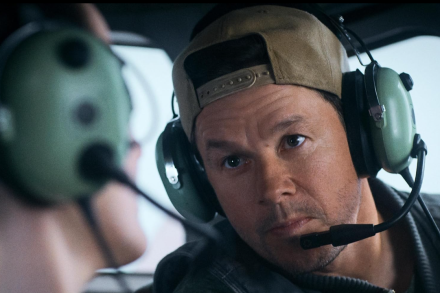
Last weekend’s opening of Twisters saw the windy picture receive both critical acclaim — although not in this magazine — and commercial success, blowing to a wildly impressive $81 million opening at the US box office. This was by no means a given for the tornado thriller, as the original film, although a smash hit when it opened in 1996, is largely unknown to the millennial audience who make up the majority of moviegoers who will flock to see a film as soon as it comes out; many of them were not even born when it was released. Instead, its appeal lies another way, in the casting of newly minted megastar Glen Powell in one of the lead roles.

The Boys is empty shock value

Some shows, like Game of Thrones, are only great so long as they stick to their source material. Others succeed by respecting the lore and cannon of a beloved novel or comic, but tell an original story in that universe. HBO’s Watchmen is the pinnacle example of this; however, the first season of The Boys may be the only show that succeeded precisely by not being like its source material. The Boys comics shares Watchmen’s premise of exploring an alternative reality where superheroes are real; but whereas Alan Moore considered this premise richly, and opposed the concept of superheroes on philosophical grounds — against the worship of power and great man theory of history —  that isn’t so for Garth Ennis.

boys

The Jedermann, the myth, the legend

The telephone was ringing. On the other end was Markus Hinterhäuser, artistic director of the Salzburg Festival. “Robert, would you like to direct a new production of Jedermann for us next year?” A new Jedermann at the Salzburg Festival, but with only a few months to prepare? I hesitated for about one second before saying I would be delighted and honored to direct. Jedermann is the complex, frightening, inspiring and fascinating German adaptation by the great Austrian writer and poet Hugo von Hofmannsthal of the English medieval morality play Everyman. Hofmannsthal’s adaptation premiered at Berlin’s Circus Schumann theater in December 1911.

Jedermann
Gatsby

A new adaptation of The Great Gatsby is enrapturing and impressive

In F. Scott Fitzgerald’s classic 1925 novel The Great Gatsby, Daisy Fay is a mercurial character. The popular rich girl from Louisiana — married to Tom Buchanan, an adulterous brute — is ravishing and entrancing and, at times, cruel. It is her voice that most draws Jay Gatsby to her years after their initial fling when he was a poor officer, as he longs for her across the bay. As Fitzgerald describes it, Daisy’s is a voice that rises in dramatic swells and falls to intimate murmurs, coaxing its listeners to draw closer. Gatsby, the nouveau-riche rumored bootlegger from an impoverished farming family, is obsessed with Daisy: her class, her beauty, her unattainability, her voice. It is a voice, he tells the book’s narrator Nick Carraway, that is “full of money.