Yale University

Doctors are embracing identity politics – and harming babies

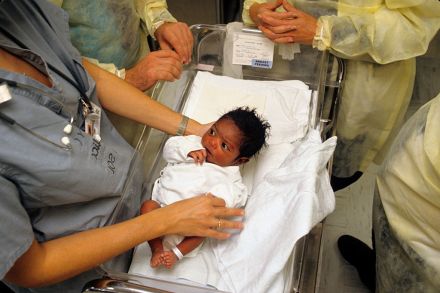
“Why did I ever order those tests?” This is the question that Dr. Sharon Ostfeld-Johns of Yale Medical School now asks herself of every drug test she ever ordered for newborns with mothers who were heavy users.The pediatrician is one of a growing cadre of doctors who think that at risk babies should not be screened for drug exposure because positive tests lead to interactions with child welfare services and exacerbate what they see as racial bias in the system. Like so many new policies in this field, though, the efforts to reduce racial disparities only end up harming the most vulnerable children.   Dr.
Babies

The harm that DEI has done to public safety cannot be overstated

Firefighters do not run into a blaze like you see on TV. We crawl with purpose like rats in a maze, which is what a well-involved structure fire feels like, the smoke so thick our high-powered flashlights can’t cut through it. We are trained to locate windows and leave furniture in place as reference points while we conduct search and rescue then scurry to the nearest walls. It makes it all the more vital to have another firefighter with you. The fire was consuming a construction site on Yale’s campus. “The security guard’s inside.” The water company hadn’t arrived yet. No matter, we were going in. I ordered the firefighter to grab the forcible entry saw. He didn’t know where it was. Precious seconds gone.

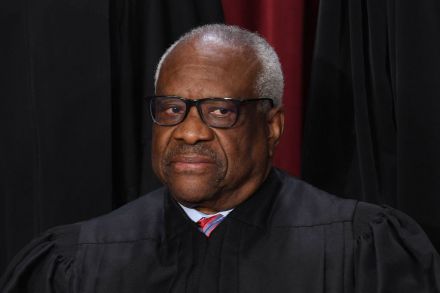
Clarence Thomas is no hypocrite

Anyone looking for a villain in the Supreme Court’s decision to strike down decades of affirmative action precedent will find one in Clarence Thomas. Critics have long found Thomas’s politics vexing in light of his race, a frustration that has only grown more pronounced as the affirmative action decision drew near. To hear his detractors tell it, Thomas was himself the beneficiary of affirmative action policies, both as an undergraduate at the College of the Holy Cross and later at Yale Law School. That Thomas could have such an experience and still strike down race-based admissions policies seems to make him a hypocrite — and an ungrateful one at that.

This is how small colleges die

Iowa Wesleyan is the latest. Finlandia University before that. Pennsylvania College of Health Sciences as of January 2024. Many others you have probably not heard of: Stone Academy, Cazenovia College, Bloomfield College. These are colleges and universities that have breathed their last. Most often they are just local stories. A college that has been reduced to a few hundred students and perhaps two dozen faculty members comes to its final, final end.  In most cases, that final end has been dragged out long past the point where there was any realistic hope of saving the institution. As a former college president once told me, “Colleges die hard.” The faculty and administrators rarely have other career options.

small colleges legacy

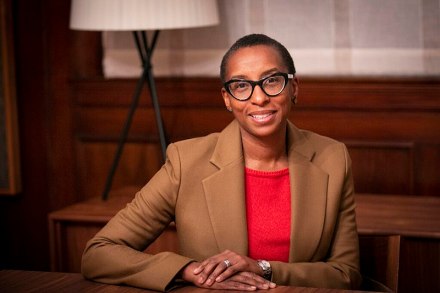
Harvard’s new president is the next chapter of its racial spoils system

Peter Salovey must be fretting. The longtime president of Yale University has done everything in his power to pander to the forces of woke identity politics. He changed the name of Calhoun College at Yale because students didn’t like that it was named after John C. Calhoun, a supporter of slavery in the early nineteenth century. Salovey covered over or ripped out artwork across the university that a specially appointed committee deemed insensitive or offensive. He shoveled tens of millions of dollars into “diversity” initiatives in an effort to appease student crybullies. But Salovey has one insuperable handicap. He is white. In the great racial sweepstakes of the day, that is (if I may so put it) an insuperable black mark. Harvard understands this.

claudine gay harvard

Picking a fight

Lee Siegel’s defense of argument in the latest volume of Yale’s “Why X Matters” series is original, provocative and frustrating, which isn’t bad for a book on argument. Siegel is less interested in what argument does than in what it is. An “expression of a universal longing for a better life” is how he puts it initially. It is also a justification for “ways of living,” something that“ flows from our intuitive certainty that our right to exist is the most fundamental truth,” and an expression of our “unique, particular existence.” Albert Camus stated in The Myth of Sisyphus that the only serious philosophical question is suicide, “whether life is or is not worth living.” Siegel therefore writes “To exist is to argue your existence.” You get the idea.

argument

Amy Chua and the age of infantilization

Before anyone says anything else about Amy Chua, it’s worth noting that we still have no idea exactly why people are talking about her. This is a peculiar state of affairs for a person whose offenses and subsequent downfall have been the recent subject of reporting in multiple major media outlets. There's an allegation: that Chua, a Yale Law School professor, violated both protocol and decency during the 2020 school year by hosting dinner parties at her home for students and elite members of the legal profession. There's a punishment: the alleged infraction cost her a position as the head of one of the Yale Law School's intimate classes for first-year students known as a ‘small group’.

amy chua

Stalin at Yale

Are we in our own revolutionary moment? Many of our leading institutions clearly believe so. Yale University has been working overtime to prove it is on the right side of history. ‘Problematic' colleges have been renamed. ‘Offensive’ stained-glass windows have been knocked out. Only the leadership of an Ivy League school could spread such a poisonous rash. Heading the charge against the Dead White Male has been a progressive Yale bureaucracy that is, for the most part, pale and stale. Now the task of dismantling Yale’s famous art history survey course has fallen to a scholar I respect, Tim Barringer. British-born, Barringer is the Paul Mellon Professor of the History of Art at Yale University and has been a leading curator at the Metropolitan Museum.

yale art history woolf

Digby Dent on lawn darts in winter

New Haven, Connecticut Greetings friends. Old Digby Dent (BR ’89) here. I’ve been press-ganged by the good folks at The Spectator into sharing a few reflections on living well as the fiery splendor of autumn gives way to the dour cold of winter. The leaves are gone, the days grow short and it’s dark by four in the afternoon in Boston. Worse still, the obvious recreations of warmer days having given way to the inconstancy of the third season, we find ourselves waiting for enough snow to ski, cross-country or alpine. What is to be done in the unsteady interregnum from now until The Game? Sailing is no damned good if you can’t guess how cold it’ll be on the water.

lawn darts

The real reason for college food fights

This article is in The Spectator’s December 2019 US edition. Subscribe here. Oberlin College hit the headlines earlier this year when it lost a high-profile lawsuit against a small business. Staff and students at the liberal arts college had accused a bakery in the local town of racism and organized a boycott after an employee caught an African American student shoplifting. The owners of the bakery sued the university for defamation, infliction of emotional distress and tortious interference. Turned out, the store’s employees were completely color-blind when it came to stopping people stealing — of the 40 shoplifters arrested in the previous five years, 32 were white — and the jury found with the plaintiffs.

The irony of the war on Yale fraternities

Three female students are suing Yale and several campus fraternities for ‘alleged gender discrimination and for fostering a sexually hostile environment,’ reports the Yale Daily News. The lawsuit fits into a broader, national conversation happening on college campuses around the country about the role of fraternities, sororities, and any on-campus organization that discriminates on the basis of sex. Increasingly, campus activists — and, in the case of Harvard, sometimes college administrators — are calling for single-sex institutions to be forcibly integrated. I’m biased on this issue, but so are the plaintiffs, whether they recognize it or not.

yale fraternities harvard

The trouble with American universities: I talk to Jamie Kirchick

What’s gone wrong with the American university? Everything, really: politicised teachers — agit profs, we might call them — inciting know-nothing students; pusillanimous presidents cringing before mobs of ‘activists’; teaching standards hollowed out, with classes taught by grad students and adjuncts; the ‘mission’ turned from teaching something useful to Social Justice, the healing of a universe sullied by white capitalism, and the endless milking of alumni for donations; and all of it at a cost that’s been rising ahead of inflation every year since 1980, while teaching standards and the value of a degree have been steadily dropping. Take Yale University, for instance.

yale university jamie kirchik