World war ii

It’s a shame that Crooked Cross isn’t better

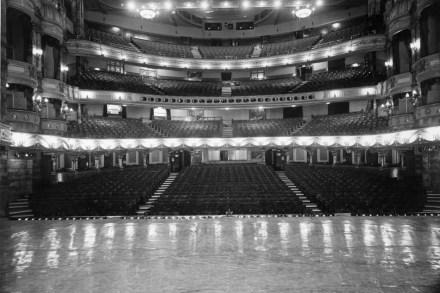
It’s Christmas Eve in a small German town. In a cozy wood-paneled living room, a brother and sister named Helmy and Lexa are decorating the tree, half chatting and half squabbling, the way siblings do. As they light candles, Lexa’s fiancé, Moritz, pounds on the door, demanding jauntily to be let him. He’s as excited as a small child to see the festivities – and to kiss his bride to be. So opens the off-Broadway production of Crooked Cross.  It's a joyous scene, full of promise. Quickly, though, things begin to go south. Moritz Weissman, a surgeon, is accomplished, smart, and well-liked. But while he was raised Catholic, his name, taken from his professor father, is Jewish.
Crooked Cross

Trump has the resolve to defend the West

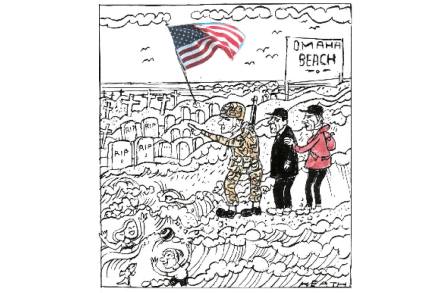
There is never a dull moment in the second, more cheerful reign of Donald Trump. I am writing from London, but was in France last week, picking my way through various battlefields and cemeteries in and around Verdun, Bastogne (think “Easy Company” and “Battle of the Bulge”), and Reims. Well-informed readers will know, as I did not, that “Reims” is not pronounced as its letters might suggest but rather as a nasalized “Reince.” I have always associated the place with champagne, and I am pleased to say that the city capitalizes on the association. But one point of interest had nothing to do with that magical elixir. Reims was also the location of General Dwight D. Eisenhower’s headquarters at the end of World War II.

Trump borders

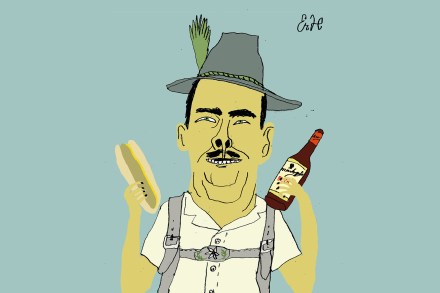
Why German-origin Americans keep quiet about their culinary contributions

Irish Americans are arguably the most ostentatious in their national celebrations. It is hard to imagine any other group getting a day off work and spending it turning the Chicago River green. I wrote of my own Irish pride in these pages last year. March 17 was the highlight of our social calendar. My grandfather inaugurated our city’s St. Patrick’s Day parade, which still runs in Great Falls, Montana, today. Montana — especially Butte — is famous for its Irish population, which makes up 15 percent of residents. But there is a significantly larger ethnic group in Montana, whose traces of national pride are almost imperceptible. According to a US Census Bureau survey in 2020, 24 percent of Montanans claim German ancestry.

German

The Einstein family atrocity

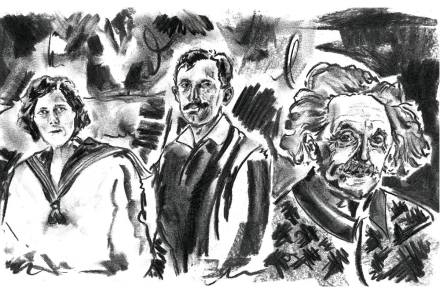
What’s in a name? Well, if it’s Einstein, quite a lot. For Roberto Einstein, it was to prove a devastating connection, even though he had lived in Italy all his adult life, was married to an Italian Christian woman, Nina, with whom he had two children who regularly attended church, and was father to two motherless nieces who were brought up Catholic. In 1944, the increasingly paranoid German occupation decided that Roberto’s whole family was Jewish and inextricably linked to the world-famous Nobel prizewinning scientist Albert Einstein, now in America and high on the Nazi death list. There were connections, of course. Roberto and Albert were first cousins — their fathers were brothers — and were both committed atheists.

Einstein

The powerful, brutal story of Polish resistance fighter Elżbieta Zawacka

In May 1942, Agent Zo was in the home stretch after a long and risky mission that had placed her in Berlin, at the heart of Nazi Germany. As usual, she picked up a small stone and threw it at the second-floor window of her sister’s apartment in a grimy industrial city in occupied Poland, south of Warsaw. But no one in the flat turned on a light, the agreed signal. She threw another. Nothing happened. With a mounting sense of unease, she knocked at the door of a first-floor apartment, and a pallid face appeared. The terrified neighbor told her that the Gestapo had appeared two days ago and arrested the occupants. “Get away, by God. They are here!” she urged.

Zo

Giles Milton retells the story of the Grand Alliance as a cinematic thriller

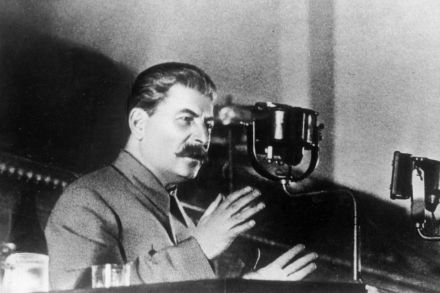
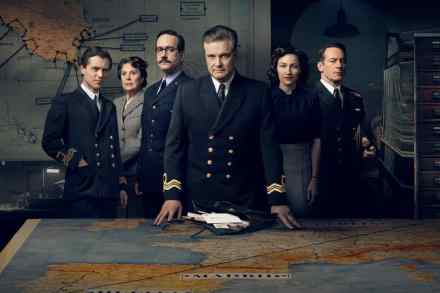
On June 22, 1941, the German army invaded the Soviet Union. Over the next four months, the Wehrmacht blasted through the Soviet defenses, taking millions prisoner and destroying thousands of tanks. By early December, German scouts were purportedly within site of the Kremlin. Even though the Wehrmacht was forced back from the gates of Moscow by the Red Army, the renewed German offensive in spring 1942 threatened to deliver the coup de grâce to the Soviet Union. That it didn’t was due to an unlikely alliance between British prime minister Winston Churchill, US president Franklin D. Roosevelt and Soviet dictator Joseph Stalin.

Alliance

Letters from Spectator readers, July 2024

The cunning of the Democrats’ lawfare On the right flank the aristocrats of the conservative intelligentsia dominated by the likes of Max Boot, David Frum, David French, Bill Kristol and George Will would rather compromise than soil their false pride; the haughty intellectual snobs are thus perfect targets for Alinsky’s “Make the enemy live up to its own book of rules” — aristocratic intellectual elites that would rather die than support a judicial and policy juggernaut with bad table manners. As Victor Davis Hanson observed, Marquess of Queensberry Republicans would rather lose nobly than win ugly. — Adler Pfingsten Will Cherelle Parker become the next ‘America’s mayor’ in Philadelphia?

letters

A skillful retelling of one of World War Two’s most dramatic stories

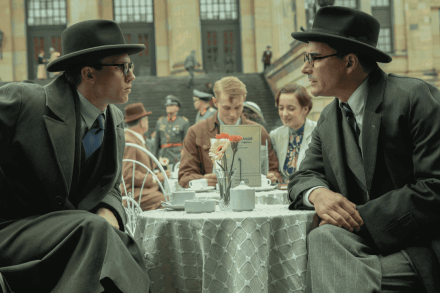
Around lunchtime on a late September day in 1944, a young woman stepped into one of the most fashionable cafés on the Champs-Élysées. Her eyes still scanned the room for threats, even though her war had been over for many months. Known variously as Suzanne, Madeleine, Blanche, Ginnette or Tony, she had “amassed names and personas just as other women of her years and beauty amassed admirers. And she had amassed those too” in the service of her country. Two such admirers now sat opposite her in the café, and she had to decide which one she was going to spend the rest of her life with, and which she would never see again. Such is the climax of the epic story of love and betrayal that Nahlah Ayed tells, using unpublished interviews and archival and personal documents.

Ayed
Normandy

On D-Day at eighty

Traveling to Normandy fourteen years ago, we encountered a rare guide. He was a middle-aged Frenchman native to the neighborhood. I do not recall how long he had been at it, but he had learned something important about the guide business that was evident the day he shepherded us, and another American woman and her teenaged daughter, about the places made famous before any of us were born. He knew when to show, when to tell and when to relate something from his own experience that would enlighten ours. He took things in a certain order, which was not the order I would have guessed. First we stopped at the German cemetery at La Cambe, where 21,200 of the some-80,000 German soldiers who died in Normandy are interred. I remember few other visitors.

Churchill was all in favour of a united Europe — as long as it didn’t include Britain

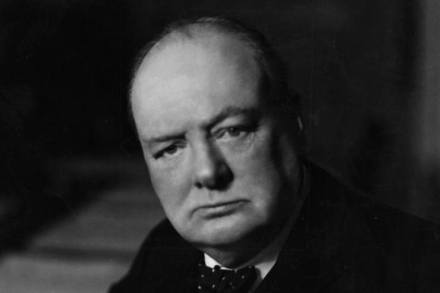
Dr Felix Klos is an extremely personable, highly intelligent American-Dutch historian who has undertaken much archival research, worked extremely hard and is an excellent writer. In trying to persuade us that Churchill favoured Britain joining a federal Europe, however, he comes up against several immovable obstacles. The most serious of these is that in the four years that Churchill was prime minister, between 1951 and 1955, he personally, regularly and decisively blocked all movement towards Britain joining any of the European federal institutions that existed. However engaging Klos may be, and however well written his book, he is utterly wrong in his central thesis.