Women

Trump’s women trouble

From our UK edition

Washington DC In La Crosse, Wisconsin, on Monday night, Donald Trump said, ‘If we do well here, folks, it’s over.’ He was right in theory. There were signs that the billionaire’s crusade against the Republican party establishment and the plutocrats who run it might find an ear in Wisconsin. The state has an industrial working class. It has lately seen plants close and good jobs flee. On the other hand, there were signs that Trump might go up in flames. Wisconsin is well-educated. It is one of the last places in the country where the party system resembles the sociological cliché of the 1950s: rich Republicans in the suburbs, working-class Democrats in the cities and the boondocks.

Whoever invented referendums needs a kicking

From our UK edition

My favourite quote of the year so far comes from the author Fay Weldon. ‘If this were an all-woman society,’ she said, ‘we wouldn’t have television. We’d just have lots of nice cushions.’ Fay was making the point that it’s men who do all the -inventing and most of the work. She has since profusely apologised for this remark and others made during the same ‘off the cuff’ interview — almost certain proof, then, that what she said is largely true. But only largely, Fay. Without women we might not have discovered either of the unpleasant radioactive elements polonium and radium — both stumbled upon by Marie Curie, who was habituated (unwisely) to carry chunks of them around in her apron pocket.

Girl power | 10 March 2016

From our UK edition

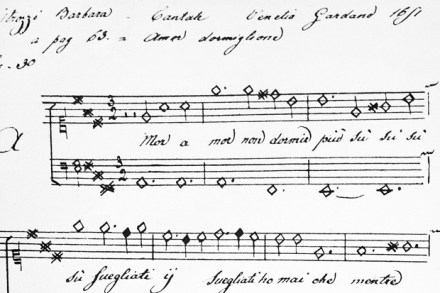
Hurrah for Radio 3 and its (long-overdue) efforts to give us music not just performed by women but composed, and conducted, by them too. Last year’s innovative day of programming for International Women’s Day introduced us to composers many of us had never heard of, such as Elisabeth Jacquet de la Guerre and Barbara Strozzi, Charlotte Bray and Anna Clyne. Yet to the surprise of even the most sceptical critics, the day was a huge success, proving that some of this music is really good. As Edwina Wolstencroft, producer last year and responsible for this year’s celebration of women in music, says, ‘We know that as many as 6,000 women composers have been identified in history.

A foolish proposal

From our UK edition

[audioplayer src="http://rss.acast.com/viewfrom22/insidethetorieseudogfight/media.mp3" title="Katie Glass and Isabel Hardman discuss Leap Year proposals" startat=1456] Listen [/audioplayer] I’m planning to propose to my boyfriend this leap year. I’m proposing that he earns another £10,000 and loses a stone. But marriage? Hell, no. I don’t know why, in the age of equality, society still endorses women going down on bended knee on one solitary day every four years. The internet blames it on St Bridget, who in the 5th century allegedly complained that some men took too damn long to propose. It was St Patrick, though, who came up with the wheeze of granting us special dispensation to propose every 29 February. But to propose on this day is hideously outdated.

Creaky voice

From our UK edition

My husband, not surprisingly, finds it extremely annoying. It, in this instance, is the use by women of creaky voice. If you don’t recognise the trend immediately imagine a youngish woman (not me) finishing a sentence with the phrase ‘really shiny leather’ and creaking, like a door, as she says the vowels. The trait is also known as vocal fry, as if it were produced by a chip-fryer. It is a feminine characteristic by a proportion of two to one. Reese Witherspoon was heard doing it to the phrase ‘truly heinous angora sweater’ in the film Legally Blonde as long ago as 2001. Recently I’ve heard Emma Barnett on Woman’s Hour doing it. Why do we women do it? If it’s a fashion, is it smart or downmarket?

Should David Cameron be deported for crimes against the Queen’s English?

From our UK edition

This week David Cameron has warned that migrant spouses who fail language tests could be made to leave the UK. While many have since accused the Prime Minister of stigmatising Muslim women over his call for immigrants to take language lessons, Mr S is more concerned that he is not au fait with the age-old adage that 'people who live in glass houses shouldn't throw stones'. Speaking on Today on Monday to announce his plans, Cameron's Eton education appeared to escape him entirely as he used a double negative to describe the problem: 'There are 38,000 Muslim women who don’t speak hardly any English at all' While he could perhaps be forgiven for a one-off error, Cameron struggled once again with the Queen's English during PMQs.

Why are MPs meddling with women’s toiletries?

From our UK edition

The Times has a fascinating splash today on the discrepancy in prices between products for women and men. It reports that high street stores are charging women up to twice as much as men for practically identical products, with the addition of pink to something seemingly boosting its price hugely. The most striking finding is that products as banal as razors can be twice as expensive for women as they are for men. MPs are already involved, with Maria Miller, chair of the women and equalities committee, threatening to summon retail bosses to parliament to explain the ‘unacceptable’ higher prices. But while the Times has performed a vital public service in sifting through packs of razors, girls’ and boys’ toys, and clothing, is this really a matter for MPs?

News from Labour: Labour says Labour is pro-women

From our UK edition

It's safe to say this week hasn't been the best for Labour. As well as a never-ending reshuffle saga, Corbyn was accused of 'low-level non-violent misogyny' over the lack of women in the top roles in his Shadow Cabinet by Labour MP Jess Phillips. So with the cabinet officially reshuffled, brains at Labour HQ decided it was time for a very special announcement: they had increased the number of women in their Shadow Cabinet by one! A press release entitled 'NEWS FROM LABOUR: Following the reshuffle women now occupy 17 out of the 31 shadow cabinet positions' was sent around which included the number of women in both the shadow cabinet and the ministerial teams.

Passion play | 31 December 2015

From our UK edition

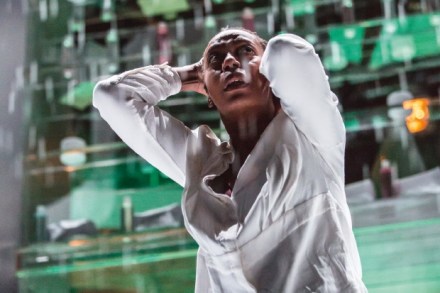
Illness forced Kim Cattrall to withdraw from Linda, the Royal Court’s new show, and Noma Dumezweni scooped up the debris at the last minute. And what debris. All thoughts of kittenish Cattrall evaporated as Dumezweni strode on to the stage, a luscious blend of high-performance hair and trouser-suited luminosity. Linda is in her prime, at 55, a marketing director at a beauty firm, but she faces problems at home. Her balding husband, in midlife crisis, has joined a rock band. Her older daughter, Alice, is in deep trauma after internet trolls mocked an explicit clip of her posted by a jealous ex. Linda told Alice to pull herself together but Alice has withdrawn from life and exists like a waspish nun concealing her nubile physique in a grey onesie.

Real life | 19 November 2015

From our UK edition

I got on a bus. Well, I wasn’t to know, was I? I just saw a bus stop by the Science Museum and thought, ‘I know, I’ll get on a bus.’ That’s how long it has been since I’ve ventured on to the London roads. Since driving became unfeasible due to congestion charging, I’ve been getting the Tube. I’ve thought about buses, but before credit card swiping the drivers would never let me on. I suppose I shouldn’t refuse to get an Oyster card because I don’t want the state to know where I am. It’s a foolish protest, but it’s my protest. However, the other day I was suddenly possessed by the urge to travel above ground.

Is ‘female’ still an insult?

From our UK edition

‘More deadly than the male,’ said my husband archly. He was knowingly quoting Kipling, though I don’t know why he should, since Kipling was not fashionable when he was young. His cue was a remark he overheard from an academic former colleague puzzled by the frequency of female in student essays, where woman might have been expected. This usage is said to be ‘now commonly avoided by good writers, except with contemptuous implication’, said the Oxford English Dictionary in 1895, when it got round to considering words beginning with F.

The films the Arab world doesn’t want you to see

From our UK edition

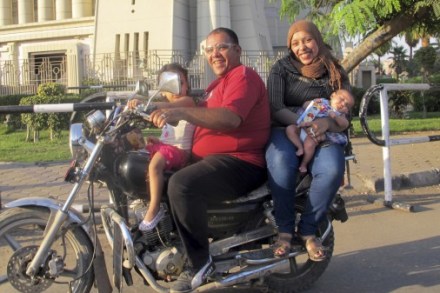
‘I want a woman to be President,’ declared one of the ambulance drivers interviewed by Sherief Elkatsha for his film Cairo Drive. I don’t think he was joking. He was fed up with the struggle to do his job in the chaos of the Egyptian capital’s streets clogged by 14 million vehicles. Elkatsha’s feature documentary took five years to make and takes us from 2009 through the Tahrir Square uprising up to the most recent elections purely through looking at the traffic, the lifeblood of the city. He set out to give us voices, not tell a political story, and this lies behind many of the films shown in last weekend’s BBC Arabic Film Festival, held in the radio theatre at Broadcasting House.

Michelle Payne’s Melbourne Cup win is proof that women jockeys can triumph – if they’re given the opportunity

From our UK edition

Much has been written in these pages – both by Robin Oakley and myself – about the lack of female jockeys in racing. But every single time the topic is raised, the same argument pops up: that women simply can't compete with men because they ‘aren’t strong enough’. But yesterday Michelle Payne proved them all wrong, by becoming the first ever woman to win the Melbourne Cup. What was her message to those who think female jockeys aren’t good enough? ‘Everyone else can get stuffed, because they think women aren’t strong enough, but we just beat the world.’ ‘It’s a very male-dominated sport and people think we are not strong enough and all of the rest of it ... you know what?

The end of feminism

From our UK edition

[audioplayer src="http://rss.acast.com/viewfrom22/thedeathoffeminism/media.mp3" title="Charlotte Proudman and Emily Hill debate whether feminism is dead" startat=35 fullwidth="yes"] Listen [/audioplayer]It would be easy to believe from the papers these days that women have never been more oppressed. From the columnist Caitlin Moran to the comedian Bridget Christie, a new creed is preached: that we are the victims, not the victors, of the sex war. Feminists claim we are objectified by the builder’s whistle, that a strange man attempting to flirt with us is tantamount to sexual assault. Suddenly, just as it seemed we women were about to have it all, a new wave of feminists has begun to portray us as feeble-minded — unable to withstand a bad date, let alone negotiate a pay rise.

Isis takes its British schoolgirl jihadis seriously. Why don’t we?

From our UK edition

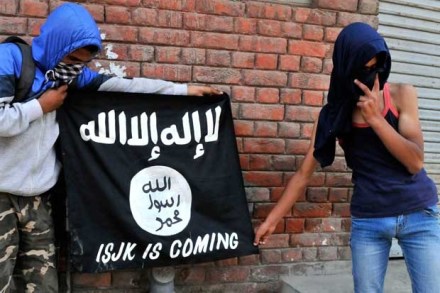
When the first schoolgirls ran away to Isis I had some sympathy for them — at least, I could see how they’d been suckered in. The girls were young, daft, desperate for a cause. They’d nosed about online, and found the Twitter feeds of jihadi wives who sell Syria as a teenage paradise: all fast food, deathless love, martyrdom and shopping. Because I felt for those first schoolgirls, I kept following their progress, checking for them online as they set up in Syria, married, and began to tweet themselves. But as I followed them on social media, my sympathy soon turned to disgust. ‘Happy #9/11’ wrote young Zahra Halane, one of the twins from Manchester who fled to Isis last year. ‘Happiest day of my life. Hopefully more to come. InSha Allah #Is.

Women are still scared to talk about IVF. Let’s change that

From our UK edition

As a result of a ruptured appendix, I am infertile. The appendicitis was followed by gangrene and peritonitis, which permanently blocked my fallopian tubes and left me having to do IVF for a chance to have my own child. I have never felt shame about my situation but I have felt isolation and grief, both of which would be very much more bear-able if people were prepared to talk openly about in-vitro fertilisation — to dispel the taboo that still surrounds it. IVF in its various forms is incredibly common these days. More than 2.5 million babies born in the past seven years began their life in a Petri dish.

Women are to blame for the big Glastonbury sell-out

From our UK edition

I suppose you can look at it two ways. Glastonbury, and rock festivals generally, were once patronised by music obsessives; largely male and probably some distance along the autistic spectrum, in many cases. People like me, in other words, when I was younger. Oh yes – and that’s another thing. Age. They used to be for the young. But the defining difference with today was that people once went for the music. I note that next year’s Glastonbury has sold out – without anybody knowing who is actually playing. I blame women. In general they have a different approach to music. They like the experience of being somewhere people are making a lot of noise, without worrying about the name of the bass guitarist. It’s probably a healthier way to enjoy music, I suppose.

Fancy that

From our UK edition

[audioplayer src="http://rss.acast.com/viewfrom22/boris-nickyandthetoryleadership/media.mp3" startat=1677] Listen [/audioplayer]Stand by your remotes, girls: the second series of Poldark is under way. Filming has started — yes, he’s out there somewhere, wearing those trousers, not wearing that shirt, swinging that scythe. You’ve only got to wait for someone to edit it all together and then Sunday nights can be special again. You’ll be able to gaze and sigh and imagine. Us blokes, meanwhile, will be considering an anomaly: why is that women can express lust without sounding seedy, but men can’t? I didn’t watch the first series. About three weeks in, when the Twitter drums had really started beating, I asked a female friend if it was that good.

Letters | 24 September 2015

From our UK edition

Have faith, Nick Sir: Rarely have I read an article as powerful as Nick Cohen’s (‘Why I left’, 19 September). As a lifelong Tory, all I feel qualified to say is that I think I understand. I am certain, however, that Messrs Corbyn, McDonnell et al will soon be consumed by the fire of their own hatred, and disappear in a puff of acrid smoke. Have faith in the British electorate, Nick. Jem Raison Shipston on Stour, Warwickshire No mention of Paula Sir: With regards to Simon Barnes’s article about drugs in sport (‘Our drugs cheat’, 19 September), I have not ‘outed’ Paula Radcliffe as anything, let alone as a drugs cheat.

Why I left

From our UK edition

[audioplayer src="http://rss.acast.com/viewfrom22/thedeathoftheleft/media.mp3" title="Nick Cohen and Fraser Nelson discuss the death of the left" startat=32] Listen [/audioplayer]‘Tory, Tory, Tory. You’re a Tory.’ The level of hatred directed by the Corbyn left at Labour people who have fought Tories all their lives is as menacing as it is ridiculous. If you are a woman, you face misogyny. Kate Godfrey, the centrist Labour candidate in Stafford, told the Times she had received death threats and pornographic hate mail after challenging her local left. If you are a man, you are condemned in language not heard since the fall of Marxist Leninism.