Withdrawal

The Biden admin was prepared to leave our Afghan allies behind

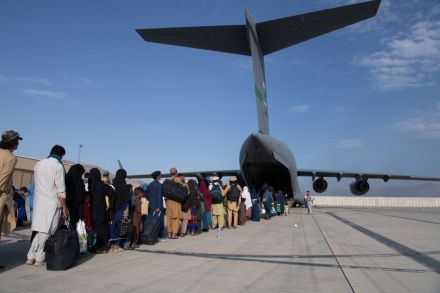
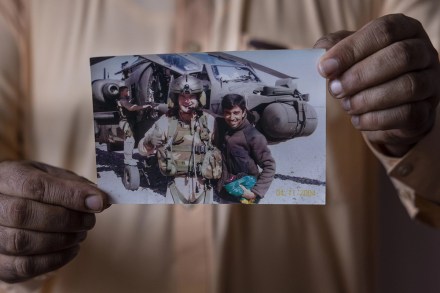
The administration’s utter failure to plan for the inevitable Afghanistan evacuation meant that it had barely enough resources to focus on getting (some) US citizens out of the country. If the government was the only actor calling the shots — normally standard procedure in war zones, to say the least — then the tens of thousands of Afghan allies who had risked their lives based on years-long US promises of loyalty would be on their own.  Colonel Seth Krummrich, a twenty-two-year Green Beret who served as the chief of staff for Special Operations Command Central (SOCCENT) during the withdrawal, told us that US special forces had had just enough capacity to rescue Americans stranded across the country, but evacuating SIV applicants was simply beyond their bandwidth.
afghan allies biden

Exclusive: How Covid protocol disrupted the Afghanistan withdrawal

The Biden administration’s Covid obsession interfered with the execution of the Afghanistan evacuation, just as it had with Special Immigrant Visa applicants’ evacuation planning. The administration’s Covid vaccination requirements deprived critical units of key personnel. The problem was especially acute for the Marines in 2/1. From April to October 2021, the battalion rotated in as the combat arms unit of the Special Purpose Marine Air-Ground Task Force — Crisis Response — Central Command (SPMAGTF-CR-CC). In classic military fashion, the task force has an eleven-word name but a straightforward mission: part of the battalion safeguards embassies in the region, and the other part serves as the region-wide “Oh, shit!” response team.

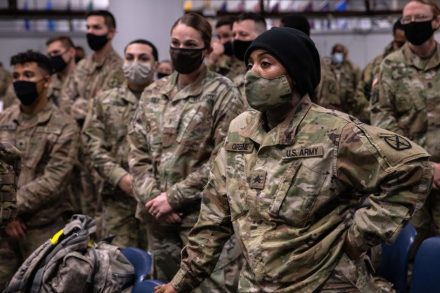
U.S. Army soldiers are briefed on COVID-19 quarantine procedures after returning home from a 9-month deployment to Afghanistan on December 10, 2020 (Photo by John Moore/Getty Images)

Afghan leaders say country is a terror haven

The Biden administration is using every tool at its disposal to paint a rosy picture of Afghanistan as a terrorist-free state as the two-year anniversary of its disastrous withdrawal approaches. But a coalition of Afghan generals, diplomats and civil servants is writing to Congress to explain that in reality, “today’s Afghanistan under the Taliban and their al-Qaeda allies, is again the greatest terrorist safe haven in the world.

afghan taliban

One year later, Biden is right to have left Afghanistan

A year ago today, the Taliban captured the northern Afghan city of Kunduz, dealing the US-supported Afghan government an embarrassing blow and setting in motion a blitz across the country that would eventually send Afghan President Ashraf Ghani and his closest aides into exile. A week later, Taliban fighters entered Kabul virtually unopposed. American forces would leave the country two weeks later, cutting the cord on a two-decade war that cost the US over $2 trillion and tens of thousands of casualties. "We succeeded in what we set out to do in Afghanistan over a decade ago,” President Biden said from the White House last August 31. "Then we stayed for another decade. It was time to end this war.” Much has changed since the troops left.

The myth of the good Afghan war

There’s a disgusting scene I can’t stop thinking about. It comes about midway through This Is What Winning Looks Like, a 2013 VICE documentary about America’s efforts in Afghanistan you can watch for free on YouTube. The film switches between the documentary footage itself and a sort of metafilm in which the filmmaker, Ben Anderson, discusses aspects of his work with Eddy Moretti of VICE, with Anderson’s footage from his time overseas frozen on a computer monitor behind them. The scene in question starts at 51:00 in the YouTube cut, was filmed around 2012, and involves a series of horrific murders. These were perpetrated not by the Taliban, but by America’s supposed allies: the country’s nascent police force.

afghanistan

Congress got mad about Afghanistan 20 years too late

Nearly a week after the last American C-17 flew out of Kabul, the Biden administration remains in the middle of a firestorm. Lawmakers are shouting about what they consider a botched withdrawal and evacuation process from Afghanistan. Calls for oversight and accountability on Capitol Hill go beyond President Biden’s traditional opponents. Multiple Senate committees are planning to conduct investigations into why officials weren’t prepared for worst-case scenarios, why the administration believed the Afghan army could hold out longer than it did, and why tens of thousands of Afghans who assisted the US military during the war were unable to be airlifted out of the country.

congress

The American epoch of failure 

For 20 years America built a Potemkin village and called it Afghanistan. Now this cardboard democracy has been trampled down in a matter of days by the Taliban. The speed and comprehensiveness of the rout cannot be explained by Joe Biden’s blunders. The war has drawn to a humiliating end not because of a weak president’s missteps in the final weeks but because the entire project was misconceived. Afghanistan was not ready for democracy and trillions of dollars in American aid could not even begin to change that fact. With US and allied forces providing security, the Afghan government did not even have to fulfill the most basic function of any state. The Afghan government lived off charity — foreign money, foreign arms.

war

How the US military got rich from Afghanistan

The departure of American troops from Afghanistan is being lamented (or hailed — see the Chinese press, passim) as a defeat. But this is a shortsighted attitude, at least from the point of view of the US military and the multitude of interested parties who feed at its trough. For them, the whole adventure has been a thumping success, as measured in the trillions of taxpayer dollars that have flowed through their budgets and profits over the two decades in which they successfully maintained the operation. The truth of this was forcefully brought home to me once by a friend of mine who, as a mid-level staffer, attended a conclave of senior generals discussing Donald Trump’s Afghan mini-surge back in 2018.

afghanistan military

Give peace a chance

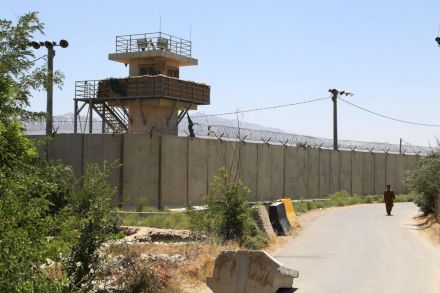
The American war in Afghanistan is over. In the predawn hours of July 2, US troops slunk away from Bagram Air Base, without even informing the local Afghan commander. It was a sorry end to a sad and futile war. For 20 years Bagram was the Gibraltar of American power in Afghanistan, the single largest Nato base in the country, housing 10,000 troops, thousands more support personnel and a Pizza Hut. Now Bagram, and the adjacent prison holding 5,000 Taliban fighters, are in the hands of the Afghan military, which soon showed its mettle by letting an army of looters plunder the base.