Wine

My recipe to cure a hangover

From our UK edition

Journalists exaggerate, often reaching for superlatives to chronicle mildly interesting events. Even so, there are times when it is necessary to become hyperbolic. 2019 was an extraordinary year. As Chou En-lai might have said, it is too early to assess its significance. We will be doing that for at least the next 20 years. Indeed, it may turn out to be one of the most important dates in our peacetime history. The new year has also started with a bang. It was cunning of the government to persuade Donald Trump to drive Dominic Cummings out of the headlines, but that will not exhaust 2020’s disruptive potential. Exhaustion leads one to the end of Christmas.

Politics of a certain vintage – and wine to match

From our UK edition

I wonder how they do things now at Tory headquarters. For the ’79 election, the preparations had been completed weeks in advance. Press conferences had been planned on the basis of a four-week campaign, press releases drafted and shadow ministers told when they would be needed in London to go on the platform. Then the starting gun was fired and von Moltke kicked in. No plan survives the initial contact with the enemy. Some of the material was used, but not in the order that had been expected. There was a lot of improvisation. But it did not seem to matter. Something similar happened in 1992. The first press conference was to be devoted to tax. Labour’s tax plans would be lambasted, allowing the Tories to move on to other themes.

They may take our wine, but they’ll never take our brie-dom

I was poking at a dessicated branzino at the Union League yesterday, half-listening to a schoolmate drone on about international alternatives, when he mentioned off-hand that the United States and France are gearing up for a trade war. Bordeaux could cost a bomb; brie could break the bank. I dare say, it shook me to my coeur. Thank God it’s not Sancerre season. They’re decorating the club for Christmas, so I worried I was delirious from the smell of brass polish. I excused myself and discreetly logged on to see that, alas, the dreadful news is true. It’s bad enough that they’re banning foie gras in New York, which is as civilized as burning churches. Now the feds are getting in on the act too.

wine brie

Wine that puts politics in its place

From our UK edition

In the era of vinyl, lost in one of Bruckner’s longueurs, it could be hard to tell what was stuck, the record or the composer. Sir Jim Gastropodi would make regular appearances in the Peter Simple column, conducting the Soup Hales Philharmonic Orchestra in a performance of Bruckner’s interminable symphony. Despite Boris Johnson’s attempts to enliven it, this is the interminable election campaign. In effect, it has been going on since 2016, but the end may be in sight. Barring a 2017-scale upset (which is unlikely — though Boris has faults, he is not Theresa May mark two), he will return to No. 10 with a majority. He will also enjoy some fiscal laxity, and he may turn out to be a lucky prime minister.

California drinking: forgive them their granola

This article is in The Spectator’s November 2019 US edition. Subscribe here. Cyril Connolly famously opined that every young man of spirit wants to do two things: start a magazine and start a chicken farm. That’s about half right, I think. It would have been more accurate if he had included a true, if often unspoken, heart’s desire: to be a wine critic. Do you know anyone — anyone you still speak to, I mean — who hasn’t wanted to be one? Every Sunday, my family and I participate in an august ceremony that extols a beneficent God through whose ministrations we accept the gift of vinum...fructum vitis et operis manuum hominum: ‘wine… fruit of the vine and the work of human hands’.

pax mahle california

A vintage tale of Thatcher, Reagan and some truly great wines

From our UK edition

Poor Old Girl. The final act may not have been sanglante, but as the third volume of Charles Moore’s life of Margaret Thatcher makes clear, it was sad. It may seem unwise to expend great praise on a contemporary book before time has had a chance to lend perspective: not in this case. Time’s verdict can be anticipated with confidence. Boswell apart — sui generis — this might be the finest biography in the language. Alas, the final volume is also a story of decline. It did not help that the Lady was sacked with as little ceremony as a cleaning woman guilty of plundering the gin bottle. But a more dignified exit would still have hurt.

Why do Americans and Brits write about alcohol so differently?

This article is in The Spectator’s inaugural US edition. Subscribe here to get yours. ‘No nation is drunken where wine is cheap,’ Thomas Jefferson famously said, laying the blame for insobriety firmly on ‘ardent spirits’. The third president was a notorious wine-fancier with a particularly soft spot for Sauternes, yet it is true that countries with a long history of winemaking tend towards more easeful drinking. Despite the ghastly interregnum of Prohibition, America has become a serious wine-producing nation — and yet ardent spirits seem to have left far stronger a mark, on the national mindset and on the nation’s prose.

liquor american alcohol

When did ‘big girl’s blouse’ become an insult?

From our UK edition

Fotherington-Thomas was introduced by Nigel Molesworth, the narrator of Down with Skool!, in 1953: ‘As you see he is skipping like a girlie he is uterly wet and a sissy.’ Geoffrey Willans featured the school sissy again in How to be Topp (also illustrated by Ronald Searle, who had spent time in a Japanese prison camp): ‘It is only fotherington-tomas you kno he sa Hullo clouds hullo sky he is a girlie and love the scents and sounds of nature.’ Last week, Sky News revealed what Boris Johnson said about David Cameron in private cabinet papers, after it had obtained an ‘unredacted’ copy of documents disclosed to court. The Prime Minister referred to him as ‘girlie swot Cameron’. This is nothing new.

Claret, dogs and nothing to grouse about

From our UK edition

What do you get if you cross a dyslexic, an insomniac and an agnostic? Someone who wakes up at 4 a.m. and says: ‘Is there a dog?’ There was a lot of dog talk this weekend, and about the tributes they bring to their owners in the shooting field. A South African who had just enjoyed his first days at the grouse, walked up and driven, was incoherent with joy, especially as he had made a respectable contribution to the bag. The Afrikaners have always been an embattled race. God usually directs them to the windy side of the hill. When they do find some refuge to enjoy a settled life, perhaps planting a few vines, they often become lyrical about hemel en aarde: heaven on earth.

Summer in the city

From our UK edition

Foolish me. I could have been writing this by the shore of Lake Trasimene, with only one problem: how to transmit it to London. Last time I stayed in the delightful house there, the technology was still in the era of Hannibal’s victory. There was no wifi, only spasmodic mobile-phone reception, and the nearest English newspapers were 50 miles away. ‘Where ignorance is bliss…’ Instead, I stayed in London to work out what was happening. As I say, folly. After two fruitless weeks, I have not even identified the questions, let alone the answers. There have been compensations: one great Test match, and very likely more to follow. Steve Smith — the Australians are fortunate that his extraordinary stance was not coached out of him.

A wine of Boris’s vintage

From our UK edition

My host twinkled sardonically. ‘We’re bound to be discussing Boris. So what’s the right wine?’ I suggested a bunker-busting Australian Shiraz, preceded by an alluring, minxy champagne: cuvée Madame Claude. ‘No, we need something intellectual, to bring perspective.’ ‘That sounds like Graves, perhaps a Pessac-Leognan.’ ‘Got it in one. Came across a couple of bottles the other day. La Mission Haut-Brion ’64 — the year Boris was born.’ In personality, the bottles were everything that a mature claret ought to be, with no resemblance to Boris.

Letters | 25 July 2019

From our UK edition

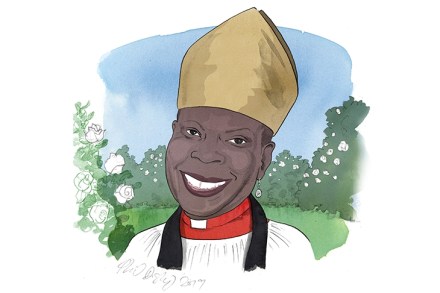
Rose is the right choice Sir: Every Wednesday for the past nine years, it has been my privilege to attend the lunchtime Eucharist services in the Parliamentary Chapel, conducted by the Speaker’s Chaplain Rose Hudson-Wilkin. These routine acts of worship are not public, but are attended by parliamentary staff, MPs and peers. Central to them are Rose’s homilies and prayers, which are spiritual life-support to those of us who serve and navigate our increasingly fraught politics.

Norman’s wisdom

From our UK edition

We were in a club, discussing Norman Stone, recently departed, over a meal that he would have enjoyed. Norman divided opinions. This manifested itself in his obituaries. Professor Sir Richard Evans summed up for the prosecution. He cited Norman’s failure to build on his early scholarly promise and his chronic neglect of academic duties. He concluded by quoting an old adversary of Norman’s, who described him as ‘amoral’. This is a difficult verdict to refute. Yet it is only part of the picture. He won the enduring affection of most of his best pupils, despite — or because of — his unorthodox methods. In Norman’s Cambridge days, an earnest young man turned up for his first supervision. No Stone. Next week, ditto.

A perfect match

From our UK edition

Cricket is the most gracious of games. County grounds in the lee of cathedrals, village greens in the perfect setting of trees and a pub, and not far from the parish church: even if the match will not be over in time for evensong, there is more than a hint of Dearly Beloved, a phrase which captures so much of English civilisation. Cricket is an intellectual game. It baffles Americans. Try explaining that a Test can last for five days and then end in a draw — which may well be the right outcome, morally and aesthetically. Think of Gavaskar’s immortal match in 1979. Any other ending would have been much less satisfying. Cricket engenders humour. At his best, Cardus is up there with Wodehouse, MacDonald Fraser (in the McAuslan books) and even Waugh.

Debunking Greek myths

From our UK edition

A book, a bottle, a bower set in an ancient garden: you think that if you walked round the right corner, there would be England, putting manure on the roses. Kipling reminds us that gardening is hard work and that beauty depends on bent backs. True enough, but they also serve who only sit and admire. There was a further contrast between hard work and sedentary admiration, for the book was the first volume of Kenneth Rose’s journals: the easiest of reads, yet the product of hard labour. Kenneth was an exemplar of his craft. There has never been a more meticulous journalist. If only the same were true of those who edited the volume.

Dear Mary | 9 May 2019

From our UK edition

Q. I was invited to birthday drinks in London. On my way there the name of someone I haven’t heard from for months flashed up on my mobile. My instinct was not to answer — I’d heard the host of the party had gone off this woman and thought it best not to answer in case the woman asked what I was doing that night. I didn’t want to hurt her feelings if she’d been excluded. Nor did I want to lie. However, on arrival at the party my host told me that all was now well between him and her and she’d been invited but couldn’t come. When I rang her the next day, she said she’d been calling to say she was sorry she wouldn’t be seeing me that night. Mary, how could I have handled this better? — Name and address withheld A.

Spare us the new

From our UK edition

There is no new thing under the sun. Over the weekend, I read a book which was alarmingly relevant to our present discontents: The Neophiliacs, by Christopher Booker, written at the end of the 1960s. That decade began well. The country had recovered from the austerities of wartime. It seemed to be an era of social stability. Most couples who married expected to stay married and bring up their children in stable families. Living standards were rising. National service was about to end. The public schools, whose oppressive regimes had created many left-wing dissidents, were liberalising. Politics was also stable. Less than three years after the Suez debacle, Harold Macmillan had won a majority of 100.

Given up hope? Join the club

From our UK edition

During the Middle Ages, some of the monastic halls which evolved into Oxbridge colleges allowed their younger inmates to indulge in jocundus honestus after the evening meal. There is nothing monastic about the clubs around St James’s, least of all at their dining tables. But there is still plenty of jocund. Honestus? That is another matter. The other evening, in a gathering well-equipped with bottles and glasses, someone remarked that we were still in the last lap of Lent and then asked an improbable and unexpected question: ‘So what have you given up, Anderson?’ I was pleased with my reply: ‘Hope.

Three Tories in search of solace

From our UK edition

Three tribal Tories had gathered for a convivial glass, and also a consolatory one. One quoted Huskisson’s verdict after Goderich’s brief and worthless premiership. ‘Never surely was there a man at the head of affairs so weak, undecided and utterly helpless.’ Well, the female sex has now caught up. I said that at least she had refuted Hopkins. ‘No worst, there is none.’ As long as Theresa May is in charge, there could always be a worst. The terrible premier has out-gloomed the Terrible Sonnets. We were hiding away in a club, hoping not to meet any foreigners. Not that any of us is in the least xenophobic. One chap has a house in France; another regularly takes a place in Italy. Our affection for abroad goes well beyond its food and its bottles.

Brexit and cru bourgeois

From our UK edition

Acouple of lawyers were disagreeing about a matter which could become increasingly relevant. Could a sitting president pardon himself? But there was a further aspect to this question. A friend of mine who has known Mr Trump for 20 years and who likes him detects a weakening in his mental powers. One of our number was a distinguished neurologist. Pressed to overcome his intellectual scrupulousness about television diagnosis, he thought it not impossible. So are we dealing with dementia, or is the President of the United States just demented? Might it be early stage Alzheimer’s, or merely chronic Trump-heimer’s?