Wine

Why Grüner is my go-to

The first person ever to tell me something true about wine was my first real boss, a generous and wise woman who toted me along to the Frankfurt Book Fair with her for several years in my early twenties. At the time I drank mostly sweet red blends that came in denominations of ‘box’ or ‘jug’. When she sensed (or perhaps shared) my fear of humiliating us both when I was asked for my wine order at a long, formal luncheon in a rather famous hotel, she leaned across the many forks of her place setting and whispered to me, ‘Get the Grüner.’ She elaborated that the American white wines I’d had were probably sweet or buttery, but German whites, like dry Rieslings and Grüner Veltliner, were mineral and fresh and lovely. They paired well with all foods.

grüner

The Judgment of Paris

What’s the most famous story about wine in the last 50 years? My candidate is the so-called ‘Judgment of Paris’ of May 1976. It was actually two judgments, one of American and French Chardonnays (the subject of the movie Bottle Shock), the other, more consequential, of American and French Cabernets (well, French Bordeaux, which are predominantly Cabernet). The competition was organized by Steven Spurrier, now one of the world’s most renowned wine connoisseurs, then a 35-year-old British bundle of energy who in 1970 had moved from London to Paris and acquired a small wine shop off the Rue Royale.

paris

Memories of Stellenbosch and South Africa’s finest wines

From our UK edition

Lockdown provides time to think, and to reminisce. A South African friend, trapped in Amsterdam, phoned the other day. Had I written about the David and Nadia wines from Swartland we had tasted at the end of last year? Not yet: I was awaiting further particulars, which may have been remiss of me. Justerini and Brooks is a major stockist and they are some of the best wines coming out of South Africa, which is saying a lot. Wines have been produced in South Africa since the Huguenots settled in vine-friendly lands not far from Cape Town. Stellenbosch, Paarl and the aptly named Franschhoek are well known. Swartland is catching up. The names take me back to so many evenings in the 1980s, drinking wine in Stellenbosch and discussing the future.

Abstinence makes the heart grow fonder

From our UK edition

The wine has been flowing in the Young household this week. The reason I’ve been celebrating is because I managed to get through January without a drink. Like many people, I try to do this every year, but it felt like a particular achievement this year because of the lockdown Boris announced on 4 January. Almost everyone I know used that as an excuse to fall off the wagon. ‘There’s no way I can get through another lockdown without a drink’ was the general refrain. One thing that helped was joining the Wine Society and loading up on bottles throughout ‘dry’ January. It had never occurred to me to join until my neighbour Mark Beaumont, who’s been a member for 30 years, told me you had to be proposed by an existing member.

My palate and the plague

From our UK edition

Later this week, on Spectator.co.uk, I will resolve a mystery that has featured in a lot of Zoom traffic around St James’s — plus a lesser--known puzzle. The first: why has Anderson been absent from The Spectator? The second: why has he been more or less off the grog for a month? The two are related. I have had the plague, and though I am recovering, my superb doctor thinks I should stay dry for a little longer. I have no wish to become a virus bore. Those who would like more information can read Coffee House; those who are already yawning with tedium will know what to avoid. But just before my little life may have been almost rounded by a sleep, there was an outstanding tasting: suitable for a condemned man’s last drop.

The Netflix sommelier: what to drink while you watch

From our UK edition

Are we there yet? No, not a child on a long drive (remember those?) but me every day of last week as I struggled to stay strong towards the closing stages of Dry January. Yes - finally we are there: the sunlit uplands of 1 February. Having spent the best part of a month dry, it’s fair to say I have done a good amount of reflection on the subject of alcohol and abstention thereof. No, not about how awful I’ve realised drinking is and how I now plan to stop drinking forever - none of that nonsense. I was thinking more about how it’s made me realise once again quite how much I love wine.

How Argentina conquered Malbec

From our UK edition

When Napoleon III proclaimed himself Emperor of France in 1852, he unwittingly kickstarted quality wine production in Chile and Argentina. A mass exodus of republicans ensued, one of whom happened to be a skilled agronomist from Tours named Michel Aimé Pouget. Pouget carried with him a cache of French grape cuttings that were to change the course of wine history and formed the basis for Argentina’s wine industry today. Because of the phylloxera plague, French wine production fell by 75 per cent between 1875 and 1889. Today the vines of Europe are still grafted on to phylloxera-resistant American root stock. In Argentina and Chile, which have no phylloxera, old ungrafted European vines are flourishing.

Lockdown means it’s time to drink your most prized bottles of wine

From our UK edition

Losing your sense of smell due to Covid is no joke when you make a living in food and wine. In April last year my taste buds shut down for three weeks. I began staring at my wine cellar like a recovering addict for whom the drugs no longer worked. Sure, I’d read posts from other sufferers who were concerned about whether or not their olfactory organs would ever get back to normal, but I’m fatalistic, and besides, my chances were good. But if my smell didn’t return, I’d rue having not lived in the moment more often. Pandemics, floods, wildfires, cyber-attacks, artificial intelligence, terrorism: we’re living in a boom time for disaster, so if you’re not opening your most prized bottles of wine now, when exactly do you plan on doing so?

Nietzsche and Wagner

Before he was a celebrated travel writer, Patrick Leigh Fermor (who died in 2011 at 96) was a celebrated special operations soldier. In February 1944 he commanded a raid to kidnap General Heinrich Kreipe, the newly installed German commander of Crete, and take him to Egypt. Leigh Fermor, his fellow officer William Stanley Moss and three members of the Cretan resistance commandeered the general in his car and made a daring trek across the island pursued by the German occupiers. They spent one chilly night on the slopes of Mount Ida.

wagner

The beauty and tragedy of Lebanon

From our UK edition

I was thinking about tragedy. Could one use the term ‘chronically tragic’? My first instinct is against. Tragedy is the soul-ravaging final scene of Othello or King Lear, when hope is overpowered by implacable despair. In Kent’s words: ‘Break, heart; I prithee, break.’ Flesh and blood could not withstand such emotional intensity in chronic form. Then again, how else can we describe the modern history of Lebanon? I have just heard of the passing of a splendid old girl. Yvonne Sursock was caught up in the terrible explosion which shattered Beirut at the start of August. Being a tough old bird, she lived for more than two weeks. Being 98, she succumbed. Yvonne could claim kinship with most of the Christian great and good along the Mediterranean littoral.

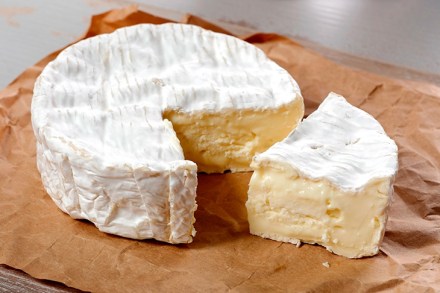
Why you can’t trust supermarket cheese

From our UK edition

We were celebrating the end of lockdown by talking about war and deer stalking — over a business lunch, naturally. My friend David Mathew, from a distinguished legal, military and political family, told a story about Churchill’s arrival in Athens at Christmas in 1944. David’s father, Robert, then a young officer, was sent to meet the great man, who was grumpy and preoccupied, with good reason. He had come to save Greece from communism, with little guarantee of help from the Americans, let alone left-wing opinion in Britain. The sucking-up to ‘Uncle Joe’ Stalin may have been necessary to win the war. It would not be helpful for winning the peace.

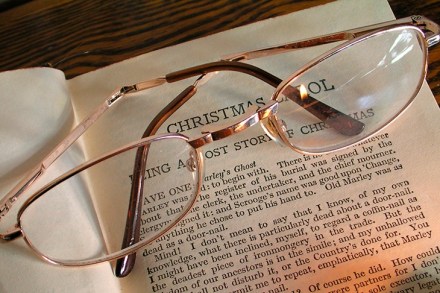
Lockdown might bring the Dickensian Christmas back into fashion

From our UK edition

I feel like a prisoner, making daily marks on the cell wall to chart the approach of freedom. But will it be freedom, or will we be on parole, obliged to wear a tag and subject to re-incarceration at authority’s whim? Such thoughts do not encourage equanimity. On that subject, I remember a delightfully splenetic political column by the late — alas — Alan Watkins, published a generation ago. As Christmas approaches, even the most acerbic hack feels obliged to relent and sound a little more like Fezziwig, a little less like Scrooge. Perhaps because he was never given to excessive astringency, Alan did not relent. He was complaining about secretaries, who were then numerous in newspaper offices.

Wines of turkey

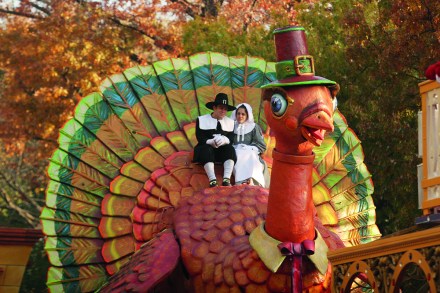
Thanksgiving is probably my favorite holiday, and not only because it offers an excuse to dine lavishly among friends. It also provides an occasion to live up to its name and give ourselves the pleasure of correcting Aristotle. Man, the old Greek said in a distracted moment, is the rational animal, ζῶον λόγον ἔχον. Clearly, what he meant to say is that man is the ungrateful animal, ζῶον αχαριστίαν ἔχον. Since Thanksgiving is all about enumerating one’s blessings, it is one of those rare opportunities in which everyone’s favorite pastime, virtue-signaling, can be indulged while thoroughly enjoying oneself.

turkey thanksgiving

Drinking to the glories of Burns and follies of Boris

From our UK edition

At least in London, midwinter spring has not been entirely vanquished, and the trees are still a couple of strong winds away from losing their autumn glory. This will give the government some undeserved help. People can sit outside, and the view from windows is not too depressing. Before long, though, those indoors are likely be cursing the PM and his close associates: ‘sic a parcel of rogues in a nation’. Burns and the onset of seasonal bleakness makes one think of the dark. In earlier times in Scotland, Hallowe’en was a characteristic festivity: an attempt to embrace the oncoming winter. Its theme was ghouls and witchcraft. Children, dressed as witches or warlocks, would go from house to house making sepulchral noises.

How to spot good French wine

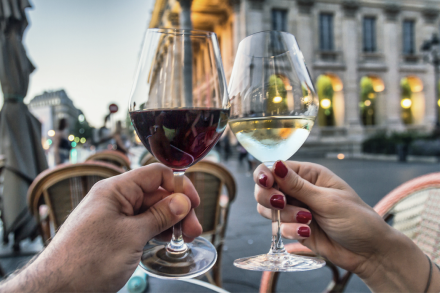
‘If you swill it around, you look at the legs of the wine — we’re in the Naughty Room, so I’m sorry to talk about legs again!’ exclaims Prince Robert of Luxembourg, alluding to our saucy surroundings. We are tucked away in a bijou risqué room at 67 Pall Mall, a London private members’ club for wine lovers. The Naughty Corner, as it’s known, is adorned with erotic paintings, and a miniature sculpture of a naked man has been turned away from us. While members must be approved, there was little chance of Prince Robert being blackballed. His family owns the French wine estate Chateau Haut-Brion, the oldest of the great growths of Bordeaux.

good wine

A toast to Tim Beardson

From our UK edition

I am in an Eliot mood, not a Keatsian one. ‘Season of mists and mellow fruitfulness’ is a surprisingly… mellow poem. There must have been a brief ceasefire between poor Keats and the advancing forces of premature mortality. But I have just heard of the appallingly premature death — by today’s standards — of a fascinating fellow. So it is more a matter of ‘Under the brown fog of a winter dawn… I had not thought death had undone so many’. At 69, Tim Beardson died of the ultimate effect of a tick bite, which compounds the sadness. At the beginning of the 1970s, he read history at the House.

Perry Worsthorne: a man incapable of dullness

From our UK edition

I had known Perry Worsthorne for several years before I went to work for him in 1986 (horrifying how time passes). Then again, everybody knew Perry. He was one of the most colourful figures in London. Elegant, silver-haired, always amusing, regularly original and frequently provocative, he was a triumphant refutation of the idea that conservatism is a dull creed, based on worship of the Gods of the Copybook Headings. Perry was incapable of dullness. He also felt ambivalent about Margaret Thatcher. At moments, he would acknowledge that she had saved the country from decline. But on one famous occasion, he accused her of ‘bourgeois triumphalism’.

The finest Rioja in all of Spain

From our UK edition

It had been a long and no doubt fractious sea voyage. The crew would have signed up for a variety of reasons: pay, adventure, escape from domestic ties — in some cases, no doubt, escape from the authorities. After ten weeks at sea, some of them would have doubted their judgment, if not indeed their very sanity. Then came the lookout’s cry: the Spanish for ‘Land ho’. Christopher Columbus had set forth to find a passage to China. Instead, he had discovered America, a new world, large parts of which would soon be known as New Spain. The 12th of October 1492, when that forgotten sailor announced that the world had moved on its axis, was one of the most important days in history.

Is it time to say adieu to avocado toast?

From our UK edition

Oh the avo. The fruit that launched a thousand tweets. This millennial Holy Grail has done more to divide generations than anything save perhaps Brexit. It has been three years since Australian property developer Tim Gurner became a hate figure for suggesting in a TV interview that it was not economic difficulty that was keeping millennials from getting on the housing ladder but a tendency to spend $19 on smashed avos for brunch. Millennials vented their anger in the only way they know how—by twitter tirade. Perhaps it would have been more fitting to pelt Tim with over-ripe avos for his audacity. To eat avocado on toast in public is now as bold and unequivocal a statement one can make on their position in the contemporary culture wars.

A perfect luncheon wine

From our UK edition

I suspect, though this may be romanticising, that if a French lorry driver with hitherto suppressed culinary tastes won France’s national lottery, and booked a table at the local much-rosetted restaurant, he would know what to expect. A great chain of culinary being would connect him to the heights of gourmandisme. In the UK, we lack a gastronomic tradition. As a result, when it comes to assessing food, inspissated snobbery often takes the place of inspired gluttony. There are superb chefs: Gordon Ramsay, Marco Pierre White, the Roux family. But there are also instances of pretentiousness: no names, no pack drill. These characters forget that the glory of a good cook is to make ingredients sing, however humble in origin.