Wine

Seven summer terraces for al fresco drinking

From our UK edition

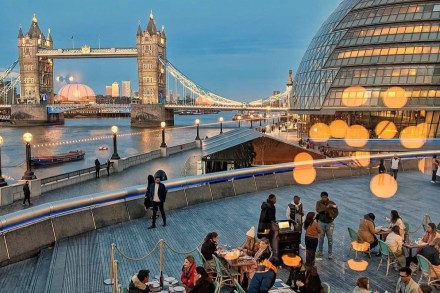
While most of us won’t be making it abroad to sip Apérols and swan around piazzas at dusk, London offers the next best thing. From rooftop feasts in Mayfair to fine dining among a wildflower meadow, these are the best summer terraces for al fresco drinking and dining. Kutir, Mayfair The rooftop of this Mayfair townhouse-turned-restaurant has been covered with a lush lawn and borders of topiary to create the feeling of a private garden, suspended among the chimneys of the surrounding mansions. Cosy candle lit tables sit among the shrubbery surrounding a glass skylight with views into the restaurant below. Ring the posh doorbell outside to enter. Kutir specialises in contemporary Indian cuisine, drawing inspiration from the country’s wildlife.

The true cost of my week in Wales

From our UK edition

Rather miraculously, my daughter managed to leave the country last week to go on holiday with a group of friends. To celebrate finishing their A-levels, they had bought tickets to a music festival in Croatia, but it was cancelled at the last minute due to a surge in Covid cases. Having been denied every other rite of passage in the past year, they decided to press ahead with the trip anyway, which left me having to sort out the PCR testing logistics. In order to be allowed into Croatia, she had to produce evidence of a negative test, then, once there, she had to test negative again in order to be allowed back into the UK, as well as produce evidence that she’d booked a third PCR test for two days after her return.

The beauty of wine from the Rhine

From our UK edition

In an apparently benign — almost prelapsarian — setting, the Rhine is an epitome of the human condition. Scenery is rarely more beautiful or more glorious. Yet it can be equally hazardous. This is a river that arouses mysticism, and its temptations. By swimming in those waters, men seek to affirm their unity with the cosmos and their triumph over the natural world. But every year, a fair few swimmers end up in the mortuary. Their quest for mastery over nature ends with ashes to ashes, dust to dust. Almost as soon as men first emerged from caves, they began to beautify their dwellings near the Rhine, as well as exploiting its fertility.

A taste of heresy

The weight of history — a seemingly infinite vista of incident — hangs heavy in the Languedoc in the South of France. The region (also called Occitania) is the place where people said ‘oc’ rather than ‘oui’ for ‘yes’ — langue d’oc instead of langue d’oïl. Gauls, Romans, Visigoths, Franks, Moors, Cathars: one by one they came, they pillaged or prayed, slaughtered or were slaughtered. A plaque in the Carcassonne cathedral reminds us that only yesterday St Dominic (1170-1221) preached there during Lent. A lot of nasty things have happened in Languedoc over the centuries. Perhaps that is one reason the people are so cheerful now. The area is also the biggest wine-producing region in France, which also contributes to the quota of cheerfulness.

languedoc

The wine that made me change my mind about rosé

From our UK edition

Some time ago, I wrote that rosé should only be drunk south of Lyon, but one could start on the first bottle around 10.30 while brushing away the last shards of breakfast croissant. Although I received appreciative comments, I am no longer sure that I agree with myself. I recently discovered Domaine de Triennes, which is a serious wine with length and structure — far better than the average supermarket rosé which would work perfectly well as an ice lolly. Domaine de Triennes ought to be good. It was founded by Aubert de Villaine of Romanée-Conti, an unsurpassable pedigree, and Jacques Seysses who had been with Dujac, a superb Burgundian producer. The Var has always produced lots of wine, almost all quaffable, almost none worthy of serious attention.

A new take on New Zealand wine

From our UK edition

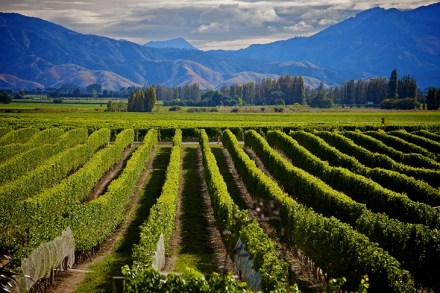
‘The doors clap to, the pane is bright with showers.’ With ‘summer’ determined to do its worst, there is one obvious question. How were the English able to invent cricket and tennis? Apropos tennis, there is another obvious question. How long will Wimbledon remain mired in sexism? It has now been established beyond peradventure that women are at least as good as men at everything. Anyone who claims that those who were born female — an increasingly irrelevant criterion — are not as strong as men is likely to encounter the wrath of the criminal law. Quite right too: supposed free speech must not be allowed to trump common sense.

The green, green wines of Portugal

If I am going to talk about summer wines, I am going to have to introduce you to Gaius Plinius Secundus, known to us as Pliny the Elder. Pliny was a busy chap. Army commander and admiral in the Roman navy. Gourmand. Pal of the emperor Vespasian. Pliny did not have writer’s block. He published the first 10 books of his sprawling Historia Naturalis in 77 AD. Despite its title, the book is about a lot more than natural history. Really, it is a sort of proto-encyclopedia. Pliny hadn’t finished revising the rest when he went to investigate the strange things that were happening down at Mount Vesuvius in 79. He died in the conflagration. The chap we know as Pliny the Younger — the elder Pliny’s nephew and heir — was with him.

vinho verde green

British vineyards that make you feel like you’re abroad

From our UK edition

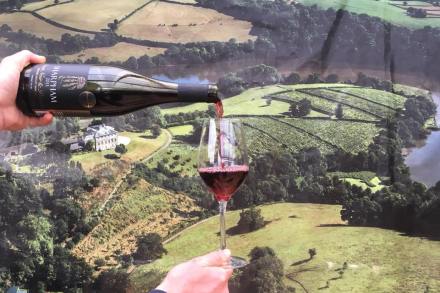
As a sommelier who has worked for Copenhagen’s Noma and Per Se in New York and set up the two Michelin-starred restaurant Kitchen Table in 2012, I'm more than a little discerning when it comes to wine. Britain may be a relative newcomer  to wine making but its offerings are gaining more attention from oenophiles as time goes on, especially in the field of sparkling wine. And the good news is you can now stay at many of Britain's vineyards and try out the wines for yourself. Here are five to try: The Bathing House at Sharpham Wine Estate A romantic self-catering cottage straight out of the scenery in movies is surrounded by rows of vines that lead down to the waters of the River Dart in Devon.

How to drink in the delights of France (without leaving the country)

From our UK edition

It is hard to decide which is more depressing, the extension of the lockdown or the public support for this latest instance of ministerial panic. The Royal Navy may still march to ‘Heart of Oak’. But among great swathes of the civilian population, there is precious little sign of stout-heartedness. As well as virus variants, there is another infection, from variants of Stockholm syndrome. Many Britons appear to be enjoying captivity: mask-wearing, restrictions, bossing people about. The trouble is that there is no vaccine to hold all that at bay. Boris promises relief after four weeks. He means it; he always does with his promises. But in BoJo speak, four weeks is a long time. Four days is a long time. We shall see.

The wine that links Thomas Jefferson, Charles II and Samuel Pepys

From our UK edition

It seemed a suitable topic for a bank holiday. We were discussing Haut-Brion, a bank-breaking wine. There is a question that is often asked. Which is the greatest claret, Haut-Brion, Lafite or Latour? I find that easy to answer: the one I have drunk most recently — not that I have tasted nearly enough of any of them. (I have heard at least one expert claim that post-war, there has been no greater claret than Haut-Brion ’59.) Haut-Brion is a marvellous wine. Thomas Jefferson may have been the first to explain why. There is a good deal of gravel in the terroir, which seems to give the wine an intellectual depth: appropriate for Jefferson. Yet the initial impact on the nose is hardly an intellectual one.

A taste inquisition on Stink Street

From our UK edition

Walking up through the Stink Street medieval arch with a bag of shopping, I spotted Michael between the oleander branches seated in front of his ancient cottage having a drink. Stink Street is so called because it is just without the old town walls and in medieval times pigs were kept there. At this time of year it’s not easy to walk up Stink Street after midday without one or other of the cottagers inviting you to join them for a glass. And it was just after six and I deserved one. Stink Street runs uphill steeply and has only recently been dressed with its first layer of tarmac. Michael’s little front terrace nestles close by to the road.

A novel approach to New Zealand’s wine

From our UK edition

The last Saturday of lockdown — inshallah — and we were discussing literature. Specifically, when does a detective story become a novel? T.S. Eliot edited the World’s Classics edition of The Moonstone and gave a copy to A.E. Housman, with the inscription: ‘The best detective story in English or any other language.’ Surely Eliot was right. The Moonstone and The Woman in White are superb detective fiction. But they are not novels. Poor Wilkie Collins did try to write novels. Nobody read them. Nobody was wise. We more or less agreed. Ian Rankin, Reginald Hill, P.D. James, Dorothy Sayers, James Lee Burke: all regularly cross the frontier into novelism. Perhaps we should adopt the French term: roman policier.

My ongoing war with the ‘vinfluencers’

‘Slut-shaming’, ‘sexist’, ‘garbage writing’, ‘offensive towards women’, ‘aggressively distasteful’, ‘nipple-ist’ ‘old bitch’ that I am, I stand by the article I wrote in the April issue of The Spectator about influencers and the social-media celebrities who use their looks to sell wine — despite the outrage of those who are so clearly and irreparably under the vinfluence already. My take on the new advertising powerbase that is ‘influencing’, and the media-doping tactics that are often used to gain that influence, remains the same.

Vinfluencers

Pahlmeyer’s proprietary perfection

When Jayson Pahlmeyer left the practice of law in the mid-1980s in order to devote himself to winemaking, he said, ‘All I wanted to do was to create my own “California Mouton” — a rich, powerful Napa Valley Bordeaux blend, a wine that would drop wine lovers to their knees.”’ He did it in 1986, the first vintage of his Proprietary Red, a luscious Cabernet blend that won plaudits throughout the world of wine. Pahlmeyer’s Merlot and Chardonnay have been similarly decorated, and I may return to them in a future column. For now, I want to focus on the Proprietary Red.

Pahlmeyer

A tale of two tapas

In 146 BC, Scipio Aemilianus laid siege to and destroyed the city of Carthage, thus bringing the third Punic War to an end. Scipio made a gift of what remained of the Carthaginian library to the kings of Numidia, Rome’s old ally against Carthage. At the direction of the Senate, however, he held back one book, the agricultural treatise of Mago, which he sent back to Rome. It was duly translated into Latin, but all that remains are fragments, which is too bad, for Mago apparently had a lot to say about many exigent matters, including the cultivation of grapes and making of wine. It appears that it was the Phoenician precursors of the Carthaginians who, around 1500 bc, first planted grapes in the Iberian peninsula.

Tapas bar

Thirst trap: how ‘vinfluencers’ took over the wine world

The first time I saw the Instagram feed of Georgie Fenn I thought she was a model stooge. Utterly gorgeous, Fenn regularly poses in carefully picked diaphanous clothing, ‘nipple poke’ a specialty. Paid brand collaborations offer excellent returns. Her artfully shot images tagged with maxims as trite as ‘It doesn’t matter what you’re drinking as long as you’re enjoying it’ are a marketeer’s wet dream. Miss Fenn is an up-and-coming ‘vinfluencer’ — that is, she uses her considerable social media presence (31k and rising @winingawaytheweekend) to sell wine.

vinfluencers

Georgians on my mind

Long before Achilles chased Hector around Troy and Homer wrote about the οἶνοψ πόντος, the ‘wine-dark sea’, people living in what is today the republic of Georgia were making wine. Archaeologists have found evidence of wine making there dating from 8000 BC: an impressive statement to the inventiveness to which necessity gives birth. Stretching from the Black Sea to the Caucasus Mountains, Georgia is home to a wide variety of climates, types of soil and geographical physiognomies. Today it is home to some 500 varietals, few of which are familiar to westerners (even though many if not most western grapes probably have precursors in Georgia and the Black Sea ‘cradle of wine’).

georgian wine

I’ve swapped booze for Pot Noodles

From our UK edition

Along with many other people, I gave up drinking for the month of January and then resumed with gusto on 1 February. But my 13-year-old son Fred, the only Christian in my household, urged me to give it up again for Lent. ‘Why not keep me company?’ he asked, having decided to forego sugar. But he didn’t just demand I stop boozing. He’d spotted the fact that when I go through a teetotal phase I compensate by stuffing my face with nuts and chocolate, thereby piling on the pounds. So he insisted I give up all three for 40 days. At least, he told me it was 40 days. In fact, the first day of Lent was 17 February and the last day is 3 April, which is 46 days.

My thrilling rendezvous with the sausage lady

From our UK edition

One day last week we did a wine run up to Manosque in the foothills of the Alps, leaving early in the morning. Catriona drove, big Vernon squeezed into the back seat and made a nest for himself among a fortnight’s recycling rubbish. Along the road up to Manosque the almond trees were in blossom, and in the gardens yellow forsythia and mimosa. But last year’s dead leaves still clung about the naked branches of the forest. Manosque it was because we’re massive fans of a local red called La Blaque. But on the way we passed a Louis Latour wine outlet. Catriona likes their Viré-Clessé white so we stopped for a tasting.

Nights – and wines – to remember in Paris

From our UK edition

Some friends claim to be making marks on the wall to count the days until liberation. Ah, the forgotten delights of restaurants and foreign travel. In one long nostalgic phone call, we kept present discontents at bay by discussing Paris. Although I have partaken of three-rosette meals in the capital of gastronomy and was never disappointed, a different experience came to mind. This restaurant has never received Michelin’s highest accolade, not that it would care. It believes itself entitled to at least four rosettes. Its name is Chez l’Ami Louis, in the Troisième, not far from the Marais. I was introduced to it by Rémy and Mathilde, a couple who knew their Paris. The husband could explain every nuance in Proust and the wife was not far behind.