Wine

Why Sardinian wine is one to watch

From our UK edition

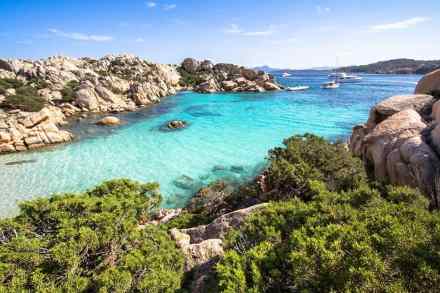
The larger islands of the Mediterranean all have their glories. Fought over for millennia, they now seem to have attained stability as part of the post-1945 political order, but the records of the long epochs of conflict are among the most fascinating aspects of European history. The successive waves of conquest have left material to delight archaeologists and aesthetes. Although western Sicily stands above them all, the intricacies of Sardinia’s history and culture can enthral the scholar, and the visitor. Prehistoric inhabitants left interesting traces as did Phoenicians, who were succeeded by Carthaginians, Romans, Vandals and Byzantium. Then, for more than four centuries, Sardinia was part of the Kingdom of Aragon.

Delicious wines from the Omicron Open

Some people think that it is the job of a wine critic to discover great bargains in the world of bottles and impart the news in hushed but excited tones to the madding crowds. Maybe that’s part of the remit. I incline, however, to this piece of wisdom from George Saintsbury, prosodist to the stars and incomparable, if quirky, cicerone to the fructum vitis et operis manuum hominum, which is to say: wine. “There is no money,” Saintsbury wrote, of the expenditure of which I am less ashamed, or which has given me better value in return, than the price of the liquids chronicled in Notes on a Cellar-Book. When they were good they pleased my senses, cheered my spirits, improved my moral and intellectual powers, besides enabling me to confer the same benefits on other people.

wine

‘To a wine lover, it was like taking a call from God’ – remembering Anthony Barton

From our UK edition

In 2014 I received a mystery phone call. It came from a French number but the voice sounded like a patrician Englishman from another age. It was a voice that you can imagine following into battle: 'Hello, it’s Anthony Barton here'. You might not know the name but to a wine lover, it was like taking a call from God. Barton, who died this week at 91, was the man behind Châteaux Léoville Barton and Langoa Barton, and his family were Bordeaux aristocracy. I was writing a book about the history of the British and wine, and had sent a message to the information at Langoa Barton email expecting at best to hear back from a PR representative, as had happened at Lynch-Bages. Instead, Anthony phoned me out of the blue.

What ‘partygate’ got wrong about wine

From our UK edition

There is palpable public outrage about the flagrant lockdown rule flouting of 10 Downing Street during Partygate. But for oenophiles everywhere, by far the most disturbing revelation is not that the Prime Minister broke the rules (even though he made the rules) or that he might have lied about it, but that staff in No. 10 scuttled to the local Tesco Express with a ‘wheelie’ suitcase in which to smuggle enough vino back to the office for ‘wine-time Fridays’. Talk about tasteless.  It’s admirable that the Prime Minister of the United Kingdom of Great Britain and Northern Ireland lives in a modest flat above the shop instead of in some grand, sprawling neo-classical mansion surrounded by parkland.

A rioja to beat the new year blues

From our UK edition

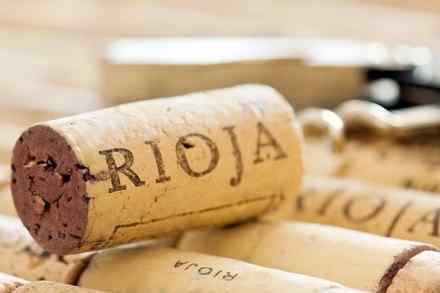
There was only one flaw in my Christmas this year. I did not spend enough of it with Santa Claus-age children. It is of course easier to delight in the charm if one does not live with the brats all year round. However adorable they may be, there are moments when they are also living instances of the doctrine of Original Sin. Moreover, in a Father Christmas household, it is helpful to have a bedroom some way from the parents. Admonitions will have been issued. The little ones will have been prohibited from invading the parents’ room until, say, 8 a.m. But admonitions do not automatically command obedience. Misrule is — and should be — one of the joys of Christmas Day. There can be pathos as well.

Travels with Herodotus

I am part of an informal reading group with a few friends and colleagues. At the moment, we are reading Herodotus’s Histories (or “Inquiries,” as he might have said had he been writing in English). It’s lots of fun, in part because it is also an excuse to conduct a little wine appreciation class, but also because that old denizen of Halicarnassus — Herodotus lived from around 484 to 425 bc — was possessed of such high-octane and companionable curiosity about the world: what happened when and to whom and with what result. He wanted to know; moreover, he wanted you to know. Herodotus is most famously a major source of our knowledge of the Persian Wars and such signal moments as the Battle of Marathon (490 bc), Thermopylae (480) and Salamis (also 480).

Herodotus

The art of choosing ‘healthy’ wine

From our UK edition

I’m entirely convinced that, when drunk in moderation, wine is good for us, with its benefits far outweighing its potential harm. It certainly reduces stress, a contributory factor in around a fifth of all heart attacks, and helps us socialise, raising our ‘feel-good’ dopamine and serotonin levels. All of which should make us think twice about a completely dry January, whatever the level of our festive indulgence. Red wines are high in chemical compounds such as resveratrol – an antibiotic agent and antioxidant which some studies suggest might play a part in protecting against heart attacks, strokes and cancer – and saponin, an antioxidant which might help reduce cholesterol.

The promise of South Africa

From our UK edition

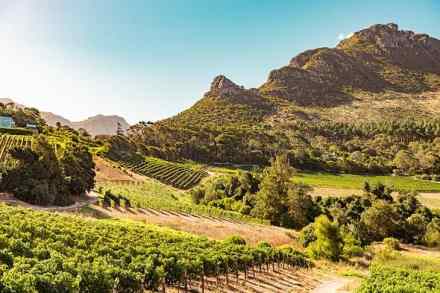
‘Earth has not anything to show more fair.’ One can admire the view from Westminster Bridge and feel near the epicentre of a great civilisation, but still believe that Wordsworth was exaggerating. His line came to mind when I was thinking about Christmases past, two of which I was fortunate enough to spend in the Cape. That scenery really is hard to rival. In the 1980s, the Cape offered five of life’s greatest pleasures. Landscape, politics, shooting, wine — and about 120 miles from Cape Town, there is an enchanting village called Arniston, or Waenhuiskrans, not far from Cape Agulhas, the southernmost point of Africa. Its inhabitants are Cape Coloured fishermen, living in charming white cottages and speaking only Afrikaans. My companion could translate.

The secret to drinking Chardonnay

From our UK edition

Chardonnay has fallen dramatically out of favour. It’s passé, old hat and, well, just that little bit naff. I’m referring, of course, to the girls name, twenty years ago, which was briefly in vogue in certain circles. Indeed, in 2003 – thanks to the popularity of Chardonnay Lane-Pascoe, a character in the ITV seriesFootballers’ Wives – some sixty five baby girls were officially registered with the moniker Chardonnay. Today, only a handful of babies are thus encumbered.

The finest festive fizz

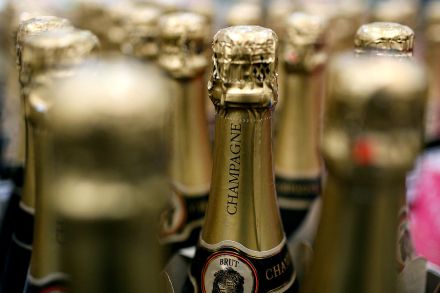
A dinner party without good conversation is like flat Champagne: pretty pointless. It’s like that not-so-funny joke about the inscription on an atheist’s tombstone: “All dressed up and nowhere to go.” Of course at a miserable dinner party you and your glad-rags have reached a destination of sorts, but (as for the late atheists) it’s not the one you were expecting. How to avoid such an infernal disappointment? Jean-Paul Sartre famously felt that hell was other people; all I can say is, that’s no attitude to bring to the table.

champagne
chambertin

Silky, sumptuous wines for Christmas dinner

I have had occasion to mention George Saintsbury’s classic, if quirky, Notes on a Wine-Cellar (1920) in this column before. Back then, it was to sample and swish about the mouth Saintsbury’s fondness — which I took to be a broader public fondness — for fortified wines like port, sherry, and Madeira. I suspect that most of my readers, except when listening to Flanders and Swann, rarely give Madeira a second thought. And although afternoons were made for sherry, they were made for other things too. As for vintage port, we are wheeling into the season — Thanksgiving through New Year’s — when it comes into its own and gladdens the hearts of many. I am certainly counting on it to gladden the hearts of the serious thinkers chez Kimball at Thanksgiving and Christmas this year.

Is it worth gambling on supermarket wine bargains?

From our UK edition

Rich men often look out for bargains. I suppose that is why they are rich. But there can be problems. Occasionally bargains fail to live up to their name. It would not be easy to find a single bottle of le Montrachet for £600, yet a friend of mine once bought a whole case for that sum. He forgot the wise old adage: ‘If something sounds too good to be true, it is probably neither.’ Not one of his 12 bottles turned out to be drinkable. On a lesser scale, my friend Geoffrey fell victim to Waitrose. He and Louise invited me to lunch and the pièce de résistance was boeuf bourguignon. Before that, there was a brief tasting. ‘Try this,’ he said, proffering a glass as I arrived. Judging by his tone, it was not going to be a treat.

Vega Sicilia: the best Spanish wine I have ever tasted

From our UK edition

Four hundred and fifty years ago this month, a great victory helped to safeguard European civilisation. The battle of Lepanto would be more enthusiastically commemorated if our civilisation retained its self-confidence. For decades, the Ottoman empire had been menacing western Europe. Suleiman the Magnificent was the most formidable commander of the age, and Europe was doubly divided, both by the endemic rivalry between Spain and France and by the Reformation. Popes made regular attempts to persuade European monarchs to set aside their differences but these were usually unavailing. Rulers with other preoccupations often anticipated Stalin’s question: how many divisions has the Pope? By the 1570s, Venice was encouraging an anti-Ottoman coalition, for obvious reasons.

Two modest but delightful wines

According to Tennyson, ‘in the spring, a young man’s fancy lightly turns to thoughts of love’. Be that as it trochee, in the autumn a man of any legal age abandons rosé and moves on to Cabernet. If he is broadminded, he also makes a spot in his heart for Chablis, which I’ll come to in a moment. First, some anthropological, or perhaps I mean ethological, news. A friend recently passed along a slender but improving book called Wine: the Source of Civilization. Written by John J. Mahoney, a ‘certified wine educator’, it is full of edifying revelations. Right at the beginning, we have this bulletin: ‘Man did not settle from nomadic travels to build cities and civilization, and then develop wine.

wines

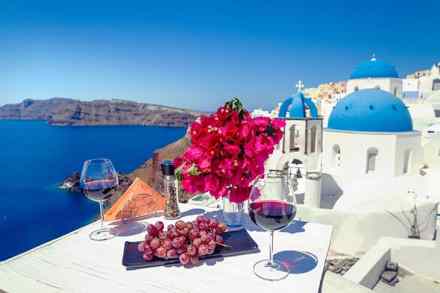
Is this Greece’s finest wine since Homer strummed his lyre?

From our UK edition

We were in deepest Dorset, l’Angleterre profonde. The weather was also typically English: inundations followed by counter-attacks from the Indian summer. Despite those, and even under a still blue sky, it was just too nippy to eat outside — or at least, that was what the less well-insulated members of the party insisted. Fear no more the heat of the sun. It has gone south with the swallows. But there was mellow fruitfulness, in this season which offers a delicious choice between grouse and partridge (unless you are Nicholas Soames, and have both). When it came to accompanying bottles, we were eclectic. Our hosts are good friends of Giugi, Marchese di Sesti, who makes superb wines in Montalcino, amid the splendours of Toscana profonda.

The wonder of Lebanese wine

From our UK edition

In the Levant, the grape has been cultivated for millennia, some of it used for wine. The hills of Lebanon were — and are — especially fertile, as the Jesuits discovered. The Society of Jesus was the SAS of the Counter-Reformation. Its alumni were famous for intellectual ability and physical courage: scholars and martyrs. They were also notorious for deviousness. Even Catholic monarchs regarded them with suspicion: the latter-day successors of the Templars. But at least Jesuits were not burnt at the stake, merely expelled from a number of countries, including Spain. The Jesuits believed that in order to convert the world, they had to move effortlessly in sophisticated circles. To that end, they kept a good table, reinforced by a fine cellar.

Condiments and conservatives

Years ago, an entrepreneurial friend had the idea of marketing ketchup with a catch, a jaunty political declaration. I say ‘many years ago’, and to give you a sense of just how ancient this ancient history is, contemplate that the ketchup was called ‘W’ and the ‘W’ stood for the personage that the followers of William Jefferson Clinton mean to disparage when they removed that letter from the computer keyboards in White House and other government offices just before the W in question — George W. Bush — took office.

people

Spain vs Italy: who would win the wine Test?

From our UK edition

In London, the weather is a gentle sashaying mockery. An Indian summer reminds us of the sullen apology of summer which we have just endured. Soon it will be winter, and ‘A cold coming we had of it’. As always, poetry is a respite. My first resort is usually Yeats. In English, no one except Shakespeare is better at turning language into music. I have probably apologised before now in these columns for using those ravaging Yeatsian lines which have become a cliché because they are so true, so powerful, such an epitome of the post-1914 world and its agonies. ‘The best lack all conviction / The worst are full of passionate intensity.’ Has any historian ever rivalled that lapidary conclusive eloquence?

Thoughts on dearly departed vintages

Some people, out at a nice restaurant, are shy about sending a bottle of wine back when there is something wrong with it. They shouldn’t be. Wine, as the vintners like to tell you when everything is going as it should, is a living thing. Like all living things, it is subject to a variety of unfortunate vicissitudes. We’ve probably all encountered ‘corked’ wine at one point or another — that taint caused by a smidgen of 2,4,6-trichloroanisole (TCA) or 2,4,6-tribromoanisole (TBA), which can be transferred from or through a cork. But wine is susceptible to other liabilities as well. One is the same liability that, sooner or later, affects us all: age.

wines

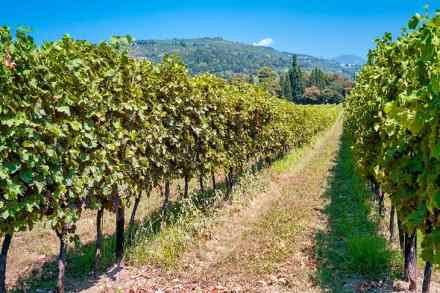
The wine that made me change my mind about Valpolicella

From our UK edition

There was a marvellous general of yesteryear called George Burns. He had a good war and a splendid peace. He also held senior posts for longer than would be permitted in these diminished times. Colonel of the Coldstream for 32 years, he was Lord-Lieutenant of Hertfordshire for a quarter of a century. Many stories are told about him. Connoisseurs of equestrianism say that he was much the worst rider ever to appear at the Queen’s Birthday Parade, always looking like a magnificently attired and bemedalled sack of potatoes. He also had a set diet: a game bird at every meal. Once, he collapsed, was rushed to hospital and opened up. The medics expected to find terminal stomach cancer. Instead, they encountered what looked like the overflowing harvest from an enormous tin of caviar.