Wine

The beauty of rosé and roses

From our UK edition

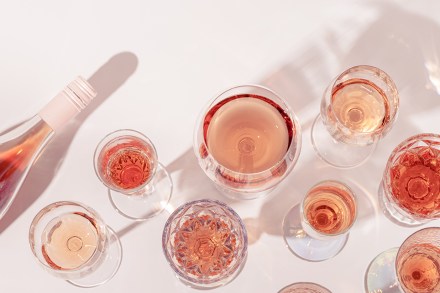
What an idyllic setting. We were amidst the joys of high summer in England, with just enough of a breeze to save us from the heat of the sun, and the further help of a swimming pool. Water without, wine within. We were also surrounded by roses, England’s flower, luxuriating in their beauty and innocence. Experts have applauded my friends’ rose-husbandry. It seemed to this non-expert that they have not merely created a good rose garden; they have triumphed with a great one. Yet other thoughts intruded. Godparents are supposed to abjure the devil. Might Satan not sue for breach of contract? Roses makes one think of Henry VIII. I have recently been reading C.J. Sansom: so much better than Hilary Mantel. His Henry is wholly convincing as a study of corruption and evil.
The Britishness of Bordeaux

From our UK edition

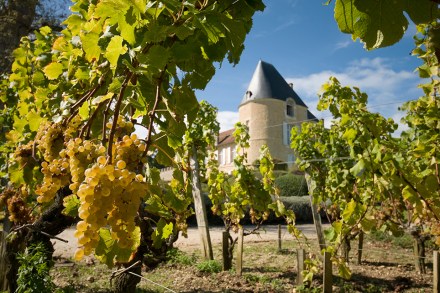
Burgundy or Bordeaux? We were discussing that unending question during dinner over the weekend. I think that there is only one answer: ‘Yes.’ ‘But which, you clot?’ ‘Either. Better still, both.’ It is so much a matter of sentiment, and of which great bottle you have been lucky enough to drink most recently. But there is an argument, which is nothing to do with quality, that Bordeaux – claret – is more British. This is as true in North Britain as in England. There are various versions of a well-known piece of doggerel. My favourite is: ‘Proud and erect the Caledonian stood / Auld was his mutton but his claret good.

What to do when you only have modest wine on hand for a decorous guest

So, I’ve have been rooting around in Horace’s Epistles, which are full of amusing things. They really are not “epistles” in the conventional sense, since they were make-believe letters, artfully wrought jebux d’esprit that employ the convention of addressing a friend in order to entertain not (or not only) that friend (who may or may not exist) but one’s readers. Horace wrote two books of Epistles, one circa 21 BC when he was in his early forties, one a decade later, a few years before his death in 8 BC at the (it seems now) tender age of fifty-six. One that caught my eye when sitting down to write this column was Epistle 1.

horace

Tinta de Toro: the Spanish red that helped Columbus make waves

From our UK edition

I am assured that this is not a legend. But a few years ago, an Irishman’s life was twice saved by a raging bull. The Irish fellow was running with the bulls at a town near Pamplona. He tripped and was virtually impaled. The bull’s horn went into one side of the chap’s stomach and out of the other. He was rushed to a neighbouring hospital, which was accustomed to bull wounds, and the surgeons saved his life. While they were doing so, the aeroplane that he should have been catching took off. There were no survivors. Fifteen years later, the Irishman developed gut rot. One doctor wondered whether scar tissue from the horn wound might be causing the problem. So the patient was opened up. Scar tissue was indeed present and was excised, as was pancreatic cancer at a very early stage.

The Loire Valley is the place for bargain hunters

North of Cognac and Bordeaux, due west of Burgundy, the valley of the Loire River, attended on the second half of its journey east by the Cher River, stretches from the Pays Nantes and the Atlantic Ocean to Orléans in the heart of France. It is not quite right to say that this area is like Hamlet’s “undiscovered country from whose bourn no traveler returns,” but it’s my sense that Americans tend to overlook it in favor of its flashier neighbors. This is a pity, not only because the Loire Valley boasts lots of excellent wine, but also because the region still offers many conspicuous bargains, something you will look long and hard for in Bordeaux or Burgundy.

loire

What the Cambridge dons drink

From our UK edition

In June last year, King’s College Cambridge made more than £1 million from an auction of just 41 lots from its wine cellar. Not bad for a college that until just a few years ago had a hammer and sickle flag hanging in its student bar. But the Marxist sympathies of some of its legendary fellows and students stand little chance against the viticultural genius of the cellar’s buyer: Peter de Bolla, a scholar of 18th century literature and aesthetics. Included in the bonanza sale were 12 bottles of 1999 Echezeaux, an apparently legendary grand cru from Henri Jayer, for which someone bid £100,000. De Bolla had bought them on release and, to give some indication of the return on his investment, when he bought the 1996 vintage he had paid £31.11 per bottle.

The hidden charms of Montenegro

From our UK edition

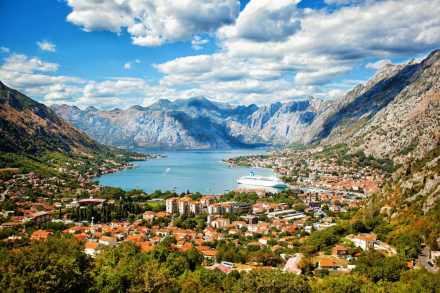
The first thing you should know about Montenegro is that it is wildly more dramatic than you might imagine. It would be frankly rude not to pull up on its precarious mountain roads and gawp. In summer the Adriatic shines; in autumn the mountains compete with New England for glorious, rich colours. The second thing you should know is that there is a relaxing lack of big-hitting sights. And anything you do want to do won’t take long. Even the most beautiful and Venetian of the tiny Balkan state’s towns take an afternoon at most to peruse, leaving plenty of time for lingering coffee stops and long fish lunches in the family konobas strung along the coast (which, if you were pushing it, you could drive end to end in around three hours).

How to wine and dine

If you dare to host a dinner party, said Brillat-Savarin, you must be prepared to be responsible for your guests’ entire happiness while they are under your roof. It’s not just the victuals you are serving. It’s an entire world. I got that sage bit of advice from the French doctor and food writer Édouard de Pomiane (1875-1964), one of the most engaging writers about the preparation and enjoyment of pain quotidien I know. At least two books by Pomiane have been translated into English, Cooking with Pomiane and French Cooking in Ten Minutes (yes, really). Neither replaces Julia Child’s Mastering the Art of French Cooking or similar nitty-gritty manuals, but both are atmospheric charmers, books that can be read as well as consulted.

host

The rise of women winemakers

From our UK edition

Anna, the daughter of friends of mine, is in her final year at university and keen to enter the wine trade. Clearly, she is wise beyond her years because it’s a hugely engaging career. She will never get rich but will always be happy. Oh, and a glass of something tasty will never be far away, and nor will someone congenial with whom to share it.  Wine is made in beautiful places – just think of Bordeaux, the Douro Valley, Western Cape, Yarra Valley, Napa, Piedmont, Mendoza, Central Otago and even the rolling South Downs of Sussex – by delightful people (well, with just the one exception). It’s a warm, friendly and collaborative world to be in.

German philosophy and German wine: a sumptuous pairing

The best teacher I ever had in graduate school — or anywhere else, for that matter — was also the most dedicated. Most semesters he would offer a not-for-credit seminar one evening a week at his house. There, some half-a-dozen fledgling philosophy students would congregate, bottle of German wine in hand, to parse slowly through one text: Heidegger on Nietzsche, say, or Bishop Tempier’s condemnation of 219 propositions in 1277, a once-famous event that signaled the eclipse of the Aristotelian world view in favor of the Christian. We devoted one full semester to De li non aliud, “Concerning the Not-Other” (i.e., God) by the mystically inclined Renaissance philosopher, churchman and diplomat Nicholas of Cusa (1400-1464).

German

Hungarian wine is Europe’s best kept secret

From our UK edition

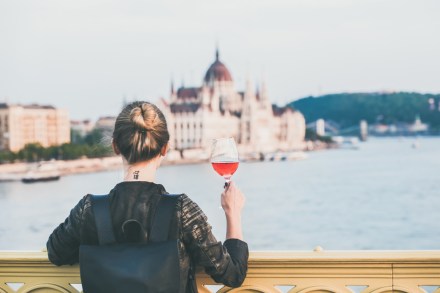
The Ottomans were evicted from Budapest in 1686, but you can still find reminders of Turkish rule if you look in the right places. All these relics are on the western, or Buda, side of the river, for Pest did not really exist in the 17th century. The original Turkish dome crowns the Rudas Baths, which are still in operation, public baths being one of the more salutary legacies of 145 years of Turkish occupation. Just north of the baths, on a slope leading up to the Buda Castle, an out-of-the-way cluster of graves is all that’s left of an old Muslim cemetery. From a distance, the weathered turban headstones look like pineapples. Other legacies of the Turkish era remain outside of Budapest.

There’s a sherry for everyone

On cold nights, a zesty margarita just isn’t going to cut it. You need a bolder tipple: a glass of sherry, the fortified wine favored by retired generals, members of the Diogenes Club and Ordinariate priests swotting up on Thomas Aquinas for the next Sunday sermon. It’s an appropriate drink with which to reflect on the complexity of life itself. You can go from the crispest blanco sherry, through a series of progressively richer flavors, to the most moreish dulce rum-colored sherry. When I passed through Jerez de la Frontera in southern Spain’s Andalucía region, every bar was jammed with great quantities and varieties of sherry. I had stumbled — literally, as I was hiking a hundred miles of the Camino from the coastal city of Cádiz to Seville — upon the Mecca of sherry.

burgundy

Planning world domination, fueled by Burgundy

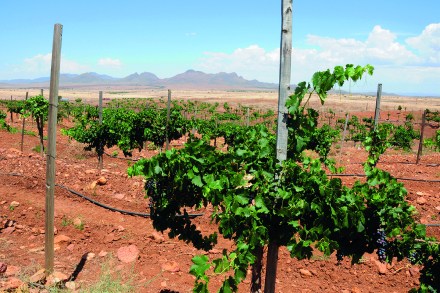
Just because you were born in a manger doesn’t mean you are a horse. I stumbled upon that bit of proverbial wisdom several times in the buildup to Christmas last year. It seems somehow applicable to a recent visit to Arizona where, despite the non-vinous-friendly environs, I had some amazing wines. On the Cabernet front, I finally had the opportunity to taste Alpha Omega. I mentioned this storied Napa Valley wine back in July when I wrote about the wines from its San Luis Obispo cousin, Tolosa Winery. I was with friends at an undisclosed, semi-secure venue, pursuing a plot for world conquest. As a result, my attention was not as focused on this excellent wine as it should have been.

Buried treasures of the Broadmoor

There are many reasons to visit the magnificently storied and illustrious Broadmoor Hotel, in the Rocky Mountain resort town of Colorado Springs. It has a glamorously luxe and gleaming spa. They will do you a superb dry martini with its own cute little carafe. Prince Harry once nipped into this pink-stone Italianate palace for a cheeky pint. But it’s the fantastical history of the Broadmoor that really compels, and which also tells us something possibly rather important about the relationship between politics and alcohol. The owner-founder of the Broadmoor was a failed-at-Harvard bon viveur by the name of Spencer Penrose.

broadmoor hotel
Émilion

Saintly succor

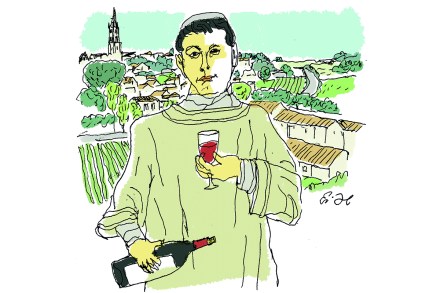
Since you’ll likely be reading this with what Wallace Stevens called “a mind of winter” (needful “to regard the frost and the boughs of the pine trees crusted with snow;... to behold the junipers shagged with ice, the spruces rough in the distant glitter of the January sun”), I thought I would provide something warming to conjure with. I am eventually going to get to one of the world’s most spectacular wines, Château Cheval Blanc, a premier grand crus classé from St. Emilion, but first let’s indulge in a bit of lore. A friend introduced me to Michael Foley’s Drinking with the Saints: The Sinner’s Guide to a Holy Happy Hour (Regnery), a Catholic-heavy but light-hearted topper’s fasti.

A Christmas gift guide for foodies

I’m hungry, so I know it has begun. December. The month when the kitchen transforms into a battleground, no soldier safe from its vigilant sniper’s gaze. Seemingly innocuous snacking is off-limits: one must assume that everything edible — everything — has been squirreled away for festive drop-ins, cocktail parties and The Big Day. “Wait! Don’t open that. It’s the Christmas wine.” “Hey. Don’t even think about it. That’s a gift for Auntie Jo.” “Put those back! They’re the Christmas Eve cashews.” We must struggle with bizarre concepts like “having a banana” or “waiting until dinner.” Or, do as I do. Continue in vain, scribbling an IOU list that grows as long as my belly grows round. I’ll buy it back tomorrow. Of course I will.

christmas gift guide foodies

How to see Switzerland by train

From our UK edition

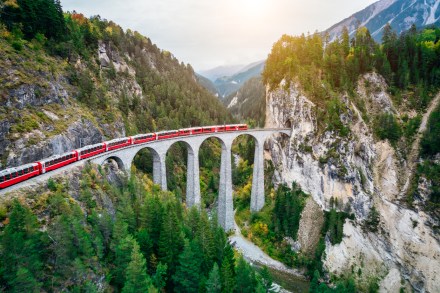
As we all know, the Swiss love their clocks, their cheese and their chocolate. They also adore their railway. The trains are clean, comfortable, convenient and you can set your (Swiss) watch by them.  The system is 175 years old this year, a fact recently celebrated by the running of the world’s longest train through the Swiss Alps. It was quite a feat and took years to plan. The 1.2 mile-long train comprised 100 carriages and passed over 48 bridges and through 22 tunnels during its 15-mile journey, setting a new Guinness World Record as it did so. If you’re exasperated by British trains with the constant strikes, delays, cancellations, melted rails, frozen points, leaves on the line or the ‘wrong type of sunlight’ (do you remember that one?

The Chablis complex

Chablis has the paradoxical distinction of being at once one of the most famous and least well known of French wines. Hugh Johnson opined that it is “one of the world’s most under-estimated treasures.” I agree. We say that Chablis is Burgundy, but, situated on the Serein River some 100 miles southeast of Paris, Chablis is nearly 100 miles north of Beaune. Perhaps we can say that it is the Hadrian’s Wall of Burgundy. Hadrian’s bit of Britain was part of the Roman Empire, but no one would confuse it with Rome. The climate in Chablis is markedly different from and less forgiving than that of the Côte-d’Or: chillier and windier. Think of Auden’s poem, “Roman Wall Blues”: “The rain comes pattering out of the sky, / I’m a Wall soldier, I don’t know why.

chablis

Does Taylor Swift have a drinking problem?

Being an eclectic chap, Cockburn has sampled his fair share of music. And he’s not ashamed to admit, contrary to Al Michaels’s suggestion that Taylor Swift only appeals to teenage girls, that he considers himself a “Swiftie” — not least of all because Swift makes repeated reference to one of his favorite activities: drinking alcohol. Swift just released her new album, Midnights, along with an official music video to accompany her catchy and oh-so-clever song, Anti-Hero. The video tells you all you need to know about Swift’s preferred method for dealing with her problems. Though she never mentions booze by name, she appears in the video taking shots and desperately shaking the last drop from a bottle of wine directly into her mouth.

taylor swift

Roger Scruton’s philosophy of wine

From our UK edition

The philosopher Roger Scruton died in January 2020 just a few weeks shy of his 76th birthday. He left behind a large circle of admirers and a correspondingly large shelf of books in a variety of genres – novels, opera libretti, volumes of occasional journalism, cultural and architectural criticism, and various philosophical works, popular as well as technical. He wrote and wrote about music, hunting to hounds and politics. He also wrote about the subject that brings us together: wine. Roger was a gifted teacher, always on the lookout for opportunities to educate the ignorant, enlighten the benighted and expand the horizons of those cramped by bigotry and parti pris. His missionary work extended to the pages of the New Statesman, in whose pages his wine columns appeared.