Who

The US has left the World Health Organization. What next?

At this year’s World Economic Forum America’s friends and enemies heard about what some are calling a new world order. In Davos, President Trump advanced his own version of Realpolitik. America has its particular interests and he doesn’t mind being fully transparent about them and the actions they portend.   He plainly said that NATO is not forever. His Board of Peace is described as a possible prototype that will displace the UN. Trump has no regard for Biden’s devotion to the “rules based world order” when it really means the US has to pay for everyone else to honor the rules.   This is the reason that while the good and great were chatting it up in Davos the US finalized its withdrawal from the World Health Organization.
world health organization

Activist silence over Sudan speaks volumes

The city of El Fasher, long a symbolic and strategic stronghold in Darfur, has in recent days become the site of atrocities so grave that the United Nations has openly warned of the risk of genocide. Videos reviewed by the Office of the High Commissioner for Human Rights show scores of unarmed men executed in cold blood, some lying dead at the feet of Rapid Support Forces fighters, others dragged off and detained. Journalists and aid workers have disappeared. The last remaining functional hospital was shelled, killing patients and staff. The Saudi Maternity Hospital, once a rare lifeline, is now a mass grave.

Sudan

What Trump’s executive orders will do

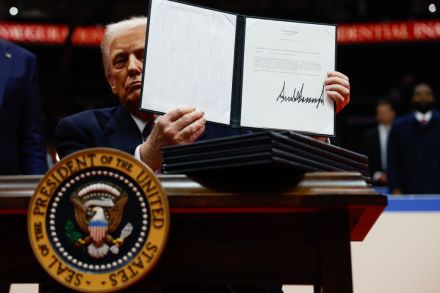
The newly sworn-in President Trump had a busy inaugural day. Between swearing into office and waving a saber around while dancing to “YMCA” at an inaugural ball, he also signed several executive orders and proclamations. After signing his cabinet and other nominations, President Trump’s first order of business was to proclaim that all flags should be flown at full staff for this and all future inauguration days. Following the inaugural parade, President Trump signed a bevy of additional executive documents as thousands of his supporters cheered.

Admit it: monkeypox is kind of funny

When monkeypox crept onto the scene last month, with a handful of confirmed cases in the US, it seemed too absurd to be taken seriously by anyone who’d been paying attention over the last two years. Americans wised up to media malfeasance and career scammers in our health bureaucracies, rolled their eyes and thought, here we go again. The name itself, monkeypox, couldn’t be scarier — like something from a doomsday novel, or cooked up in an editorial meeting to provoke maximum panic. White liberals — the inexhaustible, ever-dutiful and poised-for-action enforcers of tyranny — had a different issue: the name’s racist.

The World Health Organisation has lost all credibility

From our UK edition

Let’s be honest: is there anyone out there who has faith in the ability of the World Health Organisation (WHO) to tackle a future pandemic? Any lingering hope that the WHO might be an organisation fit to be trusted with global heath concerns has pretty well evaporated with the election, by acclamation, of China as one of the 12 members of its executive board on Friday.  It is true, of course, that an international body must have representation from all over the world if it is going to win the near-universal cooperation it needs in order to operate. It can’t be led entirely by western democracies and wealthy South Asian countries even if they might have the best skills available; you need members able to tap into every culture and religion on Earth.

‘I was treated like a traitor’: An interview with WHO whistleblower Francesco Zambon

From our UK edition

Francesco Zambon is calling the World Health Organisation (WHO) to account. Zambon, who was based at the WHO’s Venice bureau, claims that the WHO suppressed critical information about the pandemic to serve the political interests of member countries. There are conflicts of interest at the highest levels of the institution, he says. As a result, according to Zambon, the world lost valuable time in mounting effective defences against the pandemic. Back in May 2020, Zambon and his team wrote a report for the WHO called: 'An unprecedented challenge: Italy’s first response to Covid-19'. The report, drafted in a time of emergency, was meant to help other nations still untouched by the virus, and it could have saved lives, says Zambon.