West

Facing the facts of the West

The century began with a global celebration — the West’s belief in liberal democratic capitalism had battled foes for centuries and emerged victorious. All that remained was for the rest of the globe to melt into the West’s soft and loving embrace. Two decades in, things look much less rosy. China’s rapid rise has not spurred democratization, as many suggested it might; instead it has nourished a massive ideological and political competitor that may supplant the West not only economically but as an arbiter of global culture and behavior. Western decline is not yet inevitable, but Western values will survive and spread only if leaders recognize two clear facts. The first is that the spread of Western values has in large part been due to the dominance of Western power.

west

Will economic pressures weaken the West’s alliance?

From our UK edition

This morning’s retail sales update isn’t pretty. Sales volumes fell by 1.4 per cent last month, following a 0.5 per cent drop in February (revised, and worse, than the original estimate of 0.3 per cent). The biggest fall came in non-store retail shopping: almost an 8 per cent month-on-month fall. However, the Office for National Statistics points out that overall sales volumes are still roughly 20 per cent higher now than they were pre-pandemic. But the recent drop indicates that the cost-of-living crisis is already worsening, as inflation – now at 7 per cent – is taking its toll on real incomes and is already prompting changes in consumer behaviour. As Capital Economics notes today, the 9.

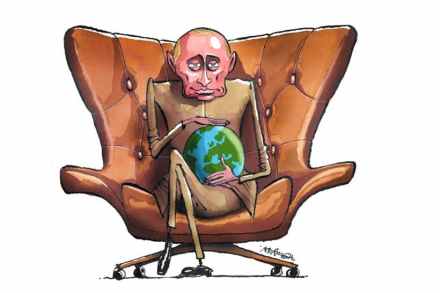
Putin must look at the West and laugh

From our UK edition

Whatever the West’s response to Russia’s attack on Ukraine’s sovereignty, the crisis demonstrates the limitations of western politics and policy across the board. If Vladimir Putin understands any demographic better than the Russian people, it is the governing class of the West: that Harvard-Oxbridge-Sciences Po axis of toweringly smug and practically interchangeable global-liberals who weep for international norms they weren’t prepared to defend. Their ideas and their sanctions are tired because they are civilisationally tired. Putin knows this, but none of the rival ideologies aiming to replace liberalism have anything better to offer.

Russia is the lost great power

Lost in the endless debate about whether Russia will invade Ukraine is the real reason that Moscow — armed with nuclear weapons and one of the most advanced militaries on the planet — feels so threatened by its neighbors, the NATO alliance, and ultimately the United States. While the expansion of NATO in the 1990s plays a big role, it is Russia’s everlasting internal debate about its place in the world that is the real source of tension. It's a historical black hole no one wants to get sucked into, but unless resolved it has the potential to be a source of armed conflict the likes of which Europe has not witnessed since World War II. Geography and history are both a blessing and a curse for Russia.

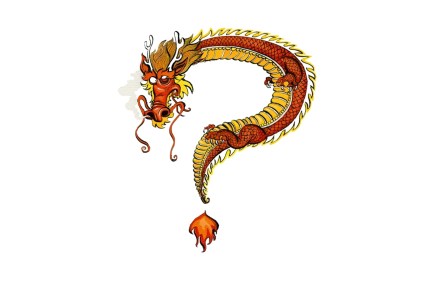
The China challenge has no precedent

From our UK edition

The US has never been more worried by the rise of China than it is today. In my Times column today, I mention a new book by Joe Biden's China director on the National Security Council which sets out why ‘China now poses a challenge unlike any the US has ever faced’. Rush Doshi notes that American hegemony has been based, in considerable part, on its economic might. In the second world war, Germany and Japan combined did not reach 60 per cent of US GDP. Throughout the Cold War, the Soviet Union failed to hit this mark. Yet, China passed it seven years ago. The book sets out how China is attempting to replace the US-led world order with its own system, and how the US should try and counter this. It highlights that great power competition is very much back.

How China is stoking racial tensions in the West

From our UK edition

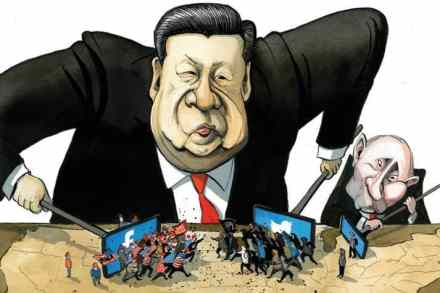
Footage of a brutal late March attack on a 65-year-old Asian American woman in Manhattan drew widespread outrage on social media. It also made for a productive afternoon for Zhao Lijian. From his Beijing office, the Chinese government spokesman retweeted 20 posts and shared the video 12 times on his official Twitter account. ‘We can’t help but wonder, who will be the next victim? When will it all end?’ he asked his almost 900,000 followers. Zhao isn’t the only one who’s been busy. In the wake of the Atlanta spa shootings on March 16, Chinese state media used Facebook, Twitter and YouTube to stoke a narrative of American racism and hatred.

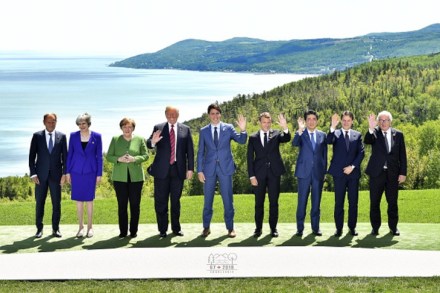
The Western alliance is dead

The big question that hangs over Donald Trump’s trip through Europe is not whether America’s NATO allies should spend more on defence or whether Vladimir Putin poses an overriding strategic threat to the continent. The big question is this: why should Uncle Sam continue to provide the military assets and leadership across the pond as it has for the past 70 years? The answer lies in understanding that the concept of a united political West is a tenuous and unconvincing one. Indeed, it should have been moribund since the fall of the Berlin Wall and the demise of Soviet Communism. It’s now collapsing. True, the West has an obvious and historically glorious validity.