Wealth

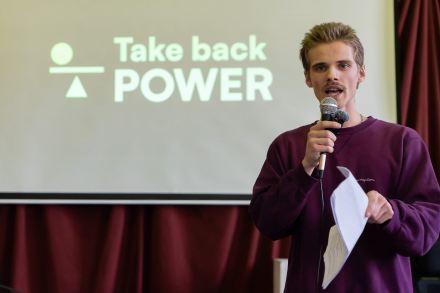
Take Back Power is no Robin Hood movement 

From our UK edition

The biggest rebel in my year at school (a pretty raggedy state comprehensive near Chester) was a guy called Paul. He had very long hair, wore a trench coat and was regularly told to ‘have a bath’ by the more boorish elements of the playground. Paul railed against the system in the way that only teenagers who have experienced nothing of life but have read at least half of The Catcher in the Rye and The Outsider can. The more militaristic tranche of our teachers also hated him for the permanent odour of weed that followed him around and the crude drawing of Che Guevara on his rucksack. He was one of my best friends. Paul cut his hair and stopped reading Noam Chomsky in his mid-twenties.

Billionaires or bust: the world needs the super-rich more than ever

The socialist left was on parade in the final innings of 2025. The long cold shadow cast by “The 2026 Billionaire Tax Act,” a ballot initiative in California to be voted on in November, has led tech billionaires to take flight out of the state and land in the zero-income-tax paradises of Texas and Florida. The initiative seeks a one-time 5 percent tax on the worldwide net worth of anyone stupid enough to be a Californian with assets worth more than $1 billion as of January 1, 2026. That meant anyone in the three comma club had to hightail it out before Governor Gavin Newsom could bellow “Happy New Year.

old buff dudes bodies billionaires

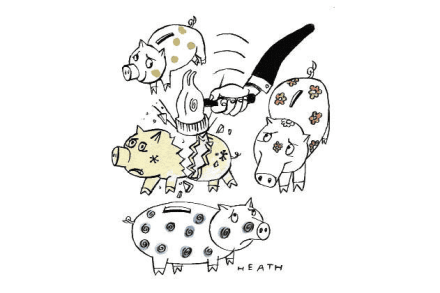
My plan for a wealth tax – with a difference

From our UK edition

Reading Careless People, an exposé of life within Facebook written by a Kiwi, it occurred to me that one potential advantage that the UK, Australia, Canada and New Zealand have over the US is we do not unthinkingly idolise the very rich. Americans sometimes find this confusing: it always irked transplanted American bankers in London that local employees were eager to make a few million quid, but lost interest beyond a certain threshold. Once they had a rectory in the Cotswolds, an Aga, two labradors and a Range Rover it was game over, you win. This is because the US is more of a money/power economy, whereas the Commonwealth countries are to a greater extent prestige economies. We shouldn’t bemoan this, but turn it to our advantage instead. Here’s how. It’s a wealth tax.

Things Fall Apart: Flesh, by David Szalay, reviewed

From our UK edition

London and the South East, The Innocent, Spring, All That Man Is, Turbulence – the titles of David Szalay’s first five novels, which won a flurry of prizes, are all captured, in a sense, by Flesh, his sixth. Much of the latest book is set in Britain’s capital, and the innocent frequently lose that tag as its protagonist battles to advance his position. When we first meet him, Istvan is 15, living with his mother in Budapest in the dying days of communism and being introduced to sex by a neighbour. Having served a jail sentence for killing the woman’s husband, this ‘solitary individual’ joins the army and, after tours in the Middle East, heads for London – only to be stuck on the door of a strip club.

The nerdy obsessive who became the world’s richest man

From our UK edition

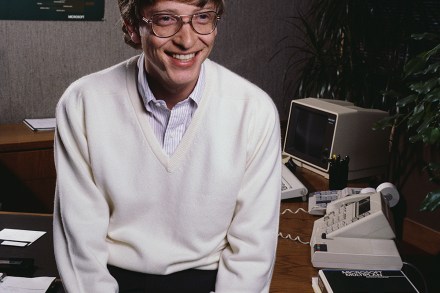
Shortly before Bill Gates’s seventh birthday in 1962, his parents stuffed their son into a button-down shirt and blazer for a visit to Century 21, a bold showcase of scientific prowess in their home town of Seattle. This futuristic fair was intended as the nation’s rebuff to Soviet Russia following the Sputnik satellite launch, which sparked the space race. The family enjoyed the new 600ft Space Needle. They also saw the Mercury capsule that carried the first American into space; Ford’s concept of a six-wheeled nuclear-powered car; and IBM’s idea of a cheap computer, costing $100,000. Best of all in the boy’s view was rattling around on the Wild Mouse Ride, which felt risky and thrilling, stoking a lifelong love of rollercoasters.

Is it better to be posh or cool?

What in twenty-first-century Britain is it better to be: posh or cool? Of course the correct answer is: it’s best to be posh and cool. But posh people, on the whole, tend not to be cool and really cool people aren’t usually posh. But the tribes have a lot in common. They share a certain insouciance, which is a posh word for total indifference to the feelings and thoughts of other people. They are both anti-democratic and anti-meritocratic in spirit and practice. No matter how hard you try and how much money you have, you can’t join the posh or be cool. Like sex appeal, you’ve either got or you ain’t. Defining either group is not easy, but you know when you see it — or in the case of the posh, hear it.

posh

The downside to being rich: Long Island Compromise, by Taffy Brodesser-Akner, reviewed

From our UK edition

Fleishman is in Trouble was one of the funniest novels of 2020, and it catapulted Taffy Brodesser-Akner, a New York Times journalist, into the spotlight with a US TV series two years later. Long Island Compromise is a rollicking family saga written with the same sardonic wit. It is centred around a wealthy family living in a suburb of Long Island, who owe their fortune to the late patriarch, a Jewish European émigré who set up a successful factory making polystyrene foam moulds. There’s a backstory to this, which we learn later, but his indomitable widow and his son Carl’s wife Ruth rule the roost. At the beginning, Carl is kidnapped, then returned traumatised, and the implications of this violent act affect Ruth and their children Nathan, Beamer and Jenny.

The elite’s war on wealth

Wealth comes from ownership. Being involved in the financial industry for nearly thirty years, and spending the past dozen-plus years in the media helping people create economic freedom and wealth for themselves and their families, I know that wealth being derived from ownership is an indisputable truth. More concretely, wealth comes from the ownership of assets that increase in value over time. Ownership is a subject people tend to greatly misunderstand. We misconstrue where wealth comes from, and we misinterpret the benefits of hard work and taking risks. You can meet a poor construction worker putting in eighty hours a week for someone else. You can find professional athletes declaring bankruptcy as soon as their multimillion-dollar contracts end.

In praise of megarich adventurers

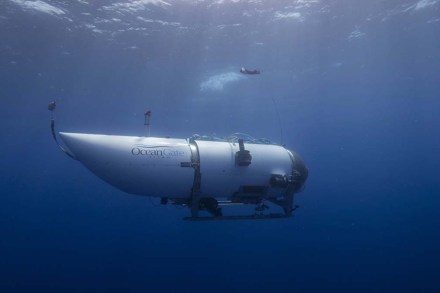
There's rich and there's rich. There's a number beyond which stuff starts to get boring. I'm not sure what it is, but it's the point at which you run out of restaurants to frequent and clubs to join and clothes to buy and you start thinking bigger. You start thinking about going to space and colonizing Mars — and exploring the dark depths of the deep blue sea. It is the reason that Elon Musk sold his seven homes and chucked out most of his possessions and torments his staff by sleeping at work. It is also part of the reason that five men are now sadly believed to have died while aboard a missing submarine after a "catastrophic implosion." If we didn’t love to hate the rich, this would have been seen for what it is: a tragedy.

titanic megarich adventurers

What do we think of when we think of Essex?

From our UK edition

Apparently much of the notoriety – or perhaps by now it has become allure – of Essex is my fault. In 1990, weeks before Mrs Thatcher was defenestrated, I wrote an article in the Sunday Telegraph called ‘Essex Man’, in circumstances that Tim Burrows describes entirely accurately in this exceptionally well-written and intelligent book. Although the Iron Lady was about to be history, the part of England that had come to exemplify her achievement and her legacy was throbbing with capitalist energy more than ever – which motivated the profile of Essex Man and his hard work and ability to seize opportunities in a society where native ability counted for more than class.

Why Louis C.K. has a point on immigration

During a recent appearance on The Joe Rogan Experience, comedian Louis C.K. stated a position that many on the left believe but are unwilling to admit: America should open its borders to the world. “My feeling is they should open the border,” he explained. “Just let everybody pour in… Then there will be all these problems, well, there should be. It shouldn’t be so great here. It is a weird thing to sequester a certain group of people and keep upping their lifespan and their lifestyle.” As someone who's spent most of his journalistic career railing against mass immigration, my initial reaction was one of scorn.

Gardening’s bad girl: the genius – and malice – of Ellen Willmott

From our UK edition

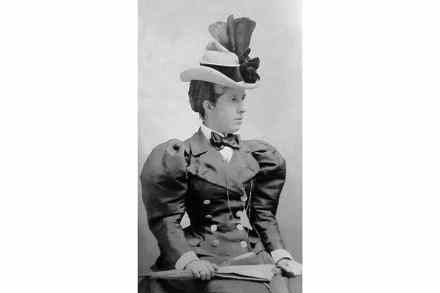
In October 1897, the grandees of the Royal Horticultural Society gathered to bestow their highest award, the Victoria Medal of Honour, struck to commemorate the Queen’s Diamond Jubilee, to 60 of gardening’s greatest luminaries. For the first time, these included two women. One was Gertrude Jekyll, known by all as the Queen of Spades; the other was the 39-year-old Ellen Willmott. But Willmott did not turn up. This public snub was the beginning of her reputation as ‘gardening’s bad girl’, as Sandra Lawrence puts it, one that increased exponentially until it exploded in stories of daffodils being booby-trapped to deter bulb thieves.

Stop attacking billionaires

From our UK edition

The $5.79 trillion budget plan Joe Biden submitted to Congress yesterday was more notable for what it didn’t include, rather than what it did. There were no line items on the environment or education – key pillars of his 'Build Back Better' agenda – but it did call for a new minimum tax requiring 'billionaires' to pay at least 20 per cent of their income in taxes, including on the gains on investments that have not been sold. This will, apparently, reduce the government deficit by $360 billion over the next decade. The President is in a tight spot. Since the turn of the year, his approval ratings have fallen to their lowest levels since he took office, with voters justifiably concerned by the nation’s largest inflation spike in four decades.

The rise of the new autocracy

From our UK edition

Gstaad Dinner parties are no longer verboten here, so I posed a question to some youngsters my son had over: did any of them feel morally entitled to their privilege? The problem with talking about privilege is that the discussion goes around in circles, original thoughts get lost, and what emerges says more about those conversing than about the subject at hand. Ditto when I posed the question to my son’s friends. There were no straightforward answers. Let’s face it, privilege is so enjoyable that the beneficiaries are mostly seen as undeserving, spoilt lightweights — by the underprivileged, that is. Envy has always been around, as has the urge to take away wealth from those not seen as having earned it.

The wealth explosion

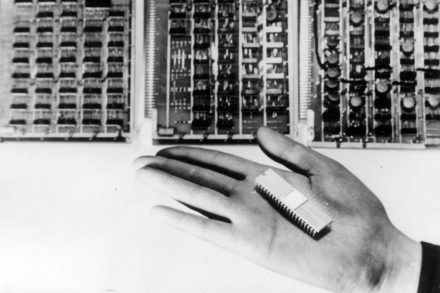
Not all inventions change the world. But some do — and they do it by greatly lowering the cost of a fundamental economic input. This inevitably causes an economic revolution that brings about a new political and social order by opening previously impossible economic opportunities,  creating vast new wealth in the process. We are in the middle of such a revolution today, thanks to the microprocessor, which first came to market in 1972 and really took off with the introduction of the personal computer in the early 1980s. The microprocessor, a dirt-cheap computer on a chip, hugely reduced the cost of storing, retrieving and manipulating information. Computing power that cost $1,000 in the 1950s today costs a fraction of a cent.

microprocessor

The global elite is egregiously rich and corrupt — and you’re paying for it

Deep down, everyone has always known that the wealthy and powerful hide away vast quantities of often ill-gained money in far-flung tax havens. In recent years though, with the Panama and Paradise Papers, the public has had chances to see how the clandestine industry that helps the elites do so operates. Another such opportunity has come knocking with what is being called the biggest leak of offshore data in history. The Pandora Papers consist of almost 12 million files that lay out the secret financial affairs of almost three dozen world leaders and hundreds of high-level public officials from more than 90 countries. The details make for sensational headlines: the king of Jordan has a hidden $100 million real estate empire (including a seven-bedroom mansion in Malibu!

pandora paper elite