Washington dc

What Trump got right in his State of the Union address

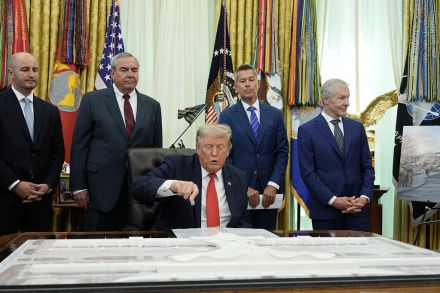
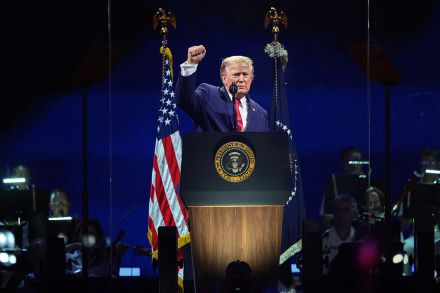
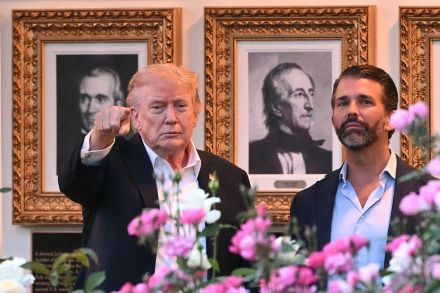
Watching Donald Trump’s State of the Union Address tonight, I thought of two homely things. One was something that a friend used to say to her young daughter: “Don’t forget to have an attitude of gratitude,” she would remind her preteen when that attitude was absent. The second thing I thought about was a fact I recently learned about Ulysses S. Grant. He was a great general, yes, and he was also a great, if generally under-appreciated, president. One sign of his greatness came posthumously. At his funeral, two of Grant’s pallbearers were Confederate generals. Grant had won the civil war, defeating the Confederacy, saving the Union. But in death he underscored his

sotu address

The deep state vs Nixon

Americans took a break from their partisan vituperation in February to mull over newly revealed testimony that Richard Nixon gave to grand jury investigators in 1975, a year after the Watergate scandal drove him from power. James Rosen, a veteran Washington journalist and the biographer of Nixon’s attorney general John Mitchell, revealed the episode in the New York Times. Nixon had argued that his program of wiretaps had been made necessary by another spying operation that senior American military commanders were carrying out against him and his top aides. The outline of this story has been known to historians since James Hougan laid it out in Secret Agenda (1984): a

nixon

My theatrical Senate confirmation hearing

It’s a bit difficult to explain a Senate confirmation process to those who haven’t gone through it. It is, to put it in a single word, intense. Years ago, the first time I had a hit piece written about me, I wanted to crawl into a hole in the ground and die. During my confirmation hearing, my attitude was more, “Oh, Chuck Schumer is denouncing me from the Senate floor as a racist, anti-Semitic, white supremacist. It must be Monday.” I still haven’t even bothered to read the vast majority of press accounts or descriptions of me that have come out in the days since the hearing. It’s important in

Jeremy Carl Senate

The redemption of Richard Nixon

In the last five years of his life, when I knew Richard Nixon, nothing described him better than Milton’s “calm of mind, all passion spent.” During the most tumultuous political career in American history he had come back many times, but the greatest comeback of all was in full swing. His enemies had seized control of the puritanical conscience of America to slay him, unjustly, and he was manipulating the same national conscience, which was founded on Plymouth Rock and has survived all the corruption and hypocrisy and violence of American public life, and when aroused, is insuperable. Since his political fall, and later his death, polls increasingly indicate public

A late Congolese ruler with a new following

At the exit of the National Museum in Kinshasa, capital of the Democratic Republic of Congo (DRC), is a whiteboard for visitors to leave their comments. On that whiteboard, full of underlinings and exclamation marks, are messages like this: “Thank you for your life.” “Thank you for our national unity.” “You left behind a glorious historical legacy. We plan to follow in your footsteps.” A giant photograph of the man the messages refer to hangs in the museum’s main hall as part of its new exhibition, a man in dark glasses and leopard-skin toque, smiling down at his people. More than 28 years after fleeing into exile, Mobutu Sese Seko,

Pete Hegseth is a polarizing figure who doesn’t quit

Pete Hegseth’s Saturday begins with personal training. The Secretary of War, @SecWar on your socials, is very fond of working out with the troops – something most defense secretaries have done without someone dutifully filming the experience for Instagram. Then he heads off to the Reagan National Defense Forum, the annual gathering of war hawks, policy nerds and defense contractors in Simi Valley, California. Hegseth, the veteran of the Global War on Terror, is there to fulfill his mission of denouncing the neocons. “Out with idealistic utopianism, in with hard-nosed realism,” he declares, insisting the United States will no longer be “distracted by democracy-building, interventionism, undefined wars, regime change, climate