Warfare

What Ukraine’s ‘Amazon-for-war’ website can teach the US

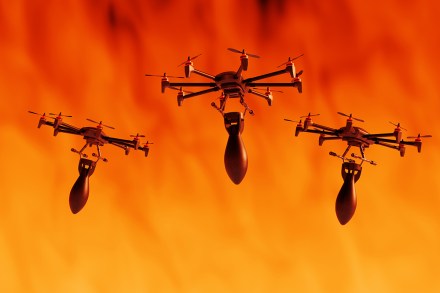
Donald Trump calls Dan Driscoll the “drone guy.” The 39-year-old Secretary of the Army – also a “total killer” with a “nice, beautiful face,” according to Trump – is on a mission to modernize the US military and firmly believes that drones are “the future of warfare.” The former Army Ranger, Yale Law School student and venture capitalist, announced last month that the Army was going to buy 1 million drones. Catch-up will be hard. Currently, the US military acquires around 50,000 a year – while Russia makes 4 million and China 8 million. In his race against time, Driscoll’s north star is Ukraine, the country he calls the “Silicon Valley of warfare,” where cheap, often garage-made drones have effectively killed tank warfare and redefined the modern battlefield.

dial a drone

Is Anduril Industries building the future of warfare?

Defense contractors tend, on the whole, to be a pretty faceless crew, indistinguishable in their dark suits and hence little known to the world outside the military-industrial complex. Palmer Luckey, founder of Anduril Industries, strives to be different, invariably sporting a uniform of Hawaiian shirts, shorts and flip-flops – projecting an iconoclastic image attractive to venture-capital investors, somewhat in the manner of former crypto mogul Sam Bankman-Fried. He beguiles journalists with exciting monologues about the great things his vision can accomplish for US defense, making him, according to a glowing profile in the Financial Times, “arguably the most crucial figure bringing Silicon Valley to the front lines of American national security.

anduril palmer luckey

Space is the place — for war

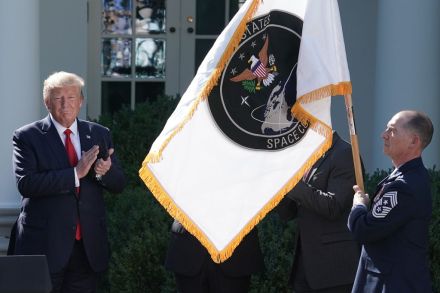
This article is in The Spectator’s inaugural US edition. Subscribe here to get yours. You have no phone service, no television, no GPS for the car and no road atlas because you threw it out in 2009. Planes aren’t flying, and that spinning sound you can’t hear is the sound of space hardware floating out of our control. So dependent have we become on satellites for everything from communications to traffic control that a day without them would mean catastrophe. In the new space race, victory won’t mean landing on the moon or sending a rocket to Mars, but developing a new arsenal to wage and win war in space.

space force

How drones are dramatically changing warfare

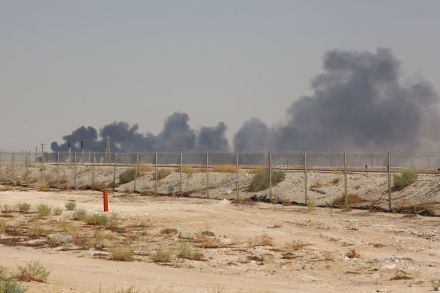
The attack on Saudi Arabia’s oil facilities by Houthi rebels using a fleet of 10 drones loaded with explosives has caused serious damage and will result in a global production cut of around five percent. The Houthi strike was the second aimed at Saudis oil facilities after a previous effort last month resulted in minimal damage. The Houthi drones were likely supplied by Iran, which has a large drone fleet and has been arming the rebel group in Yemen for years. Saudi Arabia is likely to launch retaliatory strikes against both the Houthis and Iran. Drones have become a new frontier in warfare allowing activist groups and nations access to a potent weapon that can be used for surveillance or as a remotely piloted bomb.

drones oil saudi arabia

The changing face of war and heroism

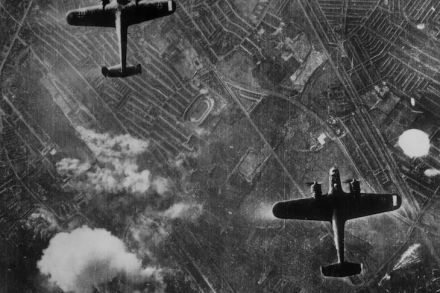
On War and Writing by Samuel Hynes is hardly about war at all. There is little about combat here, or the actual business of fighting and killing — what Shakespeare wryly called ‘the fire-eyed maid of smoky war/ All hot and bleeding’. Hynes is an august scholar of English literature and particularly the literature of 20th-century warfare. But he also served as a bomber pilot in the Pacific during the second world war, and has written an engaging, plain-spoken memoir of his service called Flights of Passage, published in 1988. His two vocations, he explains in the introduction to his new book, are ‘professor’ and ‘pilot’, and here the professor not the pilot is at the controls.