War on terror

Real ID is a legislative wisp from the Bush-era War on Terror

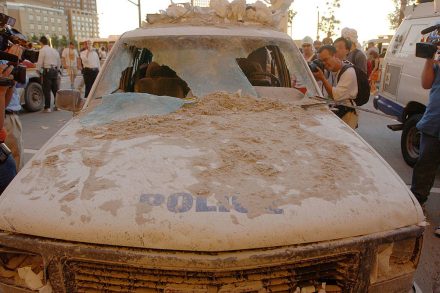
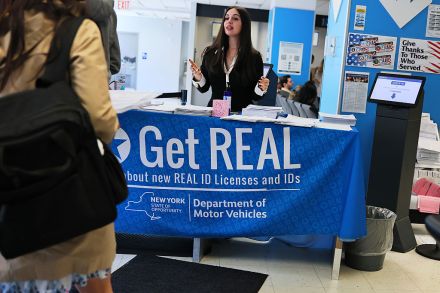
The Real ID moment is here, the Y2K panic of 2025. Today is the deadline to update your driver’s license, leading to frantic predictions of something no one alive has ever seen before – long lines at the DMV. Will the center hold, or will the need to have a digitally embossed star on a piece of plastic finally bring the Republic down once and for all? I predict a quiet day. The fact is, though you now need a Real ID, you technically don’t need one today, unless you do. People must now deploy these enhanced IDs any time they’re entering a federal building, which most people don’t do on the reg, or a nuclear-power plant, which most people never do, and, most significantly in the lives of the general public, if they’re trying to get through airport security.
real id

Modern-day slavery in Mauritania

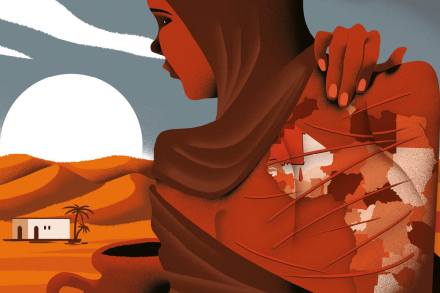
In April 1864, the US Senate passed a bill that set in motion what would become the Thirteenth Amendment to the Constitution. Slavery was to be abolished. Seven months later, Union forces would burn Atlanta to the ground, a year after Lincoln’s address at Gettysburg marked the battle that began the South’s collapse and the April 1865 surrender of General Robert E. Lee and his Confederate army. The Civil War remains the bloodiest and most divisive conflict in American history with at least a million dead, including soldiers and civilians from both sides. You might think that given American history, if slavery had an in-your-face visibility anywhere on the planet, Congress would call for intervention by the UN, perhaps threaten to send in the Marines. Think again.

Mauritania

Afghan leaders say country is a terror haven

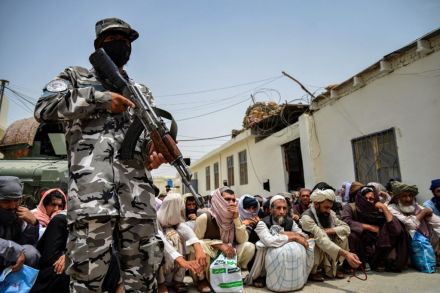
The Biden administration is using every tool at its disposal to paint a rosy picture of Afghanistan as a terrorist-free state as the two-year anniversary of its disastrous withdrawal approaches. But a coalition of Afghan generals, diplomats and civil servants is writing to Congress to explain that in reality, “today’s Afghanistan under the Taliban and their al-Qaeda allies, is again the greatest terrorist safe haven in the world.

afghan taliban

The fight for the burn pits veterans isn’t over yet

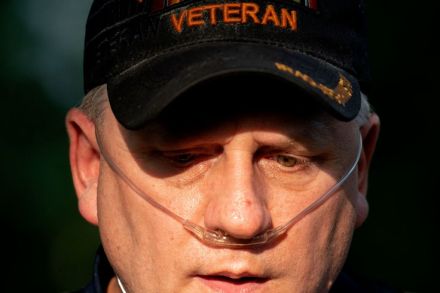
On July 28, 1932, the United States military attacked its own veterans. The desperate former soldiers, who had survived the horrors of World War One, had dug in for months in Washington, DC to get the bonuses that had been promised to them by Uncle Sam. Yet instead of paying the money they were entitled to, the Hoover administration dispatched General Douglas McArthur, who led against them four troops of cavalry, four companies of infantry, a machine gun squadron, and six tanks. Ninety years after the infamous attack on the Bonus Marchers, dozens of veterans camped out on the steps of the Capitol building for several days. These veterans were not routed, thankfully.

The lawless Liz Cheney

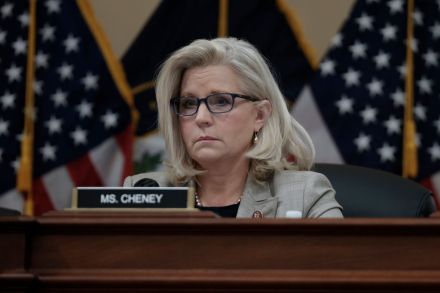
Congresswoman Liz Cheney had a supposedly shining moment this week as she sat on the January 6 committee to lecture the Capitol attackers and anyone in league with former President Donald Trump about the importance of the rule of law. Cheney has long said the committee was about “fidelity” to the Constitution. Seriously? Liz Cheney? Dick’s neocon daughter? People are buying this? I don’t even know where to start. In 2011, when libertarian-leaning Republican Justin Amash and many in the Tea Party movement insisted that President Barack Obama did not have the constitutional authority to bomb Libya, Cheney, Senator John McCain and other establishment politicians said to hell with the Constitution.

cheney

Biden’s big UN whopper

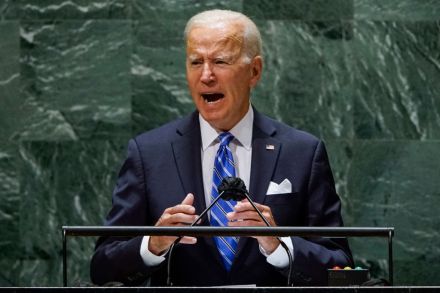
President Joe Biden walked into the grand UN General Assembly chamber this morning with a list of asks, an appeal for greater cooperation among the world’s great powers and a bit of controversy trailing behind him. Biden’s first UN address came at a difficult time in American diplomacy. The European Union, led by an irate France, is livid over a $60 billion US-Australian nuclear submarine deal that European leaders view as skeevy and duplicitous. And last month’s American troop exit from Afghanistan remains a sore point for contributing nations in the Nato coalition, some of which wanted more time to evacuate their own nationals. Biden, however, sidestepped all of these disputes.

un

The last war for democracy

Twenty years after 9/11, the War on Terror has come full circle. Everyone expected the Taliban to surge back to power as soon as American forces left Afghanistan. Instead, the surge began while America’s embassy in Kabul was still open, inviting unwelcome flashbacks to Saigon in 1975 and Tehran in 1979. There are piquant memories of 1989, too — not of the Berlin Wall’s fall or a young Francis Fukuyama’s publishing ‘The End of History?’ in the National Interest, but memories of an Afghan insurgency’s triumph over a superpower. That triumph would inspire and ultimately contribute in the most concrete ways to a decade of terrorism, culminating in the 9/11 attacks.

war

Afghanistan — the long defeat

In announcing his decision to withdraw all remaining US troops from Afghanistan, President Joe Biden declared that 'it’s time to end America’s longest war.' The wording of the President’s announcement left little room for backtracking so his decision appears to be definitive. It’s also necessary and long overdue, if not without risk. But it will not actually 'end' the war that began just weeks after the 9/11 terrorist attacks when US special operations forces and CIA paramilitary units entered Afghanistan. The conflict that Americans are accustomed to calling the Afghanistan War will continue, albeit without any overt US military involvement.

afghanistan iraq military

The dark Prince

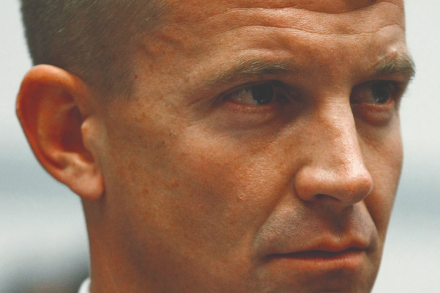
‘No modern US war would be complete without the involvement of Blackwater founder Erik Prince,’ wrote journalist Jeremy Scahill in his seminal book Dirty Wars. That was back in 2013. Since its founding in 1997, Blackwater, Prince’s private military outfit, has been reincarnated several times under different names. But Prince has stayed the same. Iraq, Afghanistan, Libya, Somalia — Prince, a very 21st-century mercenary, has wreaked havoc in all these places. He comes, he spoils, he leaves a mess that is impossible to clear up. Take Libya.

prince

The next American empire

Americans have never been sure of their standing in the world, and the world has never been sure of Americans’ standing. In their first century as a nation, Americans believed that their principles made their civilization not just different but also better than Europe’s. Meanwhile, the intellectual and political leaders of Europe were unconvinced that America was a civilization at all. In their second century as a nation, other, older civilizations were obliged to admit that Americans were not just different: they were better at modern life. The Americans achieved this recognition first by the force of their industrial and military power, and then by the flattery that other civilizations could become equally forceful and seductive by adopting the American way of life.

empire

Still, the Global War on Terrorism goes on

I can think of only a single positive thing to say about World War One: it ended. Yet in addition to precluding any further waste of lives, the Armistice of November 1918 and the ensuing Paris Peace Conference did something else. It allowed historians and other writers to begin taking stock of this ghastly episode, which had caused death and destruction on an unprecedented scale. Making sense of the so-called Great War exceeded the limits of human capacity. Yet however imperfectly, at least it might be understood. Why had the war happened? Why had it lasted so long? What had motivated the belligerents? What did this horrendous cataclysm signify, both politically and morally? Finally, how could the recurrence of such a debacle be averted?

global war on terror