Wales

Jan Morris’s last book is a vade mecum to treasure

From our UK edition

Jan Morris, in all her incarnations, was always able to evoke a place and a moment like no other. As James Morris, the only journalist to cover the first successful ascent of Everest in 1953, he described Edmund Hillary returning from the summit as huge and cheerful, his movement not so much graceful as unshakably assured, his energy almost demonic… It was a moment so thrilling, so vibrant, that hot tears sprang to the eyes of most of us. Morris, who died last year, was married to Elizabeth Tuckniss for 71 years and had five children, one of whom died in infancy. She transitioned to live as a woman in 1964, one of the first high-profile people to do so. Her subsequent memoir, Conundrum, was a bestseller.
Interview: Rowan Williams on Wales, independence and the King Lear of Westminster

From our UK edition

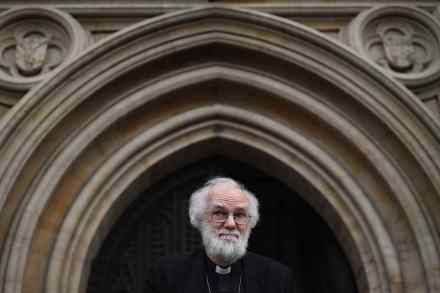
Rowan Williams is no stranger to politics. As Archbishop of Canterbury he was as comfortable criticising Tony Blair over Iraq as passing stern judgment on David Cameron’s austerity measures. Even in these pages, at the height of the global crisis in 2008, Williams was arguing that Marx could teach us a thing or two about financial markets. Still, in recent weeks it just might be that he has embarked one of his most controversial projects yet: a commission to help define Wales’ constitutional future in the UK. As the spectre of Scottish independence haunts Westminster and Welsh nationalism gains momentum, it is a timely mission. In October, Williams was unveiled as head of a Welsh government independent commission on the constitution, set up by Mark Drakeford.

Wales is terrified of a repeat of the Aberfan disaster

From our UK edition

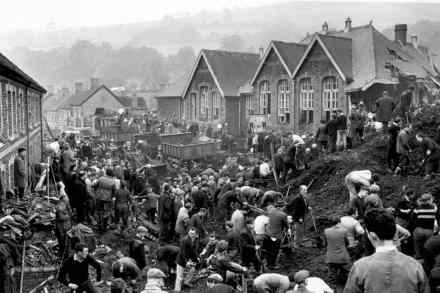
While the Westminster bubble has spent the last few weeks focusing on Tory sleaze and COP26, the Welsh have been facing a far more consequential challenge. The problem is the country’s coal tips: monstrously black, heavy slag heaps, omnipotent and ever-present reminders of the great industry that once dominated Britain’s economy and fuelled the furnace of the Empire. Rarely do I find myself agreeing with the rabble rousing Rhondda socialist, Leanne Wood, but the former Plaid Cymru leader (who unexpectedly lost her South Wales seat in the Senedd election in May) sounded a prescient warning this month. She argued that unless action was taken to manage these tips properly, another Aberfan was ‘on the cards’.

The Welsh village taking on the tree planting industry

From our UK edition

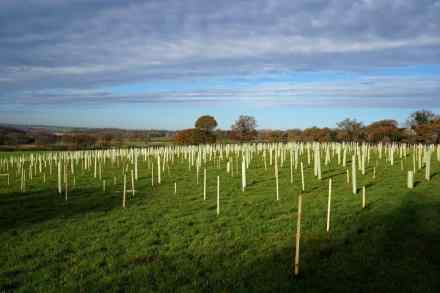
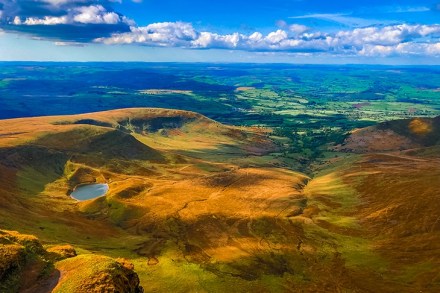
The village of Cwrt y Cadno sits in a particularly pretty and unspoiled valley in Carmarthenshire, south west Wales. The steep sides of the Mynydd Mallaen plateau rise to the east; the foothills of the Cambrian mountains look down from the other side, and the Cothi river cuts a path between the two. But in this quiet village a scuffle has broken out over the fate of a tree planting scheme in the area. It’s a fight that may well reveal the folly of mass tree planting in Wales, the side effects of ambitious carbon targets, and the futility of government subsidies. Large forestry plantations have been a feature of Wales’s landscapes for nearly a hundred years, ever since the Forestry Commission was created in 1919.

You need to be a millionaire to move to Wales

From our UK edition

We began searching for the farm of our dreams in Wales as we planned our escape from Surrey. The problem was, so did every other dreamer in London and the south-east of England. Since lockdown, the rush to perform ‘lifestyle change’ has sent the price of the valleys sky high. In fact, I would go so far as to say that Welsh farmers must be downsizing to townhouses in Chelsea. We were already quite down. It was sad to be served notice on the land we have been renting to keep our horses. We knew we had to buy our own land this time. We quickly ruled out staying here. Even if we could afford Surrey, we don’t want to carry on dodging stockbrokers on electric bikes. We settled on East Sussex as a possibility, because the builder boyfriend has family there.

Devolution doesn’t work in a crisis

From our UK edition

One of the worst features of devolution is the tendency of devocrats to insist on doing their own thing in all circumstances and at whatever cost. The idea that decentralisation would lead to experimentation and the sharing of best practice now seems hopelessly naive. Instead, politicians in Edinburgh and Cardiff try to use nationalism to earth criticism, treating an attack on their records as an insult to the Scottish or Welsh people. Perhaps the most abject example was when a Welsh minister accused Michael Gove of harbouring ‘colonial attitudes’ when the then-education secretary penned an article comparing English and Welsh school outcomes.

The true cost of my week in Wales

From our UK edition

Rather miraculously, my daughter managed to leave the country last week to go on holiday with a group of friends. To celebrate finishing their A-levels, they had bought tickets to a music festival in Croatia, but it was cancelled at the last minute due to a surge in Covid cases. Having been denied every other rite of passage in the past year, they decided to press ahead with the trip anyway, which left me having to sort out the PCR testing logistics. In order to be allowed into Croatia, she had to produce evidence of a negative test, then, once there, she had to test negative again in order to be allowed back into the UK, as well as produce evidence that she’d booked a third PCR test for two days after her return.

It’s time to upgrade the office of the Welsh first minister

From our UK edition

Some of the most revealing detail from newly released 1997 government files relate to Welsh constitutional affairs. The Home Office advised against the Queen opening the new Welsh Assembly, for instance, judging the institution to be ‘wholly subordinate’ to Westminster even before the people of Wales had voted for it. Tony Blair and John Prescott even thought the leader of the Assembly should be known as ‘Chief Executive’, unlike the ‘First Minister’ title bestowed in Scotland. It has taken more than two decades, but attitudes to Welsh politics have finally changed, from both the public and politicians in Wales and Westminster.

Welsh independence faces an existential crisis

From our UK edition

Wales has never embraced the notion of independence and perhaps never will. So it was unsurprising that YesCymru, a grassroots nationalist movement formed to support Scottish secession in 2014, was more or less irrelevant for the first five years of its existence. Its official launch in 2016 went without notice. Wales’ decision to follow England – not Scotland – in voting to leave the EU also complicated arguments for separation. And despite a march in 2019 through Merthyr Tydfil featuring celebrity guests, the group’s 2,000 members at the start of last year was a modest figure – signalling they had little hope, like Plaid Cymru, of winning popular support. Then Covid came along, with constitutional fissures growing across the UK and Wales.

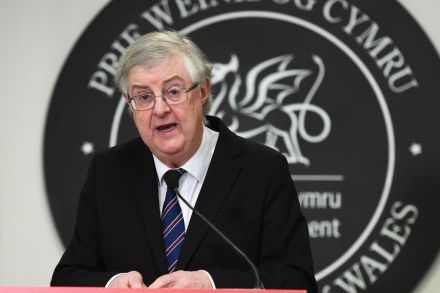
King of Fortress Wales: an interview with Mark Drakeford

From our UK edition

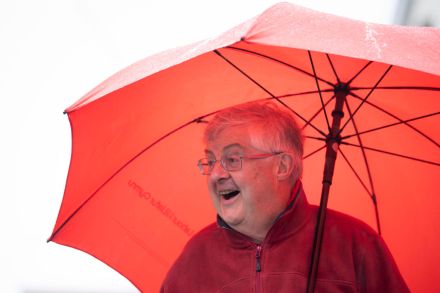
Mark Drakeford sits opposite me in a small conference room on the third floor of Cathays Park, the nucleus of Welsh government operations during Covid-19. The First Minister of Wales is in bullish mood. Last month, he almost single-handedly delivered a thumping election victory for Labour in Wales – securing 30 seats in the Senedd and extending Labour’s 22-year-grip over the devolved parliament. The party in Wales enjoys starkly different electoral fortunes to its comrades across the border, with Drakeford now Labour’s only leader with experience winning national elections across the UK. I meet him a few hours after the first devolved Covid summit, where he and other devolved leaders spoke with the Prime Minister, the Chancellor and Michael Gove.

Scrapping English votes for English laws could spell trouble

From our UK edition

It has been almost 45 years since Tam Dalyell first asked the West Lothian Question. It is a damning indictment of devolutionary unionists that they are still flailing for an answer. Dalyell, a Scottish Labour MP with the uncommon foresight and courage to oppose his party’s embrace of devolution, first posed it during the parliamentary debates that teed up the first referendums in 1979: 'For how long will English constituencies and English Honourable members tolerate ... at least 119 Honourable Members from Scotland, Wales and Northern Ireland exercising an important, and probably often decisive, effect on English politics while they themselves have no say in the same matters in Scotland, Wales and Northern Ireland?

Euros 2021: Turkey deserved to lose to Wales

From our UK edition

Turkey 0 Wales 2 (Ramsey 45, Roberts 90+5) Apologies to those of you who have been expecting my annual list of the world’s most loathsome countries, which I usually publish at this time of year. Various stuff has got in the way – not least this tournament. Once it is over I’ll get down to work – but as a taster, I’m happy to inform you that Turkey will be right up there, at number one or two. Thuggish, bullying, inept, humourless, Turkey. If ever a football team embodied the characteristics of its government, this is the one. What a pleasure it was to see them comprehensively outclassed by a country whose population is about one thirtieth of their own.

More devolution won’t save the Union

From our UK edition

Yesterday, Lord Dunlop – the author of the Dunlop Review into the British state and devolution – appeared before a joint meeting of four Select Committees. It was the first time the Public Accounts and Constitutional Affairs Committee (PACAC), Scottish, Welsh, and Northern Irish committees had sat together, which was fitting given his remit. But the resultant Q&A only highlighted the ongoing tensions in the government’s approach to the Union. Dunlop is an advocate of what he calls a ‘cooperative Union’. His emphasis is on getting the various parts of the governments of the UK to work together, and building on the past two decades of devolution.

Beware Welsh Labour’s Trojan dragon

From our UK edition

After polls that suggested a radical shake-up at Cardiff Bay, in the end it turned out to be a strong result for the status quo in Wales. The Labour First Minister Mark Drakeford enjoyed a vaccine bounce — thanks to procurement decisions in Whitehall — and can now govern on his own should he wish to. But the fact that Labour won’t need a formal arrangement with Plaid Cymru to govern (as it did between 2007 and 2011) should not blind people to the fact that the Welsh leader already leads an increasingly nationalist party. Welsh Labour actually ran pro-independence candidates in these elections Drakeford himself has said that the UK ‘is over’.

Your guide to the 2021 election results

From our UK edition

This week will see the biggest set of polls in UK history outside of a general election. Contests are under way in Wales, Scotland, London and in the various mayoral, local and PCC elections across Britain as part of a so-called ‘Super Thursday.’ But while past election nights have been met with the chimes of the BBC’s Arthur theme and a Dimbleby fronting hours of programmes, Covid means there will be no all-night television special. Whereas normally all results are in by midday Friday, this year it will take longer to verify and count the votes than it has done in previous elections. This is due to both reduced staff numbers to allow for social distancing and the high number of polls taking place in some areas.

Number 10 should fear a Welsh nationalist coalition

From our UK edition

As Disraeli’s famous maxim goes: England does not love coalitions. In Wales, by contrast, we can’t get enough of them. Throughout the devolved era deal-making has created and sustained governments, including the current Labour-led administration – backed by the sole remaining Senedd member for the Liberal Democrats, Kirsty Williams, and the independent statesman Lord Elis-Thomas. After the votes are counted in next month’s Welsh election, history looks likely to repeat itself. A slurry of recent opinion polls project various outcomes on May 7 but none suggest an outright majority for any party.

Wales’s election is finally heating up

From our UK edition

You could be forgiven for forgetting that there is an election happening in Wales. The looming possibility of an SNP majority in Scotland, violence on the streets of Belfast and the death of the Duke of Edinburgh have led to a somewhat lulled campaign in recent weeks. Thankfully, last night’s ITV Wales television debate got things going, to a point. First Minister Mark Drakeford was at the crease to defend his government’s performance throughout the pandemic, as well as Welsh Labour’s record over 22 years in Cardiff Bay. Snapping at his heels was Andrew RT Davies, the Welsh Conservative leader, and Plaid Cymru’s Adam Price, regarded generally as the most impressive debater.

Is Welsh devo-scepticism beginning to unravel?

From our UK edition

Calls to abolish the Welsh parliament are nothing new: Wales rejected devolution in 1979 and voted only by the smallest of margins for partial self-government almost 20 years later. In spite of this, the Welsh political establishment have embraced the potential of devolved politics over the last two decades. And so the devo-sceptics have never had a way to deliver their mission. But they didn’t go away. Quite the opposite: abolitionists have been given a new lease of life throughout the last 12 months. They have latched on to the backward perception that the Welsh cannot govern themselves, and have attacked Mark Drakeford and Labour throughout the pandemic for making different Covid decisions to London ‘for the sake of it’.

Could Holyrood ever be abolished?

From our UK edition

Although Alex Salmond and his Alba party have understandably been getting most of the attention, the separatists aren’t the only side riven with divisions over a new challenger. Unionist relations, especially between the Conservatives and partisans of George Galloway’s ‘All for Unity’ outfit, grow more rancorous by the day. To the former, the latter resemble little more than a band of egotists hell-bent on clawing their way into Holyrood even if the result is fewer pro-Union MSPs. The latter, having largely abandoned their original idea of ‘uniting to win’, are pitching themselves to angry Unionist voters as a chance to clear out the old guard and have a ‘real opposition’.

Welsh Labour’s Red Wall is crumbling

From our UK edition

For a long time, Lord Mandelson’s famous quip that the people of south Wales ‘will always vote Labour because they have nowhere else to go’ rang true. The party dethroned the Liberals in 1922 to become Wales’s voice at Westminster and have won every general election since. In more recent times the onset of devolution presented a new opportunity for Labour to dominate in a new seat of power in Cardiff Bay. They have done just that: the party has been in government in Wales without serious challenge for over two decades. The coronavirus crisis has been a relatively successful period for Welsh Labour too.