Wales

Made in Port Talbot

From our UK edition

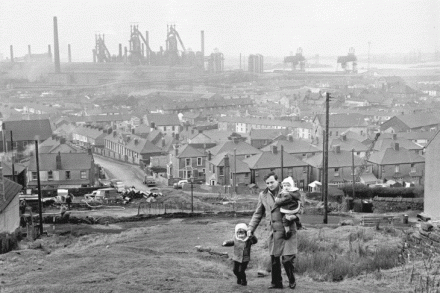
Port Talbot, on the coast of South Wales, is literally overlooked. Most experience the town while flying over it on the M4, held aloft by concrete stilts planted in terraced streets. From that four-lane gantry, the only landmarks are the dockyard cranes and belching steelworks. Over Easter in 2011, National Theatre Wales staged a piece of street theatre that was crafted as a civic resurrection. The Passion of Port Talbot featured Michael Sheen as a Messiah-like teacher who harkens to oral memories. ‘I remember!’ he hollered on the third day, while attached to a crucifix on a traffic island by Aberavon beach, before reeling off a litany of local names: of villages, streets, sweet shops, pubs, clubs, mountains.
The listening project

From our UK edition

As Classic FM celebrated its quarter-century on Wednesday with not a recording but a live broadcast of a concert from Dumfries House in Scotland — Bach, Mendelssohn, Chopin and Liszt, and the première of a specially commissioned work by the Welsh composer Paul Mealor — Radio 3 has upped the ante by announcing an autumn schedule that promises to be ‘an antidote to today’s often frenzied world’. Its new programming ranges from a special opera season and a series of organ and choral music to ‘an immersive audio impression’ of what it feels like to hang vertically on the side of a mountain, wind whistling through the ears, feet teetering on the edge.

The death of the Welsh Labour party appears to have been exaggerated

From our UK edition

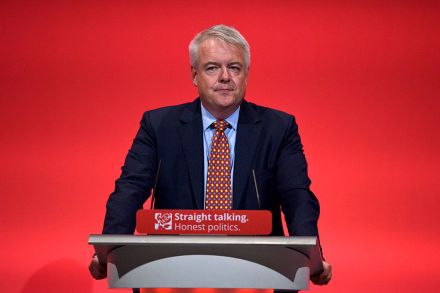
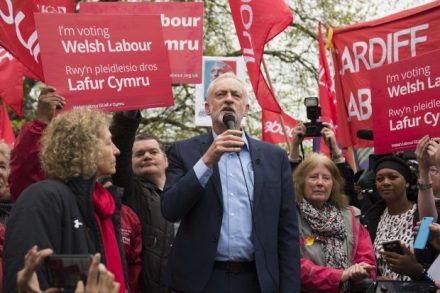
Never underestimate the resilience of the Welsh Labour party. Up until now, this year's general election had looked like it was going to be an historic one in Wales, where the Conservatives have not won since the 1850s, and Labour have come first in both votes and seats every time since 1922. Both Welsh polls conducted since the election was called had given the Tories a clear lead, and put them on all-time high levels of support. But the latest Welsh poll, published today, puts a very different light on things. Labour are now, it appears, back in a clear lead: up nine percentage points in the last two weeks, to 44 per cent, and ten points ahead of the Conservatives whose rating has slumped by seven per cent over the past fortnight.

The rise and fall of Ukip in Wales

From our UK edition

Once upon a time the Welsh didn’t much care for the Kippers. In successive European elections (1999, 2004 and 2009), Scotland always produced Ukip’s worst result and Wales was the second or third worst. It was a similar story in Welsh Assembly elections: in 2003, 2007 and 2011, Ukip talked up their chances of winning seats on the regional list, only to fall well short in the end. Wales seemed barren territory for what looked like a very English party. Then things started to change. In the 2014 European election, Ukip came within a whisker of actually topping the poll in Wales. This was followed in the 2015 general election by the party securing 13.6 percent of the vote there, easily pushing Plaid Cymru into fourth place.

Why Wales decided to forgive the Tories

From our UK edition

The recent Welsh poll showing a ten-point Conservative lead in voting intentions for the forthcoming general election (and also, though much less reported, the first ever Conservative lead in devolved voting intentions in Wales), came as a shock to many. The next Welsh poll, out next week, will tell us whether this first one was just an outlier or the more solid harbinger of an historic realignment in Welsh politics. But why should it be such a surprise that the governing party of the UK, with around a twenty-point opinion poll lead across Britain, should have a lead half that size in one particular part of Britain? The astonishment is that the Conservatives winning in Wales offends many deeply-held and cherished myths and assumptions. The Welsh just don’t do Conservatism, surely?

May 2016 elections: The Spectator guide

From our UK edition

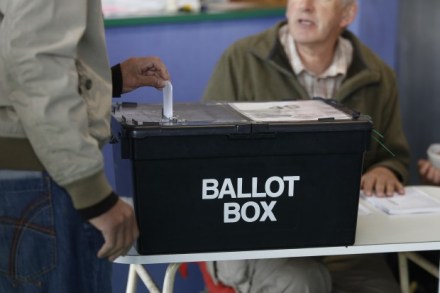
Britain goes to the polls this week, as electoral contests take place in London, Scotland, Wales and across England. They’re the elections which James Forsyth described in the Spectator last week as the ones ‘no one has even heard of’. So what will happen on Thursday night and when will the results be announced? Here’s The Spectator’s run-through of the May 2016 elections: London Mayoral election: Zac Goldsmith and Sadiq Khan go head-to-head in the London Mayoral contest. In 2012, Boris and Ken ran a close-fought race, with Boris getting 971,000 first-round votes to Ken’s 889,918. The relatively small margin between the two meant the result didn’t filter through until early evening.

Can Labour become a truly national party again?

From our UK edition

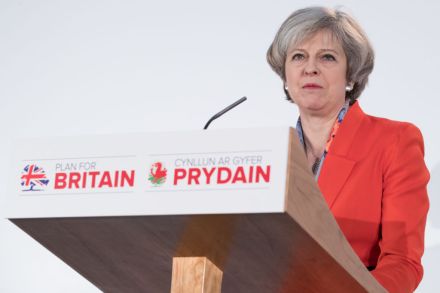
The latest polling marmalade dropper comes from Wales. Labour have won a majority of Welsh seats in every general election for the past eighty-odd years. But the latest Welsh Political Barometer, the most respected poll there, has the Tories on 40 per cent and on course to win 21 seats to Labour’s 15. This poll combined with the fact that Labour is now down to one MP in Scotland shows how difficult it will be for the party to win a UK-wide majority again. They will have to do it without the inbuilt advantage that their Celtic strength used to provide them with. If May can succeed in realigning British politics in this election and flip lots of Labour seats in the North and the Midlands, then it will become even harder for Labour.

What were the Welsh thinking when they voted for Brexit?

From our UK edition

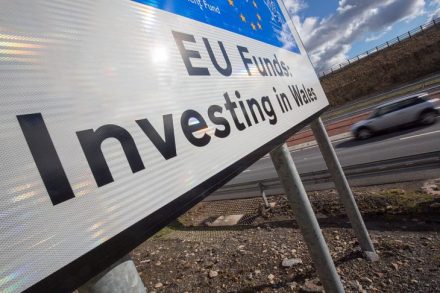
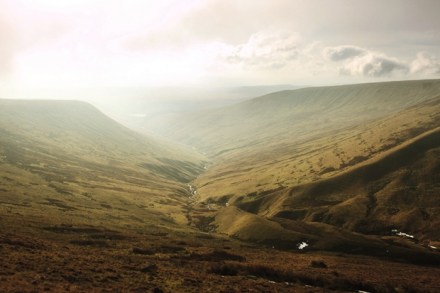
Goodness, Wales is gorgeous to look at. The landscape is sublime. I woke in Abergavenny to snow on the Black Mountains, interspersed with emerald green valleys — all that rain is not for nothing. The natural beauty only heightens a troubling question. Wales voted for Brexit, but every road, university and waterfront improvement scheme — and they are everywhere — is EU-funded. Excuse me? What were all those warmly welcoming people I met thinking of exactly?

Diary – 9 March 2017

From our UK edition

Oh dear. Usually writers who contribute to these diaries start with something like, ‘To Paris. To launch my novel at Shakespeare and Company.’ Well, I went instead to Penarth, which is a charming seaside suburb of Cardiff, and got a right royal welcome. I told the customers of Griffin Books (and Book-ish in Crickhowell and Cover to Cover in Mumbles) that I forbade them to buy books from Amazon. If they didn’t support their independent bookshops, they would lose them. And bookshops are vital for community health. Think what Daunt’s did for Marylebone High Street; started its transformation from a non-street to a destination street, no less. Speaking of Daunt’s, do you realise that their business rates are about to double?

The Six Nations is the most exciting sport on the planet

From our UK edition

Perfection in sport: unattainable, but sometimes you can come close. Moments, people, actions you never tire of watching: Roger Federer’s backhand; Virat Kohli’s cover drive; Mo Farah’s acceleration off the final bend or little Lionel Messi dribbling through a crowded penalty area as if his opponents were shadows; Fred Couples’s sensuous golf swing. Last weekend another moment: the long pass from England’s Owen Farrell to Elliot Daly for that decisive try in the final minutes at the Principality Stadium. This 25ft rocket, superbly timed and delayed long enough for Farrell to be in touching distance of the defensive battery, was so quick and flat it left the defence flummoxed.

Viewing the view

From our UK edition

Landskipping is about viewing the view, from the 18th century to the present. From the title (which is the only self-conscious thing about this terrific book) I feared we might be in for a heavy dose of Wordworthishness and ‘the lone enraptured male’ school of writing. But Anna Pavord, along with Kathleen Jamie, Dorothy Wordsworth and Jane Austen, is more down-to-earth than any Romantic moper. Like the author of Sense and Sensibility, she sees both sides of the coin. Romantic mopers, however, do crowd the early pages. Once a ‘correct’ taste for landscape became a desirable attainment in the mid-18th century, the way you looked at wild places was a way of demonstrating sensibility rather than sense.

If the single market is so great for Wales, why is it so poor?

From our UK edition

Industry will shrivel. Exports will dry up. The few remaining steel works will be closed down. And rugby will be banned. Okay, I made that last one up. But in a report today, the leaders of Welsh Labour and Plaid Cymru have laid out the case for keeping the principality in the single market - and warned that the economy will be virtually destroyed if they come out. 'Severing ties with the single market to control our borders would be an act of catastrophic self-harm,' according to the Welsh First Minister, Carwyn Jones. Like a kind of mini-me Nicola Sturgeon, it is possible to see what Jones, or certainly the Plaid leadership, might be playing it. They see membership of the single market as a way of driving a wedge between Cardiff and London, and winning more power for themselves.

The power of song | 20 October 2016

From our UK edition

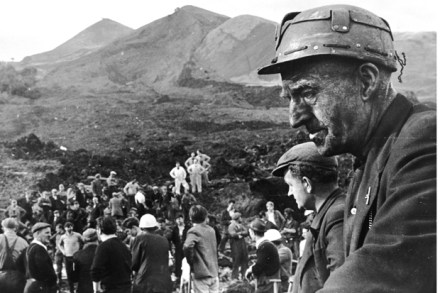
‘I went in at seven and came out aged 22,’ said Brian as he looked back on the day in October 1966 when his primary school in Aberfan was smothered in a great black wave of coal slurry. On that day, of his small school of just 141 pupils, only 25 children survived. Brian lost his older sister; he escaped because he refused to get under the desk as the teacher instructed when they heard this extraordinary, unexplained, overwhelming noise, ‘like an aeroplane coming into land’, getting louder and louder. He later joined the Ynysowen Male Voice Choir, formed in Aberfan a couple of years after the disaster as the fathers, husbands and brothers of those who died began to realise that the only thing that was helping them get by day-to-day was singing.

Letters | 25 August 2016

From our UK edition

Golden age problems Sir: Johan Norberg’s ‘Our golden age’ (20 August) is absolutely right — we do live in a golden age; antibiotics still work, we have less starvation, the world is open for trade, with all its benefits. But there is a fly in the ointment: human overpopulation. Global warming (if you believe in it), degradation of the environment, extinction of species, all are consequences of it. It is a result, in fact, of our success. The only country to have grasped the nettle — China — is now having second thoughts. Perhaps wind and solar power can provide for our needs when we are 70 million in these islands; but what when we are 80 million, 90, 100? And for the rest of the world? W.G.

Something must be done for Wales

From our UK edition

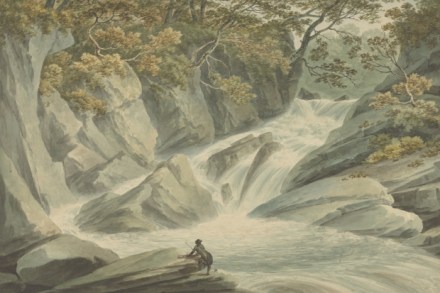
On Monday 25 July we climbed Cader Idris. No particular reason except a free Monday and a memory of what a fine mountain it looked when, many years ago and heading for the north Wales coast, I skirted this massive ridged hunk of green and black rising from oak forests. Some hills have a strong sense of their own identity and Cader Idris impresses itself on all who see it. It’s a walk, really, not a climb, but at just under 3,000 feet a big, steep walk, taking four or five hours up and down. So we set out from Derbyshire at seven and were there in three-and-a-half hours. In a little sunshine and some misty drizzle we left the car and followed the trail. Our route was to be circular, clockwise, right over the top.

Barometer | 22 June 2016

From our UK edition

Big game hunt Wales beat Russia 3–0 to finish above England in their group at the European Football Championships. Which is bigger in Wales, football or rugby? — The Football Association of Wales was founded in 1876, five years earlier than the Welsh Rugby Union. However, rugby then took off rapidly in south Wales while football remained stronger in the north. — Wales lost their first matches to England in both football (2–1) and rugby (8–0). — Rugby and football matches have both filled Cardiff’s Millennium Stadium (capacity 76,000), though in a recent Wales Online poll, rugby was still reckoned more important, by 56% to 44%.

A merry guide

From our UK edition

If you have legs, or a bicycle, or indeed both, you are going to love this book. Chaps, no matter how old or how fat or otherwise incapacitated you are, if you haven’t already received it for Father’s Day the chances are it’s coming your way this Christmas. Ladies: if you are a fell-runner, a hill-walker or a budding Victoria Pendleton, pop this into your backpack or saddlebag with your energy bars and your old Ordnance Survey. Graham Robb — yes, that Graham Robb, the biographer and historian of all persons and all things French, and also the author of an excellent history of homosexuality, Strangers: Homosexual Love in the 19th Century (2003) — has written a book about British and Irish cols and passes. But wait: British and Irish whats?

The Spectator podcast: Erdogan’s Europe

From our UK edition

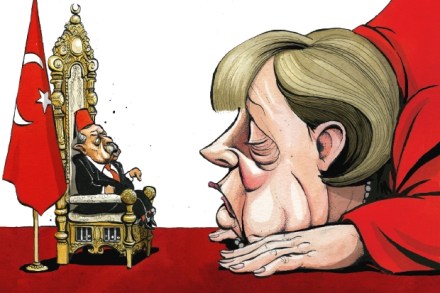
To subscribe to The Spectator’s weekly podcast, for free, visit the iTunes store or click here for our RSS feed. Alternatively, you can follow us on SoundCloud. Has Erdogan brought Europe to heel? In his Spectator cover piece, Douglas Murray argues that the Turkish President has used a mixture of intimidation, threats and blackmail to do just that and throw open the doors of Europe to Turkey. Douglas says Erdogan is a ‘wretched Islamist bully’ who has shown just how the EU works. But in pushing Europe around, is Erdogan now more powerful than Merkel, Juncker and Cameron? And how does the Turkish PM's resignation this week changed the country's relationship with the EU? Isabel Hardman speaks to Rem Korteweg, from the Centre for European Reform.

The female gaze

From our UK edition

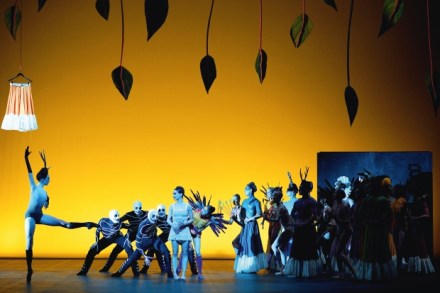
Tamara Rojo programmed three female choreographers for her English National Ballet spring bill because, she said, she had never danced a ballet by a woman, and wanted to see what women would produce. Just the two begged questions here. First, that female choreographers are being stifled by institutionalised sexism in the ballet establishment. Second, that female choreographers, if allowed to see the light of day, would offer a differently thought, differently imagined argument from the general tenor of those pesky male choreographers who dominate the stage.

Watch: Ukip candidate blames litter in Cardiff on migrants

From our UK edition

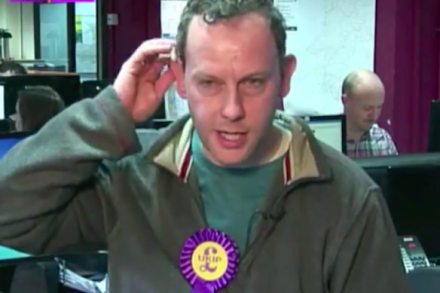
Oh dear. Gareth Bennett may soon regret his decision to appear on today's Daily Politics. Bennett, who leads Ukip's regional list in South Wales Central, agreed to be interviewed on the show after he came under fire this week for blaming increased litter in Cardiff on East European migrants. During his appearance on the BBC show, Bennett was grilled by Andrew Neil on whether he had any evidence to back up his claims. Despite a lack of proof, Bennett showed no sign of backing down: AN: You said you think there's a hygiene problem, what is that hygiene problem?