Wagner group

Ukraine’s own Wagner Group

As peace in Ukraine seems still far and the conflict is witnessing a new escalation of violence, a new breed of private military companies is already emerging, ready for a post-conflict Ukraine. Rooted in a draft legislation “On International Defense Companies” proposed on April 2024, the Ukrainian government aims to channel combat-seasoned veterans into regulated, transparent security firms rather than leave them adrift or, worse, turn them into mercenaries for hire in distant conflicts from the Sahel to the DRC.

Ukraine

The American mercenary is back

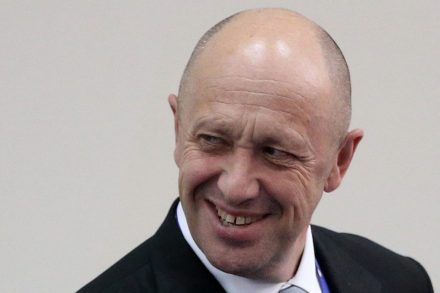
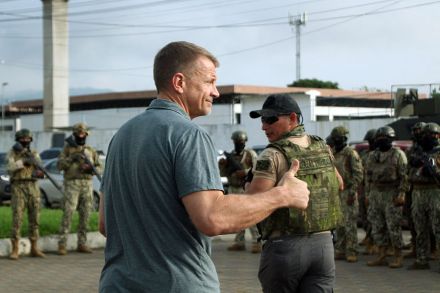
Two years after the fiery death of Yevgeny Prigozhin, the warlord behind Russia’s Wagner Group, the global shadow war waged by mercenaries and contractors still rages on. And now one of the most well-known names in the mercenary world is back in the headlines: Erik Prince. The founder of Blackwater and longtime ally of President Donald Trump, is on the ground in Haiti, where he has signed a deal with the government to take on the armed gangs that have brought the capital to the brink of collapse.Prince sold Blackwater in 2010 after its contractors opened fire on civilians in Iraq and it now operates under a different name.

Erik Prince

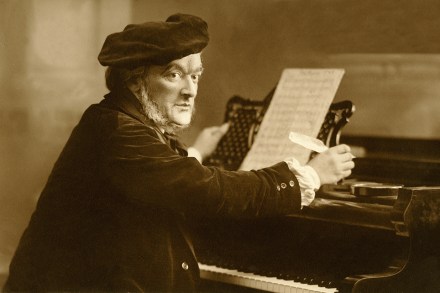
Would Richard Wagner have approved of the Wagner Group?

From our UK edition

Wagnerian exile Would Richard Wagner have approved of the Wagner Group? While he is believed to have harboured anti-Semitic views and his music later became an inspiration for Adolf Hitler, the young Wagner was a left-wing activist. In 1849, in spite of serving with the Saxon court in Dresden, he joined an uprising against Prussian rule. He is believed to have been involved in making and distributing grenades and to have acted as a lookout. Several of his associates were killed or arrested and sentenced to death after the uprising failed, but Wagner fled to Switzerland. His exile had a happier outcome than that of Yevgeny Prigozhin, and he was able to return to Dresden 13 years later when a ban on him was lifted.

Will mounting casualties change the debate in Ukraine?

From our UK edition

At a small army field clinic outside Bakhmut, I watched as the body of a dead soldier was carried in. Two more soldiers followed, this time seriously injured – and this was what troops described as a ‘quiet day’. Ukraine doesn’t talk about its military deaths much and refuses to reveal any figures. There’s little in the way of victim culture here; the emphasis is on how brave its troops are, not how many have perished. Most people know someone who’s died in action, but treat the collective trauma as something to worry about when the war is over. In the meantime, there’s vodka. While Russia has used the conflict to drain its jails, Ukraine is losing its brightest and best Here and there, though, glimpses of the nation’s best-kept secret emerge.

Why Putin still needs Wagner

From our UK edition

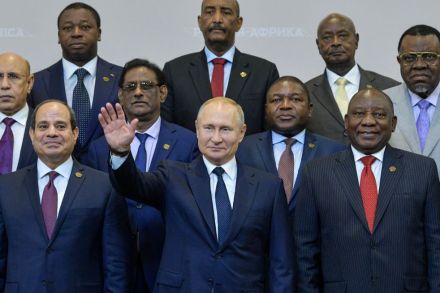
It will be a matter of deep regret for Vladimir Putin that, in the wake of Yevgeny Prigozhin’s ill-fated attempt to overthrow Russia’s military establishment, he has finally been forced to come clean about the Kremlin’s association with the Wagner Group. Deniability is a vital facet for a veteran spook like Putin. Even when Wagner’s band of mercenary cut-throats were spearheading the assault on the east Ukrainian city of Bakhmut earlier this year, the Russian leader rebutted claims of Prigozhin’s involvement. ‘He runs a restaurant business, it is his job – he is a restaurant keeper in St Petersburg,’ Putin told Austrian television.

Beijing and Prigozhin: what does China think of the Wagner uprising?

From our UK edition

36 min listen

It’s now a week since the Wagner Group revolted against the Kremlin. Though the dramatic uprising was quelled within 24 hours and the group’s leader, Yevgeny Prigozhin, is now exiled to Belarus, the episode will have lasting impact on President Putin’s authority. Among those closely watching the events unfold would have been the Chinese leadership, who sent out a statement of support for Putin, but only after it was clear that the revolt had been put down. What will those in Zhongnanhai make of the Prigozhin uprising? And could something similar happen in China? On the episode, I’m joined by James Palmer, a deputy editor at Foreign Policy and long time China hand, to discuss.

The Wagner Group isn’t Russia’s only private army

From our UK edition

Allowing a psychopath to form a private army of violent criminals may not, on reflection, have been Vladimir Putin’s greatest idea. But Yevgeny Prigozhin’s mutinous Wagner Group is by no means the only private army operating in Russia. Over the past couple of months no fewer than five armies have been fighting on Russian soil. Only one of them, the official Armed Forces of the Russian Federation, is directly subordinate to the Kremlin. Pay can run to £2,400 a month, an attractive offer when the average wage in the provinces is under £600 The 12,000-strong semi-irregular forces of Chechen president Ramzan Kadyrov, officially known as the 141st Special Motorised Regiment but more famous as the ‘Kadyrovsty’, are effectively the Praetorian Guard of a regional leader.

Russian failure is a lesson for America

We may never understand the series of events and decisions that led Yevgeny Prigozhin to stage an armed rebellion against Russian president Vladimir Putin’s administration with his Wagner Group private military company, or PMC. Prigozhin was opposed to the planned forcible incorporation of Wagner into the Russian armed forces. He also came to be a sharp critic of the fabricated rationale for Russia’s war on Ukraine and the sloppy way it was being waged by its generals, who are more focused on politics than on defeating Kyiv.

russian military

Wagner Group leader claims Russian forces attacked his troops

The leader of Russia’s Wagner group, Yevgeny Prigozhin, claimed Friday that Russian forces targeted his private military company, with “many victims.” The attack occurred after Prigozhin produced a video where he lambasted the Russian military brass for peddling falsehoods about the war to the Russian public and to President Putin. “The ministry of defense is trying to deceive the public and the president and spin the story that there was insane levels of aggression from the Ukrainian side,” said Prigozhin according to The Guardian, “and that they were going to attack us together with the whole NATO block.” “When Zelensky became president,” he added, “he was ready for agreements. All that needed to be done was to get off Mount Olympus and negotiate with him.

yevgeny prigozhin

Putin’s imperialism in Africa

Last week, at roughly the time that photographs and stories began to filter out of liberated Bucha in Ukraine, the NGO Human Rights Watch published a report of similar massacres which took place contemporaneously in rural Mali. What linked the two was the identity of the perpetrators. In Ukraine and across Africa, these atrocities are committed by Russians. In combination with the Malian military junta, foreign soldiers "summarily executed an estimated 300 civilian men," in the town of Moura in late March. These soldiers did not speak French.

The terrifying neo-Nazi mercenaries being deployed in Ukraine

From our UK edition

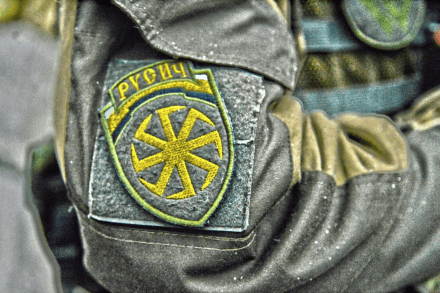
Given how the Kremlin is so determined to portray Ukraine as a hotbed of Nazis, it is tragically ironic not only that its own forces seem determined to recreate some of the horrors of the German invasion in the second world war, but also that it is so willing to use its own fascists in pursuit of its war. The latest unit to hit the news is Rusich, a unit affiliated to the infamous mercenaries of Wagner Group. Its name simply means a member of the old Rus’ people, and speaks to its inchoate ideology, a mix of traditional Slavic (and Viking) paganism, Nazism, and extreme Russian nationalism.