Vladimir putin

Boris gaffes, Russia laughs

Cockburn woke up this morning to a good laugh over his coffee when he saw that British prime minister Boris Johnson had attributed Putin’s invasion of Ukraine to “toxic masculinity.” Johnson, the Conservative PM of the UK, told German broadcaster ZDF, “If Putin was a woman, which he obviously isn't, but if he were, I really don't think he would've embarked on a crazy, macho war of invasion and violence in the way that he has." He proceeded to say that the war is a “perfect example of toxic masculinity,” urging more countries to have “more women in positions of power.” While Putin’s bare chest on horseback may be the source of endless memes, Cockburn believes Johnson is focusing on the wrong things here.

Defending Ukraine should be a European project

NATO gatherings at the head-of-state level are ordinarily placid, even boring affairs. But this week’s three-day NATO summit in Madrid will be quite different. For the first time in twenty-three years, the alliance is meeting as a war churns on European soil. Russian President Vladimir Putin’s invasion of Ukraine has been an electric shock to the continent’s defense establishment, at least if their rhetoric is any indication. European officials have finally come around to noticing that Europe isn’t an exceptional zone of peace and tranquility, but a region no more immune to armed conflict than any other. NATO, which was straying out of theater in a desperate attempt to stay relevant, is now back to performing the defensive mission it was meant to do.

What happens to US fighters captured in Ukraine?

Alex Drueke and Andy Huynh are two former American military members now in Russian custody, captured by the Russians in Ukraine, where they were fighting for the Ukrainian government. What is going to happen to them? The most likely thing is that both men will eventually be traded to the US in return for captured Russians. Prisoners are very valuable and rarely wasted in executions unless those carry much more value than the prisoners held by the other side. The deal may be public or secret, and the US can expect to pay a premium. Israel usually releases ten or more Palestinian prisoners in exchange for one of its captured troops.

Can the Big Mac save Russia?

Cockburn has rarely seen eye to eye with de-celebrated New York Times columnist Thomas Friedman. He's particularly irked over Friedman's habit of quoting conversations he's had with cab drivers, given that Cockburn never remembers his taxi rides the next morning. Yet today he can't help but think there's something to Friedman's pro-globalism parachute journalism after all. During the 1990s, Friedman became famous for touting what he called the Golden Arches Theory of Conflict Prevention. This held that "no two countries that both have a McDonald’s have ever fought a war against each other." The thinking behind this idea was simple: as American corporations expanded globally, as nations consolidated and opened up their markets, war became bad for business.

Russia is sidestepping American oil sanctions

When the European Union finally made the decision to ban 90 percent of Russia’s crude oil imports by the end of the year, the bureaucrats in Brussels were jubilant. The EU’s adoption of oil sanctions was thought be a big blow to Russian President Vladimir Putin, who depends on the revenue generated by his country's oil exports to fund his war in Ukraine. It doesn’t take a genius to figure out why European officials were so thrilled. The EU imported 2.2 million barrels per day of Russian crude last year, amounting to tens of billions of dollars in profits for the Kremlin every month.

Biden dumps weapons into Ukraine

Over the last four months, the Biden administration has assured us that it is only sending “defensive weapons” to Ukraine. It's a claim that's become more difficult to believe as more sophisticated systems are announced seemingly every week that do not require further congressional approval. Take the most recent example. The White House announced a fresh $1 billion last week for 18 more Howitzers, more long-range missiles for the HIMARS rocket systems announced earlier this month, and a new weapon, Harpoon anti-ship missiles. These are systems that can strike at the more than 20 Russian naval vessels accused of blockading Ukraine’s eastern ports.

Russia slogs through the Donbas

A brutal artillery battle: that’s what the latest phase of Russia’s war on Ukraine has become. Vladimir Putin failed in his original goal of seizing the entire country swiftly, beginning with the capital of Kyiv, and installing a puppet government. When Ukrainian resistance prevented that, Putin shifted to a smaller, more achievable objective: establishing complete control over two eastern provinces, Luhansk and Donetsk, which border Russia and are jointly known as the Donbas region. That’s where the war is being fought now, with an uncertain outcome. Victory will depend on who wins the artillery battle. Russia has more blunt firepower; Ukraine has more precise, longer-range weapons — or at least it will have them when more NATO supplies reach the frontlines.

artillery

Ron DeSantis’s aide is no Russian agent

The recent retroactive registration of Christina Pushaw — Florida governor Ron DeSantis's press secretary — as a foreign agent has led to an ignorant backlash. A quick glance at any article on the story leaves readers thinking this is Cold War stuff, a "foreign agent" reaching all the way into the halls of Floridian power. The comments suggest that readers have lapped this up. “Trump + DeSantis = Russian money,” says one. “Trumpian Republicans have a fond affinity for Russians,” writes another, finishing with “such fools.” Clearly, they knew this sort of thing was going on all along: "The Kremlin have done it again!" they think, shaking their fists at the memory of the Russian interference which they've convinced themselves won Trump his election back in 2016.

ron desantis

Why are Putin’s propagandists so bad at their jobs?

During the Cold War, the Soviets would place defectors from the West under house arrest as soon as they arrived in Russia. The assumption was that, as soon as they realized what a dump the USSR was, they would try to sneak back home. And they were probably right. Still, it’s a credit to the Soviet propaganda machine that they showed up in the first place. Back then, Russia did a great job of marketing itself. They paid top dollar to seduce high-ranking scientists and intelligence officials, while young radicals lined up to do the Kremlin’s bidding. Their disinformation was second to none. And today? Well, put it this way. Last week, Russian foreign minister Sergei Lavrov said that Ukraine’s Jewish president, Volodymyr Zelenskyy, is a Nazi.

Pussy Riot’s daring escape from Russia

It is a story of ingenuity, cunning and farce that would have done credit to Mr. Toad, escaping his prison bondage by dressing as a washerwoman. Lucy Shtein, one of the members of the Russian protest art collective Pussy Riot, recently revealed how she managed to flee the country while dressed in the bright green attire of a food delivery company. Along with her constant familiar Mr. Rat — a pet rodent who, as is often the way of these things, has become a social media breakout star — Shtein managed to leave her flat in central Moscow, where she had been under house arrest for more than a year.

The failure of Marine Le Pen

Following her second-round loss to Emmanuel Macron in France’s presidential elections last month (it was her third loss on the national stage), Marine Le Pen has announced her candidacy for the National Assembly. She hopes to win Pas-de-Calais’ eleventh constituency in June — a seat she won in 2017 — to oppose Macron’s policies in the French parliament, along with her National Rally (RN) colleagues. But she is unlikely to have much leverage. In the last parliamentary elections, the National Rally (then the National Front) won eight seats out of 577. The latest poll by Harris Interactive has them winning 65 to 95 seats this year, compared to 338 to 378 seats for Macron’s re-branded Renaissance party, which would give Macron an absolute majority.

Putin’s Victory Day speech shows he’s not backing down

“Victory Day” is one of the most solemn events on the Russian calendar. Every year on May 9, the country gets together to celebrate the defeat of Nazi Germany in what Russians call “the Great Patriotic War,” in which as many as 26 million Soviet troops and civilians perished. It’s a time for reflection, for an appreciation of history, and, yes, for pomp and circumstance, with Russian troops decorated in dazzling uniforms marching in unison throughout Moscow's Red Square. This year’s Victory Day celebrations, however, had much of the world on edge. In next-door Ukraine, Russian forces were taking a beating, with smaller but nimbler and more determined Ukrainian units continuing to mount stiff resistance against a Russian military offensive in the Donbas.

Where will the war in Ukraine go next?

Almost every night in Russia, it seems, a government building bursts into an unexplained fire. Fuel depots, office buildings, infrastructure hubs — and once a bridge. No doubt people have their theories. Insinuation abounds. "Karma is a cruel thing," one Ukrainian official has said on Telegram. But in the main, both the Russian government and Ukraine maintain an eloquent silence. The metaphor is apt. The fires are an unexpected consequence of Russia’s war in Ukraine, an eventuality, no doubt, that no one in the Kremlin inner circle anticipated, or planned for. And yet they burn merrily nonetheless.

Among Moscow’s lost generation

Vladimir Lenin famously said that there are “weeks where decades happen.” He was talking about the Bolshevik Revolution, but the panic-stricken weeks after Vladimir Putin shocked even his own people by invading "brotherly" Ukraine will also be remembered as an intensely transformative period in Russia’s history, when the ground shifted and Moscow was yanked back to its Soviet past. Those crazy weeks when my phone rang non-stop now feel like decades in retrospect, especially from the perspective of New York. The changes were apparent even after the first mad days of the "special operation." Anti-war Russians had panicked at Putin’s cruel gambit and fled the country by the tens of thousands, along with thousands of Western expats.

In search of a Biden doctrine

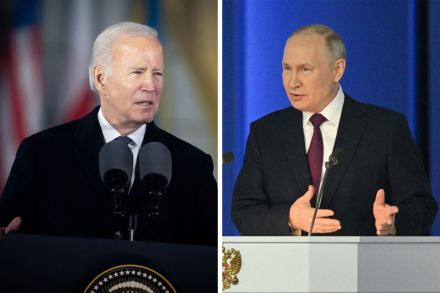
Considering how likely we all are to be blown to pieces by it within the next five years, the atomic bomb has not roused so much discussion as might have been expected,” wrote George Orwell in 1945. The public conversation soon caught up with the lethal realities of the nuclear age. The possibility of annihilation loomed over politics, domestic and foreign, for much of the second half of the twentieth century. Then, with the fall of the Berlin Wall, it faded into the background. Thanks to Vladimir Putin, the threat has returned to the fore. The isolated and unpredictable strongman in the Kremlin is not shy when it comes to reminding the world of Russia’s nuclear arsenal.

biden
Putin

Why Putin won’t save NATO

Vladimir Putin’s invasion of Ukraine is the best thing to happen to NATO since 1989. No amount of cajoling by American presidents could get the Germans to increase their defense spending to 2 percent of GDP, as the alliance asks. The Russian president found a way to persuade them. Putin has also persuaded Finns and Swedes that joining NATO is a good idea. Not for the first time, a war is having the opposite of the effect its instigator intended. Putin may yet get what he demanded from Ukraine and the West right before his invasion. NATO membership may be on the table for everyone else but not for Ukraine. Russia wants its possession of Crimea to be acknowledged by Kyiv, and that too is within Putin’s reach.

Inflation is here to stay

Inflation last month increased to 8.5 percent over a year ago. That’s up from 7.9 percent just last month. It’s the sixth straight month that inflation has been over 6 percent, and the highest it’s been since 1981. The Fed will almost certainly be raising the funds rate steadily for the rest of the year, perhaps by fifty basis point increments instead of the usual twenty-five basis points. The trick, of course, is to rein in the inflation without causing a severe recession. The price of gasoline rose a staggering 18.3 percent in March alone. But even if you take out the cost of fuel and food, which tend to be much more volatile than other commodities, the “core inflation” was 6.5 percent, again the highest in decades.

Marine Le Pen takes on the king of Europe

Last Sunday marked the beginning of the French presidential vote; the runoff election will take place on April 24, and incumbent president Emmanuel Macron winning again is no sure thing. If she plays her cards right, challenger Marine Le Pen has a legitimate shot at becoming the next president of France. Macron emerged victorious in the first round with 27 percent of the vote, followed by Le Pen with 23 percent. For the nationalist Le Pen, it is the second time she has qualified for the runoff, and thus the second time she is running against Macron. In 2017, she lost to Macron 66 percent to 33 percent, crushing once again the ambitions of her National Rally party. This year, however, will be a much closer call.

The Kremlin’s clown prince

The beginning of the year has not gone as well as it could have for Vladimir Zhirinovsky. Mostly because he is now dead, but also because Zhirinovsky, a Russian politician of the “managed” (pro-Kremlin) opposition, predicted and vigorously supported Russia’s invasion of Ukraine. If Zhirinovsky were able to follow the campaign from his hospital bed, it could not have met his expectations. The imperial Russia of his imagination ought to have come into glorious existence, but its armed forces instead suffered reversal and humiliation. Zhirinovsky was the long-time leader of the Russian Liberal Democratic Party — a grouping that, as many wags have separately concluded, was under his leadership neither liberal nor democratic nor, in some lights, a party.

Don’t blame the West for its Ukraine hesitance

As Ukrainian President Volodymyr Zelensky addressed the UN Security Council today with all the anguish you would expect from a wartime commander-in-chief, he could nonetheless be relatively pleased about several things. Sure, Zelensky and his advisers are constantly making the point that Ukraine needs bigger and better weapons to resist Russia’s invasion, but the West has been quite responsive to Kyiv’s requests. The Biden administration’s latest weapons shipment, announced last week, adds to the $1.6 billion in military aid the US has sent to the Ukrainian military since the war broke out on February 24.