Vladimir putin

Those who believe in liberalism must now fight for it

I’m conscious that, just as the easiest way to lose an argument is to mention Hitler, so the easiest way to lose journalistic credibility is to invoke the 1930s. Yet the similarities to our own dismal decade are now too numerous to ignore. There is the same collection of morbid symptoms: the rise of strongmen, the collapse of the political centre, the intellectual organisation of political hatreds. Even more worryingly, there is the same sense of hurtling towards global conflagration. The similarities begin with the disintegration of the international order.

The Iran war is just what Putin’s depleted coffers need

Of all the parties watching the chaos in the Middle East unfold, one should be rubbing its hands together with particular satisfaction. Russia has not fired a shot in this conflict, lost no allies it cannot afford to lose and has so far gained rather a lot, with more to come. A cynic might call it the perfect war for Vladimir Putin. Moscow's public reaction has been characteristically theatrical. The Foreign Ministry denounced American and Israeli actions as a "reckless step" and a "dangerous adventure." Things have gone no further. There has been no announcement of political or military support for Iran from the Kremlin – nor is there likely to be: Russia needs its drones and missiles for Ukraine.

putin

Putin is enjoying the Iran war

After Iran unleashed a torrent of missiles against its neighbors – including those with whom it had enjoyed friendly relations such as Turkey and Azerbaijan – few regional leaders are in the mood to congratulate the new Supreme Leader Ayatollah Mojtaba Khamenei. Few, but not none. "At a time when Iran is confronting armed aggression, your work in this high office will undoubtedly require great courage and dedication," wrote Vladimir Putin in an official message of congratulation to Khamenei Junior. "I am confident that you will honorably continue your father’s legacy and unite the Iranian people in the face of these severe trials.

‘More than half our squad were executed’: Inside Russia’s rotten army

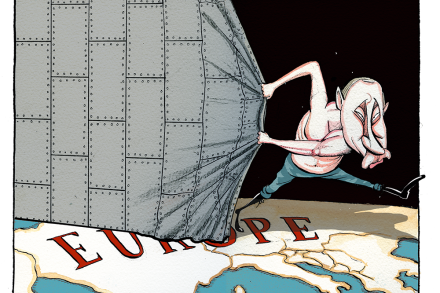
The Russians are on the warpath – and Europe is Vladimir Putin’s next target. That was Sir Keir Starmer’s alarming claim at the Munich Security Conference earlier this month. Britons ‘must be ready to fight, to do whatever it takes to protect our people, our values, and our way of life’, Starmer warned. Britain and Germany’s top military commanders delivered the same message in a recent article. Russia’s military posture ‘has shifted decisively westward’, wrote Air Chief Marshal Sir Richard Knighton and General Carsten Breuer. Soon the Kremlin ‘may be emboldened to extend its aggression beyond Ukraine’. Really? According to much western coverage in mainstream and social media, the Russian army is crumbling, corrupt and inept.

Learning from history requires sophistication and skill

From our UK edition

If you reckon you have an understanding of international politics today, you probably haven’t been listening properly. Vladimir Putin, Xi Jinping, Benjamin Netanyahu and Donald Trump are making history too fast for most of us to keep up. Odd Arne Westad’s The Coming Storm seeks to make sense of the current geopolitical chaos by drawing parallels between now and the years before 1914. If you don’t find those comparisons reassuring, you aren’t supposed to. The point being stressed is that, unless we are careful, we risk sleepwalking into a Great Power conflict as terrible as, or worse than, the first world war. Westad is a leading Cold War historian from Yale and his comparisons are always thought-provoking and often accurate.

Is the war in Ukraine any closer to ending?

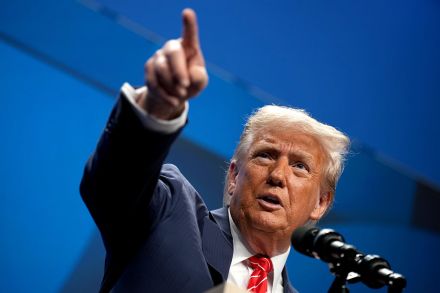
Is the latest round of Russia-Ukraine peace talks, sponsored by the United States and currently under way in Geneva, likely to hasten the war’s end? Donald Trump seems to believe so. On Friday, President Trump claimed that "Russia wants to make a deal, and Zelensky will have to hurry. Otherwise, he will miss a great opportunity. He needs to act." Europe, for its part, remains deeply skeptical and is urging Ukraine to fight on. As the EU's Foreign Affairs chief Kaja Kallas told the Munich Security Conference last week, "the greatest threat Russia presents right now is that it gains more at the negotiation table than it has achieved on the battlefield.

Can Russia’s shadow fleet be stopped?

Of all the weapons in Vladimir Putin’s arsenal, the most strategically crucial has proved to be not hypersonic missiles but the motley fleet of oil tankers that have allowed Russian oil to keep flowing to international markets. Oil dollars have been the lifeblood of Russia’s war economy during four years of conflict. And the West’s failure to shut that export business down has, so far, been the single most important factor behind Putin’s continued military resilience. Economic sanctions were supposed to be the West’s superpower to punish the Kremlin for invading Ukraine in February 2022. So how come Russia now exports more oil by sea than it did at the beginning of the war?

shadow fleet

The world after New START

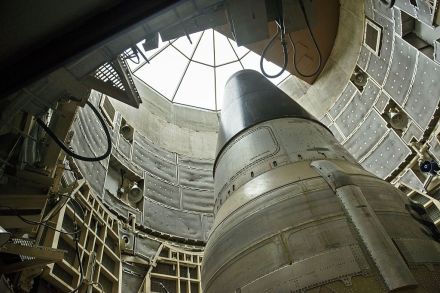
When the New Strategic Arms Reduction Treaty (New START) expires tomorrow, the United States and Russia will, for the first time since the early 1970s, operate without a binding agreement limiting their strategic nuclear forces. That fact alone is striking. What is less obvious – and more consequential – is what the expiration reveals about the state of nuclear order in a world increasingly shaped by authoritarian ambition and multipolar competition. Signed in 2010, New START capped each side at 1,550 deployed strategic warheads and restricted the number of missiles and bombers that could carry them. Equally important were the verification provisions: inspections and data exchanges designed to reduce uncertainty and prevent worst-case assumptions.

Maduro’s capture is mixed news for the Kremlin

For the Kremlin, the US’s snatching of Venezuela’s President Nicolás Maduro is a humiliation with a silver lining. True, little more than a year after the precipitous fall of Syria’s Bashar al-Assad, Russia has been shown to be completely hopeless when it comes to keeping its allies in power. In Caracas, US airborne forces breezed past Russian-supplied S-300 air defense systems, which were part of a $20 billion package of maybe not-so-great Russian military equipment that Moscow sold the Venezuelans. The Kremlin has lost a strategic bridgehead in South America which it could, potentially, have used to disrupt and challenge Washington’s regional hegemony – if Moscow weren’t so committed financially and militarily to its war in Ukraine.

Will US businesses profit from a return to the Russian market?

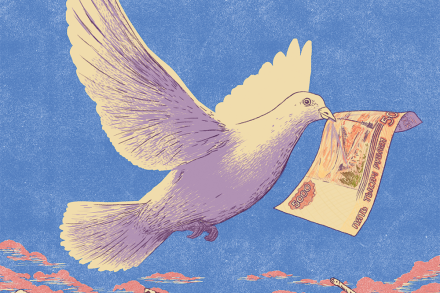
Rome Will peace in Ukraine also prove to be a great deal for US business? Vladimir Putin would certainly like Donald Trump to think so. Within days of Trump’s election victory last November, the Kremlin ordered major Russian corporations to prepare detailed proposals for economic cooperation with Washington. Coordinating these efforts were Maxim Oreshkin, deputy head of Putin’s presidential administration, and Kirill Dmitriev, the US-educated Harvard, Stanford and Goldman Sachs alumnus who heads Russia’s sovereign investment fund.

Trump’s brave new world

No one ever tucked themselves up in bed to read a government document – at least not in the expectation of enjoying it. The standard format is one of hundreds of pages of impenetrable jargon yielding no more than nuggets of significant ideas. The Trump administration has admirably cut through that tendency to produce a National Security Strategy (NSS) that is worth reading: a coherent outlining of America’s strategic intentions on the world stage. Originally composed by Michael Anton, a brilliant mind who is sadly leaving the State Department, the document concisely lays out a Trumpian vision of America’s role in the 21st century.

Why Putin thinks he’s winning

The Kremlin pulled out all the stops for the visit of Donald Trump’s son-in-law Jared Kushner and special envoy Steve Witkoff to Moscow yesterday. Accompanied by Putin’s envoy Kirill Dmitriev, Witkoff and Kushner strolled through crowds on Red Square with minimal security after lunching at a fancy restaurant on Petrovka street. Not coincidentally, Chinese foreign minister Wang Yi was also in town for a meeting with Russian Security Council head Sergei Shoigu, where Russia affirmed its support for Beijing’s One China policy.  It was a sophisticated piece of great power signaling intended to send a multi-part message to Donald Trump.

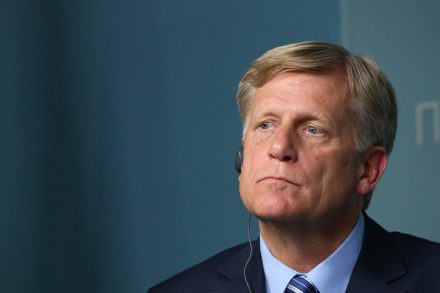
It feels as if Michael McFaul’s audience has long since left

Since the end of the Cold War, politicians and commentators have been searching for a new paradigm through which to understand international relations. Notwithstanding Francis Fukuyama’s oft-misunderstood The End of History, we have tried various patterns to classify the world order, of which George W. Bush’s “Axis of Evil,” first used in 2002, was among the more enduring. In Autocrats vs. Democrats: China, Russia, America, and the New Global Disorder, Michael McFaul acknowledges the widespread if nebulous consensus that the challenge presented by Russia and China is a kind of second Cold War – historian Niall Ferguson has labeled America’s relations with China “Cold War II.

Michael McFaul

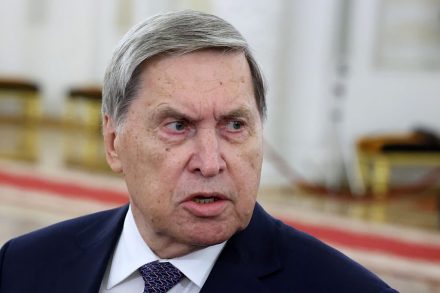
Inside the mind of Putin’s real hatchet man

As Moscow and Washington prepare for talks on the latest version of Donald Trump’s peace plan, leaked recordings of a conversation with US envoy Steve Witkoff have thrown a spotlight on to senior diplomat Yuri Ushakov. It seems he, not Foreign Minister Sergei Lavrov, is the prime mover behind Russia’s negotiating position. The stature of Lavrov, once a legend in the diplomatic community, has steadily diminished since 2014, when he wasn’t even consulted before Vladimir Putin decided to annex Crimea. Every year since then, the now-75-year-old minister has petitioned Putin to be allowed to retire; every year this is denied. Instead, Lavrov remains confined to a role of repeating threadbare talking points to audiences who frequently and openly disbelieve him.

ushakov russia ukraine putin

Why would Putin sign Trump’s peace deal?

It was summer 2022. Ukraine had just taken back Kyiv, people were returning to the city, and the mood was one of euphoria, triumph and success. I was having dinner with a Ukrainian official in a neon-lit seafood restaurant in the center of the city, the curfew nearing. "If this ends like the West Germany or Korea scenario, that would be the best outcome," I said to him. He snapped at me: "You want me to tell my relatives in Kherson that they will never live in Ukraine?" Three years later, and even that unwelcome outcome is now far from what Kyiv is being offered by the Trump administration.

trump putin
electric

The battle for Ukraine’s electric grid

On Sunday, Ukrainian drones attacked the Shatura Power Station located about 75 miles east of Moscow. The 1,500-megawatt gas-fired facility provides heat and power to the residents of Shatura, a town of about 33,000. The drone attack caused three transformers at the plant to catch fire, and a local official said, “All efforts are being taken to promptly restore heat supply,” to the town. According to Reuters, the drone strike was “one of Kyiv’s biggest attacks to date on a power station deep inside Russia.” Sunday’s attack on the power plant in Shatura came two weeks after Ukrainian drones and missiles hit power infrastructure in the Russian cities of Belgorod, Voronezh and Taganrog.

Will the Russia peace deal backfire on Trump?

Kyiv The rumor reverberating around Kyiv is that the FBI has been leaning on Ukrainian anti-corruption police to investigate Zelensky’s inner circle in order to force him to swallow the bitter US peace deal. Trump, as they say, has put the screws, or the feds, on Zelensky. The National Anti-Corruption Bureau – which is unravelling a $100 million war-profiteering scandal that has implicated many of Zelensky’s closest political allies – has denied the accusation point blank, and there’s not a single shred of evidence that it is true.

Witkoff’s Ukraine peace proposal is unworkable

With Ukrainian president Volodymyr Zelensky’s political authority already under grave assault in the wake of a major corruption scandal, he now faces a new challenge – this time from his erstwhile ally, the United States. A high-level US delegation led by army secretary Daniel Driscoll is meeting Zelensky in Kyiv today to present the latest version of a peace plan aimed at ending the war. The contents of the plan have not been officially revealed and so far it has not been publicly endorsed by Donald Trump. But two things are already clear. One is that there’s nothing new in it. And two, there’s nothing good in it for Zelensky.

ukraine

Putin thinks time is on his side

Very well then – war. That is the bottom line of Vladimir Putin’s response to Donald Trump’s latest attempts at mediating an end to Russia’s invasion of Ukraine. In August, Putin rejected the peace deal that Trump lined up in Alaska. Now, the Kremlin has scuttled the White House’s plan for a summit in Budapest by insisting that Russia’s demands for Ukrainian demilitarization and “de-nazification” remain in force. Clearly, the Russian President still believes that he can win the war on the battlefield – and terrorize Ukraine’s civilians. What is Putin’s plan?

putin

Moldova has been saved from Russian influence, but at what cost?

From our UK edition

The European Union, guardian and champion of democracy, rightly takes a dim view when ruling parties ban their opponents, refuse to open polling stations in areas likely to vote against them, censor opposition news channels and allow a large staff of foreign election monitors to police social media in the run-up. If Serbia, say, or Georgia tried systematic election rigging of this kind, Brussels would be the first to call foul and disregard the result as illegitimate. But when it’s the EU that’s running the interference, as in Moldova this week, the rules are apparently quite different. This week the pro-EU party of Maia Sandu, Moldova’s President and a former World Bank official, won a slim majority in a general election.