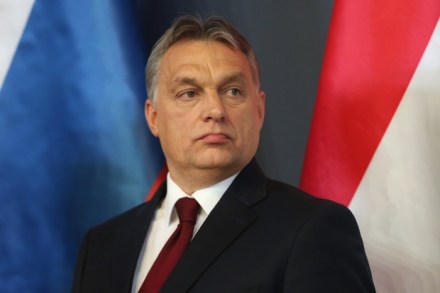
Viktor orbán

Letters: How to revive Britain’s orchestras

From our UK edition

Good conductors Sir: Yes, it is sad to see talents like Sir Simon Rattle and Mirga Gražinyte-Tyla leaving our shores (‘Rattled’, 30 January) and yes, the Brexit complications faced by British musicians are ludicrous. But both might be bearable if there were sufficient investment in grass-roots music here. At least then we could hope that the gap left by departing maestri would be quickly filled by homegrown talent. Unfortunately, the government continues to turn a blind eye to musical education, despite the many studies evidencing its benefits.

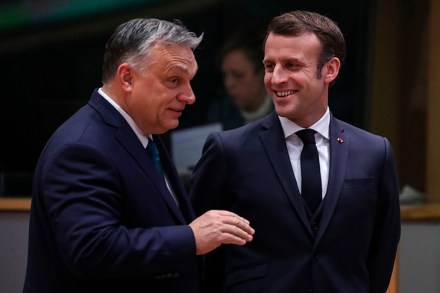
Orban and Macron, Europe’s new power couple

From our UK edition

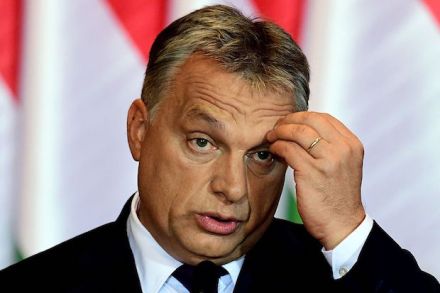
After Brexit, the general assumption was that France and Germany would take their place as the two rulers of Europe. But Angela Merkel’s influence has been waning and Germany is often an absent power — preoccupied as it is by redefining its own politics after 15 years of her rule. This suits Emmanuel Macron, who was never satisfied with sharing the stage with her. He has found himself another ally, one who is far more influential than people give him credit for — Viktor Orban. Macron and Orban have a monastic attitude to power: they both rule on the basis of there being a single orthodoxy that everyone must observe. They also like to behave like monarchs, treating voters as subjects and accepting few restrictions on their personal projects.

Where three empires met

From our UK edition

Norman Stone has already written, with a brilliant blend of humour, understanding and scepticism, histories of the Eastern Front, Turkey, Europe between 1878 and 1919, both world wars and the Cold War. A history of Hungary is his latest book. He has one qualification increasingly rare in England. As polyglot as an educated archduke, he knows Hungarian in addition to German, French, Russian and Turkish. Moreover, he has been visiting Hungary for more than 50 years, since he first went as a student in the dark days of 1962. He has returned many times — his Hungarian improved in a communist prison and he reported the fall of the communist regime in Budapest in October 1989 — and now lives there part of the time.

Hungary’s Prime Minister shares similar views to Donald Trump. Should he be banned too?

From our UK edition

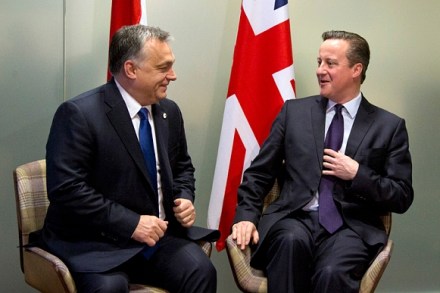
If you are going to try to put people beyond the pale on the grounds of what they have said it pays at least to be consistent. This week, left-wing MPs were cock a hoop at achieving the required number of signatures on a petition calling for Donald Trump to be banned from the UK for the matter to be debated in Parliament.  More than 560,000 signed, with the result that the issue will be discussed in Westminster Hall on 18 January. There was no visible protest, on the other hand, against David Cameron meeting Hungarian PM Viktor Orban in Budapest this week, no audible call for Mr Orban to be banned from making a return visit to the UK. There was even praise from liberals for Mr Orban’s strong words to David Cameron complaining about negative images of Hungarians in the UK.

The scrutiny of Scruton

From our UK edition

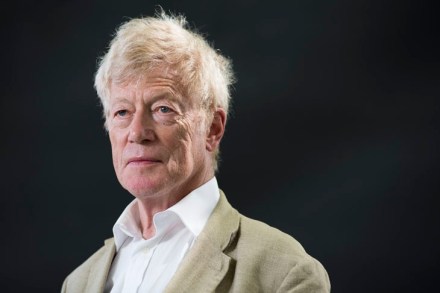
‘Once identified as right-wing you are beyond the pale of argument,’ wrote Sir Roger Scruton. ‘Your views are irrelevant, your character discredited, your presence in the world a mistake. You are not an opponent to be argued with, but a disease to be shunned. This has been my experience.’ Unfortunately, that experience is due to intensify for the 74-year-old conservative philosopher. Last weekend, the government announced it had set up a commission to try and make new housing developments ‘beautiful’ and appointed Sir Roger as its chair. It’s one of the few sensible things the present government has done; so, of course, it’s caused a scandal.

The wrong right

From our UK edition

To the inhabitants of the British Isles, the nations of central Europe have always existed in a semi--mythical space, near enough to be recognised as somehow European, but too distant to be taken seriously. Neville Chamberlain dismissed them as ‘faraway countries of which we know little’; Shakespeare gave landlocked Bohemia a coastline. In British school textbooks, Poland appears for the first time in 1939 and then vanishes again, just as abruptly. In the feverish politics of the Brexit era, central Europe has once again returned — and, once again, it is in a semi-mythical form. This time, the region is playing the role of an imaginary alternative Europe, one perfectly suited to the needs of Brexiteers.

George Soros vs the nation state

From our UK edition

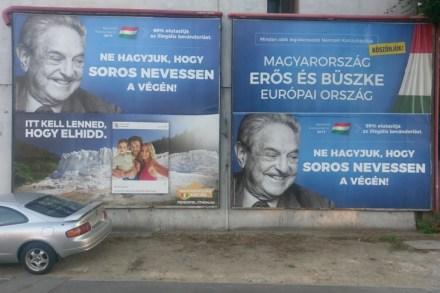
Freedom House is a remarkable and largely admirable organisation. Over the years it has done some great work challenging governments with a tendency towards the authoritarian. Yet its attacks on the government of Hungary are increasingly off-kilter. Regular readers will recall that the Hungarian government differs from the German government in believing that it is not desirable to invite the entire developing world to come and live in your country. The Hungarian government – led by Prime Minister Viktor Orban – also differs from the views of Hungary’s wealthiest son, George Soros, who along with the numerous NGOs that he funds has spent recent years undermining the borders of Europe, and specifically the borders of Hungary.

High life | 16 February 2017

From our UK edition

Gstaad One’s unpopularity on account of calling it a night diminishes in direct proportion to the severity of the next morning’s hangover. I was literally booed by Geoffrey Moore and co. for asking the wife of a friend to drive me 200 yards to my chalet. Co., not Geoffrey, had other plans for the lady, and I will give you, the readers, two guesses what those plans were. It was 5.30 a.m., the friend’s wife did look awfully charming — desirable is closer to the truth — and co. was getting touchy-feely, so I opened my big mouth and asked her to drive me home. The next day, all sorts of people thanked me rather profusely for ending the party. Starting with her hubbie, who was home babysitting. (Fool.

Diary – 1 December 2016

From our UK edition

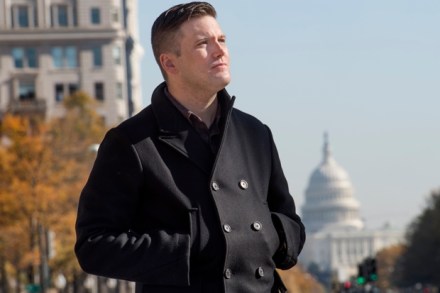
It is odd when someone you know becomes a world-famous Nazi. You may not recognise the name Richard Spencer, but my bet is you soon will. He’s an American white-power activist who is often billed as the inventor of the ‘alt-right’. In the age of Trump, when everyone is panicking about the rise of extremism and the end of liberal democracy, he commands a lot of attention. Spencer has emerged as a media anti-darling — a hardcore version of the gay British controversialist Milo Yiannopoulos, whom I also know a little. (Hark at my social life.) Milo does the camp feminist-and-Islam-baiting thing; Richard is a full-on white supremacist. They both exploit the growing market for troublesome right-wing bogeymen.

The new reality on immigration

From our UK edition

The good people of Hungary went to the polls on Sunday and voted by more than 98 per cent against accepting even a few hundred migrants, as per the European Union’s insistence. That poll result must have been gravid with nostalgia for Magyars over the age of about 35. They will remember that sort of election result being de rigueur, rather than astonishing. Indeed, in 1985 the Hungarian Socialist Workers Party succeeded in capturing 98.8 per cent of the popular vote — and even this was a bit of a disappointment, because in 1980 it had pulled in 99.3 per cent. On both occasions the ruling party was aided, of course, by the lack of an alternative on the ballot paper.

This is what a xenophobic referendum actually looks like

From our UK edition

A country votes against the EU in a referendum in which rabidly anti-immigrant sentiments are aired by senior politicians. That is Hungary, of course, where voters have just rejected -- with a majority of 98 per cent, albeit it on a turnout of 44 per cent, too low to make it binding  -- an EU plan for the country to house 1200 refugees. Now, perhaps, the Remain camp in Britain will stop trying to portray Britain as a nasty, xenophobic country out of step with European values and admit that actually we are really rather liberal in our attitudes towards migration. The only difference is that we had an in-out referendum on EU membership and no other country has yet done so.

Voters have no time for the flaccid centre

From our UK edition

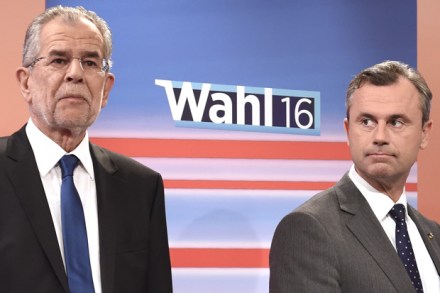
A depression has settled on the Liddle household ever since Norbert Hofer narrowly failed in his bid to become the president of Austria. I like a man who keeps a Glock pistol in his jacket pocket, and there is something noble in the cut of his jib. Norbert was thwarted by the voters of Red Vienna and the usual fraudulent postal ballots, most of which will have come from immigrants, as happens time and again in this country. So he lost. Instead the Austrians are saddled with a lunatic, Alexander Van der Bellen, a hand-wringing Green halfwit representing what George Orwell was habituated to call the ‘pansy left’. Interestingly, both of the two leading candidates for the job of president seem to loathe Austria and wish for it to be abolished.

‘European values’ won’t last long without national borders

From our UK edition

Fascinating events in Hungary where Prime Minister Viktor Orban continues to come under fire from other EU member states for trying to maintain what we used to call ‘borders’. This has now led Orban into direct confrontation with Hungary’s richest export – billionaire financier George Soros.  Orban identifies Soros as being one among a number of ‘activists’ whose organisations share part of the blame for encouraging migrants to come to Europe and for lobbying Europeans to regard borders and sovereignty as things of the past. Soros has now responded in a most illuminating manner, confirming that the many groups he funds are indeed working for precisely the ends Prime Minister Orban described.

Cameron’s friend in Brussels

From our UK edition

The Spanish, in their local elections, just elected a bunch of radicals who oppose the austerity needed to keep Spain in the euro. Poland on Monday elected a Eurosceptic challenger from the conservative Law and Justice party. And leaks from the Euro-summit suggested that David Cameron will respond to this rare combination of crisis and opportunity by demanding… well, not much in the way of reforms and concessions. Admittedly these leaks may be feints to mislead all sides about London’s negotiating strategy. It’s early days. Nor is Poland yet a reliable ally for Britain in such negotiations: its government will be divided between a Eurosceptic president and a pro-Brussels administration until at least October.

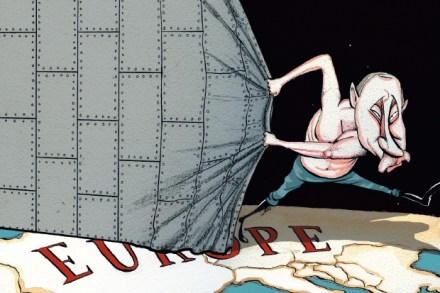
How Vladimir Putin is waging war on the West – and winning

From our UK edition

Last month, the speaker of the Russian parliament solemnly instructed his foreign affairs committee to launch a historical investigation: was West Germany’s ‘annexation’ of East Germany really legal? Should it be condemned? Ought it to be reversed? Last week, the Russian foreign minister, speaking at a security conference in Munich, hinted that he might have similar doubts. ‘Germany’s reunification was conducted without any referendum,’ he declared, ominously. At this, the normally staid audience burst out laughing. The Germans in the room found the Russian statements particularly hilarious. Undo German unification? Why, that would require undoing the whole post-Cold War settlement!