Viktor Orban

Orbán’s defeat is a warning to MAGA

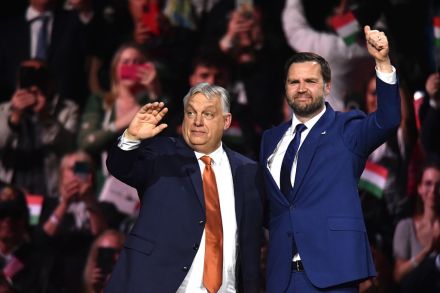
Hungary’s Viktor Orbán was the first populist of the 21st century. The problems his country faced, he said, were immigration – both legal and illegal – and the entrenched class of bureaucrats, judges and NGOs. By the end of 2015, he had built a fence on the southern border, and an attempt to replace the country’s establishment with new people was underway. His project had, for the most part, succeeded on its own terms. And so, what to do then? Once the initial crisis had subsided, Orbán and his theorists' thoughts turned, perhaps inevitably, to the moral character of society and the quest for meaning in the modern world. What they came up with was disappointing, and as certain figures on the American right – J.D.

Hungary has become a tired gerontocracy

Hungary in 2026 is what most developed countries were probably on their way to becoming in the 1980s and early Nineties, had mass migration not intervened: a sleazy gerontocracy with occasional bouts of moral-majority politics and ethnic nationalism. With socialism dead, the opposition is made up of liberal parties led by equally sleazy modernizers. Crime has ceased to be an issue, partly because the population is aging. The people, like pandas, do not breed. There is boredom and ennui. There is nothing analogous to, say, the killing of Iryna Zarutska. Hungary has had a dreadful century and is now a tired sort of place Such has been the work of Viktor Orbán, Hungary’s Prime Minister since 2010, who is to face the voters again on April 12.

Last waltz for Trump’s Hungarian friends?

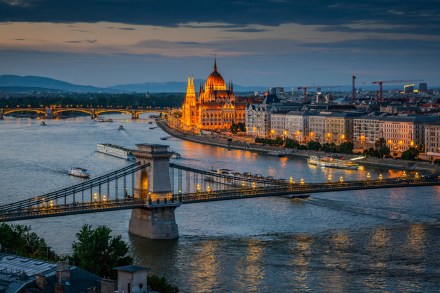
Walking by Hungary’s immense neo-Gothic parliament building in Budapest’s Kossuth Square, one of Cockburn’s traveling companions sidles up to him. “For a certain kind of right-winger,” he grins, “Hungary is their Rojava.” ‘We were Trumpists before Trump,’ Orbán often says There’s something to this idea, for sure. Since 2010 the premiership of Hungary’s Viktor Orbán has – like the proto-government of the Kurds in Syria – given certain groups in America a space to see their ideas implemented that they do not enjoy at home. The Orbán government is rebuilding Budapest in the traditional Baroque style, and there are generous cash payouts to mothers.

Democrats splurge on ads for tough Senate battle

As we look ahead to a Biden-Trump rematch, the map for Senate remains filled with uncertainty, and the Senate Democrats’ super PAC is making major money moves with the “largest ad reservations in Senate history,” according to the group.Senate Majority PAC’s total ad reservations for the fall currently amount to $239 million, as first reported by the Washington Post. It’s a wise move, as the early bird typically gets the cheaper ad buy rate. The ads are booked to run in seven states: Nevada, Ohio, Michigan, Wisconsin, Arizona, Pennsylvania and Montana. SMP’s president said they will focus on “a woman’s access to abortion, healthcare coverage for preexisting conditions and the preservation and strengthening of Medicare and Social Security.

Poland and Hungary learn different lessons from history

For decades, the European Union was dominated by a combination of French élan and German economic clout. By the late 2010s, a conservative Budapest-Warsaw alliance seemed poised to challenge this arrangement. The ideological firepower was supplied by Hungarian prime minister Viktor Orbán, who emerged as an unlikely spokesman for the international right, while Poland’s booming economy and large population lent the partnership some much needed heft. The Polish elections in mid-October not only marked the end of the Law and Justice party’s near-decade of conservative rule; they offered another blow to a Polish-Hungarian relationship already fraying over the war in Ukraine.

poland

What did the Habsburgs ever do for us?

Do you have a favorite Habsburg? Mine is Maximilian I, the first and last ruler of the Second Mexican Empire. Americans may be vaguely aware of him because a defeat of his French allies is commemorated annually on Cinco de Mayo. His struggles echo the experience of many unlucky rulers supported by fickle foreign patrons: Abandoned by the French and besieged by belligerent locals, the ill-fated emperor stubbornly refused to abandon a throne he hadn’t much wanted in the first place. His last words to the firing squad were, “Aim well, muchachos.

habsburgs

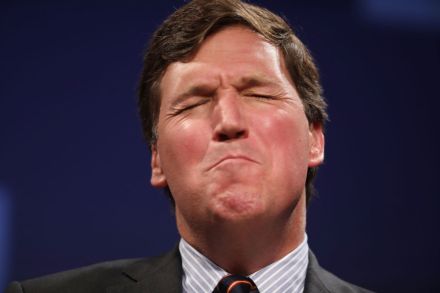
Tucker Carlson and the revenge of the neocons

When Tucker Carlson appeared at the Heritage Foundation’s fiftieth anniversary celebration as a keynote speaker this past Friday, he was in an expansive mood. He reminisced about starting to work at the think-tank’s old publication Policy Review in August 1991, the month that the Soviet Union collapsed. He offered that it had not occurred to him that America would end up succumbing to the very totalitarianism that existed in the USSR, but then proudly noted that there wasn’t any special courage in his own willingness to challenge it. “I’m paid to do that,” he said. “I can have any opinion I want.” Oops. Carlson’s sudden ouster at Fox, complete with reports that the network has compiled a secret dossier filled with dirt on him, suggests a rather different verdict.

Tucker Carlson

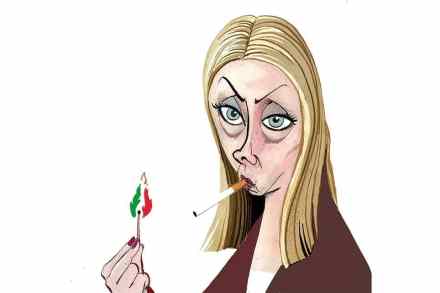
Giorgia Meloni and the reactionary axis that wasn’t

One is a blonde, photogenic woman who grew out of a youthful infatuation with Benito Mussolini to become the first female prime minister of Italy. The other is anything but photogenic, a grizzled veteran of more than three decades of political combat, who began his career as a student activist and became a respectable center-right statesman, only to reinvent himself as a populist firebrand. But if you were to judge Giorgia Meloni and Hungarian Prime Minister Viktor Orbán by the frequency with which they appear together in media coverage, usually with adjectives like “far-right” and “extreme” attached, you might assume that the two conservative heads-of-state are basically indistinguishable. The European Union and its assorted sympathizers certainly seem to think so.

giorgia meloni

Is the right about to backslide on gay rights?

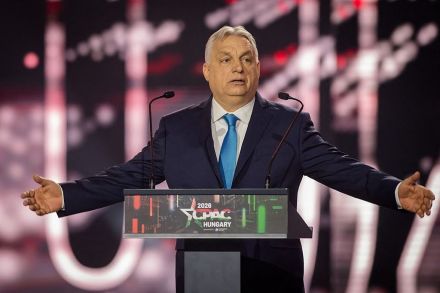
In a speech to August’s CPAC gathering in Dallas, Hungarian president Viktor Orbán said a good many admirable things about the importance of liberty and the tyranny of the globalist left, and the audience was gratifyingly receptive. But the biggest cheers and the most prolonged applause came in response to Orbán’s citation of a line from the Hungarian constitution: “Hungary shall protect the institution of marriage as the union of one man and one woman.” Not so long ago, that enthusiasm might have raised eyebrows. To be sure, the 2015 Obergefell v.

gay

Russia is sidestepping American oil sanctions

When the European Union finally made the decision to ban 90 percent of Russia’s crude oil imports by the end of the year, the bureaucrats in Brussels were jubilant. The EU’s adoption of oil sanctions was thought be a big blow to Russian President Vladimir Putin, who depends on the revenue generated by his country's oil exports to fund his war in Ukraine. It doesn’t take a genius to figure out why European officials were so thrilled. The EU imported 2.2 million barrels per day of Russian crude last year, amounting to tens of billions of dollars in profits for the Kremlin every month.

Conservatives need to forget about Hungary

In his novel The Prime Minister, the fifth in the Palliser series, Anthony Trollope has Plantagenet Palliser, the Duke of Omnium, enunciate his political credo. The Duke explains to Phineas Finn, who recently defended him in the House of Commons from the charge that he tried to purchase a seat for one of his supporters, that the belief that “political virtue is all on one side is both mischievous and absurd. We allow ourselves to talk in that way because indignation, scorn, and sometimes, I fear, vituperation, are the fuel with which the necessary heat of debate is maintained.” Finn responds, “There are some men who are very fond of poking the fire.” Just so.

hungary

Hungary’s Orbán remains a thorn in everyone’s side

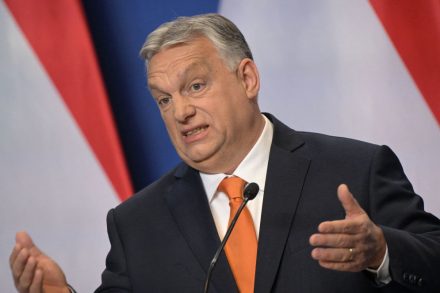
Viktor Orbán has just won another election. The Hungarian prime minister has secured a hefty majority in his country’s legislative elections, and in his victory speech, Orbán revealed once again that he is a thorn: in the side of Europe most obviously but, if need be, in the side of all. I’ll leave for others the discussion of Hungarian democracy — whether Orbán has so manipulated national life that his continued electoral successes are unimpressive, even fraudulent. But Orbán, in his own mind, thought an “overwhelming force” ranged against him. “We never had so many opponents,” Orbán said.

Where Europe ends and the war begins

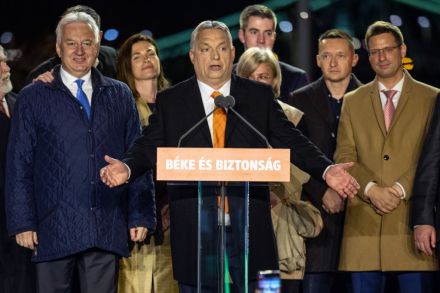
On a nondescript bridge in the northeastern Hungarian town of Záhony, the European Union ends and the war begins. Even amid the turmoil in Ukraine, the local border crossing is strangely quiescent. The flood of cars from the early days of the war has slowed to a trickle, and big eighteen-wheelers continue to cross over from Hungary into Ukraine. There are only two signs that something is amiss: a small notice on the door of the nearby Penny Market asking customers to help Ukrainian refugees, and a massive billboard of Hungarian prime minister Viktor Orbán’s stern face, promising voters that he will keep Hungary safe and peaceful.

viktor orban eu hungary

Even Hungary has soured on Vladimir Putin

As Russian tanks rolled across the Ukrainian border, the front page of the Hungarian tabloid Pesti Hírlap revived an old rallying cry to capture the national mood. “Ruszkik haza!” (“Russians go home!”) was the headline, with Budapest 1956, Prague 1968, and Kyiv 2022 listed below the fold. The line was borrowed from graffiti scrawled on Budapest street corners during the 1956 anti-Soviet uprising, a heroic but doomed effort that has since entered into Hungarian national lore. Is it 1956 all over again? Despite some eerie parallels, the political geography of Europe has changed considerably since the bad old days of the Cold War. Budapest is two hours from Vienna by train and Prague is actually further West than the Austrian capital.

Can Viktor Orbán’s conservatism work in America?

American conservatives are often accused of narrow-minded parochialism, but in recent years, the right has turned its gaze abroad. The Brexit referendum and the rise of Boris Johnson in the United Kingdom anticipated the potential appeal of conservative populism to working-class voters. Alt-right intellectuals look to Singapore’s curious mix of technocratic managerialism and libertarian economics as a blueprint for governance, while their more extreme (and extremely online) fellow travelers celebrate would-be strongmen like Brazil’s Jair Bolsonaro and the Philippines' Rodrigo Duterte. More recently, the presidential campaign of Éric Zemmour in France has captured the imagination of immigration restrictionists.

Viktor Orbán is winning his culture war

Budapest Even supporters of Hungarian prime minister Viktor Orbán acknowledge privately that the Pegasus scandal is a hard blow to the embattled leader. Last month’s news that government spies had employed Israeli software to commandeer the smartphones of journalists, activists and government opponents confirmed the worst authoritarian stereotypes of Orbán, who will be running for his fourth consecutive term in 2022. These allegations, if true — and many Orbán backers with whom I spoke assume that they are — will likely displace what was Orbán’s greatest liability heading into next year’s vote: that he and his Fidesz party oversee a vast web of public corruption.

viktor orbán

Viktor Orbán, literal authoritarian

Wake up, everyone! Democracy is in peril again. Blasting across Cockburn’s email feed recently was a new piece from Yasmeen Serhan for the Atlantic, titled 'The Autocrat’s Legacy.’ The piece is about the unfathomable wickedness of Hungarian prime minister Viktor Orbán. He’s the autocrat. Orbán doesn’t stick his opponents in jail or ban political parties or rig the votes in elections. He’s a much deadlier kind of authoritarian: the kind who wins elections but believes wrong things. Orbán has been the dominant political force in Hungary since 2010, when his Fidesz party dominated elections so thoroughly that they achieved a supermajority capable of passing a new constitution (which they did; replacing Hungary’s Communist-era document). Whoops, that’s 'supermajority’.

orbán

Hungary isn’t afraid to call ‘Christian persecution’ what it is

Following Donald Trump’s election, there was hope that the US would aid Christian communities overseas, especially in Iraq where the population of Christians was reduced by over 80 percent since the US invasion. The Obama administration was less receptive to a focus on persecuted Christians, often opting to use euphemistic terms. Christian persecution became known more as a series of sporadic, unrelated incidents rather than a phenomena. The US has invested significantly in helping rebuild Iraq, but the effectiveness of our aid has been limited, and some people on the ground in Iraq claim they never saw the entirety of the aid themselves.

hungary christians

Can nationalists of the world unite?

Want to lecture people about the anti-globalism trend that is supposedly sweeping the West? It goes without saying that you must refer to Brexit and the election of Donald Trump, followed by mentioning the right-wing (‘nationalist,’ ‘populist’ or ‘illiberal’ or ‘far-right’ could substitute as adjectives) political parties that rule Hungary, Poland, and more recently, Italy. After all, they want to Make Poland/ Hungary/Italy Great Again!

steve bannon nationalism