Venezuela

The real Russiagate: why are the press ignoring Putin’s troops in Venezuela?

Over the weekend, two Russian military aircraft carrying General Vasily Tonkoshkurov along with over 100 Russian troops landed in Caracas, Venezuela. Did the US know Putin was planning this? What will America’s response be? Who knows, because the American media isn’t asking. What might well become the most explosive situation since the Cuban missile crisis has gone almost totally ignored on the homepages of our major news sites. Rather than inquire what will be done about Russian troops in Venezuela, the media focuses its myopic gaze on the only Russia story they seem capable of seeing: what role Russia may have played in our 2016 presidential election.

troops venezuela

Tyrannical tips

From our UK edition

Last week, in an effort to understand what that left-wing hero Nicolás Maduro, President of Venezuela, must be suffering, Hieron, tyrant of Syracuse, explained to his court poet Simonides why the life of a tyrant was such a misery. Simonides here spells out how Hieron can turn the situation round. Simonides began by making a crucial distinction between activities that made one hated and those that garnered gratitude. This was the key to success: outsource the former and direct one’s attentions to the latter. So Hieron should give to others the responsibility for handing out punishments and penalties. Building on this sound principle, he should then concentrate solely on encouraging citizens to do good by offering magnificent prizes and rewards for outstanding work.

Caracas Notebook

From our UK edition

A man stopped me in the street in Caracas and grabbed my hand. I was alarmed, but tried not to look scared. This city sometimes ranks as the most dangerous capital in the world. The practical advice we tend to be given by security consultants boils down to ‘Don’t panic’. ‘Gringos,’ said the man, ‘are good people. Thank you. May God bless you.’ And he was gone. This has been an emotional week for millions of Venezuelans. And there are plenty here who believe the US administration’s endorsement of a rival president means help is on the way; that somehow, someone outside will solve this. The episode reminded me of an equally awkward moment in 2001 in Zimbabwe.

What Syria should teach us about Venezuela

It is no mere coincidence that Donald Trump turned his attention to Venezuela straight after announcing the withdrawal of US troops from Syria. Nicolás Maduro, fighting for his survival on so many fronts at home and abroad, probably hasn't had much time to think about the man who thus inadvertently created the political quagmire engulfing him: Syrian leader Bashar Al Assad. Maduro would do well, though, to brush up on how Assad survived against all the odds, as would Trump. The knowledge could prove invaluable for averting another reckless US push for regime change abroad. Trump's decision last month to accept Assad remaining in power in Syria enraged many Middle East hawks, who long saw Assad's removal as the springboard for war against Iran.

maduro venezuela syria

Corbynistas intervene on Venezuela

From our UK edition

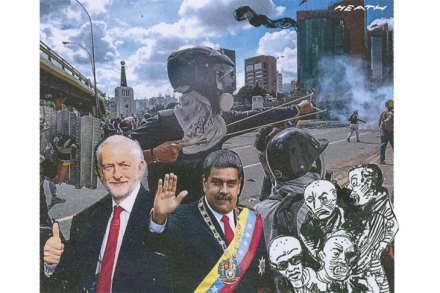
Once upon a time Venezuela was talked up by British socialists – from John McDonnell to Richard Burgon – as an example of a better way. As Jeremy Corbyn put it back in 2013: 'Chavez showed us that there is a different and better way of doing things. It’s called socialism, it’s called social justice and it’s something that Venezuela has made a big step towards.’ Only ever since there were mass food shortages and toilet paper rations – with 82pc of households living in poverty – the majority of Corbynistas have gone a little quiet on the subject.

The flaw in Donald Trump’s plan to oust Nicolás Maduro

From our UK edition

Donald Trump’s decision to recognise Juan Guaidó, the Venezuelan opposition leader, as the rightful head of state will have little impact unless the country’s top military brass turns against the socialist dictator, Nicolás Maduro. Sadly, they show little sign of doing that. Guaidó – aged 35 and president of the country’s opposition-controlled National Assembly – had himself sworn in as head of state on Wednesday. Trump formally recognised him minutes later; this was followed in quick succession by Canada, Argentina, Brazil, Colombia, and Panama. Jeremy Hunt, the Foreign Secretary, joined these calls, saying “the United Kingdom believes Juan Guaidó is the right person to take Venezuela forward.

Could Juan Guaidó finally end Venezuela’s nightmare?

From our UK edition

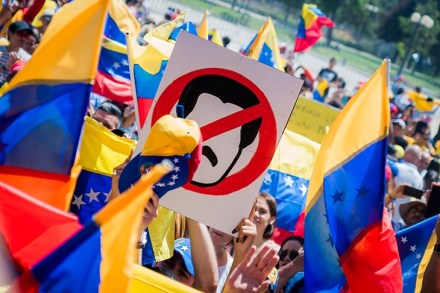
The United States has stepped up its rhetoric against Venezuela’s Maduro regime  by declaring Juan Guaidó as interim president – a move which is also backed by Germany, Brazil and Canada. Tens of thousands of people have taken to the streets of Caracas to hail Guaidó as the country's new leader. But is this really the end for Nicolás Maduro, the man who has led his country into economic ruin? Unlike the protests in the capital in 2017 which were brutally quashed before they could spread elsewhere, these demonstrations are gathering pace all across the country. There are now local reports of members of the national army starting to side with the people.

Pirates of the Caribbean

From our UK edition

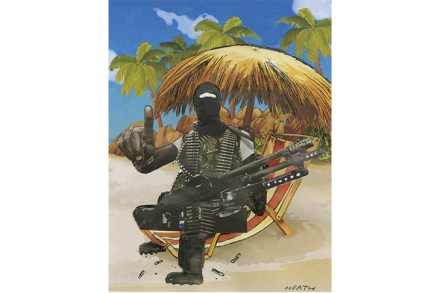
Brian Austin, a fisherman from the small village of Cedros in Trinidad, is struggling to describe the men who robbed him out at sea last year. ‘They had guns, they wore T-shirts and hoods.’ Then he brightens: ‘Have you ever seen Somali pirates? They looked just like that.’ I have indeed seen Somali pirates, as it happens, and rather closer up than I’d have liked. Ten years ago, a bunch of them kidnapped me for six weeks while I was out reporting. That was in Somalia, though, a failed state where anything goes. I never expected to be writing about a plague of pirates here in the Caribbean. The last lot of Caribbean Blackbeards were hunted down by the Royal Navy about 300 years ago, bringing to a close the so-called ‘golden era’ of piracy.

Chris Williamson on the joys of Venezuela

From our UK edition

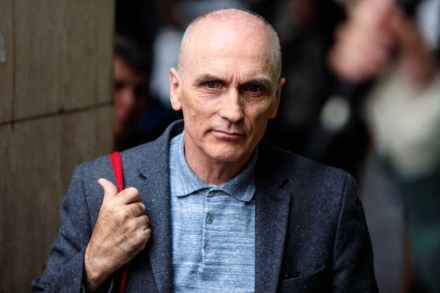
Venezuela is a country in crisis: inflation hit one million per cent last year and GDP has plummeted by half since 2013. Those who dare stand up to president Nicolás Maduro risk finding themselves locked up – or worse. Many have opted to leave: three million migrants and refugees have fled the country in the last few years. But ever the optimist about the joys of socialism, Labour MP Chris Williamson has managed to find some good news about Venezuela – the country’s social housing programme is 'on track': The Corbynista MP shared a link to a news story on a website called Venezuela analysis. But while the site promises independent analysis of the country, Mr S suggests that Williamson might be better getting his news about Venezuela from elsewhere in future.

The troika of absurdity

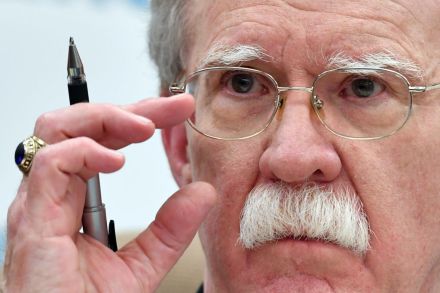
In a speech richly deserving adaption as a Saturday Night Live skit, US national security adviser John Bolton has unveiled the latest extension of America’s enemies list. Eclipsing the post-9/11 ‘Axis of Evil’ we now have a ‘Troika of Tyranny,’ consisting of those powerhouse troublemakers Cuba, Venezuela, and Nicaragua. According to Bolton, ‘this triangle of terror stretching from Havana to Caracas to Managua is the cause of immense human suffering, the impetus of enormous regional instability, and the genesis of a sordid cradle of communism in the Western Hemisphere.’ But fear not. Under the leadership of President Trump, the United States is now ‘taking direct action against all three regimes to defend the rule of law, liberty, and basic human decency in our region.

john bolton venezuela

Socialism isn’t to blame for all of Venezuela’s woes

From our UK edition

Contrary to the impression given by Jason Mitchell, Venezuela does not have a socialist economy (‘Maduro’s madness’). It has a ‘mixed’ economy (and therein lies some of its problems; such as food hoarding by private companies hostile to the regime). The private sector is large, and involved in numerous sectors within the economy; food distribution, pharmaceuticals and so on. The US sanctions against Venezuela have always been about regime change, and these sanctions amount to a blockade of the country. US and European banks have refused to handle Venezuelan payments for medical supplies, and pharmaceutical companies have refused to issue export certificates for cancer drugs — therefore stopping them being imported into Venezuela.

Letters | 30 August 2018

From our UK edition

Venezuelan sanctions Sir: Contrary to the impression given by Jason Mitchell, Venezuela does not have a socialist economy (‘Maduro’s madness’, 25 August). It has a ‘mixed’ economy (and therein lies some of its problems; such as food hoarding by private companies hostile to the regime). The private sector is large, and involved in numerous sectors within the economy; food distribution, pharmaceuticals and so on. The US sanctions against Venezuela have always been about regime change, and these sanctions amount to a blockade of the country.

The facts about the Venezuelan economy

From our UK edition

Contrary to the impression given by Jason Mitchell, Venezuela does not have a socialist economy (‘Maduro’s madness’, 25 August). It has a ‘mixed’ economy (and therein lies some of its problems; such as food hoarding by private companies hostile to the regime). The private sector is large, and involved in numerous sectors within the economy; food distribution, pharmaceuticals and so on. The US sanctions against Venezuela have always been about regime change, and these sanctions amount to a blockade of the country. US and European banks have refused to handle Venezuelan payments for medical supplies, and pharmaceutical companies have refused to issue export certificates for cancer drugs — therefore stopping them being imported into Venezuela.

Hugo Chavez is as much to blame for Venezuela’s woes as Nicolas Maduro

From our UK edition

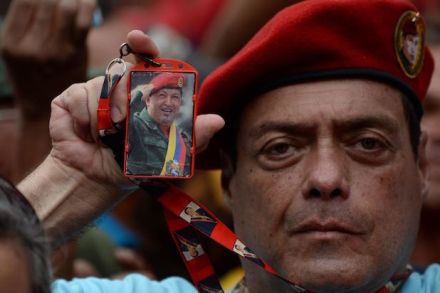
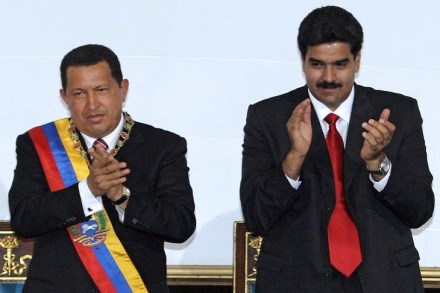
Hugo Chavez’s apologists are at it again. Venezuela’s little local economic difficulties are nothing to do with him, you’ll understand. It’s his successor, Nicolas Maduro who’s to blame. Chavez was a good guy, who lifted people out of poverty and made a more equal country. Jeremy Corbyn is right to hold him up as a hero. Nowhere was this narrative spun more strongly than on yesterday’s Today programme. In an item which sounded as if it might have been edited by Corbyn central command, we were told that Hugo Chavez used his country’s oil wealth to 'reduce inequality and improve the lives of the poorest citizens'. Chavez’s former oil minister was then interviewed, and claimed that Maduro was a 'traitor of the Chavez legacy'.

Maduro’s madness

From our UK edition

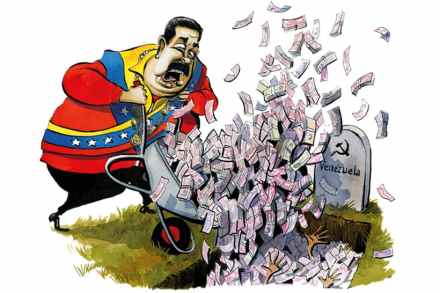
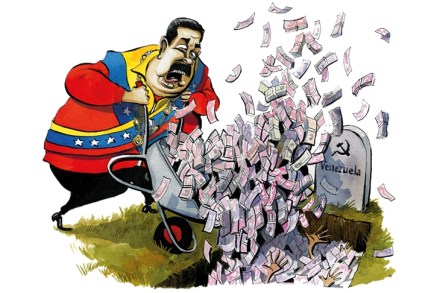
Imagine if Theresa May suddenly announced that her government was going to devalue the pound by 96 per cent; increase the minimum wage by 6,000 per cent; pay the wage increases for millions of businesses for three months; tie the pound to a mythical cryptocurrency; prepared for petrol rationing; and impose a 0.7 per cent tax on big financial transactions. It would be seen either as an act of lunacy, of a collapsing country — or both. For the long-suffering people of Venezuela, it’s just the latest stage of their country’s grand socialist experiment. President Nicolás Maduro has just issued a new currency, called ‘sovereign bolivars’. The original idea was that the currency would be like the old one, but with three zeros lopped off.

Michael Gove takes a swipe at CCHQ Venezuela attack lines

From our UK edition

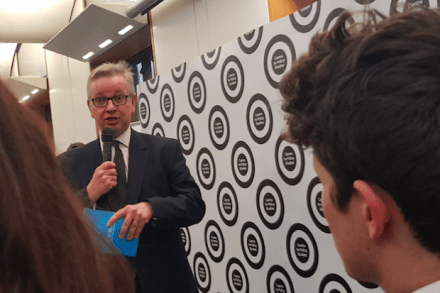
Although the local elections saw the Conservatives do better than expected, there is a sense that the Tories are not out of the woods yet when it comes to defeating Jeremy Corbyn at the next election. In that vein, last night the Centre for Policy Studies' 'New Blue: Ideas for a New Generation' launch, with Ben Bradley and Michael Gove. The Defra Secretary gave the keynote speech and used it to say it wasn't enough for his party to bang on about Venezuela and then expect the problem of socialism to go away: 'Simply to rely on a few tired arguments about what has happened in Venezuela, heart rending though the fate of that country is, or to say that we need to recapture the arguments of the 1980s, heroic as that decade was. The world has changed, capitalism has changed.

Inside out

From our UK edition

‘I murder people!’ says Elanger matter-of-factly in response to my question about what he does for a living. From the comfort of my home in the UK, I have managed to get in touch, through contacts of contacts on Facebook, with someone serving 19 years in prison for double murder in Venezuela. The country has some of the most notorious jails in the world. Inside one of them, Elanger has got hold of a Samsung Galaxy S5 Neo. Between 2010 and 2014, I lived in a student city called Mérida in the Venezuelan Andes. It is a beautiful old colonial town and was a fun place, full of bars and discos.

‘Fake news’: the far left’s favourite new excuse

From our UK edition

Admirers of violence and lies must go carefully. As true cowards they must leave themselves an escape hatch in case they are forced to retreat. They never quite commit to the suppression of rights, the rigged elections, the secret policemen and the torture chambers. Instead they tell us we are not hearing the full story, and switch the argument. The real problem is not the oppressive state and its suffering citizens, they say. The problem is the fake media. Not media faked by government propagandists and controlled by censors, not countries where every TV station and mass circulation newspaper must follow the party line, but the free media in their own country.

Corbynista MP: Media bias is the real story in Venezuela

From our UK edition

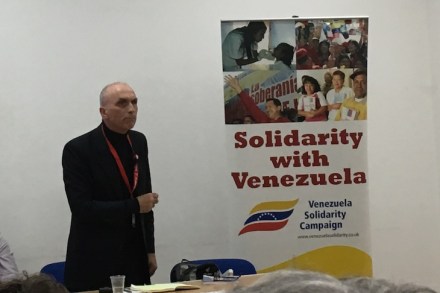
Despite admitting in an interview in this morning's edition of the Morning Star that he was ‘no bloody expert on Venezuela’, Chris Williamson, the Labour MP for Derby North, made it quite clear this afternoon who he believes is to blame for the socialist country's problems – and it most certainly isn't Maduro's socialist government. Speaking at a Solidarity with Venezuela fringe event at Labour conference, Williamson described how the country – a place where women now exchange sex for nappies for their babies and where the capital city is the most murderous city on earth – was undoubtedly witnessing ‘difficult and tough times’ and that ‘mistakes had been made’.

Chris Williamson blasts fellow Labour MPs over Venezuela

From our UK edition

Venezuela’s crisis shows no sign of stopping: protesters have been gunned down, opposition leaders rounded up – and the country recently unveiled a plan to combat food shortages by telling people to eat their rabbits. The country’s situation ‘ain’t perfect’, admits Labour’s Chris Williamson. In an interview with the Morning Star - where else? - the Corbyn ally is still keen to look on the bright side though: ‘I accept that Venezuela has its problems still...But look at where they’ve come from and where they’ve got to’ Admittedly, Williamson is angry at the ongoing situation.