Venezuela

Venezuela is essential for China’s ambitions

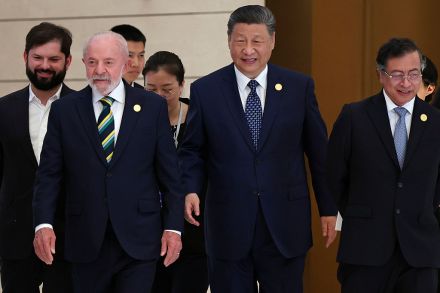
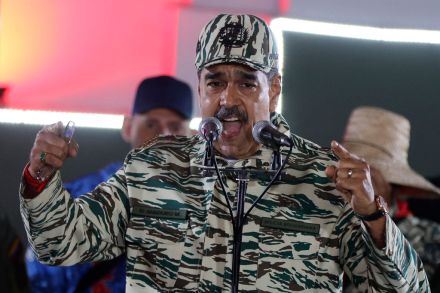
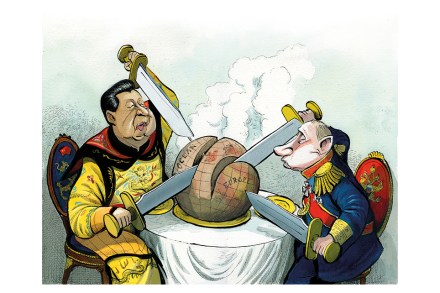
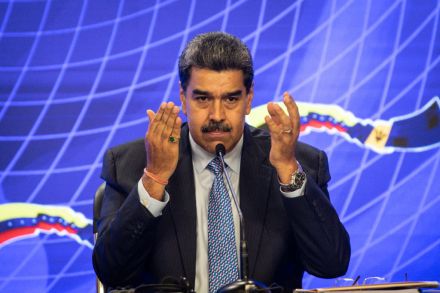
Venezuela has become a headache for Washington. Just after the Biden administration engineered a rapprochement strategy, Nicolás Maduro did more than just double down on not following through his promises of democratization: he is now pushing to annex neighboring Guyana. These developments, though, should have been anticipated, as Venezuela becomes a crucial part of China’s geopolitical strategy. "Ready for what will be a historic visit to strengthen ties of cooperation and the construction of a new global geopolitics. Good news will rain for the Venezuelan people," said Maduro after landing in the Chinese city of Shenzhen back in September.

Maduro china venezuela

Why Joe Biden’s Latin America policy is failing

At the opening ceremony of the Summit of the Americas in Los Angeles last year, President Joe Biden announced the Americas Partnership for Economic Prosperity, which the White House described as “a historic new agreement to drive our hemisphere’s economy recovery and growth and deliver for our working people.” The plan has become the administration’s signature Latin America policy. As noted by the White House, the region matters not solely because it’s where the US is situated, but because it also accounts for 32 percent of global GDP. Even more so, the region is rich in resources that are crucial in the development of emerging technologies.

latin america

Venezuelans voted to annex Guyana. What’s next?

Venezuela’s Nicolás Maduro carried out a controversial referendum on whether more than two-thirds of Guyanese territory is Venezuelan land this Sunday, challenging the international community and making a mockery of the Biden’s administrations rapprochement. The results for the referendum are in, with all of the propositions receiving more than 95 percent approval, according to the country’s electoral council.

guyana

Will Venezuela invade Guyana?

Eight years ago in Guyana, an Idaho-sized country on the northern coast of South America, ExxonMobil discovered massive oil reserves. So massive, that it’s speculated that the tiny nation, which is one of the least densely populated countries on the planet, could become the richest country per capita. Estimates indicate that Guyana has around 11 billion barrels of oil equivalent, boosting the nation to the third position in terms of proven oil reserves in the region. To contextualize the enormity of these discoveries, consider that the tiny nation has almost five times more proven oil reserves than Argentina, a country thirteen times larger by land mass. Only Brazil, the fifth largest country, and Venezuela, the country with the largest proven oil reserves, surpass Guyana.

Guyana

Meet Maria Corina Machado: could she become Venezuela’s Margaret Thatcher?

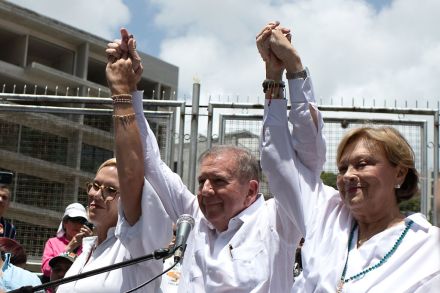
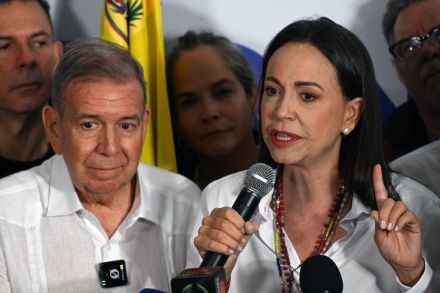
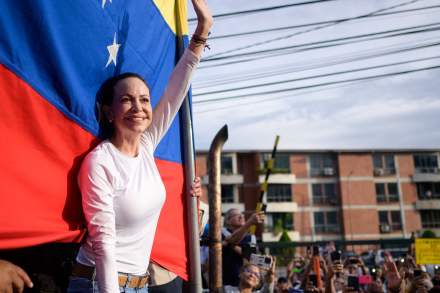
In 2006, there was Manuel Rosales. In 2012, there was Henrique Capriles. In 2018, there was Juan Guaidó. All managed to capture the hopes of Venezuela’s opposition, but as hopes slipped away, so did their popularity. Now, there is a new opposition leader in town: Maria Corina Machado, an ideologically driven fighter and a woman who was not afraid to call former president Hugo Chávez a “thief” to his face. As Venezuelans often imprudently say, she “tiene las bolas bien puestas,” meaning that, although female, she “has her testicles in the right place.” That's something that millions of Venezuelans can’t say about the charming yet gutless men who have monopolized the country’s hopes in the past. In July, Dr.

maria corina machado

Nicaragua’s campaign of persecution against the Catholic Church

From Stalin’s Russia to Castro’s Cuba, socialism and religious persecution have nearly always gone hand in hand. Nicaragua’s Daniel Ortega, a seventy-seven-year-old former Sandinista terrorist turned twenty-first-century dictator, is no exception to that rule.  The Havana Times reported last week that at least twenty Nicaraguans were kidnapped by Ortega’s dictatorship during the first ten days of April, most during Holy Week, a period in which the regime prohibited processions and religious celebrations in the streets. “In 2023, the policy of terror imposed by the Ortega government has mostly focused on the Catholic Church, and proof of this is that most of those imprisoned have some relation with the religious institution,” the report notes.

Democracy in Peru is under attack

For over a month, Peru has been in a state of near-constant unrest. In December, as the legislature threatened to impeach President Pedro Castillo for, among other things, allegations of corruption, Castillo tried to dissolve the legislature and “govern through decrees.” By all measures, this was an attempted coup, and it resulted in his impeachment (by a vote of 101-6), arrest, and condemnation from left and right. In his place, Vice President Dina Boluarte was sworn in as president, having denounced her former boss’s attack on the country’s democracy. This was a success in a country that has seen six new presidents in the past seven calendar years. The Congress has repeatedly been at odds with the president, and scandals have rocked administration after administration.

The Pink Tide returns to Latin America

As the dust settled on Jair Bolsonaro’s seismic victory in Brazil back in 2018, one might have spared a thought for those dedicated to the cause of international socialism. Having bathed in the glory of the so-called "Pink Tide" and the commodities boom of the early 2000s that allowed socialist governments such as Hugo Chávez's Venezuela to seemingly prosper, any hopes that Latin America would forever unify in the cause of left-wing anti-imperialism seemed well and truly dashed. In many of the continent’s wealthiest countries, right-of-center politicians had swept to power with a view to restoring their nation’s former glory. These included Bolsonaro in Brazil, Sebastian Piñera in Chile, Ivan Duque in Colombia, and Mauricio Macri in Argentina, among others.

Venezuela’s anti-socialist opposition has faltered

2019 was a banner year for Juan Guaidó, a relatively obscure Venezuelan lawmaker who announced to a crowd of thousands in the heart of Caracas that he, and he alone, was Venezuela’s new interim president. The United States and dozens of other countries in Europe and Latin America quickly followed up with official recognition for the fresh-faced head of the Venezuelan National Assembly. Nicolás Maduro, the man who took over the presidency after Hugo Chávez’s death, was for all intents and purposes relegated to the status of an isolated despot who had no legitimate claim to the Miraflores palace. 2022, however, has brought Guaidó and his international supporters back down to earth, with the opposition ditching his government in a 72-28 vote.

Juan Guaidó venezuela

The Brittney Griner swap was nothing out of the ordinary

Viewed from a coldly logical perspective, releasing Viktor Bout for Brittney Griner is a highly lopsided trade in favor of the Russians. The former was one of the world’s most prolific arms dealers on earth, a man responsible for sending weapons to some of Africa’s deadliest conflicts during the 1990s and early 2000s. The latter was a basketball player who was arrested for a smidgen of cannabis oil in her luggage. The two offenses are incomparable, which is one of the reasons why conservatives were so upset about President Biden green-lighting the swap. Donald Trump and John Bolton don’t agree on much, but both believe the decision was the epitome of feckless surrender (for Griner’s family, of course, it’s anything but).

griner

Can Venezuela’s exodus become America’s gain?

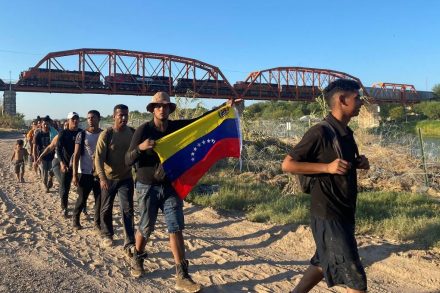
Since the onset of Venezuela’s economic and humanitarian crisis back in 2015, around 6.8 million people have fled the country in search of refuge. The most popular destinations include neighboring countries Colombia and Brazil, as well as a host of other Latin American countries. Many who can afford it have also found safe passage to Europe. Yet many of Venezuela’s poorest and most disaffected are setting their sights on another destination entirely: the United States. At the height of the country’s troubles between 2015 and 2018, the number of Venezuelans apprehended by US officials never exceeded 100 people a year. Fast forward to 2022, and more than 150,000 Venezuelans have arrived this year already.

How the US failed to stop OPEC from cutting oil production

Near the top of President Biden’s to-do list for the past few months has been to keep gas prices down. On Wednesday, this was dealt a likely fatal blow by the Organization of Petroleum Exporting Countries, or OPEC, which, led by Saudi Arabia, agreed to cut its overall production by two million barrels per day. In actuality, the cut will mean a reduction of more like one million barrels per day if it's taken into account that OPEC has been underproducing compared to its previously stated production goals. Still, this is a significant cut, and the effects on oil markets are already being felt.

foreign policy

Biden stole Trump’s foreign policy

When President Donald Trump in 2020 signed a trade deal with China after years of escalatory tariffs, then-presidential candidate Joe Biden blasted the agreement. 'China is the big winner of Trump’s "phase-one" trade deal with Beijing,' Biden said after the agreement was finalized. He wasn’t alone. Many trade experts at the time believed the purchasing targets Beijing was required to meet were highly unrealistic. Sure enough, China’s compliance has been less than ideal. According to the Peterson Institute for International Economics, China is roughly 70 percent of the way there with two months left to go. Yet despite Biden’s past comments about the accord, not to mention the tariffs that set the stage for the deal, the White House isn’t fully breaking with the pact.

Democrats double down on wasteful foreign aid

The latest version of the Democrats' $1.5 trillion spending bill being pushed through Congress includes funding for questionable foreign projects, such as "gender programs" in Pakistan and democracy building in authoritarian nations. According to a section of the bill outlining State Department funding for the year, an unspecified portion of the nearly $4 billion available in bilateral economic assistance — meaning direct transfers from the United States to other countries — shall "be made available for programs to promote democracy and for gender programs in Pakistan.

changes come covid pakistan

How working from home threatens authoritarian regimes

One of the few good things to come out of the pandemic has been the option to work from home (WFH). According to a Stanford University study of 17,000 employees, 50 percent of respondents who stayed at their jobs without commuting wanted to keep working from home at least part-time after Covid. And a September 2021 survey by OwlLabs, a video conferencing platform, found that one in three people who have worked remotely since the outbreak would likely quit if they could not continue to do so. While undoubtedly pressured by the current worker shortage to accept WFH as an employment benefit, companies have come to appreciate how decentralized staffing can improve productivity and substantially lower overhead.

Getting UN help on American civil rights is a great idea

The small-minded people who believe in freedom and democratic self-government have their shorts in a bunch over the Biden administration’s invitation to the United Nations to review our country’s civil-rights record. What a superb idea. Long overdue. The countries filling the human rights bodies at the UN have the kind of expertise you can’t get by reading books or following the rule of law. You have to get that kind of experience in the streets. Police brutality? All you have to do is ask the leading members of the UN Human Rights Council like Cuba, Libya, Pakistan, the Philippines, Russia, Somalia, Sudan and Venezuela. They know a thing or two about protecting civil rights. But why stop there?

un

John Bolton is the problem

Thanks in large part to John Bolton, America, the global cop, is back on the beat. This time it’s the Caribbean and the Persian Gulf in a near-simultaneous demonstration of resolve. For Bolton, President’s Trump national security adviser, Venezuela is an exceptionally appealing target. Juan Guaidó, the democratic socialist who is Washington’s choice to lead Venezuela is dutifully following Bolton’s script asking for US military intervention to install him and his followers in power. Why not? Venezuela harbors a few hundred Russian Special Operations Soldiers and at least 2,000-3,000 Cubans. Crushing the pathetic Venezuelan Armed Forces would be another exercise in clubbing baby seals on the Iraq or Afghan model.

john bolton

US military ‘on the balls of our feet’ for Venezuela, says four-star admiral

As Russian, Chinese and Iranian planes arrive in Venezuela to prop up President Nicolás Maduro, key Trump administration officials signaled that the US military is ready to respond. ‘President Trump is determined not to see Venezuela fall under the sway of foreign powers,’ Trump’s national security adviser John Bolton told radio host Hugh Hewitt Wednesday. Bolton favorably referenced the Monroe Doctrine and said that if it ‘fails, if China and Russia, along with Cuba, establish domination over Venezuela, I think American strategic interests will be harmed.

venezuela US Navy Admiral Craig S. Faller

The real Russiagate: why are the press ignoring Putin’s troops in Venezuela?

Over the weekend, two Russian military aircraft carrying General Vasily Tonkoshkurov along with over 100 Russian troops landed in Caracas, Venezuela. Did the US know Putin was planning this? What will America’s response be? Who knows, because the American media isn’t asking. What might well become the most explosive situation since the Cuban missile crisis has gone almost totally ignored on the homepages of our major news sites. Rather than inquire what will be done about Russian troops in Venezuela, the media focuses its myopic gaze on the only Russia story they seem capable of seeing: what role Russia may have played in our 2016 presidential election.

troops venezuela

What Syria should teach us about Venezuela

It is no mere coincidence that Donald Trump turned his attention to Venezuela straight after announcing the withdrawal of US troops from Syria. Nicolás Maduro, fighting for his survival on so many fronts at home and abroad, probably hasn't had much time to think about the man who thus inadvertently created the political quagmire engulfing him: Syrian leader Bashar Al Assad. Maduro would do well, though, to brush up on how Assad survived against all the odds, as would Trump. The knowledge could prove invaluable for averting another reckless US push for regime change abroad. Trump's decision last month to accept Assad remaining in power in Syria enraged many Middle East hawks, who long saw Assad's removal as the springboard for war against Iran.

maduro venezuela syria