Vaping

Another scare story about e-cigarettes. What we should be worrying about is sugar

From our UK edition

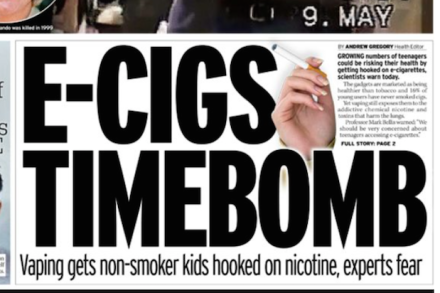
'E-Cigs Time Bomb', shrieks the front page of today's Daily Mirror. Vaping gets kids hooked on nicotine, experts fear. Experts do a lot of 'fearing', it strikes me, but what we don't know – cannot know for years – is whether e-cigarettes will cause long-term addiction to nicotine. Or what proportion of those nicotine addicts will be people who wouldn't have smoked cigarettes if a safer alternative hand't been available. Tiny is my guess. I notice that the Mirror's online version of the story backs away from the panic-stricken splash, actually describing the story as a 'scare'. One triggered, no surprise, by the state of California, which is obsessed with banning anything people might enjoy. Let me keep this short and sweet.

America declares war on e-cigarettes. But it’s an ideological battle, not a medical one

From our UK edition

The US Centres for Disease Control and Prevention have launched a wildly expensive campaign against e-cigarettes because... well, I can't really work out their logic, but the sickly aroma of liberal puritanism is unmistakeable. The medical arguments are risible. The Wall Street Journal reports: Print and radio ads starting Monday target e-cigarette users who continue to smoke traditional cigarettes. They depict an e-cigarette user named Kristy alongside a caption that reads: 'I started using e-cigarettes but kept smoking. Right up until my lung collapsed.' So it was vaping that caused Kirsty's lung to collapse, was it? Nope: it was smoking cigarettes. Of which she did less because she also vaped, but for reasons that aren't explained she kept on smoking.

MPs back plain cigarette packets. Smokers, get over it. Or switch to pretty e-cigs

From our UK edition

MPs are voting today in favour of the introduction of standardised cigarette packaging. There hasn't even been a debate on the issue and the BBC thinks the result is a foregone conclusion. That's bad news for the tobacco industry, hardline libertarians and Nigel Farage. It's been amusing watching the Tobacco Manufacturer's Association carve out its nuanced – almost schizophrenic – position on the matter. Smoking is bad for our health and it is impossible to argue otherwise. So they don’t. Theirs must be the only industry which is resigned, ostensibly at least, to deterring potential customers. Big tobacco firms have an obligation to their shareholders, so they have to say something in their own defence.

‘Smoking kills, nicotine doesn’t’: a huge boost for campaigners who say e-cigs save lives

From our UK edition

Dr Derek Yach has done more than any man alive to eradicate smoking. A former professor of global health at Yale, he developed the World Health Organisation's Framework Convention on Tobacco Control, now in effect in almost 180 countries. He has relentlessly drawn attention to the slippery tactics of the tobacco industry, which promotes its products while ostensibly lending its support to anti-smoking campaigns. But his article in today's Spectator Health breaks ranks with former colleagues in the WHO, which disapproves of e-cigarettes and other vaping products. Their 'intransigence' threatens the lives of millions, he argues. As matters stand, a billion people will die from smoking-related diseases by 2100.

Help me become an addict

From our UK edition

When the White Queen told Alice she had sometimes believed as many as six contradictory things before breakfast, she spoke for us all. But our irrationality goes further than a simple after-the-event report. Even while we’re believing it, we can know that something we’re believing contradicts something else we believe. Take, in my case, addiction. I believe that addicts lack self-discipline and willpower. Yet I know that this cannot really be the explanation. I feel a faint but ineradicable disapproval of people who can’t stop eating, smoking, drinking or injecting themselves with heroin, while knowing that this reaction is not only harsh, but must be ignorant.

E-cigarettes are making tobacco obsolete. So why ban them?

From our UK edition

If somebody invented a pill that could cure a disease that kills five million people a year worldwide, 100,000 of them in this country, the medical powers that be would surely encourage it, pay for it, perhaps even make it compulsory. They certainly would not stand in its way. A relentless stream of data from around the world is showing that e-cigarettes are robbing tobacco companies of today’s customers — and cancer wards of their future patients. In Britain alone two million now use these devices regularly. In study after study, scientists are finding e-cigarettes to be effective at helping people quit, to show no signs of luring non-smokers into tobacco use and to be much safer than their noxious competitors.