Usa

Germany, where art thou?

From our UK edition

It is more than 100 days since Guido Westerwelle became Germany’s foreign minister and the questions about Germany’s diplomatic introspection remain. They may have even grown and are becoming problematic for Berlin’s allies.   Chancellor Schröder appeared to follow a Sonderweg, a philosophy that saw Berlin move away from old notions of peacemaking and away from old alliances, such as that with the United States. At times, he seemed to want a new axis between Paris, Berlin, and Moscow, making Germany a go-between between East and West, a kind of post-modern Tito. Angela Merkel’s first term addressed the worst excesses of the Schröder years, but the vagaries of coalition government meant that Germany continued in awkward mode.

Hague’s modern Realism

From our UK edition

In a splurge of activity, William Hague gave both an interview to the FT and another foreign policy speech at RUSI outlining the views of a Conservative government. It was time for an update on Tory thinking, not least because David Cameron’s description of his policy as “liberal conservatism” and his unwillingness to march into a “massive euro bust-up” has had little effect. That is because a struggle over how to engage with the world continues to run beneath the party leader’s message of party unity.

NATO – with or without the US?

From our UK edition

Over on Foreign Policy magazine, Andrew J Bacevich and I are going at each other. Topic: the nature of the transatlantic relationship. In the slipstream of US Defence Secretary Robert Gates’ lament about Europeans’ pacifist leanings, Professor Bacevich wrote a delightfully provocative piece arguing the US should leave NATO: "If NATO has a future, it will find that future back where the alliance began: in Europe. NATO's founding mission of guaranteeing the security of European democracies has lost none of its relevance. Although the Soviet threat has vanished, Russia remains. And Russia, even if no longer a military superpower, does not exactly qualify as a status quo country.

Wanted: The Hague Doctrine

From our UK edition

Out of the conference hall, and back on to the campaign trail, it would nice to see the Tories talking about the things which make them ready for government.  In particular, William Hague should make a foreign policy speech setting out what ideas he has, and which would merit him being referred to as the likely “greatest foreign secretary in a generation” by David Cameron. Hague’s past foreign policy speeches have been solid, but unspectacular. He ticks off the likely issues, talks about global trends and looks knowledgeable about the crises that could emerge. But there is no overaching concept, such David Miliband’s idea of Britain as a "global hub". There is no Hague Doctrine.

A narrow escape

From our UK edition

For once, I felt sorry for Bill Clinton. It was January 1998, and the press reported that the President had had an intimate relationship with one Monica Lewinsky. In Independent Counsel Kenneth W. Starr’s office, where I worked, we had evidence that Clinton had sought to hide his dalliance through perjury and obstruction of justice. But that didn’t matter anymore. No president could survive the public revelation of sex (however defined) with a White House intern. Clinton was about to be driven from office over fellatio rather than felonies. I started thinking about a conciliatory statement Starr might release when the President resigned. Our judgment, as Ken Gormley observes in The Death of American Virtue, was sometimes flawed.

Method in his madness

From our UK edition

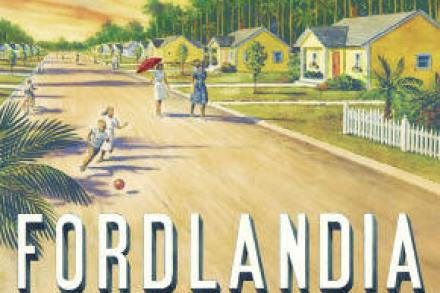
The car manufacturer Henry Ford dominates this remarkable book, managing, like Falstaff, to be its tragic hero, villain, and comic relief all at the same time. A gaunt, pacing figure, he conducted interviews while standing, believed in the values of small Main Street America (though his methods of industrial mass production destroyed these), and in pacifism, fitting out a ship to sail to Europe in an attempt to stop the Great War (though later he made billions out of armaments, and had machine-guns mounted on his factories while his paid thugs shot down hunger-marchers).

How British: a tea party

From our UK edition

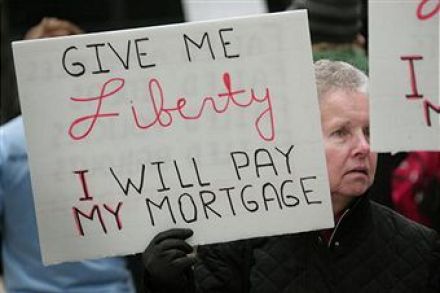
Don’t you think that ‘The Ship Money Movement’ is a more appropriate name for a British anti-tax forum? You know, given the connotations of ‘Tea Party’ in these climes? Titles are instructive, and, as James wrote yesterday, the British right has a growing fascination with its American counterpart. Perhaps I’m over doing it, but it seems a testament to the State’s dominance in post-war Britain that the country’s libertarian tradition, extending back through Burke, Bolingbroke, Locke, Milton and to Hampden himself, is no longer the right’s primary inspiration. Putting my slightly absurd ruminations aside, the coming of the Tea Party Movement to Britain is significant.

Worse off than you were in 2005

From our UK edition

The obsession of British politicians - and political journalists - with American politics is often mocked. But there's a clarity to American political messages that is often missing in this country. So it is good to see George Osborne borrowing a line from the Reagan playbook, and pointing out that people are now worse off than they were at the last election. The Tories desperately need to shift the focus of the campaign back onto Labour's failures and this is a start to that process. Osborne is delivering the Mais lecture tonight, one of the prestige dates in the British economic calendar. He's the first shadow Chancellor to deliver it, a sign of how much the markets and everyone else are waiting to see what Osborne does.

Not ‘a boy-crazed trollop’

From our UK edition

For someone who barely left the house, Emily Dickinson didn’t half cause a lot of trouble. For someone who barely left the house, Emily Dickinson didn’t half cause a lot of trouble. Lives Like Loaded Guns — which combines biographical material, critical readings, and an assessment of the history of her reputation — tells a completely hair-raising story. The Dickinsons were one of the first families of respectable Amherst. Emily and her sister Lavinia — ‘Vinnie’ — lived in one house, Homestead, right next door to her brother Austin, the head of the family, and his wife Sue. Susan Dickinson was a highly intelligent and sensitive woman, bosom friend to Emily. The poet called her ‘Sister’.

The great bailout

From our UK edition

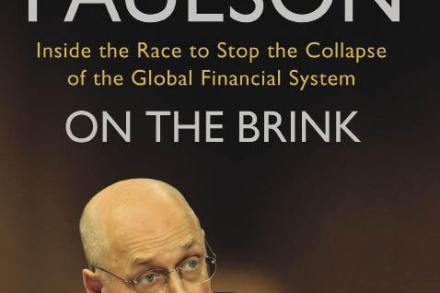
Hank Paulson’s new book is called On the Brink, but it could well have been entitled Over the Edge. Hank Paulson’s new book is called On the Brink, but it could well have been entitled Over the Edge. The story of his role as US Treasury Secretary throughout the great banking crash of 2008–9 gives an impression of people being swept along by a swirling chaos of unexpected events, often completely out of control. ‘This is the economic equivalent of war,’ Paulson said in the middle of the financial crisis in 2008, scrambling to find a resolution for AIG before the insurance behemoth brought down the entire economy. Warfare is certainly what it felt like.

The White House is bluffing

From our UK edition

The Atlantic reports that the White House is considering altering intelligence sharing agreements with Britain in the light of the Binyam Mohamed case. White House spokesman Ben LaBolt briefed: "The United States government made its strongly held views known throughout this process. We appreciate that the UK Government stood by the principle of protecting foreign government intelligence in its court filings. We're deeply disappointed with the court's judgment today, because we shared this information in confidence and with certain expectations." I detect a bluff. Britain and the US share information on an hourly basis, providing an essential understanding in the combined operation against al Qaeda.

Adventure with a difference

From our UK edition

Probably my opinion of this bold book is worthless. Peter Carey, having decided to write a novel about Alexis de Tocqueville’s visit to the United States in 1831-2, read, among many other works, my biography of Tocqueville, which was published two years ago in, he says, ‘the nick of time’. He is kind enough to call it ‘delightful’, and has plundered it assiduously. What I myself find delightful is the way in which Carey has picked up the signals. I never expected such a close, intelligent reader, and I’m glad to think my work has been of use to him. But this does not make me a dispassionate reviewer. And nobody else has my reasons for studying Carey’s transmogrifications.

What a difference a gay makes

From our UK edition

Edmund White is among the most admired of living authors, his oeuvre consisting of 20-odd books of various forms — novels, stories, essays and biographies — though each one is imbued with his preferred subject, homosexuality. Edmund White is among the most admired of living authors, his oeuvre consisting of 20-odd books of various forms — novels, stories, essays and biographies — though each one is imbued with his preferred subject, homosexuality. Now he is most famous for what could be termed his boy-ographies, a regular series of volumes about his passions, practices, predilections and peccadildos, beginning, in 1975, with The Joy of Gay Sex.

Smoking guns and missing memos

From our UK edition

Sir Christopher Meyer gave evidence to the Chilcot inquiry this morning. He spoke with characteristic flamboyance, awash with elegant witticisms and indiscretions calculated to amuse. Amid this tour de force, Meyer released one potential weapon of mass destruction. Hans Blix was given too little time to conduct a satisfactory inspection. Courtesy of Andrew Sparrow, here is the relevant transcript: ‘The real problem, which I did draw several times to the attention of London, was that the contingency military timetable had been decided before the UN inspectors went in under Hans Blix. So you found yourself in a situation in the autumn of 2002 where you could not synchronise the military timetable with the inspection timetable.

With friends like these | 25 November 2009

From our UK edition

Bob Ainsworth has publicly criticised President Obama’s slothful deliberation on an Afghan troop surge. The Defence Secretary said: ‘We have suffered a lot of losses. We have had a period of hiatus while McChrystal's plan and his requested uplift has been looked at in the detail to which it has been looked at over a period of some months, and we have had the Afghan elections, which have been far from perfect let us say. All of those things have mitigated against our ability to show progress... put that on the other side of the scales when we are suffering the kind of losses that we are.

Britain’s AWOL ally

From our UK edition

Cameron just made a very good point in his speech – namely, that Brown claimed just days ago that Obama would make an Afghanistan announcement in the “next few days”. Now, we have no idea when the announcement will come. But this isn't Gordon Brown’s fault – it’s Obama’s. The way Washington is treating Britain is deplorable and the subject of an excellent cover piece tomorrow by Con Coghlin (cover image above). As Con says in his piece: 'The Afghan issue has made clear the astonishing disregard with which Mr Obama treats Britain . As he decides how many more troops to send to Afghanistan – a decision which will fundamentally affect the scope of the mission – Britain is reduced to taking a guess.

Just the bare bones

From our UK edition

It is impossible (as I prove in this sentence) to review Philip Roth without mentioning the surge of creativity that began when the author was around 60 and which now sees him publishing a novel every year (his next one, Nemesis, is already finished). However, I would argue that it is only recently that we have seen Roth’s genuine late style. In three of his last four books — Everyman (2006), Indignation (2008) and this one, The Humbling — there has been a shift towards winter in his writing. Those are short works, lacking the manic humour that energised Roth’s earlier fiction.

Engrossing obsessions

From our UK edition

With Blood’s a Rover James Ellroy finally finishes his ‘Underworld USA’ trilogy. With Blood’s a Rover James Ellroy finally finishes his ‘Underworld USA’ trilogy. It’s been eight years since the second volume, The Cold Six Thousand, written in a staccato shorthand prose that seemed always about to veer out of control, marked the apotheosis of Ellroy’s feverish and frenetic style. Something had to give, and at first it was Ellroy himself, who suffered a breakdown and eventually quit Middle America to return to his spiritual home of Los Angeles.

Karl Marx got it right

From our UK edition

Whether the refusal to allow the Confederate states the right to self-determination, flying as it did in the face of the Declaration of Independence, was the first overt act of American imperialism is a question that goes largely undiscussed. John Keegan does not raise it. For him, unlike World War I, which was ‘cruel and unnecessary’, the American Civil War was cruel and necessary. (What constitutes an uncruel war is not explained.) Necessary both sides deemed it. At the outset volunteers came forward in such numbers that equipping them and finding capable officers to lead them proved nearly beyond both the Union and the Confederacy.

Far from a sleeping partner

From our UK edition

Richard Nixon had met Henry Kissinger only once before he asked him, on his landslide victory in 1968, to be his National Security Adviser, saying to an aide, ‘I don’t trust Henry but I can use him.’ Richard Nixon had met Henry Kissinger only once before he asked him, on his landslide victory in 1968, to be his National Security Adviser, saying to an aide, ‘I don’t trust Henry but I can use him.’ Kissinger, then at Harvard, had strongly supported Nixon’s rival for the Republican nomination, Nelson Rockefeller, openly deriding Nixon and calling him at one point ‘a hollow man … evil.