US constitution

Why are Europeans so untroubled by their ignorance of America?

From our US edition

Laramie, Wyoming Americans are infamous on the eastern side of the Atlantic for knowing little or nothing about European culture, history and politics – and for being proud of the fact, as Richard Hofstadter, the late Columbia historian, described in them in Anti-intellectualism in American Life, the winner of the Pulitzer Prize for non-fiction in 1964. Much less widely recognized is how little Europeans know about America, Americans and their own civilization – an ignorance that troubles them not at all, perhaps because they seem to be unaware of the fact.
prodi italian europeans

Why would anyone choose to live in Puerto Rico?

From the eastern Atlantic, the US looks boringly uniform. Yet Alaska is almost as different from Alabama as Turku is from Turkey. If you travel the length of the Mississippi, food, laws, customs and lingo change as surprisingly as along the Danube. Particularism is rife. In two counties in Vermont, there are warrants for the arrest of George W. Bush. In some parts of the South, you must step across a county line to evade laws against alcohol. In Indiana, where I live, every county sets its own time zone and you have to keep adjusting your watch on your way to Chicago. In this land of anomalies, nowhere is odder than Puerto Rico. It is an ‘associated’ state, but not a state of the union.

Supreme Court rules against independent state legislature theory

From our US edition

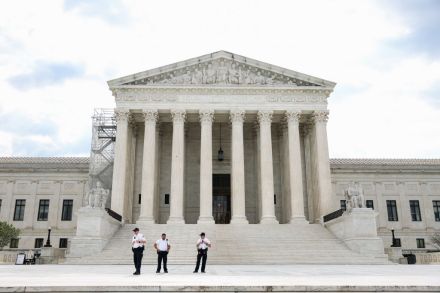
The Supreme Court has decided Tuesday that state legislatures do not have untrammeled power to draw congressional districts and must adhere to their own constitutions, which state supreme courts can adjudicate. As such, independent state legislature theory — which the North Carolina state legislature utilized to bring its case before the court — is not a viable legal theory. The decision in Moore v. Harper was 6-3, with Justices Thomas, Alito and Gorsuch taking up the dissent.  The court wrote in its thirty-page decision that, contrary to independent state legislature theory, “The Elections Clause does not vest exclusive and independent authority in state legislatures to set the rules regarding federal elections.

supreme court independent

Would Bragg have indicted anyone other than Donald Trump?

From our US edition

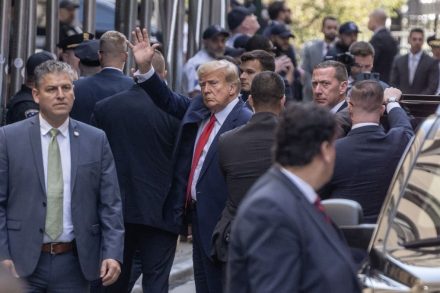
Alvin Bragg has made good on his campaign promise to hold former president Donald J. Trump “accountable” by indicting him under New York law for thirty-four felony counts of falsifying business records. For seven years, Bragg’s predecessor and numerous federal entities considered the same facts and declined to pursue charges. Given Bragg’s well documented leniency toward the violent criminals currently terrorizing New York, it’s difficult to imagine this case would have been brought against anyone but Trump.

alvin bragg

Abort stare decisis

From our US edition

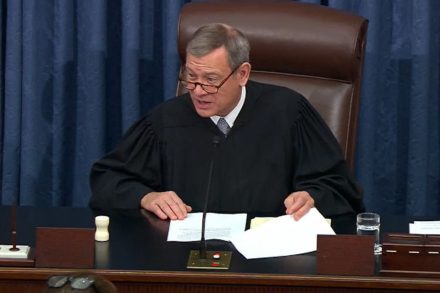
The conservative legal movement has again been bludgeoned. The culprit, as has far too often been the case, is once more the Supreme Court’s most mercurial chief justice, John Roberts. In June Medical Services LLC v. Russo, a 5-4 Court majority enjoined Louisiana’s enforcement of its law that would require abortionists to have admitting privileges at a hospital within 30 miles of a prenatal abattoir. The Court’s four liberals, ever-reliable in their outcome-oriented efforts to further the progressive political agenda, wrote for a pro-abortion plurality. Roberts, for his part, wrote a separate opinion concurring in the judgment — notwithstanding the fact he dissented in a virtually analogous Texas case, Whole Women’s Health v.

john roberts stare decisis

The presidency unchained

From our US edition

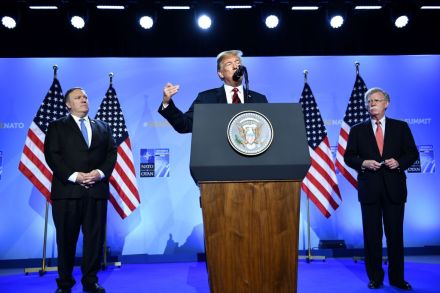
When it comes to war, does the president have too much authority? The Framers of the US Constitution had a rather dark view of human nature and went to great lengths to restrain, divide, and decentralize power. In particular, they believed that it was in the nature of executive power to be unduly prone to war. For this reason, they very deliberately placed the power to take the country to war in the Congress. At the Constitutional Convention James Wilson argued, 'This system will not hurry us into war; it is calculated to guard against it.' Yet the presidency has over the years gathered more and more of the war powers unto itself, and at present intense political conflict is tearing at the fabric of the Constitution.

presidency