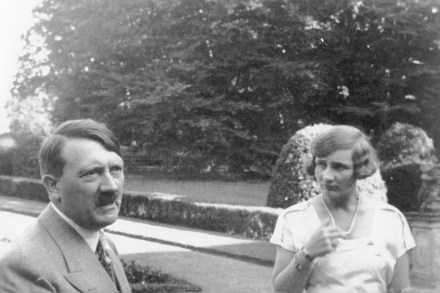
Unity Mitford

Jessica was the only Mitford worth taking seriously

From our UK edition

Can there really be any point in yet another fat book about one of the Mitford sisters? Their antics have been appearing in print since the late 1940s, when the eldest – clever, waspish Nancy – displayed their family eccentricities in her sparkling novel The Pursuit of Love. Since then, by a rough count, there have been 15 biographies, individual and joint, including three of both Nancy and Jessica, two vast compendiums of correspondence and five autobiographies by four of the sisters (Jessica wrote two).
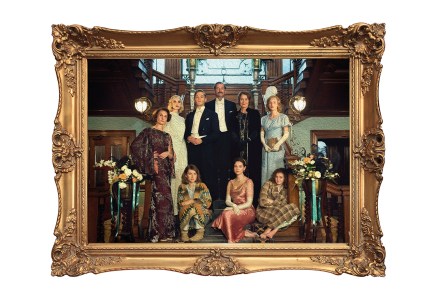
Can a TV series capture the extraordinary story of the Mitford girls?

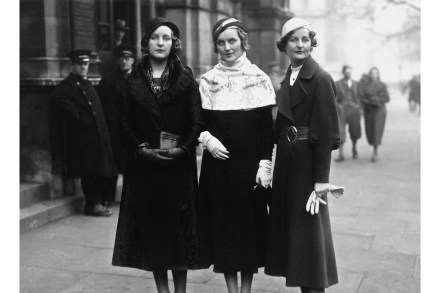
We remain fascinated, even obsessed, by the Mitfords. Collectively, their existence is the stuff of legend: the affairs, the imprisonment, the polarized politics, the wit, the beauty, and the brutality, all in one glamorous package. In uncertain times, the sisters offer a flush of eccentric characters: Nancy the Novelist, Pamela the horsewoman, Diana the Fascist, Unity the Hitler-lover, Jessica the Communist and Debo the Duchess.

Mitford

Jew and non-Jew: Unity Mitford and aristocratic anti-Semitism

From our UK edition

I was touched but not surprised that, despite his illness, the King attended the 80th anniversary of the ‘liberation’ of Auschwitz-Birkenau this week. His paternal grandmother, Princess Alice of Battenberg, was a rescuer. She hid the Cohen family in her house in Athens and is honoured as a ‘righteous’ gentile at Yad Vashem in Jerusalem, where she is buried on the Mount of Olives. A less friendly aristocrat was Unity Mitford, whose views were probably a more accurate reflection of her class. Her newly published diary describes her friendship with Adolf Hitler. Here is a typical entry: ‘Lunch Osteria 2.30. THE FüHRER comes 3.15 after I have finished lunch. After about ten minutes he sends the Wirt [owner] TO ASK ME TO GO TO HIS TABLE.’ She sounds like Bridget Jones.

Articles of War

Universal genius is a law unto itself, but the personalities presented in Signatures at least deserve to be remembered by generations yet unborn. Ernst JüngerJournals, 1951 Researching for my book Paris in the Third Reich, I was just in time to catch some German officials or soldiers who had played a part in the occupation. Understandably, they tried to put themselves in the best possible light. Ernst Jünger was different. A staff officer, exceptionally intelligent and exceptionally observant, he kept a day-by-day record of his life in Paris. Much more than a timely self-portrait, these diaries fix for posterity the historic moment when the long-drawn contest for power in continental Europe appeared to have ended conclusively in German victory and French defeat.

war