.united states

Don’t deprive Americans of July 4 fireworks

The Fourth of July is an opportunity to reflect upon the miracle that is the founding of the United States, a process that has been instrumental in the spread of freedom, democracy and human rights across the globe. That, unquestionably, is something worth celebrating. Fireworks have been a part of this celebration from the start, with displays gracing the skies of Philadelphia and Boston in 1777. For some parts of the country, however, the days of fireworks may be numbered, as the displays’ environmental and health impacts collide with politics. Reuters published a piece on June 30 detailing all of the dangers associated with the patriotic explosions.

fireworks

AMLO sides with the cartels

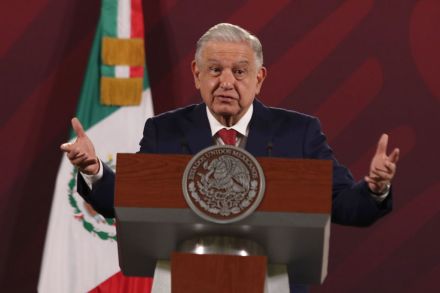
Mexico’s president, the increasingly authoritarian and erratic leftist Andrés Manuel López Obrador, aka AMLO, visited Veracruz this past Friday to commemorate the 1914 American occupation of that city. In his remarks was a startling declaration: the Mexican state and military, under his leadership, will defend Mexico’s criminal cartels from the Americans.  “There is talk in the United States,” said AMLO, “of intervening and confronting organized crime, drug traffickers, treating them as terrorists and that for this reason they will come to 'help' us, to 'support' us to confront organized crime... we do not accept any intervention... if they did, it will not be only the sailors and soldiers who will defend Mexico, all Mexicans will defend Mexico.

mexico amlo

In defense of America the arms dealer

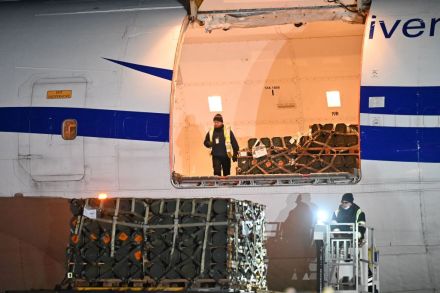
As the world enters a new era of great power competition, countries are arming themselves at a rate unseen since the end of the Cold War. The war in Ukraine, China’s increasing belligerence and angst over rogue states like Iran and North Korea are driving defense spending and weapons purchases the world over. Amid all this, the United States does not have the luxury of being too picky as to who among its friends gets the weapons they need to defend themselves. Nor can Washington continue to avoid drastic reforms to its arms export controls to face the challenges of the twenty-first century. Standards are necessary — they are what should set America apart — but they must not become so onerous that the security of the US and its partners suffer.

Macron’s China controversy is a big nothingburger

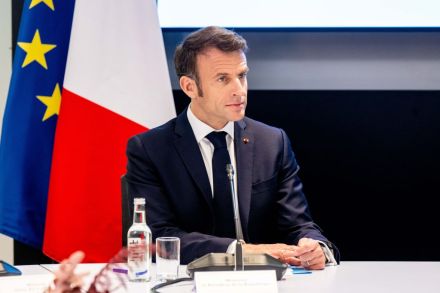
French president Emmanuel Macron, the self-appointed leader of Europe, is having a not so great week. His multi-day visit to China and successive meetings with Xi Jinping were high on pomp but low on deliverables. But it was during the plane ride back to Paris, when he gabbed with journalists, that he got into trouble. Seated aboard France’s version of Air Force One, Macron presented himself as a leader with an independent streak who believes Europe can't follow the United States like docile little ducklings. His interview wasn’t remarkable, yet foreign policy commentators and politicians are hung up on his remarks about China and Taiwan.

emmanuel macron

Use Russia’s money to destroy Russia’s military

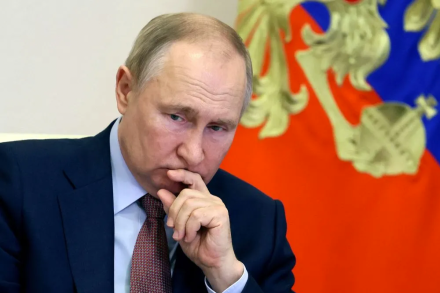
After thirteen months of war, Ukraine’s infrastructure is in a dire state. Its armies are preparing for a counteroffensive, and its economy is not likely to fare any better this year than it did in the last. Kyiv will need more money from the West — and the West will have to provide. The need is clear, but the will, in the United States and Europe, less so. Thankfully there is a way around this looming problem, courtesy of the Central Bank of the Russian Federation.  Representative Stephanie Bice of Oklahoma has submitted the Make Russia Pay Act, which authorizes the federal government to seize, deem as forfeited, and liquidate Russian assets that are currently frozen in the US.

vladimir putin hawks

Enes Kanter Freedom on LeBron, Erdoğan and the earthquake

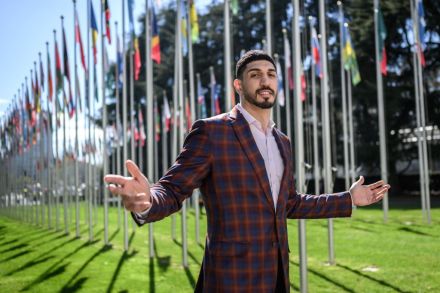
Basketball player and human rights activist Enes Kanter Freedom was invited as Leader Kevin McCarthy's guest of honor to the State of the Union last week, an address in which President Biden barely touched on foreign policy. The former Boston Celtics and Oklahoma City Thunder center spoke with The Spectator about democracy, autocracies and hypocrisy. John Pietro: How far does China’s influence reach into the NBA, in your estimation? Could you see the NBA ever standing up to China in the way the Women’s Tennis Association did in defense of Peng Shuai? Enes Kanter Freedom: I didn’t know how deep the relationship between the NBA and China was until Daryl Morey tweeted and said "stand with Hong Kong" and after that obviously the NBA lost millions and millions of dollars.

enes kanter freedom

Why Louis C.K. has a point on immigration

During a recent appearance on The Joe Rogan Experience, comedian Louis C.K. stated a position that many on the left believe but are unwilling to admit: America should open its borders to the world. “My feeling is they should open the border,” he explained. “Just let everybody pour in… Then there will be all these problems, well, there should be. It shouldn’t be so great here. It is a weird thing to sequester a certain group of people and keep upping their lifespan and their lifestyle.” As someone who's spent most of his journalistic career railing against mass immigration, my initial reaction was one of scorn.

Turkey’s heavy price for pressuring the Russians

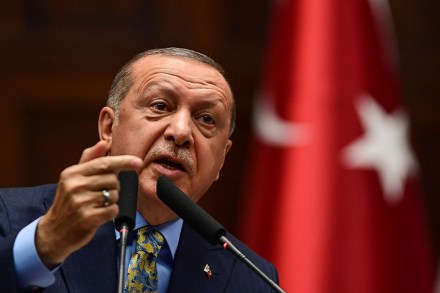
If you enjoyed the weeks-long intra-NATO spat about whether to send heavy tanks to Ukraine, then you’re going to love the ongoing kerfuffle about whether Sweden and Finland should be admitted into the transatlantic alliance. Whereas Germany was the lone holdout in the first instance, Turkey is the obstacle in the second — and going by the fiery words of Turkish President Recep Tayyip Erdogan, the squabble won’t end soon. Erdogan, in the midst of his toughest election campaign in two decades, has been using his veto over Sweden's and Finland’s NATO memberships to press both countries on one of his top priorities: cracking down on the Kurdistan Workers’ Party, a group Turkey, the US, and the European Union all label a terrorist organization.

greece

What the US can do about Germany’s hardball on Ukraine

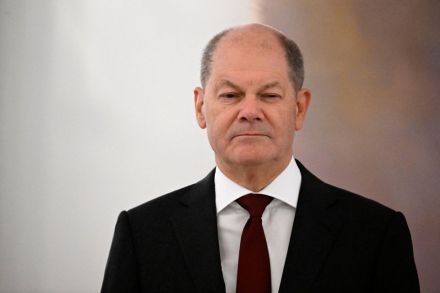
Once again, German Chancellor Olaf Scholz has crushed the hopes of NATO allies and, most of all, the millions of Ukrainians suffering under Russia’s assault. Originally, he refused to send tanks to Ukraine for fear that Russia would escalate the war. More recently, Scholz has said he'd only consider sending tanks if it was part of a coalition, not just Germany acting alone. Last week, the United Kingdom announced it would be sending Challenger 2 main battle tanks (MBT) to Ukraine, making it the first nation to supply modern, Western MBTs to Kyiv. Poland, Finland, and Denmark have also indicated that they would be willing to send their own Leopard 2 tanks. Those are German-origin weapons, so they first require a nod of approval from Berlin in order to export.

South Korea toys with developing nuclear weapons

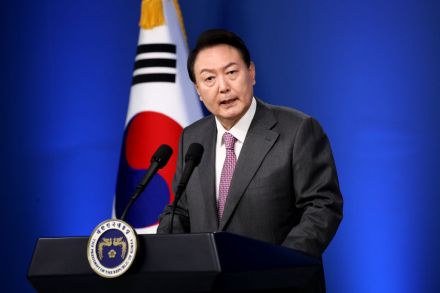
Yoon Suk-yeol isn’t a household name in the United States, but his comments this week have put him in the international spotlight. Speaking at a press briefing on Wednesday, the South Korean president openly surmised that if North Korea’s nuclear weapons program continued unabated, Seoul may have to explore an option the United States wouldn’t like: producing nuclear weapons of its own. Referring to Pyongyang’s weapons programs, Yoon said, "It’s possible that the problem gets worse and our country will introduce tactical nuclear weapons or build them on our own. If that’s the case, we can have our own nuclear weapons pretty quickly, given our scientific and technological capabilities.” The remarks generated immediate pushback from nuclear security experts.

2023 is the year of the vagabond

They say moving is one of the most stressful life events, but I’ve come to quite enjoy it. Last year alone, I lived in six different houses and moved across Wales, England, Scotland and the Channel Islands. So it’s really a good thing that the thought of packing up my belongings doesn’t give me palpitations. I’d be long dead if it did. As the world descends into a bleak new year, with recessions looming and nothing mildly positive to look forward to, more and more people are adopting this lifestyle. Some are not doing it out of choice. Sofa surfing and moving back in with parents are their only options to escape the multiple crises: cost of living, energy bills, housing, war. For others, there’s an air of "what’s the point?

Zelensky spoke to the American soul

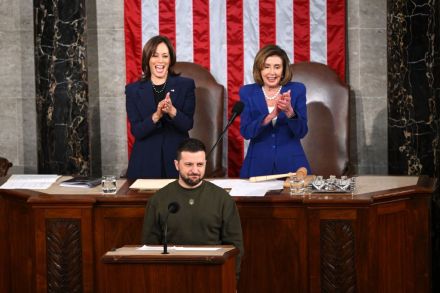
When Volodymyr Zelensky entered the chamber to address Congress, the applause and cheers took on a particularly emotional character. It was not the stilted, forced applause that the president receives at the State of the Union; it was an affectionate show of admiration for a man who has come to embody the twenty-first century struggle for freedom. Though delivered to Congress, the opening words of the Ukrainian president’s speech revealed his true audience: “Dear Americans... all those who value freedom and justice.” It was a speech for all of us. He pulled the dusty tarp off of America’s deepest identity as the shining light of liberty in a world of tyranny.

volodymyr zelensky

The Brittney Griner swap was nothing out of the ordinary

Viewed from a coldly logical perspective, releasing Viktor Bout for Brittney Griner is a highly lopsided trade in favor of the Russians. The former was one of the world’s most prolific arms dealers on earth, a man responsible for sending weapons to some of Africa’s deadliest conflicts during the 1990s and early 2000s. The latter was a basketball player who was arrested for a smidgen of cannabis oil in her luggage. The two offenses are incomparable, which is one of the reasons why conservatives were so upset about President Biden green-lighting the swap. Donald Trump and John Bolton don’t agree on much, but both believe the decision was the epitome of feckless surrender (for Griner’s family, of course, it’s anything but).

griner

Down with the American morality police

When, oh, when will the United States catch up with Iran? Those bearded, bomb-building, Koran-quoting clerics — we underestimate them at our peril. They know enough, the ayatollahs, to get rid of their morality police who have for decades subverted Iranian civic life, as they've reportedly done this week after protests in that country continued. The morality police in Iran were known for harassing Iranians — women especially — who were deemed insufficiently devoted to Islamic purity. Yet when the morality cops apparently killed a young women for her gall in showing too much hair, public protests erupted. Morality is one thing, persecution is another, as the ayatollahs appear to have figured out. Morality requiring visible and painful enforcement can’t be sustained.

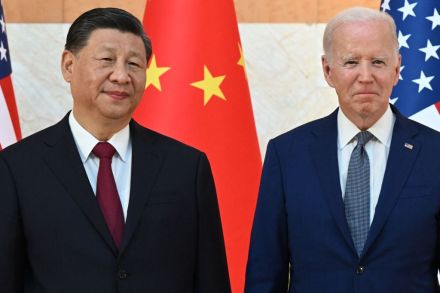
The Biden-Xi meeting was long overdue

The bilateral relationship between the United States and China is arguably the most important in the world today. The two countries make up approximately 42 percent of the world’s economic output and more than half of global military expenditure (at $801 billion, the US share of that total dwarfs China’s). The Biden administration’s recently released National Security Strategy names China as "the only competitor with both the intent to reshape the international order and, increasingly, the economic, diplomatic, military, and technological power to do it." The central objective from Washington’s standpoint is to compete vigorously with Beijing, prevent China from attaining hegemonic status in the Asia-Pacific, and ensure this competition doesn’t slide into conflict.

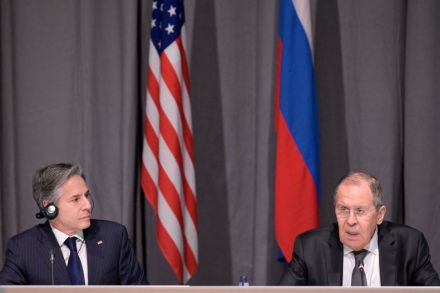
America and Russia are finally talking to each other again

Defense Secretary Lloyd Austin and Russian Defense Minister Sergei Shoigu haven’t really been on speaking terms. That is, until last weekend, when the two defense chiefs conversed with each other twice in three days. The readouts released by the Defense Department are about as brief as brief can get. They don’t tell us much about what was said, other than the general observation that Austin, a former four-star army general, swatted away Moscow’s explanations for the war in Ukraine. What the conversations illustrate more than anything is just how rare they've been. Indeed, the reason why so many news outlets wrote about the Austin-Shoigu calls was because they were extraordinary.

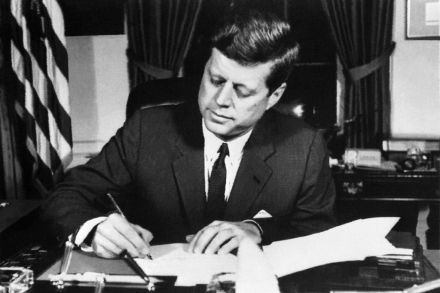
The Cuban Missile Crisis has become a cultural touchstone

At the beginning of 1962, President John F. Kennedy had high hopes for a peaceful year with the Soviet Union, the United States’ most dangerous adversary. On December 30, 1961, Kennedy issued a statement offering his good wishes for the new year to Soviet Premier Nikita Khrushchev and the Soviet people. Ten months later, in October of 1962, the US and the Soviet Union were on the brink of war. The Soviets had moved missiles into Cuba, which initially went undetected by US intelligence. On October 14, an American U-2 spy plane took pictures showing missile base construction taking place in Cuba. The next evening, American analysts realized the implications of what that construction meant.

The slumber of the Anglosphere

The countries we call Anglo-Saxon (Great Britain, the Commonwealth and the United States) have been known for centuries for their ability to govern themselves democratically, peacefully and efficiently. In the twenty-first century they have been doing less well. Britain and America are both in dreadful straits politically, economically and socially. The implosion of Boris Johnson and the search for a satisfactory successor have revealed the leadership of the Tory Party as a hapless and embarrassing collection of mediocrities devoid of coherent ideas. Across the Atlantic, one of the two major parties is a gerontocracy at the top and a gang of urban guerrillas with Molotov cocktails at its base.

anglosphere

Liz Truss showed up Biden at the UN

British prime minister Liz Truss’s speech at the United Nations this week was spot-on. It was clear, concise and left no question that the UK would do everything in its power to lead in the defense of the West and its values. President Biden’s address, by contrast, left you feeling overwhelmed and unsatisfied. That's not to say he failed to speak about Ukraine — he spent a reasonable amount of time on it — but the substance just was not there. Truss made a clear commitment to continue to “sustain or increase... military support to Ukraine, for as long as it takes,” a concrete and actionable statement. Though Biden issued a ringing condemnation of Putin’s war, he only made a vague pledge to “stand in solidarity against Russia’s aggression.

The UN gets ready for hell week

Every year in late September, the east side of Manhattan morphs into a giant sea of immovable cars. The culprit: the annual United Nations General Assembly debate, where diplomats from around the world fly to New York to shake hands, give speeches, and participate in dozens of side meetings and events throughout the city. This week’s UN General Assembly debate, however, is unique. For the first time since the UN was established after World War II, the meeting is occurring amid a large, deadly, conventional conflict in Europe. The war in Ukraine, which will cross its eight-month mark this Saturday, will dominate the session from beginning to end.