Ukraine

Venetian secessionists deserve to be punished!

From our UK edition

How should the western powers react when part of a friendly nation holds an illegal referendum and votes to secede from the country in which hitherto it was located? Sanctions? Military reprisals? We’d better send the gunships to the watery redoubt of Venice, then, which has just voted overwhelmingly to leave Italy. The Venetians, part of Italy for 150 years, are sick of paying taxes to bail out the indolent and mafia-ridden south of the country and wish to go it alone. The rest of Lombardy may soon follow suit. Rome has refused to recognise the plebiscite, fearing that the entire country may cease to exist. No sense of history, these Venetians. For them, Garibaldi is just a biscuit.

What if the Crimea poll had been legitimate?

From our UK edition

Just wondering: what would we be doing now about Crimea if the referendum a week ago had been done nicely? I know it’s not a good time to ask what with protestors storming bases in the east occupied by Ukrainian forces, but it seems pretty fundamental to me. The PM yesterday opined that the poll had been conducted ‘at the barrel of a Kalashnikov’ and was a twentieth century way of doing things (interesting put-down, that).

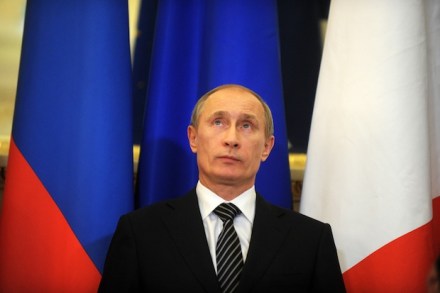
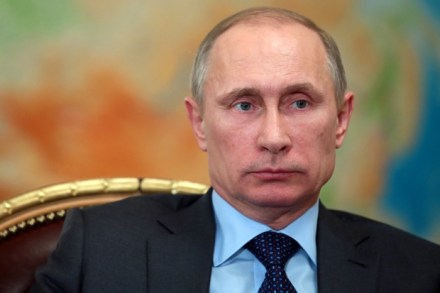
Vladimir Putin’s Russia is jingoistic, angry and oppressive. But it’s nothing like Nazi Germany

From our UK edition

I'm conservative, so it's hard for me not to love Vladimir Putin. His ripped torso, the way the sweat glistens on his pecs, the steely gaze, the cheeky smile. How much does he bench press, I wonder? And of course the main reason why conservatives like me aren't desperately keen to get stuck into the Ruskis over their occupation of Crimea is because, deep down, we really love Putin's authoritarian style of nationalist chauvinism. Especially the beating up the gays part, because deep down we're all secretly gay; or have micropenises. Whichever one would be more embarrassing.

Vladimir Putin’s right about one thing: the West doesn’t observe its own rules

From our UK edition

Congratulations to Stephen Glover for writing perhaps the only sensible piece about the Crimean crisis. There is a certain force, too, to Putin’s charge that the West believes itself a chosen people to whom the normal moral rules do not apply. We have meddled, frequently with the help of military might, to spread our own creed of liberal evangelism across the world, regardless or not as to whether the people to whose aid we have come actually share our aspirations. It has been a staggeringly unsuccessful policy. Look at Iraq. Look at Syria. Look at Afghanistan. I wonder too about the way the media reports these crusades.

Remembering the decimation of Crimea’s Tatars

From our UK edition

Crimea’s Tatars are nervous after Russia’s annexation of the territory. The Tatars, Sunni Muslims who account for 12 per cent of Crimea’s population, boycotted Sunday’s referendum worried that the Russians would impose repressive and discriminatory laws on them. Reading Bohdan Nahaylo’s 1980 article, Murder of a Nation*, you can see why. First, Stalin deported the entire Crimean Tatar nation. ‘In the early hours of 19 May 1944, some 238,000 people were abruptly awoken by units of the Soviet security forces and within minutes herded into cattle trucks. Sealed in without food or water, they were transported several thousand miles eastwards and eventually dispersed in Soviet Central Asia.

Portrait of the week | 20 March 2014

From our UK edition

Home In the Budget, George Osborne, the Chancellor of the Exchequer, said that the economy was working but the job was far from done. He expected further falls in unemployment and wages rising faster than prices this year. The economy, he suggested, would return this year to its size in 2008. Before the Budget, Nick Clegg, the Deputy Prime Minister, said that as many as 1.9 million working families could receive a tax-free childcare allowance worth up to £2,000 per child. Mr Osborne had announced that the help-to-buy scheme for new homes would be extended until 2020. He also let it be known that a garden city of 15,000 dwellings would be built near Gravesend on the high-speed line from the Channel.

Putin is making the West’s Cold Warriors look like fools

From our UK edition

William Hague was on rather shaky ground when he argued this week that Moscow has chosen ‘the route to isolation’ by recognising Crimea’s referendum. On the contrary, it is the European Union and the United States who look as if they have seriously overplayed their respective hands in Ukraine. Across Asia, Africa and Latin America, the cry of ‘western hypocrisy’ has been heard much louder than complaints about Vladimir Putin. Even in the UK, mainstream opinion is steadily becoming more critical of western interventionism and our ‘New Cold War’ posturing, despite some pretty one-sided media coverage and much establishment tut-tutting.

Russia is not a credible superpower in the 21st century

From our UK edition

The West has really got to get its act together in its dealings with Russia. It is simply not credible for us to pretend that we are confronting a threat on the scale posed by the USSR throughout the cold war. Of course, President Putin is dangerous - any charismatic, nationalist strongman with expansionist ambitions and a nuclear arsenal is worth worrying about. But Russia is also Europe’s largest failing state, a country riven by corruption that permeates every aspect of its civil and public life. Its oligarchs have not built their fortunes through honest endeavour. They have plundered their nation’s natural resources aided and abetted by a governing class that is keen to take its share of the spoils.

Sir Malcolm Rifkind delivers a stern warning on Ukraine

From our UK edition

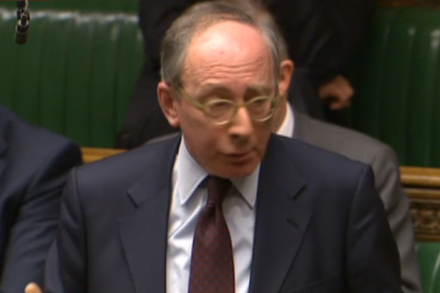
MPs moved seamlessly today from debating the breeding season of the hare to the situation in Crimea. It's been quiet recently, but this afternoon the House of Commons chamber hosted one of its better speeches from Sir Malcolm Rifkind, who was bristling with a cold, disapproving fury. This crisis, he told MPs, wasn't just a crisis for Ukraine, it was a crisis for every European country. And Europe was failing to recognise this, and failing to respond adequately, he argued. 'For the first time since 1945, a European state has invaded the territory of another European state and has annexed part of its territory.

The west has a choice: abandon Ukraine or punish Russia? It should choose the latter.

From our UK edition

An astonishing number of useless twits appear to think Russia's annexation of the Crimea is somehow not Vladimir Putin's fault. The poor Russia despot - no longer much too strong a term, by the way - is not responsible for his actions. He was provoked! Not simply by the Ukrainians, who should, it is implied, have known better, but by the west. It's our fault and Putin is simply acting logically and rationally. He has every right to reassert Russia's ancient prerogatives and if we hadn't penned him into a corner he wouldn't have needed to at all. Twaddle of course but the kind of stuff that's not hard to find. Plenty of people - by no means confined to those you would not expect to know better - appear to be swallowing this nonsense.

The BBC’s march to war

From our UK edition

Perhaps we are growing war-weary – weary, that is, of the gathering storm of World War One documentaries on the BBC. There have been so many, not just Max Hastings (for) and Niall Ferguson (against), but Jeremy Paxman keeping the home fires burning and the reheated I Was There interviews with veterans of the conflict whom age withered, unlike those who left their corpses to stink in the mud of Flanders. For all that, 37 Days, the corporation’s recent reconstruction of the events leading up to Germany’s invasion of Belgium, was utterly compelling, once again confirming the place of docudrama in the history schedule.

Spectator letters: Slavery continues to this day; and why Russia’s re-emergence as a world power is down to Obama’s apathy

From our UK edition

Slavery isn’t over Sir: I was alarmed to read Taki’s piece in this week’s High Life (8 March) which claimed that ‘slavery… has been over since 1865, except in Africa’. The Centre for Social Justice, whose board I chair, last year published its groundbreaking report It Happens Here, exposing the desperate plight of those in modern slavery in the UK.

Portrait of the week | 13 March 2014

From our UK edition

Home Ed Miliband, the leader of the Labour party, promised that, if elected, his administration would hold a referendum on membership of the European Union only if there was a new transfer of power to Brussels, which he called ‘unlikely’. If Scotland votes for independence, the Royal Bank of Scotland and Lloyds might have to move their legal homes to London under European Union law, the BBC reported. BBC Three is to be closed as an on-air channel, to go online only. The future of BBC Four is also in question. Mark Carney, the governor of the Bank of England, told the Treasury Select Committee that interest rates could reach 3 per cent within three years.

Our own folly may yet lead us to a second dishonourable Yalta

From our UK edition

'He was back after less than two years’ pilgrimage in a Holy Land of illusion in the old ambiguous world, where priests were spies and gallant friends proved traitors and his country was led blundering into dishonour.' Those words are taken from Officers and Gentlemen, the second volume in Evelyn Waugh’s Sword of Honour, his trilogy about the second world war. The words describe the disillusion of the protagonist, Guy Crouchback, as Britain sides with Soviet Russia to defeat Hitler: an alliance with an atheist tyranny to defeat an atheist tyranny, an alliance that led to the betrayal – perhaps necessary – of Eastern Europe at Yalta.

Crimean notebook: ‘They’ll have to break all my bones to make me a Russian citizen’

From our UK edition

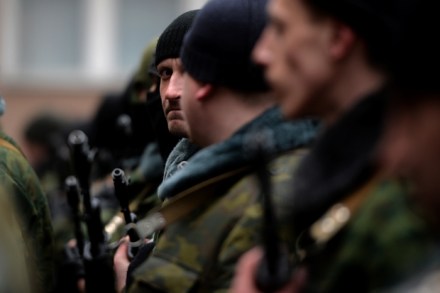
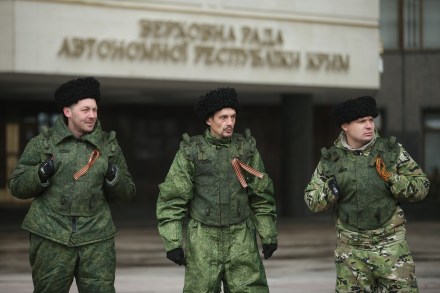
Vladimir Putin still swears that there are no Russian troops in Crimea, so their mission is to say as little as possible as they invade this holiday region in their unmarked uniforms and vehicles. It is remarkable how soon you get used to shouting questions at these heavily armed special forces soldiers while they pretend not to be Russians. They tend not to take the bait: the most you’ll get out of them is a curt ‘Nyet’. I wandered up to an officer who seemed to be in charge of seizing a Ukrainian naval base in the old Tartar capital of Bakhchisaray. He wore all black, his face hidden by a balaclava and his vest stuffed with nasty-looking weapons. ‘Can we talk?’ I asked.

Ukraine and Syria expose the West’s lack of appetite for protecting human rights

From our UK edition

‘We must stop using the language of force and return to the path of civilized diplomatic and political settlement.’ So wrote Vladimir Putin in The New York Times in September last year. Last week, he invaded Ukraine. A system of ‘international law’ which gives a man like President Putin the right to decide whether a proposed action is legal or not, is morally bankrupt. Yet that is how the United Nations Security Council functions – and that is why Western democracies should not shrink from taking action even when the Russian veto stands in the way. President Putin’s New York Times piece was about Syria. He was appealing to the American public not to assist Bashar al-Assad’s opponents.

Ukraine: Cameron and Merkel continue to focus on ‘de-escalation’

From our UK edition

David Cameron and Angela Merkel held a working dinner last night in Hanover ahead of their visit to a digital trade fair today. Naturally, they discussed Ukraine, and Number 10's readout of the call this morning says 'they both agreed that the priority is to de-escalate the situation and to get Russia to engage in a contact group as swiftly as possible'. Cameron also spoke to Vladimir Putin yesterday, with the Russian President telling the Prime Minister that 'Russia did want to find a diplomatic solution to the crisis' - although presumably in Putin's mind that doesn't involve quite the same level of compromise as those words might initially suggest.

The clock is ticking for Vladimir Putin in Ukraine. He has missed his best chance of victory.

From our UK edition

Tick tock. Tick tock. Time is running out in the Ukraine. Time passes and cements the "facts on the ground". Russia controls the Crimea and, one way or another, we should probably expect the province's referendum to endorse a return to Moscow Centre. Whether Crimea's plebiscite can or will be conducted honestly is a different matter but that, in the end, is not the most important issue. Indeed the fate and future of Crimea is, if hardly an irrelevance, a question of secondary importance. It is not the major front in this struggle. Russia's actions in the Crimea are plainly illegal and unjustified but they were supposed to be the catalyst for action elsewhere.

Leave Ukraine to the Russians

From our UK edition

[audioplayer src="http://traffic.libsyn.com/spectator/Untitled_2_AAC_audio.mp3" title="Matthew Parris and Anne Applebaum debate the Ukraine situation"] Listen [/audioplayer]‘You can’t always get what you want,’ chorused Mick Jagger, ‘but if you try some time/You just might find/You get what you need.’ The danger with Ukraine is that the western powers will get what they want, not what we need. I write this as one who has travelled in Ukraine, loved the country and seen that its people (though poor) are talented and energetic. Any reference I make to basket cases refers to the Ukrainian state, not the country’s human resources.

Where to open your brothel: an international comparison

From our UK edition

The best places to open a brothel The Commons all-party group on prostitution has called for a Scandinavian-style law where selling sex would not be illegal but buying it would be. How does the world treat prostitution? — In a survey of 100 countries by the educational charity ProCon, 50 were judged to treat prostitution as illegal, 39 as legal, with the remaining 11 making it an offence in some instances. — Among the most liberal were Canada, where laws against brothel ownership and pimping were recently overturned by the supreme court, the Netherlands, Germany, New Zealand and Greece. — The most severe criminal sanctions were found in Iran, where prostitutes face the death penalty, Iraq, Kenya and Saudi Arabia. You and whose army?