Ukraine

‘Kamala for SCOTUS’ is a distraction Biden wants

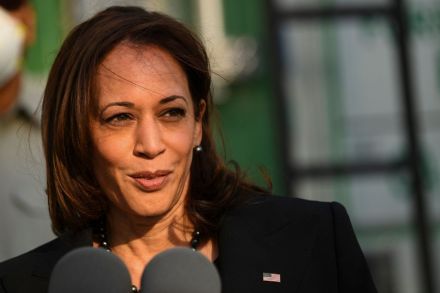
No, Kamala Harris will not be Joe Biden’s nominee to replace Justice Steven Breyer when he retires from the Supreme Court later this year. “Imminent Supreme Court retirement?” ejaculated CNN legal analyst Jeffrey Toobin earlier this month. “Longshot: VP Kamala Harris,” he suggested. NBC scooped on Wednesday that Breyer would step down at the end of this term — and more cranks joined the Kamala chorus. “Kamala Harris for the Supreme Court. #KHive She cannot win election with these numbers (yes it’s unfair, but Kamala is a pragmatist) she’s young, she’d be a great justice — and she’d spend a lifetime on the bench,” tweeted Louise Mensch. “@amyklobuchar for Vice President.” “Straightforward from here,” wrote Bill Kristol.
scotus kamala
ukraine

Don’t go to war with Russia over Ukraine

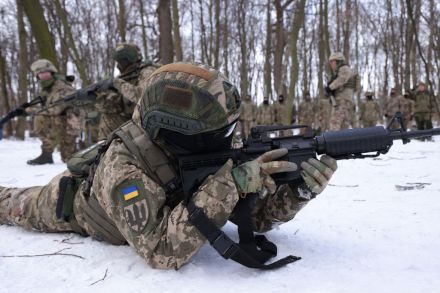
With shocking speed, talk in Washington has shifted from disunity among the Democrats and Joe Biden’s unhappy first year to possible war in Europe. The Putin government is reinforcing units poised to invade Ukraine. Washington is sending weapons to Kyiv. The United States and United Kingdom have begun to evacuate embassy personnel. President Biden is considering sending additional troops to garrison NATO member states. But for what? Why is the United States so thoroughly entangled in a conflict not its own? Not for reasons of history Throughout most of America’s relatively short existence, Ukraine was part of either the Russian Empire or Soviet Union.

Russia may very well invade Ukraine

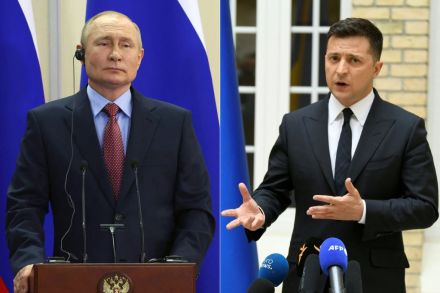
The United States is doing what it can to deter Russian President Vladimir Putin from ordering another invasion of Ukraine. Despite the cool and collected persona that Ukrainian President Volodymyr Zelensky is trying to present to his people, the White House still believes Russian military action is "imminent.” The Biden administration recently put 8,500 American troops on alert for deployment to Eastern Europe. Washington has spent the last several weeks trying to convince the Kremlin that any incursion into its neighbor would be costly. On Tuesday, the US sent a third shipment of lethal equipment to the Ukrainian military, including 300 additional Javelin anti-tank missiles. This comes on top of the 200,000 pounds of lethal aid that had already been provided by Washington.

Russia is the lost great power

Lost in the endless debate about whether Russia will invade Ukraine is the real reason that Moscow — armed with nuclear weapons and one of the most advanced militaries on the planet — feels so threatened by its neighbors, the NATO alliance, and ultimately the United States. While the expansion of NATO in the 1990s plays a big role, it is Russia’s everlasting internal debate about its place in the world that is the real source of tension. It's a historical black hole no one wants to get sucked into, but unless resolved it has the potential to be a source of armed conflict the likes of which Europe has not witnessed since World War II. Geography and history are both a blessing and a curse for Russia.

Will the old world order end in Ukraine?

As Russian troops encircling eastern Ukraine are preparing to attack, western leaders are bracing for a Russian invasion while struggling to maintain a united front. Following the fallout of peace negotiations and numerous deterrence measures that appear to be inconsequential, French President Emmanuel Macron has called on the EU to conduct its own dialogue with Russia and forge its own plan for security and stability. It’s an indication that most European nations are tired of being sidelined during negotiations and reluctant to impose harsh sanctions against Russia, especially since it could risk a gas shortage that would impact recovering European economies.

chinese meddling

The failure of hashtag diplomacy

The adults are back in charge! The State Department and its secretary Antony Blinken are tweeting out Spotify playlists! Spokesman Ned Price is sending hashtags and emojis in support of Ukraine! Meanwhile, nonessential American personnel have been ordered to evacuate their posts in Kiev. But surely they'll find a good hashtag to use on their way to the helicopters and airports. In all seriousness, this is a dangerously unserious administration that appears to be attempting to TikTok their way out of a crisis. Here’s hoping Vladimir Putin is checking his Snapchat for updates from Jen Psaki and the Jonas Brothers. What the Biden administration is trying to do is to recreate the wonder of the Obama years and their way-too-online Millennial social media strategy.

What does Russia hope to achieve in Ukraine?

President Biden said this week that a “minor incursion” of Russian troops into Ukrainian territory would not bring about the severe economic sanctions the White House threatened in response to a “significant invasion.” His counterpart in the Kremlin can probably hardly believe his luck. Effectively, Vladimir Putin has been given carte blanche by the West to launch military operations against Ukraine. Of course, the fact that there is no definition of what constitutes a “minor incursion” gifts the White House a preemptive get-out clause from having to truly confront Moscow.

ukraine

Can Putin ever be stopped?

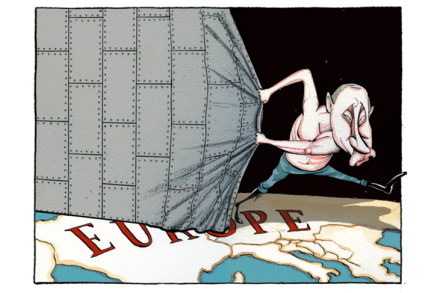
Vladimir Putin has been the most effective practitioner of Realpolitik for the past two decades. With an economy about the size of Italy’s, and just as corrupt, he has accomplished his most ambitious goal: returning Russia to the status of a Great Power. Now he’s thrown his chips on the table once more, launching a massive troop build-up on the border with Ukraine and sending still more into Belarus (for “joint exercises”), positioning them just north of Ukraine’s capital of Kyiv. Although the numbers don’t appear large enough to conquer all his neighbor’s territory, they are large enough to push through the eastern region (the one bordering Russia) and form a land bridge to Crimea, which Russia conquered in February 2014.

putin

In the pipeline: would Germany side with Russia in a conflict?

From our UK edition

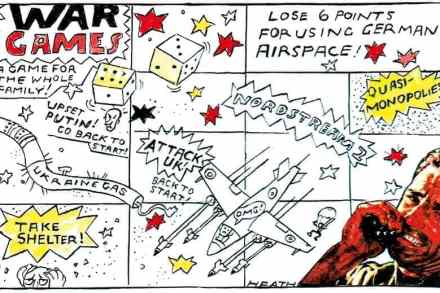
If Russia were to invade Ukraine, would Germany side with the Russians? For most of our post-war history, that would have been an absurd question, but things are changing fast in Europe. In the wake of recent events, it would not be irrational for Vladimir Putin to bet that if push came to shove, he could count on German neutrality — or even support. The Ukraine crisis continues apace, with up to 100,000 Russian troops now gathered near its border. The obvious question is: what would happen if Putin were to invade? It would split the EU, exposing its energy dependence on Russia, ruin what is left of transatlantic relations and force Germany to choose sides.

Celebrating Konstantin Paustovsky — hailed as ‘the Russian Proust’

From our UK edition

When is a life worth telling? The Soviet writer Konstantin Paustovsky’s six-volume autobiography The Story of a Life combines high drama with heroic misadventure in a comico-lyrical amalgam of history and domestic detail that enchants from start to finish. Why Paustovsky is not better known outside his native Moscow is a mystery. In the mid-1960s he was nominated for the Nobel prize. (He was pipped to the post by Mikhail Sholokhov, the author of the obediently propagandist And Quiet Flows the Don.) Denounced as a ‘counter-revolutionary’ by the Soviet Writers’ Union, Paustovsky belonged to that select band of writers who inspire true fandom.

Biden chickens out of Iran negotiations

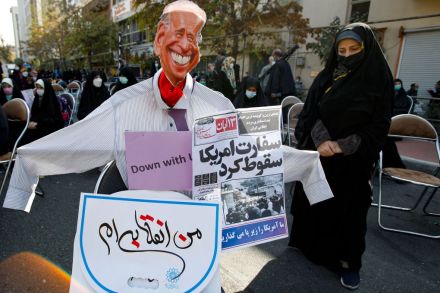
We were promised a war of nerves in Vienna between Washington and Tehran, a game of chicken. Instead, President Biden has chickened out. He's also blaming Israel. Call it fowl play. Here's how it should be going. The United States wants Iran to re-commit to refreezing its nuclear program. Iran demands in exchange the revoking of the economic sanctions against it. Each side insists that it won't give up on its demands — even if that could lead to the collapse of the negotiations, the demise of the Joint Comprehensive Plan of Action (JCPOA) and eventually to a military confrontation. The diplomatic and military tensions between the United States and Russia over Ukraine involve just such an exercise in brinkmanship.

iran

America still won’t risk a war with Russia over Ukraine

Anybody who thought this week’s intense diplomacy between American, European, and Russian officials would magically resolve the ongoing crisis in Ukraine should lie down until the feeling passes. Crisis diplomacy isn’t a walk in the park; if anything, it’s a slow-moving car ride through rush-hour traffic, with plenty of speed bumps along the way. On Monday, January 10, Washington and Moscow met for a round of discussions in Vienna to sound each other out and present their list of seemingly endless grievances. After eight hours of talks, both delegations left the room with, coincidently, similar assessments as to how it all went.

Is Vladimir Putin really willing to invade Ukraine?

From our UK edition

Is Putin preparing to invade Ukraine? It certainly looks that way, with western intelligence agencies estimating this week that around 100,000 troops are now massing at the country’s eastern border. To some, this build-up is proof enough that the Kremlin plans to invade. This week the US president Joe Biden even made significant diplomatic concessions to Moscow to prevent a looming conflict. But the US president should keep in mind that capability does not prove intent: and Putin may well decide that the cost of invasion is too hard to justify. His recent Ukrainian mobilisation could still be a piece of ‘heavy-metal diplomacy’ – a show of force intended to bully and bluff Kyiv and the West into concessions.

The battle for Ukraine has already been lost

From our UK edition

Forget the 'commitment' of the US Secretary of State Antony Blinken to Ukraine’s sovereignty, the EU’s 'firm and decisive' support, and Liz Truss's vow to 'stand firm' with Ukraine. The hard truth is that the West has already lost, or rather abandoned, Ukraine. Even if it is not overrun by Russian tanks this winter, the Kremlin has a free hand to destabilise, threaten, and undercut Ukraine – including by intensifying the conflict in Ukraine’s east. After all, that war, initiated by Vladimir Putin, has been ongoing since 2014. And for all the tough rhetoric, countless sanctions, and the two bargains struck in Minsk, Russia continues to occupy Crimea and treat Donbas as its own territory.

Biden must encourage Ukraine to negotiate

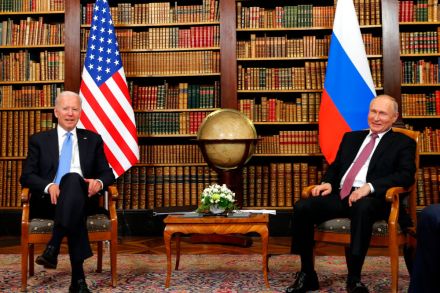
President Joe Biden spoke with Russian President Vladimir Putin today via video conference for just over two hours, the second time in six months that the two leaders have engaged in a face-to-face conversation. For Biden, the message he sought to deliver was strict and to the point: if you, Mr. Putin, go ahead and order a second invasion of Ukraine in nearly eight years, you can expect a raft of economic penalties that will negatively effect everything from Russia’s access to the SWIFT payment system to the ability of Russian banks to convert rubles into dollars. For the security-minded Putin, the meeting was an opportunity to press Biden on his principal demand: a written legal guarantee from Washington and the rest of NATO that Ukraine will not be invited into the alliance.

Why America needs a grand bargain with Russia

Russian is losing influence in a region it once dominated: Eastern Europe. Highlighting this newfound weakness are Ukraine and Belarus, two states that were once solidly in Russia’s sphere of influence and are now on the verge of completely falling away. In 2018, Ukraine enshrined in its constitution the goal of NATO membership and last year Belarus experienced massive pro-democracy protests; both of these events are in Russia’s eyes akin to westernization. The American foreign policy establishment acts as if Russia will ultimately accept being surrounded by Western-allied states. Instead, history shows that losing influence will cause Russia to lash out. If Ukraine moves toward NATO membership, it will incur a Russian invasion.

vladimir

Britain’s duty to the Black Sea

From our UK edition

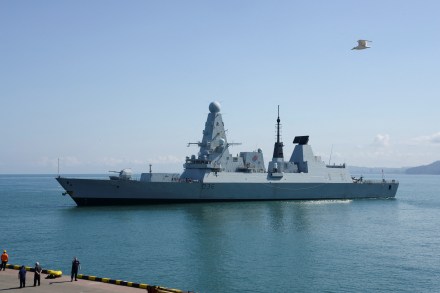
With Russian troops massing on Ukraine’s borders, the Black Sea is looking choppy. While that may seem to have little significance for us, in an age of globalised supply chains, international security commitments and Britain’s ‘tilt to the Indo-Pacific,’ that matters more than we might think. However, there is also an opportunity for the UK. In a report for the Council on Geostrategy that was published this week, I, James Rogers and Alexander Lanoszka, suggest that the Black Sea region is at risk of becoming an anarchic environment where insecurity reigns amid Russian domination. This matters.

Ukrainian annexation is already happening

From our UK edition

Nato and the EU are fearing a Russian invasion of eastern Ukraine. They have reason to be concerned, given that Russia would not blink to escalate while the West is still fumbling around on how best to respond. Brussels and Washington are in firefighting mode, while Russia chooses the when and the where. Annexation in the east, meanwhile, is already happening — not by force but through civil and economic ties. Military mobilisation looks like a sideshow, a distraction from what is really happening already: a slow annexation of the eastern quasi-independent republics. The pro-Russian regions of Donetsk and Luhansk declared independence from Kiev in 2014 but have never been recognised by Ukraine.

Stop pretending Ukraine will ever be in NATO

Russian President Vladimir Putin is once again making the West nervous. And unlike his previous display of military might near the border with Ukraine last spring, Washington is concerned enough that it's sent CIA director (and former US ambassador to Russia) William Burns to Moscow for talks earlier this month. If Burns’s trip was meant to scare the Kremlin into halting additional military formations near the Russia-Ukraine border, then the confab didn’t work as planned. The Ukrainian government estimates that up to 100,000 Russian forces are now camped out in the area. American and European officials are sharing information with one another about various scenarios the Russians could be contemplating, the most dramatic being a second invasion of Ukraine in seven years.

ukraine

Is Russia preparing to invade Ukraine?

From our UK edition

I can still hear the battlefields of eastern Ukraine. Just a mile or so from us, thousands of Russian troops were dug in; shells landed nearby. It was so cold my phone kept switching off. Seven years later, Ukraine is heading into another sub-zero winter. And the Russian troops have returned. Moscow has now massed more than 90,000 troops on Ukraine’s eastern border. Washington is briefing that intelligence suggests an invasion. Moscow says this is ‘alarmist’ and — as usual — accuses Nato of inflaming things. How did we get here? In truth the conflict never ended, it just froze. But it’s also true that the relationship between Kiev and Moscow has tanked this year.