Ukraine

Why the world needs Richard Nixon

From our UK edition

Gstaad The Speccie arrived just in time for me to read about the rudeness of one Lyndon Johnson, then vice-president, toward Lady Antonia Fraser. A later occupant of the White House, Jimmy Carter, was not as discourteous as the Texan, but in somewhat similar circumstances he left the poor little Greek boy standing alone surrounded by secret service heavies. This took place at a grand New York dinner party given in Carter’s honour by a real-estate lady, and I was seated with Norman Mailer who was busy trying to make whoopee with my ex sister-in-law, Betsy Kaiser.
Kamikaze drones are the future of warfare

From our UK edition

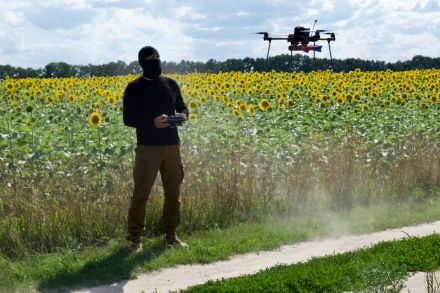
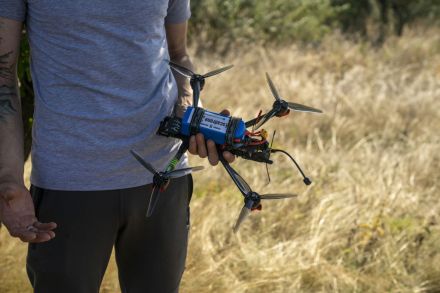
The West is struggling to confront the modern military technologies of Russia, Iran and China. A year and a half of the war in Ukraine has proved it. Iran has exported cheap Shahed-136 kamikaze drones to Russia, and they have been used to terrorise Ukrainians. Putin appears ready to invest further in procuring thousands more. Sir Tony Radakin, chief of the defence staff, said this week that, in response, the British Army wants to create regiments of kamikaze drone pilots. He's right to do so. Iran’s drones are cheap to make, estimates say around £15,000 each, but the air defences needed to shoot them down are far more expensive.

Why the new right is like the old left

F.H. Bradley, perhaps the most self-aware philosopher who ever lived, once dismissed metaphysics as “the finding of bad reasons for what we believe upon instinct.” Bradley (whose favorite pastime was using pictures of Gladstone for target practice with his revolver in his rooms at Merton College, Oxford) qualified his negative assessment of the intellectual life by pointing out that philosophy was itself one of those irrepressible instincts — a nicely circular way of putting it. This is more or less how I feel about journalism. I don’t expect anything from readers except the occasional quiet chuckle and a general sense of not having wasted their time. I am certainly not in the business of changing hearts and minds.

right

World events are not going America’s way

Contrary to the conventional wisdom, the world situation is grim for America. And it could actually get far worse. Why, then, are many of our national leaders acting as if things are going well? We need not doubling down but fundamental change. That starts with understanding that we are in serious trouble. The war in Ukraine, which is manifestly the Biden administration’s priority, is sadly likely to be protracted. While the Ukrainian counteroffensive is still ongoing, the best analysis indicates that the war has become a struggle of attrition. Russia is substantially mobilizing its economy and society for a long-haul war effort — and its armed forces appear to have at least partially adapted from their earlier failures.

world

NATO’s post-Cold War strategy has been a disaster

NATO is fighting for its life — and dying. The alliance has only grown larger as a result of Russia’s invasion of Ukraine. Now Finland is a member — and Sweden is on its way to becoming one. Ukraine and Georgia would like to join, too. All this is a sign of failure, however, not success. Whichever way one looks at the picture, NATO’s post-Cold War strategy has been a disaster. Either NATO did not expand far enough, fast enough — to the point of including Ukraine and thereby preventing the Russian invasion — or NATO’s continual expansion gave Russians reason to fear that they were being boxed in.

NATO

A month in the Baltics

On Joe Biden’s first day in Lithuania, he skipped the opening dinner of world leaders at the NATO summit and made a beeline from the airport to his suite at the opulent Kempinski Hotel for a plate of spaghetti bolognese and some quality sack time. My introduction to the country a couple of weeks later involved no fanfare, but was far more memorable. I woke up in the 700-year-old Jaunpils Castle, in a fantastic, out-of-the-way place, lost to my teenage son in an archery competition there and then drove south on winding country roads to northern Lithuania’s Hill of Crosses, a place that better symbolizes the victory of faith over communism than any other. The Baltic countries — Lithuania, Latvia and Estonia — are often lumped together.

Lithuania

Portrait of the week: A concrete crisis, Labour reshuffle and Gabon coup 

From our UK edition

Home More than 100 schools were told to close buildings before the new term because they contained the wrong kind of concrete. The Health and Safety Executive said that reinforced autoclaved aerated concrete (Raac) ‘is liable to collapse with little or no notice’. In total, 156 schools are affected, of which 104 require urgent attention and 52 have already received repair works. But in Scotland, where 35 council-run schools had been found to contain Raac, none had to close.

My prediction for the next general election

From our UK edition

My long-standing theory of British general election results is that they are all deserved. This is true not just of big victories e.g. Labour in 1945 and 1997, the Conservatives in 1979 and 2019, but also of no-score draws, such as the two elections of 1974. In our system (though first-past-the-past sometimes exaggerates) the voters are, collectively, always right. Dare I turn this retrospective rule into a prediction? If I did, I would say that the Tories now deserve to lose, but that Labour does not deserve to win. Logic therefore demands a Labour lead but no overall majority. Small British charities and voluntary groups are doing such good work in Ukraine, but being discouraged, and sometimes refused charitable status, by the Charity Commission.

Portrait of the week: Dorries finally quits, Braverman cracks down on crime and Prigozhin is confirmed dead

From our UK edition

Home Suella Braverman, the Home Secretary, told police that they must investigate every theft and follow all reasonable leads to catch criminals; the Police Federation of England and Wales said forces were already ‘stretched beyond human limits’. Home Office figures showed that only 3.9 per cent of residential burglaries resulted in someone being charged, and for thefts from the person it was 0.9 per cent. Hartwig Fischer resigned as the director of the British Museum and Jonathan Williams stepped aside as his deputy when it became clear that information about 1,500 or so missing objects had been wrongly dismissed; police continued investigations.

Why the US will decide Ukraine’s fate

From our UK edition

As Ukraine marked its 32nd national holiday since independence, news from the front lines and the wider world appeared better than perhaps in any week since the recapture of Kherson in November. In Zaporizhzhia, the hard-fought front lines moved a few miles forward. In Crimea, a missile strike took out a Russian S-400 anti-aircraft complex and a team of Ukrainian commandos briefly raised their yellow-and-blue flag on the peninsula for the first time since Russia’s 2014 annexation. A Russian Mi-8 helicopter pilot defected to Ukraine with a load of jet engine parts. Near-nightly waves of drone strikes deep inside Russia blew up two Tu-22M long-range bombers, four Il-78 transport aircraft and repeatedly struck central Moscow.

Will Trump eventually show up for a primary debate?

Milwaukee, Wisconsin America’s front-runners share a winning debate strategy: don’t turn up. Much as Joe Biden is dodging the chance to share a stage with Marianne Williamson and Robert F. Kennedy Jr. — because why would you? — Donald Trump opted to skip out on the Republican National Committee and Fox News’s first debate in Milwaukee.  Trump is still aggrieved by what he perceives as the network’s ill treatment of him, both in its “early” — but correct — call of Arizona in the 2020 election and its coverage since: there is a palpable yearning among executives to “move on” from Trump.

independence

Renewed hope on Ukraine’s Independence Day 

Kyiv Because I was born on the same day as Ukrainian Independence, there were always fireworks on my birthday. Until I was eight, I thought these rockets were in my honor. I even asked my mother to bring a bag so that I could catch a “firework” and it would keep shining for me all night long.  In addition to fireworks, there were concerts and cotton candy, and the fountain on the main square would be transformed from ordinary to multi-colored. It was like the Fourth of July in America, only on August 24 in Ukraine. But my childhood is over, I’ve become an adult and this year after eighteen months of Russia’s full-scale war, I’m not expecting fireworks. I’m hoping there won’t be Russian rockets or Iranian drones either. War forces us to adjust.

Ukraine’s real killing fields: An investigation into the war’s first aid crisis

From our UK edition

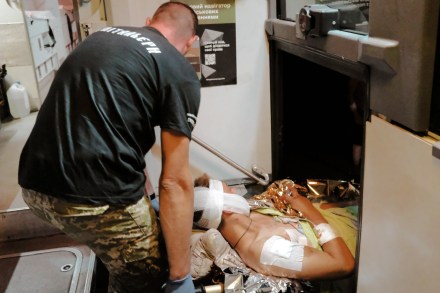
Donetsk It’s past midnight and I am standing in silence with the crew of a military ambulance on the edge of the Donetsk region. The village is dark to avoid attracting the attention of Russian drones. The paramedics move with quiet determination, lifting blood-soaked stretchers and ferrying moaning, injured soldiers from one vehicle to the next. I see a wounded man with bandages where his legs used to be. His severed limb sits next to him in a bag. There are no figures for how many Ukrainians have been maimed in this war. Nor are there proper figures for the dead. Kyiv doesn’t give body counts, saying only that Ukrainian casualties are ‘ten times less’ than Russia’s. Keeping the numbers secret prevents scrutiny.

What military lessons can we learn from Ukraine?

From our UK edition

The past comes in convenient lumps, each able to provide a lesson. When I was growing up, it was the Munich Agreement, giving Hitler the Sudetenland, and Suez, that embarrassment, that historians tried to glean some wisdom from. We later embraced the lessons from Vietnam, about guerrilla warfare, and after that the teachings of Iraq and Afghanistan, about counterinsurgency. All wars taught us something, apparently. Ukraine has appealed for international military support by presenting itself as a testing ground for future wars. The Ukrainian defence minister says that Ukraine is the perfect place for the arms industry to try out its new kit, and our own defence secretary has said as much too. You can learn your lessons, make your mistakes, in Ukraine.

The changing story on Biden family business dealings

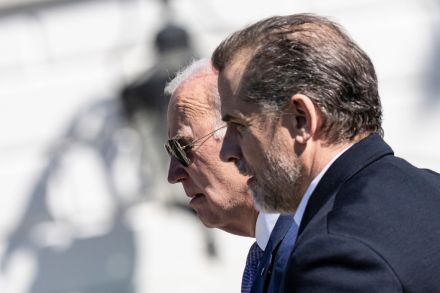
Devon Archer, a former friend and business partner to Hunter Biden, testified Monday as part of the House Oversight Committee's investigation into the Biden family business dealings and alleged foreign corruption. Archer made several key claims, including that Hunter was brought on to the board of Ukranian energy company Burisma because of his familial connections and that Hunter put then-Vice President Joe Biden on the phone his business associates at least twenty times to demonstrate his access to US government power. Archer's testimony complicates the insistence from President Joe Biden, the White House and their friends in the media that President Biden was oblivious to his son's business dealings taking place abroad in places like Ukraine and China.

U.S. President Joe Biden and his son Hunter Biden attend the annual Easter Egg Roll on the South Lawn of the White House (Photo by Drew Angerer/Getty Images)

Coutts has forgotten what the job of a bank is

From our UK edition

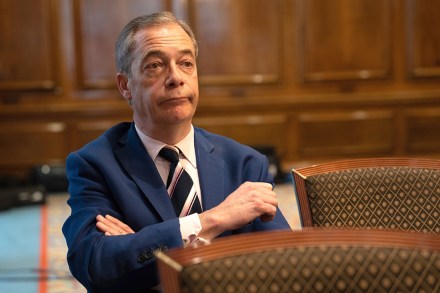
We now have a reluctant apology from Dame Alison Rose, followed by her even more reluctant resignation. Her departure is a major achievement, but the reluctance is a symptom of the problem. How could she possibly have thought she could stay after she was caught breaking a client’s confidentiality and spreading untruths about him (untruths which the BBC checked with her before publishing)? How could her chairman, Sir Howard Davies, have possibly thought that she could? And still we have nothing from Coutts, the bank that tried to trash Nigel Farage in the first place. Coutts is a B Corp, meaning a corporation which signs up to the commandments of current virtues, such as sustainability and inclusion.

Inside Ukraine’s drone army

From our UK edition

Kyiv ‘We will end this war with drones,’ says Mykhailo Fedorov, deputy prime minister of Ukraine. We meet at the Ministry of Digital Transformation, which he runs in Kyiv. It has become crucial to the counter-offensive. To reclaim occupied land, Ukrainian troops need to remove miles of landmines, and can do so only if kept safe by swarms of drones that fly ahead, searching for the enemy. Russia has drones too – many more of them – and is adept at jamming and downing Ukraine’s fleet. A drone arms race is under way. Soon after his election, President Volodymyr Zelensky asked the then 28-year-old Fedorov to run a new ministry aimed at turning Ukraine into a digital country (or, as he put it, a ‘paperless state’).

Will Chuck Grassley’s Burisma bombshell finally get the Bidens fired?

A famous clip from recent history: “I’m leaving in six hours. If the prosecutor’s not fired, you’re not getting the money. Well, son of a bitch, he got fired.” That was Joe Biden in 2016. He was relaxing among friends at a chummy event at the Council on Foreign Relations. Ha, ha, ha, tittered the appreciative audience. What a lark! Here was a former vice president of the United States bragging about how he (naughty word) blackmailed an official from a foreign government who was investigating the company on whose board Joe Biden’s son sat. This is old news, of course.

chuck grassley

The death of sportsmanship

From our UK edition

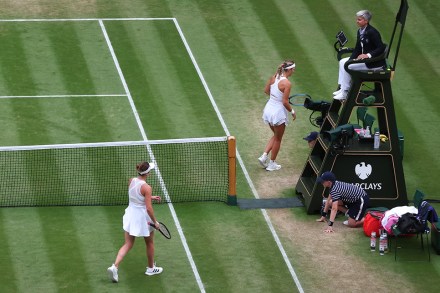
Now that Wimbledon is over, a few thoughts about youthful brains showing traces of horse tranquillisers, angel dust and cannabis, the ingredients that spell ‘moron’. I mean those sporting idiots who booed Victoria Azarenka after she lost the tiebreak 11 to 9 in the third set to the charming Ukrainian Elina Svitolina. Here’s Vica – a woman, a mother, a wonderful player and, through no fault of her own, a Belarusian – being booed for going along with the decision of Ukrainian players not to shake hands with Russian or Belarusian opponents. When a Ukrainian player refused to shake hands during the French Open last month, the public booed her, not her Russian opponent. The frogs were right. Since when does the accident of birth make one a pariah?

Portrait of the week: BBC presenter scandal, EasyJet cancellations and a baby boy for Boris

From our UK edition

Home The government pondered whether to accept pay-review bodies’ recommendations on rises in public sector salaries. ‘Delivering sound money is our number one focus,’ Jeremy Hunt, the Chancellor of the Exchequer, said in his Mansion House speech. ‘That means taking responsible decisions on public finances, including public sector pay.’ Regular pay in the March to May period was 7.3 per cent higher than a year earlier, although it rose less than inflation. Unemployment rose from 3.8 per cent to 4 per cent; vacancies fell by 85,000 to 1,034,000. The average two-year fixed-rate mortgage rose to 6.7 per cent. Jeremy Hunt confirmed that he was refused a bank account with Monzo last year on the grounds that he was a ‘politically exposed person’.