Uk politics

What Labour women think of Gordon

From our UK edition

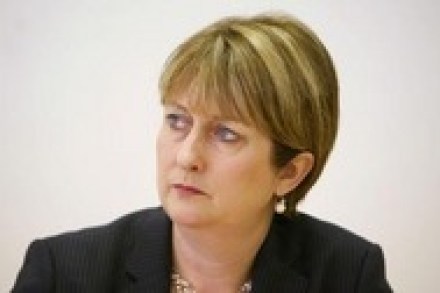
For those of you who missed it, Radio Four has just broadcast a piece about what the women who worked with think Gordon Brown think of him. Not a lot, it seems. Here are some of the quotes: Jane Kennedy "Well I think that the Labour Party is expecting us to do better. The Parliamentary Labour Party were told in the first meeting after the election in June we were promised that there was going to be a change.  We haven't seen that change yet, we haven't even really seen the kind of clarity and willingness to listen to what the voters are telling us about policy.


A framework for shelving tax cuts

From our UK edition

So, the News of the World claims that the Tories are planning to shelve some of their tax-cutting proposals - including the inheritance tax cut and tax breaks for married couples - to help combat the fiscal crisis.  Guido suspects that the news came direct from the Blackberry of Andy Coulson, but the Tories have told Tim Montgomerie to "treat the story with a ton of salt". Either way, I do - like Tim - have some sympathy for the idea that commitments will have to be sidelined to overcome Brown's debt mountain.  The longer those terrible deficits remain, the more future generations will be burdened by the Dear Leader's fiscal sabotage, and the more likely that potential investors will turn away from the UK.

So who’s really “playing politics” over troop numbers?

From our UK edition

Just when you thought Brown's government couldn't sink any lower, you go and read the Sunday Times's lead story today and the comments it contains from "senior Labour figures", including a minister.  Here are the first few paragraphs: "Senior Labour figures accused the head of the army last night of playing politics as he said that there were too few troops and helicopters in the Afghan war zone. One minister expressed fury that General Sir Richard Dannatt, the chief of the general staff, had attended a private dinner with Tory MPs and suggested an extra 2,000 troops were needed in Helmand province. The general’s remarks put him at odds with the official government line, that the 9,000 British troops already in Afghanistan are sufficient to cope with the offensive.

Good lord

From our UK edition

Earlier this week, Lord Malloch Brown announced he's resigning his brief as Africa Minister in the Foreign Office. I'm sure this will cause some rejoicing, including among my Coffee House colleagues. It was, after all, the Spectator that went to town on the former UN staffer's grace-and-favour appartment in Admiralty Arch and the other niceties offered to him by the Prime Minister a few years ago. However, I have always found Malloch Brown professional, courteous, and insightful. He may have struggled to find his proper role immediately upon appointment - foolishly describing himself as a Richelieu-type character to David Milliband's king - and sometimes allowed his sense of self-worth get the better of him, but he was miles ahead of any other Foreign Office minister.

Smith’s claims call Brown’s political judgement into question

From our UK edition

Ok, let's get the hard, grim facts out of the way first: Jacqui Smith was an ineffective Home Secretary whose expense claims were dubious, to say the least, and who rightly lost her job in government.  But - having said that - it's hard not to feel slightly sorry for her as she discusses the embarrassment caused by her husband's porn rentals in an interview with the Guardian today.  The whole piece is a remarkably candid exchange: she also discusses how she "did wrong" with her expenses, and how she'd "definitely" be voted out "if the general election was tomorrow".  But this passage struck me more than any other:      "[Smith] insists she wasn't forced out - that Brown asked her to stay when she first said she wanted out.

National security priorities: your say

From our UK edition

Watch out: it's security review season. The Brown government is about to issue a second version of its National Security Strategy. You can expect Pauline Neville-Jones to put out a revised version of the paper she did for the Tories a while ago. The Obama administration is set to launch a new "Quadrennial Diplomacy and Development Review," to be headed up by Deputy Secretary of State Jacob "Jack" Lew and Policy Planning chief Anne-Marie Slaughter. While NATO has just begun work on its Strategic Concept, and Russia recently updated its National Security Strategy. Oh, and the EU disseminated a new Security Strategy under the French EU Presidency, which also saw the French government issue its Livre Blanc, a national security-type document.

Whom do you trust more?

From our UK edition

So, a ComRes poll for the Daily Politics has Cameron leading Brown on the issue of which party leader would be more honest about spending cuts. It echoes a poll that we conducted a few days ago; the results of which we figured we’d share with CoffeeHousers, before our work experience at the Speccie comes to an end. Basically, we hit the streets of London (avoiding Westminster and all the party hacks), and asked around 350 people: “Who do you trust more, Gordon Brown or David Cameron?” Sure, it may not be as scientific as a YouGov or ComRes poll, but the results are still striking. Cameron polled a comfortable 62.5 percent, while Brown only managed a lacklustre 37.5 percent. A massive victory for Dave, then? Well, yes – in one respect.

The extent of Johnson’s loyalty?

From our UK edition

Kevin Maguire's Commons Confidential column in the latest New Statesman contains this intriguing little snippet: "Home Secretary Alan Johnson was a picture of innocence during the plot to oust Brown and replace him with a former postie with the initials A J. Not so his entourage. It has come to the attention of No 10 that one of his team offered a job in Downing Street to a hackette." After his article for the Indy earlier this week - and his fizzy performance in Manchester yesterday (covered by John Rentoul as part of his AJ4PM series) - you suspect Johnson is being a little more active than the Dear Leader would like.

The Lib Dems threaten to go AWOL 

From our UK edition

Though Nick Clegg has greater pre-existing international experience than either David Cameron or Gordon Brown (having worked in Brussels), he cannot help but see international affairs through a narrow political lens. Last year it was Israel's targetting of Hamas, now it is Nato's Afghan mission. Clegg wants the British troop contribution to ISAF either massively expanded or for the boys to come home. Simple enough. But it is also a sign that the Lib Dems, despite having such foreign policy luminaries like Ming Campbell on their benches, lack depth. It would be great for the number of British troop in Helmand to be expanded. But with almost 9000 troops already deployed, any uplift is likely to be limited.

Lansley takes one step forward and two steps back on spending

From our UK edition

Although Andrew Lansley's "10 percent" gaffe may have worked out alright in the end, I can't help but think he's pushing his luck with his latest comments: Andrew Lansley has called on the Government to come clean about their spending plans after it was revealed that the NHS has been asked to plan for efficiency savings of £15-20 billion against its 2010-11 budget. The Department of Health has refused to confirm whether these savings will be available for reinvestment in the NHS - if they are not, it will equate to a real terms annual cut to the NHS budget of 2.3 per cent. Andrew, the Shadow Health Secretary, said, “NHS staff and patients have an urgent need to know whether Labour will match the Conservative commitment to real terms increases in NHS spending after 2011.

No change on the Coulson front

From our UK edition

After the news that there won't be a new police investigation last night, the second thing the Tories feared most hasn't happened either: neither the Guardian nor any other outlet has anything to further implicate Andy Coulson in the phone-hacking scandal this morning.  Indeed, the Guardian's main story concerns how a private investigator working for the NotW collected phone messages from Sir Alex Ferguson and Alan Shearer, among others.  That deepens the media controversy, but hardly fuels the political controversy which was trying to burst into flames yesterday. I should stress - as I did in a comment yesterday - that I think phone-hacking is a disgraceful practice.

The old gray lady on Cameron

From our UK edition

Christopher Caldwell’s New York Times Magazine profile of David Cameron has finally been published; Caldwell first interviewed Cameron for it last year. I expect the Tories will see it as an important non-electoral milestone for them, a sign that the American establishment expects Cameron to be the next Prime Minister. The piece is, as you would expect with a Caldwell article, well written and, as it is written for an audience that knows little about Cameron, offers a good overview of the project. Caldwell proposes that there are two types of modernizers. “There are really two strands of modernizers in the Tory party. There are the green-friendly, diversity-oriented, welfare-state-defending ones — the ones who simply want to move the party to the left.

Labour prime their anti-Coulson strategy

From our UK edition

Some useful insights from PR Week's David Singleton, who reveals that Labour are planning a concerted effort to paint Andy Coulson as a "sleazeball" ahead of - and perhaps during - the next election campaign.  Here's a snippet: "One senior Labour source in regular contact with Gordon Brown's inner circle told PRWeek: ‘Cameron wants to present himself as the man who's going to clean up politics. That's going to be difficult if the public think his right-hand man is a complete sleazeball.'   Another Labour insider said that senior party figures had been thrashing out a strategy to target Coulson since the news emerged yesterday. The source said the aim was have Coulson ‘wounded, but still there'.

There could be a pay freeze, after all

From our UK edition

Over at the FT's Westminster blog, Jim Pickard picks up on an important comment from Stephen Timms, the Treasury minister, speaking at a committee meeting this morning.  Timms suggests that Treasury hasn't ruled out a public sector pay freeze, as recommended by the Audit Commission's Steve Bundred.  Here are the minister's words:   “It’s certain the case that our pay policy needs to reflect the wider economic circumstances ... we will be deciding on pay policy over the next few weeks, the policy has got to be fair to people who work in the public sector just as we have to be fair to everybody else. The suggestion by Steve Bundred has made is certainly one we will reflect on but the details on that will be made over the next few weeks.

Cutting through the jargon

From our UK edition

There was a wonderful outbreak of wit and erudition at Parliament this morning. The sketch-writers Simon Hoggart and Matthew Parris appeared before the Public Administration Select Committee to discuss the perils of political jargon. Simon Hoggart kicked off by imagining Churchill’s war-time speeches re-written by a local government wonk. ‘We will fight on the beaches’ turned into ‘an ongoing programme of hostile engagement in littoral sectors.’ The committee chairman, Tony Wright, wondered if his anxiety about jargon was misplaced. ‘Does this drivel matter or does it just irritate us?’ Matthew Parris pointed out that jargon is attractive because it confers an aura of learning and makes idiot politicians sound like world experts.

A headache for Cameron and Coulson

From our UK edition

So David Cameron has said that Andy Coulson's job isn't endangered by the News of the World wire-tapping allegations in this morning's Guardian, and you can see where the Tory leader is coming from.  After all, there are very few - if any - new revelations about Coulson in the Guardian piece.  We already knew that the Tory communications chief resigned the editorship of the NotW after a phone-hacking scandal involving the royal editor Clive Goodman.  And we already knew that he claimed no knowledge of the hacking but, as editor, he took responsibility for it.  No evidence has yet emerged that Coulson was more implicated than he's letting on.

The consequences of Johnson’s cowardice

From our UK edition

There was great excitement here in Old Queen Street when Lord Carlile, the Government’s own adviser on anti-terror law, announced that Alan Johnson can and should help poor Gary McKinnon. McKinnon is the computer nerd who hacked into the Pentagon looking for evidence of UFOs, but who is soon to be extradited and tried as a terrorist in America. Lord Carlile – not usually a dovish man – thinks a great injustice is being done (Mckinnon might get 70 years in a ‘supermax’ prison) and has said that the Home Secretary should prevent it. So we called the Home Office to find out when Alan Johnson was planning to act. “The Home Secretary can do nothing. This is a matter for the judicial review,” said his spokesman. So why does Lord Carlile think he can?

Rules versus discretion

From our UK edition

Today's White Paper on financial regulation avoids introducing some unnecessary regulatory changes at the expense of failing to introduce some necessary ones.  In particular, it fails to recognise the abject failure of Gordon Brown's "tripartite" framework, in which prudential supervision of the banks was taken from the Bank of England and given to the FSA. Prudential supervision is the proper task of the central bank, for only if it has oversight of banks can the central bank decide whether they should receive last resort lending when they need it.  Without prudential oversight, the Northern Rock debacle is the likely result, and the fact that we are still debating this the best part of two years into the credit crunch is a sorry indictment of UK policymaking in this period.