Uk politics

A sombre scene and a shift in power

From our UK edition

Poppy day came early to Westminster today.  Brown began proceedings by reciting the names of the 37 men killed in Afghanistan over the summer. This took two minutes. The house was silent, funereal, almost awe-struck with the solemnity of the occasion. Brown looked like a man deeply moved by personal grief as he worked his slow way through the deadly list. Ann Winterton punctured the mood with the first question, suggesting that once the Lsibon treaty is ratified the government's first duty will be 'to further the objectives of Europe in preference to those of Britain'. Brown denied this again referenced the Afghan conflict in response. When his trun came, Cameron had no choice but to add his sympathies and to engage constructively in the debate about the war budget.

What do the Legg letters mean for the Kelly Review?

From our UK edition

As the Legg controversy continues along its unedifying course, I can't help but wonder what it all means for Sir Christopher Kelly's review of the expenses system, due for publication in a few weeks' time.  The plan is that the government will go through its recommendations, adopt any it likes, and then put them to a vote in the Commons.  But will Brown now back away from the more radical proposals, from fear of aggravating the Parliamentary Labour Party even further?  Will MPs now be more tempted to dismiss Kelly's ideas out of hand?  This is, after all, yet another independent review, commissioned by Brown, which will contain suggestions you imagine will be less-then-popular with our political class.

Only the catharsis of a general election can end the expenses saga 

From our UK edition

I've just had a novel and very disturbing experience: I agreed with Harriet Harman. This was no Pauline conversion, but the Leader of the House's suggestion that it is the Commons, not party leaders, that must rescue parliament's reputation and restore public trust is self-evident: only parliament can renew itself.  Of course party leaders have an input and direct the debate, and have much to gain in being seen to expunge the rot. But the disquiet of backbenchers, even virtuous reformers such as Martin Salter, Ann Widdecombe and Norman Baker, illustrates that only MPs can change the rules that govern them: as they will resist what they see as unfair.

A goatherd by necessity

From our UK edition

In his recent interview with Fraser, David Cameron said that he's keen on bringing in outside talent to the government – the so-called "Goat" strategy, which has been a feature of Brown's premiership.  In her ever-excellent column, Rachel Sylvester makes the point that this may be as much from necessity as by design: "According to Anthony Wells, of UKPollingReport, at least a third of the House of Commons are likely to be novices after the next general election — the highest proportion since 1945. A perceived house of whores, whose members would sell their souls for a bathplug, will soon be replaced by a virgin Parliament, untouched by the John Lewis list. The implications are huge.

The right decision

From our UK edition

There's little more to add to Alex's take on the news that Geert Wilders has won his appeal against the Home Office decision to bar him from the UK.  While there's much about the Dutch MP which makes me feel uneasy, preventing him entry to this country always struck me as a needless and potentially inflammatory move.  Now, happily, that wrong has been righted, and there's just one question left: will Jacqui issue yet another apology?* *Ahem, of course she won't.  The Home Office is already saying that it may fight today's ruling.

Legg Commission: full Shadow Cabinet details

From our UK edition

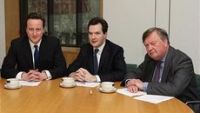
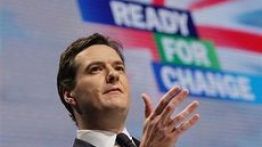
The damage to the Shadow Cabinet caused by Sir Thomas Legg has been published. All in all it’s not too bad for the Tories. Ken Clarke tops the list with £4,733 on gardening and cleaning expenses. In terms of comparing figures between the parties, an arresting and emotive issue to the public, the Tories are once again ahead, a point that reinforced by the fact that far from all of Labour's and the Lib Dem's frontliners have declared their exposure. However, there might be problems for the Tories in the future. David Cameron and George Osborne both need to produce more information about their mortgage claims. Overall though, the Shadow Cabinet has escaped embarrassment and the public’s ire. Whether Cameron will convince his backbenchers to follow suit remains to be seen.

Under these criteria, the legal case against the repayment of expenses is unanswerable

From our UK edition

Sir Thomas Legg’s statement is yet to be published, but I’ve trawled through the internet and made some calls to discover its contents. It is plain that Sir Thomas has imposed rules retrospectively. His remit was to enforce the ‘rules and standards in force at the time’. The Green Book, however badly written, should have been his sole source of reference; instead he cites the ‘fundamental principles of propriety’, defined by him, as criteria for passing judgement. His reason for doing so is obvious: these claims were outrageous. But that is a moral judgement, not a legal argument to enforce repayment. He states that the Commons Fees Office allowed ‘disproportionate claims that must be judged to have been in breach of the rules’.

Rejoice, rejoice, rejoice

From our UK edition

The Guardian is reporting that, “Within the last hour, Trafigura's lawyers Carter-Ruck, abandoned an attempt to prevent the Guardian from reporting proceedings in parliament which revealed its existence.” This is welcome news. It is not hyperbole to say that the injunction threatened British democracy; the people must be able to know what their representatives are doing. It was, to my mind, quite incredible that a newspaper could be prevented from publishing a parliamentary question. One hopes that the injunction will focus attention on whether the right balance is being struck in our libel laws. MPs now have a chance to stand up for the dignity of Parliament which has been so tarnished by the expenses scandal.

Deconstructing David Blanchflower

From our UK edition

What with his new column in the New Statesman and his articles for other outlets, David Blanchflower – a former member of the MPC – really does seem to enjoy laying into the Tories.  Problem is, much of what he says fails to convince – so much so, in fact, that I thought I'd bash out a quick fisk of his Guardian article from last Friday.  Here's the full article with my comments in bold: We are in the midst of the worst recession most people alive have ever experienced, or will probably ever experience. It is already worse than the 1980s and it isn't over yet. The only comparison is to the 1930s (my parents, now in their 80s, can remember how bad it was).

Ongoing deflation

From our UK edition

This morning the inflation figures were released for September.  They show that the economy is in ongoing deflation, as it has been since March 2009, with the annual change in the Retail Prices Index (RPI) standing at -1.4 percent.  At the same time, the policy index used by the Bank of England to determine its interest rate and quantitative easing policies – the Consumer Prices Index (CPI) – saw its annual rate of inflation fall to 1.1 percent from 1.6 percent. Some press commentary suggests that the fall in CPI inflation to 1.1 percent suggests there is now a threat of outright deflation next year.  This is wrong.  The country is already in deflation.  The CPI is not a measure of the cost of living in the UK.

Widdecombe defies Cameron over the Legg letters

From our UK edition

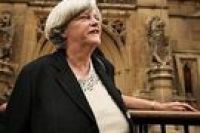
The Tory leadership’s line on Sir Thomas Legg’s expense repayment demands is clear. Mr Cameron told GMTV: “Repay or you cannot stand as Conservative MP”.   The public’s justified outrage at expenses is such that party leaders must take a stand and discipline MPs, deemed to have transgressed rules or to have exploited the second home allowance. But, as I wrote yesterday, the Legg Commission exceeded its remit, acting as judge rather than auditor. As such, MPs are right to resist Sir Thomas’ demands: Parliament urgently needs reform, but there is a clear problem that reform will be inaugurated by a commission that ignored its terms of reference. This is an unpopular viewpoint, deeply unpopular.

Brown told to repay £12,415.10 of expenses

From our UK edition

Here's the statement from the office of the PM, courtesy of Sky's Cheryl Smith: Mr Brown received a letter from Sir Thomas Legg this afternoon. Sir Thomas Legg has issued his provisional conclusions to MPs, asking for further information where necessary before concluding in December. Mr Brown has always supported this process and will cooperate fully and make the necessary repayment. Mr Brown's expenses have always been cleared by the House Authorities as entirely consistent with the rules. He has not claimed the maximum level of expenses. The Review says its findings "carry no implication about the conduct or motives of the MPs concerned".

The costs that come before savings

From our UK edition

It's a simple fact of politics that many measures which would save money in the medium-to-long term incur costs in the short term.  Normally, this point is brought up in relation to public service reform - e.g. Gove's Swedish Schools agenda.  But today's FT highlights a similar effect in relation to public sector redundancies. The important fact is that "civil servants aged under 50 can receive up to three years’ pay if made compulsorily redundant, and those who joined before 1987 more than six years’ pay".  This means that there are actually massive upfront cash costs to cutting jobs across the public sector, whatever the potential savings further down the line. To their credit, the government are currently trying to cap these redundancy payments.

Repairing the broken society

From our UK edition

One line from the Sunday papers is still haunting me today. In the Mail on Sunday, Phillip Blond wrote that, “one million children have alcohol-addicted parents”. Think about that for a minute. What hope can these children have growing up in these kind of households? How can we as a society ensure that these children have a decent chance in life despite such a challenging start? There are no easy answers to these questions. Considering the state’s appalling record with children in care, taking these children away from their parents is not the answer. But then what is? It seems that the only answer is to deal with the problem at source, to ensure that there are fewer alcoholic adults and that people take the responsibility of being a parent more seriously.

Selling assets at rock bottom prices – sound familiar?

From our UK edition

So what to make of Gordon Brown's plan to sell off an expected £16bn-worth of assets?  Like Charlie Elphicke over at CentreRight, I have my qualms. As he puts it, Brown has form when it comes to selling national assets at rock-bottom prices. And, in the immediate aftermath of the credit crunch and a recession, the prices he gets for our stake in Urenco, say, or the Dartford crossing, are likely to be rock bottom.   Besides, there's an unmistakeable whiff of political opportunism about this plan. You can imagine the posturing now: "We're selling off assets we can spare to protect jobs and frontline services, unlike those dastardly Tories..." yada, yada, yada.

Smith to apologise to Commons

From our UK edition

Sky report that the Commons Standards and Privileges Committee have judged that Jacqui Smith was "clearly" wrong to claim that her sister's home was her main residence.  Smith has been ordered to apologise to the Commons, which she's expected to do later today.  No further action will be taken. Throw in the news about Damian Green's "not proportionate" arrest, and the hubbub over Sir Thomas Legg's letters, and you feel that today will do little to restore the public's faith in the political class...

The politics of growth

From our UK edition

One strange side-effect of the car crash that was the Liberal Democrat conference is that no one dares say the word “cuts” anymore. Since Nick Clegg promised “savage cuts” – alarming his base in the process – we’re back to the normal euphemism of “efficiencies”. This, like so much in life, will have Gordon Brown hopping mad. He didn’t want to say “cuts” in the first place, and the whole farrago will prove (in his head) that he should stop taking advice from people outside his coterie.   The next stage in the debate is to focus on growth. As James revealed in his political column for the current edition of the magazine, the Tory plan to do this is an aggressive cut in corporation tax.