Uk politics

A report that must inaugurate reform

From our UK edition

Chairman of the Nimrod inquiry Charles Haddon Cave QC is convinced that the fire on board Nimrod XV230 would not have occurred had those tasked with ensuring airworthiness fulfilled their responsibilities. Haddon Cave lists Air Commodore George Baber, Wing Commander Michael Eagles and the leadership of BAE Systems among the chief culprits – the MoD and BAE face costly negligence suits and perhaps criminal proceedings in consequence. Identifying culpable individuals is unusual, illustrating quite how damning this report is to the MoD and the Defence industry – those bodies, as well as allegedly negligent individuals are responsible. The report provides a clear insight into the MoD’s modus operandi.

Raging against the dying of the light

From our UK edition

George Osborne’s speech on Monday calling for huge cash bonuses not to be paid this year drew an angry response from those hoping to receive huge cash bonuses – and various City and business pressure groups. A few years ago I would have felt deeply uncomfortable with what Obsorne proposed, but because nearly every bank has drawn heavily on state support over the last year, I think politicians do have a right – even a responsibility – to offer firm guidance to the banks. The FT led the charge against Osborne with both a critical news story, gleefully dissected by Iain Martin, and a harsh leader. Today, the paper follows up with a page two story on a letter Alastair Campbell has sent the paper criticising the shadow Chancellor.

Iain Duncan Smith’s overlooked “affordable policy solutions”

From our UK edition

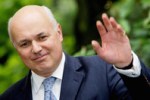
After his superb work with the Centre for Social Justice, it's encouraging that Iain Duncan Smith is being tasked by the Tory leadership to come up with "affordable policy solutions" to spring the traps which keep people stuck in worklessness.  It's thought that David Cameron rated the proposals of the CSJ's recent report on this issue – as, too, did Coffee House – but was put off by the £3 billion upfront cost of the reforms. But there's an important aspect of that report which hardly got any attention at the time: it already includes more affordable options.  The £3 billion was for a universal benefits system which would see claimants losing*, at worst, only 55p of every extra £1 they earn from taking extra employment.

Learning to let go of the police

From our UK edition

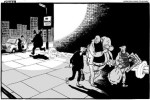
Today's Mac cartoon in the Daily Mail is, for me, a cut out and keep. It epitomises everything that has gone wrong with policing in Britain - a copper running past thieves to nick an old lady who has wrongly parked. And it touches on a wider theme: this is why regard for the police has fallen in the last dozen years. Their priorities seem to have switched from those of the public to those of the bureaucratic elite. This impression is, of course, deeply damaging and will be tough for the Tories to reverse. The plan for directly elected police chiefs, and Nick Herbert's seminal work on the subject, did seem to make sense to me. But not much has been said about it since. The Tories are, of course, in two minds about it.

PMQs Live Blog | 28 October 2009

From our UK edition

Stay tuned for live coverage from 1200. 1159: Still waiting for the main event.  You can watch it here, by the way. 1203: And we're off.  Brown starts by paying tribute to British troops in Afghanistan, as well as aid workers killed in Kabul 1204: First question from Stephen Hepburn on whether pleural plaque victims will get compensation. 1205: Here's Cameron now.  As expected, he leads on Brown's embarrassing U-turn of TA cuts; an issue the Tories have been pushing for the past couple of weeks.  Cameron asks hopw Brown could have thought about cutting training during wartime. 1206: Strange.  Brown responds by repeating his condolences - it's basically a carbon copy of his opening statement.  Seems like he's using it to defuse Cameron's point.

If you see an MP wandering around with a stopwatch, this is why…

From our UK edition

So the details of Sir Christopher Kelly's review into expenses are starting to leak ahead of their formal publication next week.  The proposals will include an expected ban on employing family members, reductions in living allowances, and a ban on claming mortgage interest for a second home.  Of all the measures, though, the most eye-catching is that MPs whose nearest railway station is within 60 minutes of Parliament will be unable to claim for a second home. Most of Westminster is expecting a parliamentary uproar over the proposals.  And it's easy to imagine how that last one, in particular, will be quibbled over and opposed during the next few weeks and months.

Two polls to please the Tories

From our UK edition

There have been two polls today which are worth mentioning belatedly.  The first is YouGov's voting intention poll for Wales, which Anthony Wells has analysed here and here.  It's not often you see a Welsh voting poll - which is a shame - and the results of this one are striking.  Labour are on 34 percent; the Tories are on 31 percent; Plaid Cymru on 15 percent; Lib Dems on 12 percent.  Overall, that's much better news for the Tories than it is for Labour: the last time the Tories scored 31 percent in Wales was in the 1983 election.

My beef with Stern

From our UK edition

I must admit that I despaired this morning when I heard that Nick Stern was arguing that meat eating should become socially unacceptable because of climate change. Those of us who think that climate change is happening and that human activity is a part of it have a big enough case to make without people thinking that they won’t be able to have a Sunday roast or a reviving steak if the green lobby gets its way. People are, understandably, not going to accept being told that they can’t fly, eat meat or have the heating on. The solutions to the problems posed by climate-change have to be technologically led. A hair-shirt approach will simply not have public support and won’t be accepted by every country.

Can you be pro-British and pro-European?

From our UK edition

Last night in a speech at the IISS, David Milliband laid out the case against the Tories’ Europe policy. As he started off saying: "It is very strongly in the British national interest for the EU to develop a strong foreign policy; that to be frightened of European foreign policy is blinkered, fatalistic and wrong; that Britain should embrace it, shape it and lead it." In that one sentence lies the case for Britain’s role in shaping a liberal, open and outward-focused EU. It is probably also the line of attack that the Foreign Secretary will use against the Tories until election day and possibly beyond, if Miliband eventually assumes the Labour leadership. I have never made a secret of my support for the EU.

The Tories prime their shake-up of the civil service

From our UK edition

One of the quickest wins that the next government could achieve is to change the power and accountability arrangements of Whitehall.  At the moment, there's a convoluted system in place where its difficult to apportion blame when a government department screws up.  Sure, a minister may take the media flak if, say, a department loses a data disk.  But the people in charge of the day-to-day running of a department tend to escape any substantive judgement on their performance.  As James Kirkup points out in the Telegraph today, "no permanent secretary has been formally dismissed for more than 70 years."  That's hardly a set-up to incite much more than complacency and atrophy.

Who’s lobbying for Blair?

From our UK edition

Isn't it funny how things change?  A few years ago, Brown could barely stand to talk to Blair.  But now, according to the Guardian, he's got civil servants lobbying on the former Prime Minister's behalf in Europe: "Gordon Brown has asked two of his most senior civil servants to lobby discreetly within Europe for Tony Blair to become its new president amid warnings from allies in government that the former prime minister will lose his chance unless he launches a dynamic campaign. John Cunliffe, the prime minister's most senior Europe adviser, and Kim Darroch, Britain's EU ambassador, are taking soundings at senior levels. David Miliband, meanwhile, has also intensified Britain's campaign for Blair to become the first president of the European council.

An untrumpeted change

From our UK edition

John Rentoul rightly flags up the story in this morning’s FT that about 100,000 NHS patients have gone private and had the state pick up the tab, the private hospitals have had to agree to do the work at the NHS price. For those of us who would like to see the NHS move towards a model where the state pays for healthcare but it is provided by a whole panoply of providers, this is an encouraging step. This kind of consumer-focused reform is hard to reverse. The story, as John notes, hasn’t got as much coverage as it should. John blames this on the press’s lack of interest in policy stories. But it is also the case that the Brown government, which is currently slowing down if not reversing Blair’s NHS reforms, hasn’t chosen to trumpet this story.

The quangocracy laid bare

From our UK edition

At last the full facts about our burgeoning quango state are laid bare. The conclusion of a report published today by the TaxPayers’ Alliance is that it’s "big, bloated and more expensive than ever before." The TPA document provides the most comprehensive and up-to-date listing available of all 1,152 'semi-autonomous public bodies' operating in the UK, along with details of how many staff each employs and how much they spend. More than £90 billion of taxpayers’ money was spent on or channelled through quangos/SAPBs in 2007-8 (up £13 billion on the year before). That’s equivalent to £3,640 for every household in the land.

The Neather clarification

From our UK edition

Plenty of CoffeeHousers are mentioning the Andrew Neather revelations in various comment sections.  If you haven't seen them yourself, the story is that Neather, a former government adviser, wrote a comment piece claiming that New Labour's immigration policy was "intended - even if this wasn't its main purpose - to rub the Right's nose in diversity and render their arguments out of date."  Many reports since have taken this as confirmation that Labour's policy was exclusively politically-motivated.    In which case, it's worth highlighting Neather's latest column for the Evening Standard, in which he claims his comments have been exaggerated and misinterpreted.

The Tories develop their <em>de facto</em> Glass-Steagall Act

From our UK edition

The most striking aspect about George Osborne's speech today is how it concentrates on retail banks - the banks you and I do business with - rather than the big investment banks.  He's expected to announce that retail banks should stop paying "excessive cash bonuses" to their senior staff, but should instead reward them with shares in the company and use the cash they would have dished out to increase the amount of credit in the economy.  This won't apply to investment banks. The separation rather recalls the American Glass-Steaghall Act, which split commercial banks from their riskier investment counterparts.  The thinking behind it was that the investment banks could then get up to all kinds of risky behaviour, without then impacting upon ordinary people's money.

The EU prepares for a Conservative government

From our UK edition

The wheels seem to have come off Tony Blair’s EU presidency campaign and no doubt there is much genuflection and soul-searching in Connaught Square. The Director of the Centre for European Reform, Charles Grant, gives an intriguing explanation at Comment is Free: ‘Yet it may be the Conservatives who spike Blair's chances of getting the job. William Hague, the shadow foreign secretary, has told the other EU governments that the Conservatives would see support for a Blair presidency as a "hostile act". A week ago, Blair was the clear favourite, with the likely support of Britain, France, Germany, Italy and Spain, plus several of the smaller countries. But on my travels around Europe last week, I have found that Hague's comments have made a huge impact.

The Tories now have a monopoly on the language of optimism

From our UK edition

So how big a blow was the news that we're still in recession to Gordon Brown?  Well, compare and contrast his latest podcast on the Downing Street website with David Cameron's article in the Sunday Times.  Brown's effort is necessarily defensive.  Gone is the "we're leading the world" bombast of a few weeks ago, to be replaced with a crude "pledge" to get the economy growing again by 2010: "My pledge to you is to make reform of the financial sector a reality, and to see Britain's economy return to growth by the turn of the year." While Cameron's effort is considerably more agressive, and concentrates on outlining a "pro-growth, pro-enterprise agenda".

Still no room for complacency about the BNP

From our UK edition

It's an odd one is today's ICM poll in the News of the World.  Most of it makes for sobering reading for the political class: it finds that two-thirds of voters think the mainstream parties have no "credible policies" on immigration, and that one-third agree with a core BNP policy on removing state benefits from ethnic minorities.  The Tories will be disappointed to see that only 20 percent of respondents think that their plan to cap immigrant numbers will work. But there are also some findings which support Alex's thesis that we shouldn't be unduly troubled by the levels of support for the BNP.  For instance - and despite all of the above - 26 percent say the Tories have the best policies on immigration, compared to 21 percent for Labour and 13 percent for the Lib Dems.