Uk politics

Balls dumps Brown into another lose-lose situation

From our UK edition

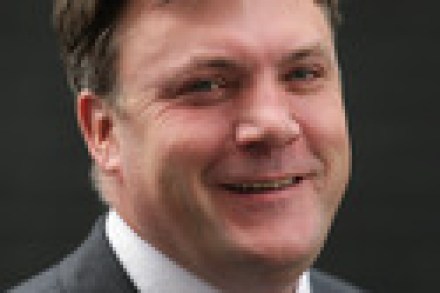
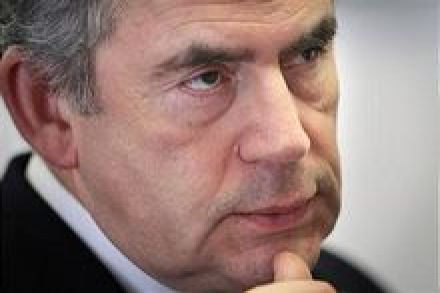
Things never seem to go smoothly for Gordon.  On a day when the Telegraph carries details of his Whitehall savings programme, the FT has news that one of his closest allies, Ed Balls, is calling for relatively hefty spending increases elsewhere.  Apparently, Balls has asked the Treasury to grant his department – the Department for Children, Schools and Families – real-terms spending increases of 1.4 percent until 2014.  That's an extra £2.6 billion in total – and goes beyond previous Labour commitments to "protect" schools spending. It's a brassy move by Balls and one which is sure to aggravate his colleagues.
Carry on camping | 16 November 2009

From our UK edition

Over at his blog, Nick Robinson has put together a useful digest of the different attitudes towards Brown's premiership inside the Labour party.  Putting it briefly, he thinks Labour MPs fit into three distinct "camps": 1) The plotters: "...believe that Mr Brown is taking their party to certain oblivion and are still desperately searching for ways to remove him and to install a new leader by January." 2) The quitters: "...agree with [the plotters'] analysis but have given up hope of installing a new leader who just might do better." 3) The fighters: "...are beginning to hope that a recovery might just be possible." It's a neat outline, albeit one which is pretty intuitive.

Going broke and going for broke

From our UK edition

The Times has a fascinating story on how Labour’s lack of cash is forcing it to give up on seats and groups of voters. The paper reports that seats with a majority of less than 3,000 have been effectively written off. So even before the campaign has begun, Labour is basically forfeiting 60 seats. By contrast, the Tory marginal seat operation — funded by Lord Ashcroft’s cash — is pushing further and further up the Tory list of target seats. (I was talking to one Tory candidate recently who thought that the resources poured into her seat — currently held by Labour — in the last 18 months or so had made it an almost certain gain for the party, barring disaster during the campaign).

Unnecessary respite from reform

From our UK edition

This snippet from Jon Snow's latest blog-post (with my emphasis) is jaw-dropping: "To add to matters, I have learned that the Labour party is now going through its ranks of peers to determine where their 'principal residence' is. This after years of wholesale abuse of the system in which lords and ladies of all persuasions have claimed distant holiday homes to enable them to get the accompanying unreceipted travel expenses. I have also learned that 'arrangements' have been made to allow serving ministers in the Lords to claim a residence out of town 'for necessary respite', retrospectively protecting ministers and law officers who may have claimed for such provision.

Labour’s next election broadcast

From our UK edition

Over at his New Statesman blog, James Macintyre reveals that Labour's next election broadcast will be the sentimental, two-and-half minute history of the Labour party shown before Brown's speech at the last party conference.  We've embedded it below, for the – ahem – benefit of CoffeeHousers; so I'll repeat the question I asked during our live blog of Brown's speech: "This is clearly a Labour crowd-pleaser, but will it make any difference outside the conference hall?

The Tory leadership could be talking like Boris soon

From our UK edition

So Boris is attacking the 50p tax rate again - and rightly so.  In his Telegraph column today, the Mayor of London repeats the lines he pushed in April: that the measure will drive business talent away from our shores, that it will damage London's competitiveness, and that it could actually lose money for the Exchequer.  It all comes to a punchy conclusion: "What Gordon Brown wants to do is therefore economically illiterate." I imagine a few commentators will see that last line as a veiled attack on the Tory leadership, given that they're committed to the tax rate too.  But, as Tim Montgomerie says over at ConservativeHome, and going off conversations with Tory types, I doubt that Cameron and Osborne would disagree with the thrust of Boris's article.

Under starter’s orders | 16 November 2009

From our UK edition

The parties are limbering up for the longest, and possibly the bitterest, election campaign in living memory. Recent asides and statements indicate that Wednesday’s Queen's Speech will be the most political that New Labour has delivered.  This morning’s Times and FT give an amuse bouche of the package with which Labour intend to “smoke out the Tories”. The FSA will be furnished with powers to punish those dastardly bankers, including the power to rip up contracts that encourage excessive risk. Also, Labour will provide free home care for 350,000 people; NHS patients will receive free private care if they are not treated within 18 weeks; and pupils will have the opportunity to take free on-to-one home tuition.

Cutting MoD staff will not win wars

From our UK edition

Liam Fox has made clear that the Conservative Party is planning to slash the number of civilian posts at the Ministry of Defence as a way of balancing the military budget if they win the general election in 2010. "We have 99,000 people in the Army and 85,000 civilians in the MoD. Some things will have to change - and believe me, they will," Fox has said. But if the Conservatives thought they had stumbled across a sure-fire criticism of Labour’s way of war, in The Times, ex-soldier, author (and, I will wager, future MP) Patrick Hennessey asks the public not to lay off the “MoD desk-jockeys.” 'The MoD deploys civilian staff into operational theatres.

Last man standing

From our UK edition

That Gordon Brown is still the prime minister proves that it isn’t only Peter Mandelson who is a fighter not a quitter. It became clear this week that Brown will fight to the bitter end, and that Labour’s election strategy has emerged through him. Labour depicts the Tories as Bullingdon boy toffs and crazed Thatcherite cutters; Brown is the stern, serious figurehead, the still small voice of calm at the vanguard of Labour’s arguments on immigration and the economy.   Matthew d’Ancona’s Sunday Telegraph column details how Brown has returned to the fore this week and delivered policy statements aimed exclusively at maintaining Labour’s core support.

Cameron’s licence fee cut – and how he’ll pay for it

From our UK edition

All hail, Jeremy Hunt, the axe man. Cameron’s first tax cut will be a licence fee cut* – and Hunt is planning to axe some stations to pay for it.  Hunt is thinking of axing 1Extra, apparently, with BBC3 and BBC4 already under threat. Also under Hunt’s axe would be the National Lottery’s runnng costs. The Sunday Times apparently has the details tomorrow, but I give Hunt this warning: if he even tiptoes in the direction of Cbebbies then he will have a revolution on his hands. Parents depend on it now, utterly. Personally, I’d pay £100 a year just for it – just for its kid-sedating powers. But it makes you think: digital television does allow a subscription model and the BBC could well spin off many of these channels.

No longer a racist party, but a party of racists

From our UK edition

The Guardian reports that the BNP membership is going to vote overwhelmingly in favour of allowing non-whites to join the party. The BNP’s electoral success entitles it to a fair hearing in the political mainstream. The Spectator has maintained that the party’s domestic policies are inspired by racial supremacist ideology and that its economic policies are like Dagenham – that is, three stops beyond Barking. The membership’s decision, forced on them by a court order with which they must comply, changes nothing.   There is more chance of Dennis Skinner being elevated to the peerage than there is of Afro-Caribbeans and Asians joining the BNP.

Shaming allegations that reveal the full horror of the Iraq war

From our UK edition

The Independent's front page splash about British troops torturing and sexually abusing Iraqis in 2003 has, to put it mildly, put me right off my cornflakes. The allegations are horrific. Acts of live pornography designed to humiliate sexually conservative Muslim sensibilities, the electrocution of detainees, beatings, rapes and widespread detention without charge - the echoes of Abu Ghraib resound. Phil Shiner, the lawyer representing all the Iraqis, wrote to the MoD saying: 'Due to the wider access of information and disclosure in the US, we do know that sexual humiliation was authorised as an aid to interrogation at the highest levels of the US administration.

In answer to your questions

From our UK edition

So, what is The Spectator coming to? Dishing out trophies to Harman and all these Labour types? Has the editor's chair made me crawl up to people like Harman and Darling? Am I angling for a political seat? The comments to my earlier blog post raise some excellent points - about politics, polemic and The Spectator itself. I thought they deserved a response in a post rather than a comment. The Spectator's tradition of honouring talent on all sides of the political divide in its annual awards is a long one:  La Harman was our 24th Parliamentarian of the Year. While Harman was speaking, Boris and I were holding her trophy and looking at the names that hers would be engaved next to.

The tactics of political insurgency

From our UK edition

That Labour held one of its safest seats is newsworthy either indicates how desperate the party’s predicament is or that it is a very slow news day. Anything other than a Labour win, and a substantial one at that, was unthinkable; even the resolutely fanciful SNP must have acknowledged that privately. However, this by-election raises some interesting points nonetheless. As Alex Massie notes, the gloss has come of the hubristic SNP. Salmond’s Braveheart act about winning 20 seats and seeing Westminster “hanging from a Scottish rope” looked optimistic-to-mad when first performed; now it just looks mad.

I dunno, how many hedgerows have we lost since the war?

From our UK edition

There’s a tremendous post on the FT's blog, inviting 20 influential public figures to ask questions that they believe incoming MPs should be able to answer. Jim Pickard explains: ‘But what should we be looking for in the people we elect to run the country? The question of what knowledge and expertise the ideal MP should possess is not much debated. So FT Weekend invited 20 experts in various fields to come up with questions that – in their opinion – any would-be MP should be able to answer. This exercise throws up an obvious problem right away: the areas of knowledge that our questioners address are so disparate that no normal person could reasonably be expected to answer all 20 of the questions.

The perfect storm

From our UK edition

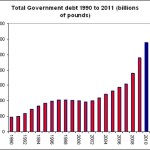
The UK debt crisis has three constituent parts – household, government and banking. The fact that households, government and banks all went on a debt binge at the same time makes the risks for the UK economy so unusual.  The European Commission is now estimating that total UK Government debt will rise above £1.3trillion by the end of 2011, representing a more than trebling in the total debt load since 1997. If interest rates normalise to the 5% or so seen during recoveries in previous cycles, this will see the interest service bill alone rise to around £65billion a year – more than double the total defence budget.

Nursing is the new Media Studies

From our UK edition

Administering injections is not an academic process. Like construction and policing, nursing is an essential professional and appropriate training is a pre-requisite. Procedures must be mastered and techniques known by rote. 2 year nursing diplomas have always provided that function effectively. Academic degrees develop critical intellect, something I’m sure nurses will appreciate as individuals but which will add nothing to their professional skill. Melanie Phillips argues that ‘nursing has been in the grasp of an ultra-feminist orthodoxy which regards the essence of nursing as demeaning to women.’ The plan is to furnish nursing with an equivalent status to doctors.

Electoral fraud

From our UK edition

“Postal voting on demand is lethal to the democratic process. Wholesale electoral fraud is both easy and profitable.” That statement sounds like a description of Afghan electoral practices, but it was delivered by Richard Mawrey QC after an inquest into UK postal voting.   The Orange Party blog has an intriguing post about the sudden surge in postal ballots for the finally convened Glasgow North East by-election. Now, the Orange Blog may be being mischievous or merely preposterous, but it suggests that fraud could be a factor. History shows that Labour benefit from postal voting, notably at the comfortable Glenrothes by-election victory last year, when every indication was that the SNP would overturn the majority.

No Brits likely in top EU jobs

From our UK edition

The process to pick the two new EU jobs - that of Council President and High Representative - is nearing completion and Britain looks set to walk away empty-handed. Tony Blair's candidacy is unacceptable to many EU leaders - both because of his record, particularly over the Iraq War, and because of Britain's odd-man status in Europe. Last night at the Queen's Diplomatic Reception, a senior ambassador remarked to me that if Blair had really wanted the EU job, he should have started lobbying for it a few years ago - or at least shown a post-No 10 interest in European affairs. Blair, said the envoy, could have given a speech in Berlin, an interview in a French paper and so on. But he did not.