Uk politics

Osborne’s recycling giveaway is actually an Age of Austerity measure

From our UK edition

I don't want to be a stick-in-the-mud when it comes to an idea which is actually quite promising, but it's worth pointing out that George Osborne's plan to pay people to recycle – featured in quite a few of today's papers – was first mooted by him back in July 2008.   The difference between then and now?  That this particular nudge was worth up to £360 a year for families who took advantage of it – whereas now the figure has come down to £130 a year.  In which case, it's probably better to regard at least this part of Osborne's announcement today as an Age of Austerity-inspired cutback, rather than new policy.  Not that that's a bad thing, of course, given the desperate state of the public finances… P.S.
A debased database

From our UK edition

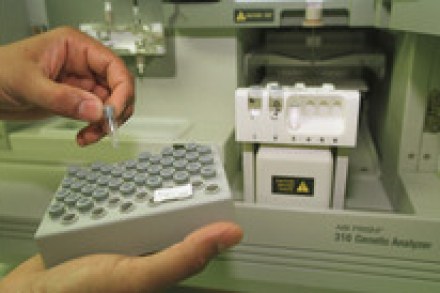
As with much police work, the questions surrounding a DNA database come down to one thing: striking a balance between civil protection and civil liberties.  Going off a new report by the Human Genetics Commission, reported on the cover of today's Times, the government are getting that balance seriously wrong: "Jonathan Montgomery, commission chairman, said that 'function creep' over the years had transformed a database of offenders into one of suspects. Almost one million innocent people are now on the DNA database... ...Professor Montgomery said there was some evidence that people were arrested to retain the DNA information even though they might not have been arrested in other circumstance.

A poll taken at the same time as the Ipsos-Mori poll had the Tories 14 points ahead

From our UK edition

The Observer’s Ipsos-Mori poll has dominated political discussion since its publication on Sunday. But two things that I have heard tonight have increased my scepticism that it marks a dramatic shift in public opinion. First, I hear that another of the big pollsters had a survey in the field at the same time and it showed a fourteen point Tory lead. Second, a new poll for Political Betting has Labour down on 22, only a point ahead of the Lib Dems. With polls it is the ones that are surprising that make waves; I’m sure we’ll all run down a few more rabbit holes before election day. The odd surprsingly tight poll is not all bad for the Tories. It helps, as one candidate in a marginal seat said to me yesterday, get the activists out and deals with any sense of complacency.

Dodgy expenses referred to the CPS

From our UK edition

And so the expenses scandal rumbles on.  This morning's Telegraph lead with home-flipping allegations against Andrew Dismore, a member of the Commons Committee on Standards and Privileges.  And now it's emerged that the Met have referred the cases of four parliamentarians to the Crown Prosecution Service.  All of which makes Brown's decision not to mention expenses in the Queen's Speech seem even more unwise.

Hold your horses | 23 November 2009

From our UK edition

The blogosphere is alight with all kinds of chatter about yesterday's Ipsos MORI poll for the Observer, which showed Labour closing the gap between them and the Tories to 6 points: from James Macintyre's claim that the Labour fightback has begun to Nick Robinson's call for calm.   Myself, I'm on Team Robinson.  Sure, the poll is an eye-opener for CCHQ - but, by itself, it's hardly evidence of a tidal shift in voting intentions.  Indeed, going off two very useful posts by Anthony Wells and Stephan Shakespeare, there's a considerable chance that this is a rogue. Polls will always be imperfect, but they've been particularly volatile recently.  Since party conference season, we've seen the Tories achieving 17-point leads as well as this low of 6 points.

Bradshaw goes to war against the Sun

From our UK edition

Peter Mandelson has already claimed that the Tories and the Sun have “effectively formed a contract", but today Ben Bradshaw takes the insinuations even further.  Here's the relevant passage from his interview with the Guardian, with my emphasis in bold: "Echoing the views of the business secretary, Lord Mandelson, Bradshaw says of News International and the Tories: 'There is no doubt there's a deal ... The Tories have basically subcontracted their media and broadcasting policy to News International. It's brazen.

Brown goes for growth – fails

From our UK edition

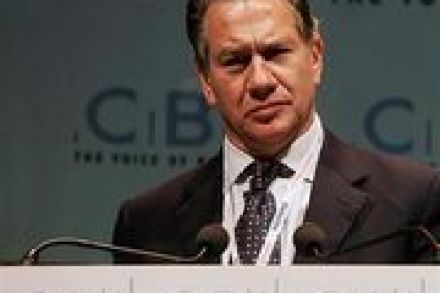
So the dividing line persists.  Today, both Gordon Brown and David Cameron will talk about "going for growth" at the CBI's annual conference.  But it all, more or less, comes down to the same, dreary "investment vs cuts" line that we've heard countless times before.  According to the Times, Brown is going to say that growth is the best way of tackling the deficit, rather than those nasty Tory cuts.  And, what's more, "he hopes investment from China will drive the recovery". Of course, growth will have a role to play in reducing the deficit.  A vibrant economy will have a better chance of tackling record deficits and debt levels than a sinking one.  But to indicate that extensive cuts will not be necessary is disingenuous in the extreme.

What should be in the British Bill of Rights?

From our UK edition

The success or failure of Cameron’s EU policy rests in part on the promised British Bill of Rights. What is clear is that Tories are unclear what should be included in it. One question that is yet to be answered is whether aspects of the constitution should be entrenched? Writing on the Blue Blog today, Michael Howard writes: 'Any decision about these rights requires a balancing of competing rights. The fundamental question is who should be responsible for striking that balance: elected MP’s or unelected judges? On terrorism, Parliament twice, after great debate, reached its view. Yet twice the judges have held that Parliament got it wrong.

A fine line between love and hatred for Peter Mandelson

From our UK edition

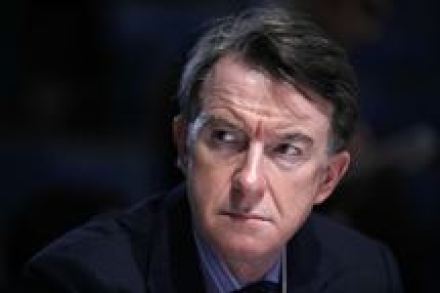
So far as Downing Street is concerned, this morning's Sunday Times cover is a presentational nightmare. It reports that Peter Mandelson is calling on Brown to make him Foreign Secretary – a move which would create all kinds of internal difficulties for the PM. Sounds a little bizarre to me: we all know that Mandelson would, in theory, like the role which was once occupied by his grandfather, but would he really want it under such controversial circumstances and for what would likely be only six months? Perhaps not. But, true or no', it still feeds into the idea that the government is divided and self-obsessed. It's also the kind of story which could loosen Mandelson's grip on the government. Over the past year he's enjoyed a remarkable renaissance within the Labour Party.

Where to start cutting

From our UK edition

Michael Portillo believes that a future Tory government, like those that came before it, will not succeed in cutting public spending. I agree with Pete: public finances are so parlous that cuts have to be made. Demolishing the state is not an overnight job; it will take time and cost money, and so it should because the stakes are too high for a quick fix, cowboy politics solution. But, immediate savings are to be made through efficiencies. ‘Efficiency savings’ are derided as being insubstantial. Such an analysis is simplistic. Endemic waste is perpetuated by irrational systems. The Department for Work and Pensions runs an administrative budget of £2.7bn.

Behind the closed doors of Brussels

From our UK edition

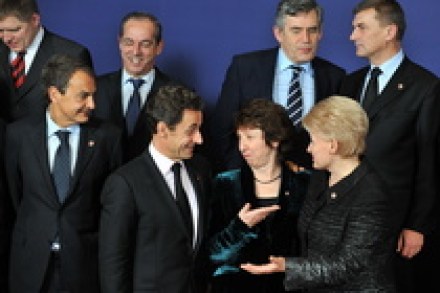
Today's Times carries a cracking account of all the wheeling and dealing that went on during the EU jobs fair this week.  Here are some of the most striking points that I've culled from it: i) Brown rejected advice from Mandelson and other ministers that he should try and secure one of the EU's financial roles for a British candidate. ii) There are claims that Brown was "persuaded" into accepting the EU High Representative role for Britain by Europe's Socialist leaders along with José Manuel Barroso. iii) There are also claims that Brown did a deal with the French to get Baroness Ashton appointed, by which a French MEP, Michel Barnier, would be appointed the Commissioner in charge of the internal market and financial services.

Portillo: the Tories won’t succeed in cutting public spending – they’ll have to raise taxes

From our UK edition

Ever the contrarian, Michael Portillo makes a case that you don't hear from many on the right in his interview with Andrew Neil on Straight Talk this weekend.  George Osborne has given "a fair amout of detail" about the Tories' debt-reduction plans, he says, but that could be the wrong approach: "I wouldn’t seek probably to give very much more detail ....  You know, I was with Margaret Thatcher when she came in to Government in 1979, we faced a big public spending problem.  It was terrible.  It was a hard slog but she didn’t cut public spending.  I was Chief Secretary between ’92 and ’94 – big public spending problem – I was trying to cut public spending; I did not succeed in cutting public spending.

Elected police commissioners are a test of whether the Tories are serious or not about their agenda

From our UK edition

Sir Hugh Orde, the head of the Association of Chief Police officers, has issued another broadside against Tory plans for locally elected police commissioner. Orde has warned that senior police officers will resign over the plans and that, “Even the perception that the police service of this country… is under any political influence, I think that suggests you cannot argue that you are a proper democratic society.” This is an absurd argument. The idea that you are not a proper democratic society because the police commissioner is accountable to the public via the ballot box is obviously nonsense. But the Tories will face a lot of this kind of criticism as the police, a totally unreformed public service, close ranks against the idea.

The problem with Brown’s latest Big Idea

From our UK edition

There's some very readable stuff in this week's Economist (including a leader which outlines what Brown's government should – but almost certainly won't – do with its "last months in power").  But if you read only one article from it, make sure it's the Bagehot column and its dissection of Brown's latest Big Idea: public service guarantees.   These are the pledges-turned-legal entitlements which popped up throughout the Queen's Speech – such as the "guarantee" that patients will have hospital treatment within 18 weeks of being referred by a GP.  As Bagehot points out, it's a problematic approach: 'To be worth the manifesto paper they will be printed on, public-service guarantees need to be readily enforceable.

Cameron goes Blond

From our UK edition

In their party political broadcast last night, the Tories endorsed a community right to buy. The idea is that communities would be offered first refusal to take over and run local amenities that are faced with closure. For example, the community would be able to take over a Post Office rather than see it shut down. Community groups would also be able to bid to run publicly provided assets such as libraries. It is a policy that has doorstep appeal and also positions the Tories where they want to be. Thatcher offered individuals a right to buy, Cameron offers communities a right to buy. The intellectual inspiration for this policy is Phillip Blond, the so-called Red Tory, who first proposed the idea back in July: 'Create a community right to buy.

Nothing’s changed

From our UK edition

It’s a pity the Spectator has already run a political scandals supplement: the Telegraph’s latest scoop is a sordid classic. The Telegraph allege that Tory MP David Curry has claimed £28,078 on a second home from which his wife had banned from using after Curry used it as a rendezvous for assignations with a local school mistress. Curry is standing down at the next election and could make a packet if he sells the taxpayer funded property. There is a further complication. Until last night, Curry was the chairman of the parliamentary standards and privileges committee, the authority that decides how errant MPs will be punished. The committee was rightly criticised for its very lax disciplining of Jacqui Smith and Tony McNulty.

Letting his opinions be known

From our UK edition

Today’s Evening Standard features an interview with Bernice McCabe, co-director of the Prince’s Teaching Institute. McCabe tells the paper that: “He [the Prince of Wales] is very passionate about the fact that children need a good grasp of literature and that all children need to understand the history of our country,” she said. “He is passionate that these subjects should remain there in the curriculum.” I happen to agree with the Prince of Wales on this point, but it is completely unacceptable that someone is speaking for him on what is a political issue. The monarchy survives in this country on the basis that it doesn’t express political opinions in public, a rule that the Queen has observed.

The day ends on a sour note for Labour

From our UK edition

Two Labour figures, two bad news stories.  The first is Tony Blair, and the news that he has given up on the role of EU President – leaving the path more or less clear for the Belgian PM, Herman Van Rompuy.  The second is Harriet Harman, and the news that she faces prosecution for allegedly "driving without due care and attention and driving while using a mobile phone." The Blair story is significant enough on its own – but throw in Harman, and it's doubly certain that Brown's legislative programme will be shunted right off the news agenda.  But isn't that a good thing for Labour, you might ask, given the kicking the Queen's Speech was subjected to in this morning's press?  Well, perhaps.