Uk politics

Hoon may strike again

From our UK edition

David Miliband lacks the gumption to play Brutus, but does Geoff Hoon? The Sunday Times has obtained correspondence between Hoon, Brown and Blair illustrating that the then Chancellor overturned Treasury assurances that the MoD would receive additional funds for helicopters in Iraq and Afghanistan. Brown wrote: “I must disallow immediately any flexibility for the Ministry of Defence to move resources between cash and non-cash.” Once again we see the (supposedly) miserly Chancellor holding Blair to ransom at any opportunity, regardless of the consequences. Whilst Brown is a spectre of a Prime Minister, he was anything but as Chancellor.

Cameron has the positioning right – but fiscal questions remain<br />

From our UK edition

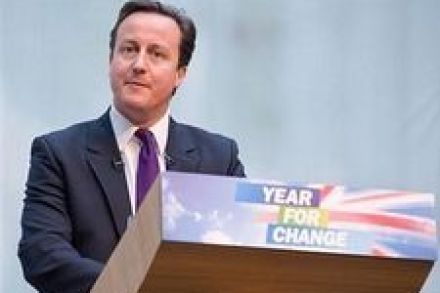
Here, CoffeeHousers, is my take on this morning's Cameron interview: 1. General demeanor: excellent, articulate, confident. The complete opposite from Brown. It does make you think that he should wipe the floor with Brown in the TV debates. 2. “Last week we saw William Hague and George Osborne going to Afghanistan together. First shadow Chancellor, the man who is going to be in charge of the money, on the frontline seeing what is going on in Afghanistan”. Indeed, but the NHS pledge and deficit cut pledge imply deep cuts to the military. To govern is to choose, and Cameron has made his choice: NHS spending before the military.

What’s Ed Miliband playing at?

From our UK edition

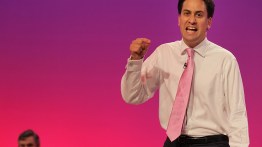
There's that prism I mentioned: Ed Miliband writes an article for the Observer, which ostensibly backs Gordon Brown in the first paragraph, and it's written up as the first, tentative step on his own leadership campaign.  Thing is, that's probably also true.  The clue is in how far he steps off his ministerial beat*, to deliver an overall prospectus for the Labour Party: "Let's start, as our manifesto will, with what the country needs in the coming five years. It can't be about business as usual. We need to rebuild our economy in a different way from the past, with more jobs in real engineering not just financial engineering.

A tale of two interviews

From our UK edition

So, at the end of a hyperactive week in politics, we've got a pair of interviews with Brown and Cameron.  The PM chats with the News of the World, while Cameron appeared on the Marr sofa earlier. One general similarity between the two interviews stands out: neither is particularly confrontational. Rather than chiding Labour after Alistair Darling's admission yesterday, Cameron adopted a more conciliatory tone, saying things like: "If [the government] ... set out reductions that we think make sense we won’t play politics with it, we’ll say yes."  And, for his part, Brown only nods towards the "big choice" to be made at this year's election, and doesn't mention the Tories once.  Quite rare that, for Gordon.

The NHS is unfair, why should it remain sacrosanct?

From our UK edition

I’ve just heard a truly shocking story. A neighbour, left brain damaged by a haemorrhage, arrived at St Richard’s hospital in Chichester on Tuesday afternoon for her check-up. She was discharged at 2 am. No beds or ambulances were available and she was sent out into the night, and of course a blizzard.   One shouldn't extrapolate that this represents standard NHS care; it doesn’t. But care is hindered by a lack of resources and facilities. Despite throwing money at the NHS, vast areas of the country remain ill-equipped, and not merely at Britain’s rural extremities. For example, there is no specialist cardiac unit between London and Portsmouth. Feel your left arm go tense in Petworth and start trusting to God.

Security and Defence Review 101

From our UK edition

Defence geeks are waiting to see how the Conservative Party intends to conduct a Security and Defence Review, if they are elected. By the time a new government comes to power, the Ministry of Defence will in all likelihood have produced a Green Paper, setting out initial thoughts on the future of the military, which is meant to lead on to a more substantive Strategic Defence Review.  But if the Tories want a process (and ultimately plans and ideas) that encompasses not only the MoD, but also the Foreign Office, DfiD, the security services and even parts of the Home Office, then a new kind of institutional vehicle will have to be set up. There are, broadly speaking, three options.

Darling’s honesty is good news for the country – but tricky news for Labour

From our UK edition

Well, well, well - Darling's Times interview, which James reported earlier, sure is a significant moment, and one which more than deserves a place on the spending cut timeline which I put together last week.  In fact, let's see what it would look like alongside a few of the most recent entries: 9 December 2009: Pre-Budget Report 2009 forecasts Public Sector Net Borrowing of £176 billion, and Public Sector Net Debt of £986 billion, in 2010-11. 10 December 2009: Alistair Darling puts in a bizarre performance on the Today programme, claiming that the PBR implies that departmental budgets would remain “pretty much flat.” 10 December 2009: The IFS works out that the PBR implies departmental budget cuts of around 19 percent over three years.

More trouble lies in wait for the government

From our UK edition

Labour lost the first week of the long election campaign. The Hoon and Hewitt plot and the late and tepid endorsements of Brown from key members of the Cabinet have highlighted the divisions within the Labour party. Hoon and Hewitt were right that stories about these decisions will not go away. They will run and run right up to polling day. The weekend papers will also not be good for Labour. To compound Labour’s woes, it looks like the big political story of early next week will be Alastair Campbell’s testimony to the Iraq inquiry, which threatens to dredge up memories of spin and Iraq. It should be remembered, though, that Campbell is a formidable performer and could come out of this appearance far better than expected.

Is it the leadership or nothing for David Miliband?

From our UK edition

A cracking post from Paul Waugh on the prospect of shadow cabinet elections for Labour.  For those who can't remember the last time they took place (14 years ago), they're the annual elections which Labour MPs hold, when in Opposition, to help determine who gets to sit on the front bench.  The party leader and deputy are immune from the process, but everyone else is subject to the whims, fancies and dispositions of all those backbenchers. In which case, Paul's observation about David Miliband is worth noting down: "Word is that David Miliband and Douglas Alexander would do disastrously, given their reputation for aloofness and failure to gladhand in the Tea Room.

Brown’s next worry: the Gilt markets

From our UK edition

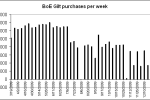
With inflation continuing to "surprise" on the upside, how long can the Bank of England keep justifying printing money? Now we learn that the Bank of England had printed £193.5 billion to finance government spending by the end of last week. So we are only four weeks to the next MPC meeting – but there is only £6.5 billion of new money left for them to pump out before they hit their £200 billion limit. Then we enter the scary territory I outlined in an earlier post.  And Brown is still left needing around £15 billion of Gilt sales a month to finance his fiscal debauchery. The Gilt market was fine while Brown's appointee's to the MPC were willing to keep the printing presses rolling to the tune of £1 billion a day through the summer.

Brown’s only strength is the weakness of his rivals

From our UK edition

So who got what? Today's Times has a great summary of the concessions and promises that Brown has had to make to keep his Cabinet colleagues on side, including: "In a series of negotiations: — Harriet Harman demanded and received a promise to have more day-to-day control over the election campaign. Labour’s deputy leader also demanded to be treated with more respect from Mr Brown’s staff. — Jack Straw told Mr Brown that he must not rely solely on a “core vote” strategy aimed at shoring up Labour’s heartland support. — Alistair Darling urged the Prime Minister to be more honest about the cuts in public spending needed to pay off Britain’s record deficit.

In preparing for war, the Tories differ from Labour in one respect – they would be prepared

From our UK edition

In today's Times, and on the occasion of George Osborne and William Hague's visit to Helmand, the Tories are publishing proposals for how to improve the Government's approach to post-conflict operations. Their central idea: to create a stabilisation force in the military, complete with the necessary expertise, training and so on to win the peace after combat. If it was not already abundantly clear, the Iraq Inquiry has shown how ill-prepared the British state – civil service, military and government – was for post-combat reconstruction. Though much has changed since the Iraq War – e.g.

The House of Lords at its exceptional best

From our UK edition

Archbishop George Carey has his detractors, but his article in the Times is a candid explanation of the ills that unfettered immigration is causing this country. The tone is so frank it shocks; the title reads: ‘Migration threatens the DNA of the nation’. Carey, of course, is not inciting anything as palpably evil as eugenics or as unworkable as uniformity between different ethnic and regional groups; he refers merely to the essence of Britain’s political, religious and social institutions. Society is determined by the health of its institutions, and ours have disintegrated through apathy. Society is broken, though not in the manner that is often assumed.

The plot’s gunpowder is extinguished

From our UK edition

The atmosphere is flat in Westminster today. The plot finally fizzled out this morning but not before having highlighted how little support in the Cabinet Brown has. It was telling that it was Shaun Woodward, not anyone more high profile, who turned up on the Today Programme to defend the PM. Plots that wound but do not kill Brown are perfect for the Tories. They make the voters see Labour as divided and add to the mood that it is time for a change. This one also had the benefit of being ideally timed from a Tory perspective, obscuring a week which had seen Cameron make a rare blunder. YouGov’s latest poll does show the Tories on course for a majority, no small achievement considering the base they are starting from.

Compare and contrast | 7 January 2010

From our UK edition

After June's rebellion, it's thought that Brown made a promise to his Cabinet colleagues: "...that cabinet ministers such as Alistair Darling will not again find themselves briefed against. There was deep anger in cabinet when Darling found himself being referred to in the past tense by Brown earlier in the week." But in today's Guardian: "The Downing Street spin machine knew something bad was afoot on Tuesday, but did not know precisely what was coming. So like any good media management operation, they tried to flush out enemies by briefing that Tessa Jowell, the Cabinet Office minister, was set to quit." If I were Jowell - and if that's what went on - then it's the kind of thing I'd resign over.  But I'm not, and I suspect she won't.

Brown has survived, for the moment

From our UK edition

Whatever took place yesterday – and there was certainly more to this plot than met the eye – the immediate danger to Gordon Brown seems to have fizzled out this morning.  Here's what David Miliband has just told the cameras: "No member of the government was involved in the letter - we are all determined to win the election under Gordon's leadership." Which is a good deal less ambiguous than the message he put out yesterday.   Now, there are two ways of looking at all this.  First, that there's enough Cabinet disatisfaction with Brown that another coup attempt has to be on the cards; that the revelations we've heard since last night mean that the plot – and not just the story – has legs.

Brown weakened by friend who became foe

From our UK edition

Intriguing post from Iain Martin, who is well sourced in the Darling camp, about what might have been said between the Prime Minister and the Chancellor yesterday: “I’ve heard from two Labour sources now that the conversation was very difficult and that Darling raised the possibility of Brown going, but the PM resisted. It would be taking it too far, says a well-placed MP, to say that the mild-mannered Darling told his old friend turned foe to call it a day. He said it was more that Darling floated the possibility of a swift departure for the sake of the party.” Whatever was said between the two men yesterday, the weakening of Brown’s position is significant for Labour’s economic strategy.

So what now for Brown?

From our UK edition

Well done, Gordon.  You seem to have survived another attempted coup.  And not just any old coup, either.  This one may have been particularly badly organised and executed, but it was also – probably – the last one you'll face between now and the election; the last one you'll ever face in your political career.  If yesterday came with a sense of "now or never," then the tea leaves now read "never".  Bravo. But, hang on.  This is hardly good news for our PM.  His authority is, pretty obviously, diminished.  If Hoon and Hewitt didn't manage to achieve that by themselves, then the ambiguous support from his Cabinet colleagues did – especially David Miliband.