Uk politics

Getting rid of the 0.7 percent aid target

From our UK edition

A leader in yesterday’s Times concentrated on the Conservatives’ aid policy – and, in particular, their commitment (shared by the government and by plenty of developed nations) to spend 0.7 percent of gross national income on development assistance. There was much to like in the article, but it misses a few key points and trains too much fire at the Tories. The key points to make about the 0.7 percent commitment is that it is not based on any assessment of how much money is needed to achieve any defined set of objectives, and has not been revised since it was set forty years ago to take into account new trends – such as remittances from migrant workers, a rise in philanthropic giving, or the role of China and India.

Is there a Labour revolt brewing over any changes to universal jurisdiction?

From our UK edition

Following the issuing of an arrest warrant for Tzipi Livni, the government committed to looking at changes to the way that ‘universal jurisdiction’ is applied. David Miliband said that, "The Government is looking urgently at ways in which the UK system might be changed in order to avoid this sort of situation arising again."   It is expected that the government will say what changes it intends to introduce next week. But judging by a debate on the Goldstone Report in Westminster Hall yesterday, there will be trouble from some Labour backbenchers over this. Five Labour MPs spoke out explicitly against any change and several more did so implicitly.

An energetic contest

From our UK edition

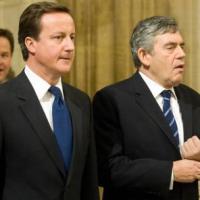
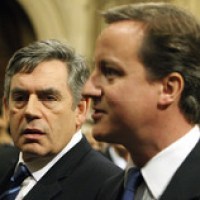
At last, Cameron’s got it. He finally varied his tactics at PMQs today. Brown had no warning. That made the change doubly effective. First Cameron asked two easy-peasy questions about salt which the PM answered in his favourite strain of complacent pomposity. At one point I think I heard him say the nation’s supplies are so crucial that he may create a ‘salt cell’ in the middle of Britain so we never again run low on this vital condiment. Cameron then tossed aside the salt-pot and declined to ask a further question. Brown was unsettled by this. Realising the worst was yet to come, he waffled nervously through an answer to the next question from Dari Taylor (Lab, Stockton South) which focused on adoption and fostering.

What a difference 13 years make

From our UK edition

Hearing Cameron joke, in PMQs, that Labour would airbrush Gordon Brown out of their election campaign, I couldn't help but think of Labour's 1997 manifesto.  As you can see to the left, it proudly featured Tony Blair's face (and not much else) on its cover.  So: what chances that Labour use Brown's face on the front of this year's manifesto?  And, more importantly, how long before someone makes a spoof version of the 1997 cover with an image of the current Labour leader?

PMQs is a contest again

From our UK edition

Well, well another PMQs where Brown holds his own. He struggled for a long time after the election that never was, but in the past couple of months Brown has found some form. For the second week in a row, he had the best line: “He’s getting much redder than he is on his photograph”. Cameron did have one particularly effective moment when he asked Labour backbenchers whether they were putting Brown on their election literature. Only a handful did. In some ways this is all Westminster Village froth, few voters watch PMQs. But Cameron’s failure to win these clashes is bugging him. While Brown’s performances must be boosting his confidence before the three planned televised debates.

Memo to Brown: before boldness comes unity

From our UK edition

Stop sniggering at the back.  I mean, all I asked was whether Gordon Brown can be bold and radical.  The way things are looking, he certainly needs to be – and, according to Philip Webster's insightful account of yesterday's three-hour Cabinet meeting, the PM has called on his colleagues to think up as many "eye-catching" proposals as possible for Labour's manifesto.  One "senior source" says that the party "should have the most radical manifesto yet put to the electorate." Which is, of course, much easier said than done – a fact highlighted by another passage in Webster's report, which reveals: "Mr Brown said there must be no repeat of last week’s botched coup.

Cuts and strategic dividing lines are indivisible

From our UK edition

Daniel Finkelstein suggests an alternative analysis to that which prevails about the cabinet split. Labour’s aristocrats are divided not over style or substance, but the timing and extent of spending cuts. Finkelstein locates his argument in Labour’s repetitive history of poor financial management. Every Labour government runs out money and becomes riven by the prospect of retrenchment, a policy that is instinctively anathema to the left. The current episode dissents from the model in one regard: 'As Chancellor, Mr Brown spent money as if there would never be a bust — an absurd hypothesis. And now, as Prime Minister, he is blocking the measures necessary to put right this error.

Just like old times

From our UK edition

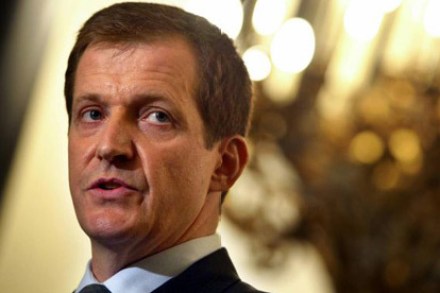
As Paul Waugh notes, it was just like old times. Alastair Campbell told us all to grow up and trust in Tony. Naturally, controversy about the dossier was the product of over imaginative hacks, and Campbell asserted that the caveats of experts are nothing compared to a PM’s need to take major decisions. It was a sensational spin operation. Inspired by Uriah Heep, Campbell cast himself as the humblest of functionaries amid grand events. In doing so he was unremittingly arrogant, almost to the point of delusion.

In it up to their necks

From our UK edition

The Robinsons, Peter and Iris, are already in it deep.  But this snippet from Martin Fletcher's column, highlighted by Iain Martin, raises the level of, erm, ordure: "In 2007-08 the pair received a total of £571,939 from [their political] posts. They also use their parliamentary allowances to employ their two sons, daughter and daughter-in-law as aides." The problem, of course, is what happens when greater public disillusionment meets with Northern Ireland's already quite fragile political process.  Seems like a pretty toxic combo to me.

Turnbull savages chancellor Brown

From our UK edition

Andrew Turnbull, who was permanent secretary at the Treasury from 1998 to 2002 and Cabinet Secretary from 2003 to 2005, has previous when it comes to criticising Gordon Brown. But his recent piece in the FT — ‘Six steps to salvage the Treasury’ — is one long barely coded attack on the PM. Take this line: “First and perhaps foremost, it [the Treasury] needs a strong ministerial team – a chancellor who wants to be chancellor for the full term rather than coveting the prime minister’s job.” Interestingly, Turnbull comes out in favour of the Tories’ plans to create an Office of Budgetary Responsibility. I know this is derided by some as yet another quango, but I actually think it will be an important reform.

Islam4UK: the clue’s in the name

From our UK edition

Irony of ironies, proselytising liberal and convinced egalitarian, Anjem Choudary, told the Today programme that the banning of Islam4UK, al-Muhajiroun and their aliases is a ‘failure of democracy’. A further irony is that he is right, sort of. Alan Johnson's decision is understandable but incorrect; the surest way to silence these repugnant extremists and reactionaries is through equality and free debate, even though they hold those principles in contempt. The members of Islam4UK abuse freedom to peddle their reactionary ideals and disregard their duties towards society, but that is no reason to proscribe the group.

The Iraq Inquiry should call Gordon Brown now

From our UK edition

Alastair Campbell is before the Iraq Inquiry. As one of Blair’s closest aides, Campbell’s role in the run-up to the Iraq war was key. But I suspect the spinner-in-chief will be doing what he was originally hired to do: namely, protect his master by attracting the incoming fire. In this case, though, he will be helping Gordon Brown, not Tony Blair.   Because it is Brown’s role in the Iraq War, not that of Blair, that is the most obscure part of Britain’s modern history. As chancellor, Brown was the second most powerful man in government. He held the purse strings. If he had opposed the Iraq War, it is hard to see Tony Blair succeeding in persuading Cabinet, the Parliamentary Labour party or the House of Commons.

A sensible Tory rethink on marriage tax breaks

From our UK edition

There's something quite refreshing about David Cameron's plan to offer a tax break to married couples.  It says, simply: this is what I believe.  And it does so in spite of polling data and strategic arguments to the contrary.  This is one area where you certainly couldn't accuse the Tory leader of caring too much about what other people think.  But refreshing or not, that doesn't make it good policy.  Of course, there's a tonne of empirical data which demonstrates the benefits of marriage.  That's important and persuasive.  But, as I've written before, there are reasons to doubt the efficacy of a tax break in particular.

Cameron takes a brave line on family policy

From our UK edition

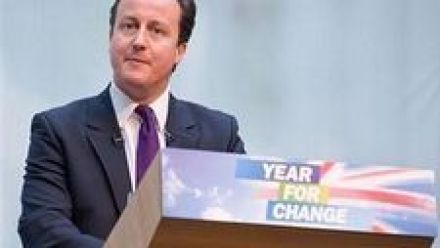
David Cameron’s speech today at the launch of Demos’s Character Inquiry was both brave and significant. His message was that it is parenting, not material wealth, that plays the most important role in determining a child’s prospects in life. As Cameron put it, ‘What matters most to a child’s life chances is not the wealth of their upbringing but the warmth of their parenting.’ This message is easily caricatured — ‘Millionaire Cameron says poverty doesn’t matter’ — but it is important and, as recent academic research shows, true. (This is not to say, that poverty doesn’t matter, it clearly does, but that material poverty is not the sole determinant).

Military manoeuvres

From our UK edition

Just when you thought it was safe to go back into the water, the leadership speculation starts stirring again. It's not Gordon Brown who's the subject of it this time, though - but rather the defence chief, Air Marshall Sir Jock Stirrup, who, according to today's Times, is due for the chop after the next election. Either his deputy, Nick Houghton, or the Army chief, David Richards, are likely to fill the breach. The story brings to the surface long-simmering tensions at the top of the military establishment about Sir Jock's leadership. The Times says that Gordon Brown did not force out the defence chief because he did not want more rowing with the military after General Richard Dannat's retirement.

Ed Balls says the same stuff, differently

From our UK edition

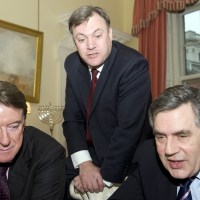
The road to Damascus has nothing on this.  Ed Balls – in interview with the FT – has condemned the class war strategy, called for an end to Labour figures briefing against each other, and suggested that the government should be more "upfront" about spending cuts.  Hallelujah!  What a difference an attempted coup makes!  And so on and so on. But wait a minute.  What does the Schools Secretary actually say?  Worth looking at, that – because Balls hasn't so much changed his arguments as changed the way he makes them.  Take, for instance, what he says about class war: "'I’m totally against a class war strategy,' he says.

It is immaterial who fronts Labour’s campaign

From our UK edition

Divide and conquer, that is what preoccupies the Prime Minister. Later today, Gordon Brown will address the Parliamentary Labour Party to reassure them of the strength of his leadership and to invigorate the party by setting it on an election footing. How he achieves the former is anyone’s guess but he will realise the latter by investing Labour’s three election supremos: Mandelson, Harman and Douglas Alexander. In typical Brown style, these lieutenants’ roles are deliberately ill-defined. Who has ultimate authority? Who will be the attack dog? What is the difference between day to day running and managing an overall strategy? And which takes precedence? A pastmaster at internal intrigue, Brown will thrive as his actors compete – divide and conquer.