Uk politics

The numbers spoil Labour’s narrative

From our UK edition

Labour have certainly come out of the traps snarling and gnashing this morning.  For one, they're making the most of two letters in the FT, signed by 60 economists, which ostensibly support their position on the public finances.  And then there's Gordon Brown's speech to European leaders, in which he implores them to tackle the "hatred" of "the right".  Naturally, by "the right", he means "David Cameron". It's those letters which really grab the attention, though.  Not really because of what they say, or who has signed them, but because they're suggestive of how the debate over the public finances is going to go.  Yep, the Tories get 20 economists to write a letter in support of their deficit-reduction plans, so Labour respond with 60 economists of their own.
Cameron and the power of the bully pulpit

From our UK edition

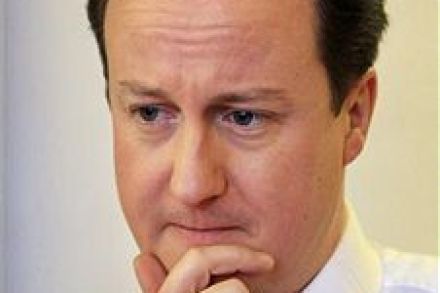
I must be one of the very few people who would genuinely like to see David Cameron give another speech on chocolate oranges. There was much mockery of it but it contained a very important point: there are some things that a business can do that have negative externalities to which the appropriate response is not taxation or regulation but social disapprobation. So, it was good to see Cameron promising both to use the power of his office to call out companies that sell age inappropriate products and to make it easier for people to protest against such behaviour. There are other areas where I expect social pressure could be effective. It would be fantastic if Cameron would say that only people who are domiciled and resident in this country for tax purposes are eligible for honours.

Introducing Dave

From our UK edition

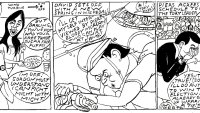
Readers of the magazine will be familiar with Michael Heath's series of 'Flash Gordon' cartoons, based on the life and sulks of our glorious Prime Minister.  Well, now it's got a successor – 'Dave' – which, naturally enough, focuses on the Tory leader and would-be PM, Mr Cameron.  Here's the first of them, from this week's issue, for the benefit CoffeeHousers.

Can it get much worse than this?

From our UK edition

£4.3bn in the red, that is the gruesome fact of the government’s January accounts. Never before has the government borrowed money in January, usually a month of surplus as self-assessed income and corporation tax receipts line government coffers. Analysts forecast a surplus of £2.8bn, denoting just how bad the situation is. This is an exact copy of last July’s accounts, lending weight to the analysis that Britain’s recovery is slow and very precarious, an analysis confirmed by the weakest mortgage lending figures for ten years. Obviously tax revenues have collapsed.

If Brown-Morgan can’t move the polls, what about the TV debates?

From our UK edition

Brace yourselves.  There's going to be poll after poll after poll in the weeks leading to the election.  And the onslaught starts in the Sun today, with the first of their YouGov daily tracker polls.  It is also the first to be conducted in the aftermath of the Brown and Morgan interview. So what's the story?  Well, Labour's vote is more or less unmoved - suggesting, in turn, that the public were more or less unmoved by Brown's interview with Piers Morgan.  They're on 30 percent (down 1), with the Tories on 39 percent (up 1), and the Lib Dems on 18 (down 1).  That's a 9 point lead for the Tories. Of course, you could say that this is because the public didn't like what they saw on the Brown interview.

What the markets are banking on

From our UK edition

Hamish McRae’s column today contains news of a warning that I had not seen reported elsewhere: 'The capital markets division of Royal Bank of Canada yesterday put out a ranking of sovereign risk – the risk that a country cannot repay its debts. Ireland and Greece came at the top, as you might expect, followed by Portugal and ... yes, the UK. On that ranking we are more of a risk than Italy, France and Spain. That is just the view of one bank but it echoes those of others in the business of advising savers around the world of the risks of investing in different countries.' My concern is that the markets have priced in a Tory victory and a tough emergency Budget.

Bare Argentine aggression

From our UK edition

The Falklands are sovereign British territory and must be defended. The Times reports that Argentina’s President Kirchner has issued a decree (how quaintly autocratic) that all ships sailing in waters claimed by Argentina will require a permit. Presumably, that includes Desire Petroleum’s rig, which is en route to drill for an oil field comparable to the North Sea field. Over at Conservative Home, Daniel Hamilton points out that the decree contravenes international law and that Britain has a right to explore for oil unimpeded. So what are the Argentines up to? Nile Gardner explains: 'If the floundering, corrupt and increasingly unpopular government in Argentina is foolish enough to choose a confrontation, it must be prepared to face the consequences.

Vote for the party of Frank Gallagher<br />

From our UK edition

Following the success of the ‘I’ve never voted Tory’ spoofs, Tim Montgomerie has launched My Labour Poster and welcomes your contributions. I imagine it'll receive po-faced censure from CCHQ, but Cameron&Co will be privately thrilled if activists get it up and running.

An early warning system for healthcare

From our UK edition

Every few years we unearth another hospital scandal in which we discover, all too late, that many patients have needlessly died.  On the face of it there is no common theme to these failures: the bug clostridium dificille at Stoke Mandeville, possibly similar infections at Maidstone & Tunbridge Wells; emergency admissions at Mid-Staffordshire, and possibly poor hygiene at Basildon & Thurrock. But, as The Sun points out today, it seems that the Department of Health was warned in the strongest terms about flaws in the healthcare oversight mechanism. It is astounding that there is no system of performance improvement in the NHS.  But suppose there was.

The Tories needed to be negative

From our UK edition

There is only one way the Tories can lose the election and that is if it becomes a referendum on them rather than a choice between them and the government. We are in such an anti-politics moment that the electorate is unlikely to give a positive endorsement to any politician or political party. This—not the poor choice of photo—was the real problem with the Tories’ opening ad of the year: it invited voters to judge Cameron in isolation. Cameron is the biggest asset the Tories have but he is their biggest asset when contrasted with Gordon Brown. This is why I think Daniel Finkelstein is wrong to argue that the Tories should eschew negative campaigning. They need to remind voters what the alternative to them is. Danny is critical of the Tory death tax campaign.

What can Cameron learn from Obama’s situation?

From our UK edition

President Obama was going to be different. He was going to learn from Jimmy Carter's failures. He was going to avoid Bill Clinton’s fate. Like his well-run campaign, Obama's tenure in the White House was going to be cool, calm and effective. If Clinton failed by sending an over-cooked healthcare reform to Congress, Obama would succeed by leaving the details to lawmakers. If McCain's campaign was psychodrama, Obama's administration was going to be all collegiality.    It did not work out that way and now the knives are out for Obama's team. First there was Ed Luce's piece in the Financial Times. Now Leslie H. Gelb, a veteran DC insider, comes out and says it: the President must change key personnel now.

Purnell’s ‘empowerment’ pledge falls flat

From our UK edition

James Purnell envisages a society of ‘empowered’ voters left to make decisions for themselves. It is an attractive concept – individual responsibility displacing state directives will save money and, providing those running the institutions are competent, improve public services. Writing in the Times, Purnell acknowledges that these concepts can become lost in the abstract terms in which they are expressed. What a pity he didn’t take his own advice - his article is an extended abstract noun. Not that it’s all bad. What power is there for parents who can’t afford to move close to a good school, he asks.

Branson’s comments are nectar to the Tories

From our UK edition

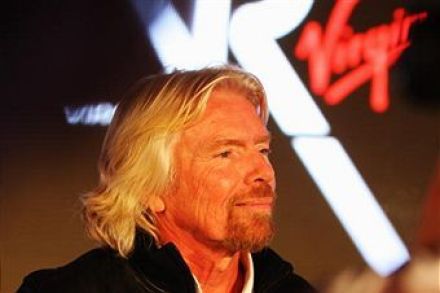
Sir Richard Branson may often personify a leering joke, but, as Steve Richards observed this morning, this election is descending into a personality contest. Branson remains a symbol of British entrepreneurial success: his endorsement is crucial and I expect to see this story splashed across the right-wing tabloids tomorrow. The Standard quotes Branson saying: “I believe the UK's record budget deficit does pose a serious risk to our recovery. “It would be damaging if we lost the confidence of the markets through delayed action and saw interest rates have to go up steeply. “We are going to have to cut our spending and I agree with the 20 leading economists who said we need to start this year.

MPs, porkies, pigs and scum

From our UK edition

The headline might almost be word association, but when it comes to Twitter the devil makes work for idle thumbs. Guido points out that tweets cannot be edited once posted. Labour whip David Wright has previous with labelling the Tories ‘scum’, and he maintains that on each occasion he has fallen victim to a would be Lisbeth Salander, who uses their genius to post inane political slurs in no more than 147 characters. Either that or he’s artless at deceit.     CCHQ scent blood and Eric Pickles is gunning for Wright’s head. He has written a letter arguing that Wright has breached the ministerial code. I can see this row running on and on, as there is a lot of bad blood between the two parties.

Short term or long term inflation?

From our UK edition

The news that the CPI rose to 3.5 percent doesn’t seem to have affected the markets, but the cost of living is soaring. Mervyn King has written to Alistair Darling predicting that inflation will fall back to the benchmark 2 percent over the course of the year, and that the current explosion is a result of short term factors such as the restored VAT rate, a 70 percent rise in oil prices and the depreciation of sterling. David Blanchflower is right: inflation may eat a little of Brown’s debt mountain and it will help those who now hold negative equities on houses. But it does precious little else that is positive, especially as wages are unlikely to follow suit in this climate.

Cutting it with the Fink

From our UK edition

I couldn't let today pass without a response to Danny Finkelstein. We do agree on the ends, but not the means. And, as he says, this debate mirrors one about the methods of reform. So, let¹s go through his points. 1. 'I am afraid I think Fraser overestimates (a lot) how politically difficult this is all going to be. And how personally painful for a lot of people. And how technically difficult.' Painful, yes, but necessary ­ and it will be resented if Cameron is not straight about the cuts he will have to make. But how painful? Gordon Brown¹s great intellectual victory is to persuade the Tories that 'cuts' can only mean frontline services cut ­ so (as Brown once said) 10% cuts 'mean schools close and hospitals close.

Why Adeela Shafi didn’t get a namecheck

From our UK edition

There is real jumpiness in Tory circles at the moment about the prospects of more candidate disasters. So eyebrows were sent upwards when David Cameron failed to name check Adeela Shafi in a section of his speech this morning which mentioned many of the Muslim candidates standing for the party. The omission seemed surprising as Shafi was one of the people who spoke in the prestigious slot just before the leader’s speech at Tory conference in 2008 and is, I think, the only female Muslim candidate standing for the Tories. The assumption was that she had not been mentioned because of the recent stories about her financial problems. But the Tories tell me not to read too much into her not been included on the list, pointing out that the list was not exhaustive.