Uk politics

Cameron attacks tax-happy Brown

From our UK edition

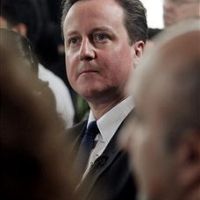
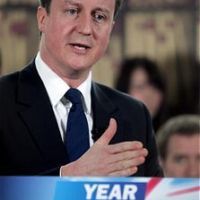
A strident interview from David Cameron in today's Express, in which he touches on everything from inheritance tax to not, never, ever joining the Euro. It's this passage that jumped out at me, though: “Middle Britain has had a wretched time under Labour. This Government has taxed mortgages, marriages, pensions, petrol and travel and raised national insurance and the top rate of income tax. We cannot keep squeezing hard-working families." Why so noteworthy? Well, off the top of my head, this is the first time that Cameron has referred to the current system as a "tax on marriage".
The problem with that David Cameron ad

From our UK edition

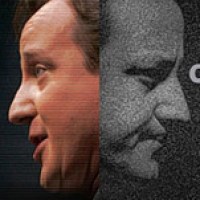
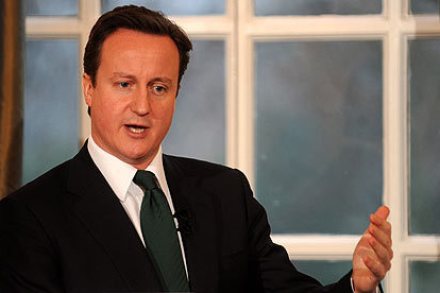
Labour’s new ad with David Cameron facing both ways highlights what was wrong with the Tories’ opening ad of the year, that one dominated by Cameron’s face. The Tory strategy for the election campaign has to be to try and make it into a referendum on this failed government. But that ad, which emphasised Cameron so strongly, gave Labour an opening to try and turn the election not just into a choice between two parties but into a referendum on David Cameron and Tory policy. Labour’s success in doing this is largely responsible for the Tory wobble. The contrast between Cameron and Brown does work to the Tories’ advantage. But it works because it is a contrast.

Some Tories are yet to repay their expenses

From our UK edition

Bad news for David Cameron in the Standard this afternoon – several Tories have not made expenses repayments that were agreed seven months ago. After yesterday’s success, the last thing Cameron needed was a question over the effectiveness of his Scrutiny Panel, established to go “beyond the letter of the rules”, which he deemed too lenient to placate public anger. Bill Cash is the major culprit exposed by the Standard. He agreed to repay £15,000 for an unacceptable rent/mortgage arrangement, but Commons records disclose that he has only repaid the £429 he claimed on an antique desk. Although the non-compliance of Tory MPs is a problem for Cameron, this isn’t merely a story of rapacious Tory MPs.

How should the Tories respond to those Labour guarantees?

From our UK edition

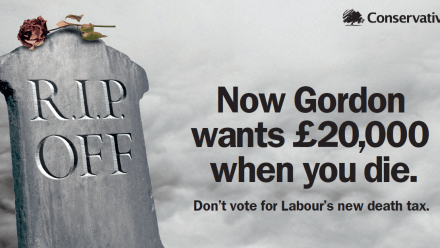
If you're going to take anything away from Andy Burnham's press conference this morning – apart from his denials about a £20,000 "death duty" – it's how heavily those Labour "guarantees" are going to feature in the election campaign.  Here we had social care guarantees, cancer treatment guarantees, waiting line guarantees, and even a new website and poster (see above) attacking the Tories for not signing up to the same guarantees.  So far as the government is concerned, it matters not that these pledges have been made before – what matters is the opportunity to draw more dividing lines across the landscape of British politics.  "Caring" versus "cruel", as far as the eye can see.

Accountability on your iPhone

From our UK edition

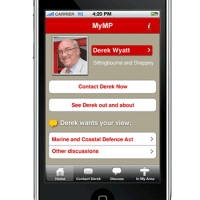
With Brown pitching his AV referendum as the solution to at least some of our political ills, it's worth highlighting the quieter efforts of another Labour MP, Derek Wyatt, to fix the system.  Mr Wyatt, you see, has got involved with the MyMP iPhone app which helps voters track and converse with their MPs.  The first version was released on 15 January, but, I must admit, I've only just come across it thanks to the Telegraph's report this morning. Sure, an iPhone app is only a small thing.  And, in this case, there's certainly room for improvement, as well as for more MPs signing up to the service.  But it's a decent start - and further proof that a combination of simple technology and proactivity on the part of MPs can result in something very much like progress.

Plenty to encourage the Tories in the Populus poll

From our UK edition

Well, the Populus poll isn't all good news for the Tories. As James pointed out last night, they have shed another point and Labour have regained some ground. But, as both Peter Riddell and Mike Smithson note, the Tories can still secure an outright majority on the basis of these figures. The numbers which lead the Times's frontpage coverage are more encouraging for Cameron & Co. They show that the public are attuned to the Tories' broad narrative. 73 percent think society is broken; 82 percent think that now is the time for change; and 64 percent believe Britain is heading in the wrong direction. After 13 years in power, Labour cannot credibly represent change; it has to defend its record, which on the evidence of these findings is not something it will manage easily.

A day to damage Brown?

From our UK edition

Contain yourselves, CoffeeHousers.  I know that we're all really excited about today's Parliamentary vote on an alternative vote referendum (it is, after all, something our Prime Minister has described as "a rallying call for a new progressive politics"), but it isn't a done deal just yet.  That "new politics" might still be put on hold. Indeed, things could get messy for Brown in just a few hours time.  You'd expect him to win the vote, what with Labour's majority and the creeping sense that Downing St very much wants this to happen.  But even the slightest hint of a Labour rebellion, or of Lib Dem disquiet, and the story could turn toxic for the PM.

The Tories think Brown is their most potent weapon

From our UK edition

‘We just need to ram Gordon Brown down the electorate’s throat’ one Tory staffer said to me today when talking about how the party could get back on the front foot. The unspoken thought was that the prospect of five more years of Gordon Brown would be enough to send voters into the welcoming arms of David Cameron.    The Tories are frustrated that in the last few weeks this election has gone from being the referendum on the government to almost being a referendum on them and their plans for government. They are determined to turn the focus back onto Brown, hence Cameron’s aggressive attack on Brown this morning.   PS The Populus poll for The Times tomorrow has the Tories on 40 and Labour on 30, a narrowing of the Tory lead from their last poll.

If this is a suspension, what is an expulsion?

From our UK edition

Sky’s Jon Craig’s asks one of those questions you wished you had posed: wasn’t Elliot Morley suspended already? Yes, he was, on the 14 May 2009 and with immediate effect. However, showing a fine disregard for the manner in which repeat offenders are usually treated, Labour suspended Morley again for good measure. Seeking a clarification about the initial suspension, Craig was told that Morley had been denied the ‘privileges of the PLP’. What might they be? Subsidised beer and sandwiches perchance? The rumour is that Morley was either re-instated on the quiet or had escaped in the first instance, lending more weight to the sense that Labour’s response to the expenses scandal has been hopelessly ill-conceived.

Which UN figures show 600,000 Iraqi deaths?

From our UK edition

While skewering Alistair Campbell on his show, Andrew Marr said the Iraq War had killed 600.000 people. Blair’s former spin-doctor was on the ropes at the time and so did not contest the count, which Marr claimed were “internationally-accepted UN figures”. But I’m curious to find out where Marr got this count from. Finding out how many people have died is difficult, as no Iraqi or Coalition government office regularly releases publically available statistics on Iraqi civilian deaths. I have not been able to find the supposedly authoritative UN figure Marr quoted. But the Iraqi Body Count, the world’s largest public database of violent civilian deaths during and since the 2003 invasion, puts the figure between 95,309 – 103,982 deaths.

What happens if Labour wins?

From our UK edition

Bruce Anderson’s column in the Independent is a must read today and it concludes with this telling anecdote: ‘The other day, a Cabinet minister had lunch with a journalist. "What happens if you win?" enquired the hack. The minister looked astonished. It was clear that this possibility had not occurred to him. Having regained the power of speech, he replied: "There'd be an immediate leadership challenge".’ Really? Brown was immovable when trailing by twenty points; a mandate will make him impervious to everything except death and possibly blindness. A narrow Conservative victory followed by a second election this autumn is a more likely scenario than a Labour win. Would Brown be unseated then?

Success for Cameron

From our UK edition

Finally, Brown has withdrawn the whip from Chaytor, Morley and Devine. This is a significant victory for Cameron in the latest battle over expenses. Once again, the Tories are streaks ahead on this issue. As Henry Macrory notes, it took Cameron 86 minutes to reach the obvious conclusion that Lord Hanningfield should be suspended; Brown agonised for 4305 minutes. Truly, this is the man who can be trusted to ‘take the tough decisions’ on the economy when needed – my guess is that most of us all will die at a Keatsian age in Dickensian penury. One point that occurs to me is that it's been clear for some time that Chaytor et al were personae non grata. Why therefore has Chaytor been used as a government plant at PMQs twice this year?

Brown’s personality defines the character of his government

From our UK edition

David Cameron will re-launch his election campaign with a personal attack on Gordon Brown. Cameron will embark on the straightforward task of proving that the Road Block is not a moderniser – the Prime Minister’s sudden avowed passion for PR is merely a marriage of electoral convenience. Cameron has led the expenses reform debate and will use Brown’s dithering over the latest furore to condemn him as a ‘shameless defender of the old elite’. According to Francis Elliot, Cameron will say: “There is no chance Gordon Brown will do what is right and put the public interest before his own political interests. He cannot reform the institution because he is the institution: he made it.

Clegg must resist Brown’s sweet nothings

From our UK edition

Gordon Brown is usually at his most patronising when confronting Nick Clegg. Last week, however, hectoring gave way to affection. Brown was almost tender. Of course, this sudden change has an obvious explanation. Brown and Clegg are brothers in arms: devotees of electoral reform, or so the Road Block would have us believe. Robert McIlveen laid counter-arguments against Brown’s opportunism and Boris Johnson repeats them in his Telegraph column today, concluding: ‘There is one final and overwhelming reason why Britain should not and will not adopt PR – that it always tends to erode the sovereign right of the people to kick the b––––––s out.

Brown wants to discuss nothing besides the middle class

From our UK edition

Aspiration is Gordon’s middle name. The Observer has an extensive interview with Brown and though the classification has changed class remains his obsession: Brown wants to fight the election on the middle classes. He spoke of little else. Education and family policy will be defined by Sure Start, child tax credits and the school leaving age; the NHS will offer yet more choice and unaffordable luxuries, such as one to one care. It may seem peculiar for a man who is synonymous with stealth taxes, and whose time in government will be remembered for the polarisation of society, to frame his arguments in such terms; but his reason is clear: Brown doesn’t want to debate the economy.

The cuts consensus

From our UK edition

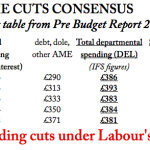
John Rentoul today puts Trevor Kavanagh and myself in the dock for demanding "massive spending cuts" and concludes that if we "had any power" we would be "about as helpful to Cameron as Sarah Palin was to John McCain" but believes Cameron "will hold to his strategic course". I mean: massive cuts. How crazy is that? Surely only swivel-eyed maniacs would be planning cuts - real, hard-core ideologues - would plan that when the deficit is a mere 13 percent of GDP. Surely? It struck me, reading this, that John is unaware of the massive cuts which Labour is planning (understandable, as they were in the small print and have still not been picked up by Fleet St).

Beyond doubt

From our UK edition

For a moment, Andrew Marr had Alastair Campbell by the short and curlies. Marr attacked (that verb is not an exaggeration) Campbell over his clarification to the Chilcot Inquiry, the phrase ‘beyond doubt’ and the possibility that Blair knowingly misled parliament over the strength of WMD intelligence.   Marr was at his incisive and dramatic best. It was the first time I’ve seen Campbell under pressure and he wobbled, his lower lip did so markedly. Perhaps I do him a disservice, but I didn’t buy Campbell’s blubbing act; it was just theatre. His defence of Blair and himself rested on the tried and tested refrain that Tony’s a pretty straight kind of guy, and what he described as the “careful and meticulous” case that both prepared.

What’s needed now is a modern Conservative party with clear, discernible principles

From our UK edition

I'd like to do a final round of responses to comments to my Keith Joseph lecture. It’s easy for debates about Conservatism to be caricatured as being for or against Cameron – and my lecture fits into neither category. I’m a big supporter of Cameron’s, but often wish he’d have more faith in himself: I fear he feels he has to make more short-term concessions than he has to – thus blunting his message of ‘change’. For years, any debate about Tory policy is described in the terminology of Tory civil war circa 2002 (which all too many people, from both sides, are still fighting) – ie that you an ‘Thatcherite or a ‘moderniser’. But now, in 2010, there can surely be a truce. Both sides had their points at the time.