Uk politics

And what about Ed Balls?

From our UK edition

Two related points, worth repeating. The first from Ben Brogan: "Mr Brown is on surer ground on a narrow point, in that in all likelihood he did not explicitly order his Eighth Circle chums to unleash hell against Mr Darling. Then again, he didn't need to. His reaction to the Chancellor's Guardian interview will have had the required Henry II effect. If Dave wanted some sport [in PMQs], surely, he should have asked whether Ed Balls ordered his friends to undermine Mr Darling. He wanted the job after all, and as has long been realised, there was what amounted to a Balls operation within the Brown operation designed to promote his interests as alternative Chancellor and future Labour leader.


PMQs live blog | 24 February 2010

From our UK edition

Stay tuned for live coverage from 1200. 1200: Alistair Darling is sat next to Brown. How cosy. 1201: And we're off.  Brown starts with condolences for fallens soldiers – sadly, seven names to read out. 1202: Labour MP Jamie Reed asks Brown for reassurances that the public will one day see the taxpayers' cash that's been pumped into the banks. He gets in a dig at George Osborne's public shares plan.  Brown responds by banging on about the G20. 1204: Cameron now. He leads off with a question about the deaths at the Stafford Hospital – asking whether a private inquiry is sufficient to tragedy and the public interest. 1206: Brown gives a managerial response – saying that the government is doing all it can.

Ashcroft has unleashed hell in the marginals

From our UK edition

Alistair Darling’s sudden and poetic ejaculation is sure evidence that the government is a rabble of warring tribes. Against such opponents, the Tories should win, and win big. Daniel Finkelstein is adamant that they still could. He states the obvious: polls are general and do not account for specifics in key marginals. In-built boundary bias created the assumption that Cameron needs an 11 percent swing to win a majority of one. Finkelstein rubbishes that thesis; parties that win by 11 points win landslides: ‘In 1997 Mr Blair’s Labour built a new coalition, winning support across social classes. They therefore won in suburbs and prosperous towns that had always voted Tory in the past. Labour swept in with a huge victory.

Darling throws one hell of a spanner into No.10’s election works

From our UK edition

So what's Alistair Darling up to?  When I first heard his "forces of Hell" comment last night – his description of those briefing against him from inside No.10 – I half suspected it was all part of Downing Street's grand plan.  You know, trying to defuse the bullying story by being honest – up to a point – about Brown's premiership, and then claiming that everything's alright really.  A bit like Peter Mandelson saying he took his "medicine like a man" – only with greater poetic license. Now, though, I'm convinced that this wasn't part of No.10's script.  The clue is in the hurried, and ridiculous, denials that have been issued since.

David Miliband would set the people free

From our UK edition

What is it about the Blairite passion for abstract nouns? I ask, not out of facetiousness, but because I want to know what they mean by loose terms such as ‘empowerment’. David Miliband joins James Purnell among the progressive left’s thinkers who are reimagining the relationship between state and citizen, and he gave a concept heavy, substance light speech to Demos this afternoon. I’ve read it a couple of times and can’t get my head round it. Peering through the glass darkly, the central concept is attractive: Miliband wants to give more power to the people. Some valid policies season his argument. For instance, the 1 week cancer pledge would be a victory for the consumer over the bureaucrat, if only it could be afforded.

Going Dutch | 23 February 2010

From our UK edition

"Going Dutch" will take on a whole new meaning now that the collapse of the Dutch government looks set to result in the country's departure from Afghanistan. Withdrawal had been on the cards for at least a year - especially as the coalition Labour party had campaigned to return Dutch troops at the last election. But now the process has gone into overdrive.   Militarily, the competent Dutch forces will be sorely missed. They have done a really quite impressive job in Uruzgan province. But the Dutch pullback will be an even bigger problem politically. NATO likes to refer to the dictum it formulated during the Balkan operations - "in together, out together".

How not to calm the bullying row

From our UK edition

Phil Woolas, the immigration minister, probably thought he was being helpful to Gordon Brown by describing Christine Pratt as: "this prat of a woman down in - where's she from, Swindon?" But, erm, he wasn't.

Brown the victim

From our UK edition

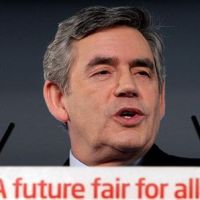
As Pete points out, the longer the bullying story runs the more chance there is that the public sympathise with Brown, as they did over the Jacqui Janes story. Now Ed Balls is playing the sympathy card for his mentor, saying that Brown has been deeply hurt by these false allegations. Whatever next? Damian McBride breaks his retreat in a seminary and says: “Brown’s the loveliest man I’ve met, never hurt a fly guv, honest.” The preposterous and the distasteful hang above this latest twist, but Downing Street’s spin operation remains terrifyingly focussed.

The bullying story keeps on rolling, but will it affect the polls?

From our UK edition

Much confusion on the digital grapevine, last night, about YouGov's latest daily tracker poll.  Turns out, it doesn't have the Tories leading by twelve – but, rather, the positions are unchanged from the poll in the Sunday Times.  So that's the Tories on 39 percent, Labour on 33, and the Lib Dems on 17.  A six point gap between the two main parties. The poll was conducted between Sunday afternoon and Monday morning – so, after the bullying story broke, but, perhaps, too soon for it to have filtered through to the public consciousness.  Even so, Labour will be encouraged by what they see.  A below-headline question has more people rating Brown as "passionate" than a "bully" (by 28 percent to 24).

Not a day to be a Pratt

From our UK edition

The unfortunately named Christine Pratt, her husband and the National Bullying Helpline have been completely demolished by one of the most well co-ordinated spin operations I can recall. The charity’s accounts bear no examination. Two Patrons, Cary Cooper and Mary O’Connor, have resigned – disgusted that Pratt broke the charity’s commitment to confidentiality, as indeed was Ann Widdecombe. The Charities Commission have been called in. She’s flip-flopped on her original claims at least twice: initially suggesting that Gordon Brown was a bully, then insisting he wasn’t and then recalling that he possibly might have been. Plainly, her memory of who calls her and what they say is as leaky as a philandering footballer’s.

A Cameron-Clegg government

From our UK edition

With even Michael Portillo predicting a hung parliament, what would Britain’s post-election government actually look like if the Tories did not secure an over-all majority.   The Tories could form a minority government, hoping to persuade enough MPs from other parties, but principally the Liberal Democrats, to vote with them on the key issues. Such a government would be inherently unstable, lurching from vote to vote and dependent on the relationship between a Prime Minister Cameron and Nick Clegg, the Liberal Democrat leader, as well as between George Osborne, the would-be Chancellor, and Vince Cable, who many think is a more qualified potential occupant of No 11.

Some reasons to be cheerful about Cameron and the Tories

From our UK edition

By way of a response to the comments on my post yesterday, here are some reasons to be cheerful about Cameron and the Tories. The poll lead dropping to six points is indeed a wake-up call, and Cameron probably worked out a while ago that things were going a bit Pete Tong. Indeed (Short the UK), there are signs that he has already started to act. Look at last Monday: three strong election videos, without a politician in sight. The perfect remedy to the Tragedy of Cameron's Head poster. The policy of allowing management buy-outs of government departments is bold, radical and entirely in keeping with Cameron's general policy of empowering the many, not the few.

Cameron’s first response to the bullying question

From our UK edition

Cameron just got the question on Brown and bullying. His reply was well pitched, right tone of voice and all that. But it contained the suggestion that Sir Phillip Mawer, who polices the ministerial code, should be asked to investigate. This is the last thing No 10 wants, it just wants this to go away. But I suspect Cameron has just given the story a nudge along.

Cameron kicks off the transparency agenda

From our UK edition

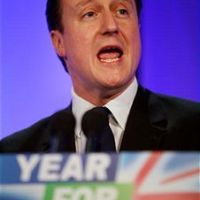
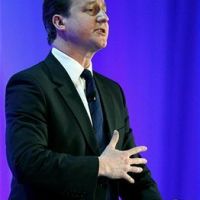
Here I am, in a cavernous "space" in East London, for a conference on the Post-Bureaucratic Age - or  "See-Through Government," as Guido more evocatively put it. David Cameron has kicked things off with a speech on the issue, and there'll be talks and panels throughout the day. It's like Glastonbury for policy wonks. So how was Cameron? Well, he's normally at his snappiest and most persuasive when he talks about all this tech stuff - and today was no exception. All the usual lines about "handing power to the people," and eroding "the dull, stultifying presence of state control," made an encouraging appearance. And he outlined what this would mean in practice, with new policies on town planning, for instance.

How should the Tories respond to the Rawnsley allegations?

From our UK edition

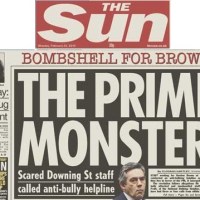
As James predicted last night, the ‘Bully boy Brown’ story is now at full steam and will speed on as phone-ins discuss bullying in the workplace. The National Bullying Helpline’s intervention, ethically dubious in view of the charity’s supposed confidentiality, has negated Labour’s damage limitation strategy. Both Peter Mandelson’s line that Brown is a passionate and demanding man and the PR campaign to soften Brown’s image have been blown clear out of the water. Brown has made significant progress recently: David Cameron’s personal ratings have halved since September. That brief resurgence will be reversed as this story rolls. The Sun’s hot-headed frontpage says it all.   Now is the time for a Conservative counter-attack.

Background politics

From our UK edition

The Conservatives are at pains to emphasise that 'it's not where you're from but where you're going that's important.' A trite but pertinent phrase: background is neither a pre-requisite nor an impediment to a political career, nor should it be. Upbringing is important when it informs values. Many of the Shadow Cabinet have travelled together from the chapel pews of Eton to the Tory front bench; consequently, the Tories are wary of linking politics to background and experience. On the whole that is sensible, the exception is Michael Gove's personal history, which is central to his Swedish market based education reforms.

Time for Cameron’s Lazarus act

From our UK edition

Two seriously worrying polls for the Conservatives today. One is a Sunday Times/YouGov poll, showing a Labour recovery reducing the Tory lead to six points  well into hung parliament territory and the lowest since December 2008. The other is a PoliticsHome poll in the News of the World, according to which: Cameron’s approval rate has been steadily falling, and Brown’s similtaneously rising – the difference between them has halved, in recent months, from 90 points to 45 points. If the election is a 39-33 split, then the Tories end up with just ten more seats than Labour and are dependent on coalition with the LibDems.