Uk politics

Spotting the Budget deceptions

From our UK edition

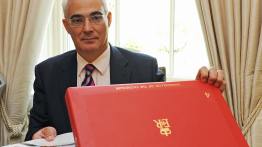
There are, lest you need reminding, two levels of deception on Budget Day.  First, there's the Chancellor's Budget statement, which is pretty obviously spun to put the best light on things.  I refer you to when Brown triumphantly announced a 2p cut in the basic rate of income tax in his final Budget statement, while somehow forgetting to mention that the 10p rate has been abolished.  And then there's a Budget document itself, in which much of the most revealing content is tucked away in appendices and footnotes.  Even straightforward spending figures are hard to come by in the Red Book. In which case, we'll be doing our best to catch out Darling in our live-blog of his statement from 1230.

Germany to the EU: no more integration

From our UK edition

A Conservative Party article of faith has been the belief that other Europeans are innately more pro-EU than the British. In the past, this has undoubtedly been the case. Poll after poll has shown that Britons see the EU differently than most other Europeans. But as I have argued before, times are changing on the continent. In an article in the Frankfurter Allgemeine Zeitung (not a Europhile newspaper by any stretch), Germany's new politics is explained.

All quiet on the Westminster front

From our UK edition

If there's one thing distinguishing this morning, then it's just how placid everything feels.  The clouds are moving sluggishly across the sky; there's little excitement about the measures expected in the Budget; and there are no stories about rifts between the Prime Minister and the Chancellor.  Indeed, Downing St insiders tell the FT that relations between Gordon Brown and Alistair Darling have been "pretty good" in the run up to the Budget, because both are "broadly agreed on the strategy of halving the deficit in four years while backing growth initiatives." Many are taking this as a sign that Darling and Peter Mandelson have won out in their efforts to coax Brown away from the crude "investment vs cuts" thinking of yesteryear.

Closing the gap between state and independent education

From our UK edition

I do hope that Oxford will finally be free from government claims of snobbery soon. We learn today that the proportion of state school pupils it admits has fallen from 55.4 percent to 53.9 percent - but, as the university says, this is in line with the (appallingly low) proportion of state school pupils achieving three As. The problem lies with the schools, not the universities, and it helps no one to pretend otherwise. Here's one figure that you won't read in the ongoing "Oxford snobbery" story: in 1969, only 38 per cent of Oxford's places went to privately-educated children. Why? Because the private schools in those days were not places of educational excellence, but of social preference. The decline of state education, relative to private, is the problem here.

Darling’s Budget preview emphasises private sector-driven growth

From our UK edition

Exactly what you want at the end of the working day: Alistair Darling's video preview of the Budget.  I've watched it so that you don't have to, and it's striking just how much emphasis the Chancellor places on "unlocking private sector investment" to "ensure growth".  There's probably nothing in it, but it does make you wonder whether Labour have some secret business tax cut ready to spring tomorrow.  And, if so, how that sqaures with increasing the rates of tax on workers.

The Tories want you to help unpick the Budget

From our UK edition

One of the best things about this Brave New Web World is how it helps you to draw upon the talents, knowledge and expertise of people around the world. We certainly had that in mind when we asked CoffeeHousers to help us track down the tricks and deceptions in last year's Budget – and now the Conservatives are thinking along similar lines. Earlier today, David Cameron said that the Tories would "crowd-source" their Budget response tomorrow. Jeremy Hunt has since provided more details here. This kind of thing ties in neatly with the Tories' powerful transparency agenda.

Two things to bear in mind tomorrow

From our UK edition

If, as expected, Alistair Darling reduces his borrowing forecasts tomorrow, it's worth keeping two particular points in mind: 1) This government has always tended to underestimate its borrowing levels.  Ok, so you might argue that the government couldn't have foreseen that public sector net borrowing would rise to £178 billion in 2009/10 when it predicted £38 billion in Budget 2008.  A recession has bitten, banks have collapsed, since then – that kind of thing.  But Brown & Co. certainly have a track record when it comes to underestimating borrowing totals.  In Budget 1999, they thought that borrowing would be at £3 billion in 2002-03 – it turned out to be £23 billion.

Cameron denounces Labour’s “lies”

From our UK edition

David Cameron’s press conference this morning was ticking along rather uneventfully until James Landale asked Cameron a question that set the Tory leader off on one about, what he called, "Labour’s complete and utter lies." Cameron had started off by talking about how pleased he was that we going to be a father again, letting slip that he and Samantha had been trying for another baby for a while, and with some remarks on the lobbying scandal and the Budget. There had been questions on Ashcroft and cuts but nothing had really got going. Then, James asked Cameron about a Lib Dem plan to scrap the winter fuel allowance for pensioners under 65. At this point, Cameron’s whole demeanour changed.

John Butterfill won’t get a peerage…

From our UK edition

...confirms David Cameron, at his monthly press conference.  If you didn't catch last night's Dispatches, Butterfill is the Tory MP who said, among other things, that it is “quite likely that I will go to the Lords,” and that this is “another string to my bow as far as you’re concerned”.  More on him from Paul Waugh here.

The Budget is a bigger opportunity for the Tories than for Labour

From our UK edition

Last night's Dispatches programme was a concentrated double blow for Labour.  Not only did the limelight burn more unflatteringly on their party, but it has also undermined their careful Budget operation.  For the next few days, at least, it's possible that broken politics may trump the broken economy in the public mind.  And Alistair Darling is going to have a difficult, if not impossible, task in bridging that chasm of "distrust and disbelief" with his prescriptions tomorrow.

Byers, Hewitt and Hoon suspended from the Labour party…

From our UK edition

...according to the Beeb just now.  And if you watched tonight's Dispatches programme, you'll know exactly why. Nick Robinson comments that the "Labour leadership" will delight in "taking revenge" on three figures who have ruffled Brown's feathers on multiple occasions – so it continues to look like backbiting and politicking will take priority over geniune reform.  A grubby Parliament just got considerably grubbier.

Another shaming day for Westminster

From our UK edition

There was something particularly depressing about Harriet Harman’s statement to the House today on this lobbying scandal. The MPs involved have damned themselves more effectively than anybody else could and so the anger of the Commons lacked bite. Though, it was noticeable that the personal attacks on those involved tended to come from their own side not the opposition benches; proof that for many this is another episode in the long running battle for the soul of the Labour party. David Heath, the Lib Dem shadow leader of the House, made probably the best speech. He wanted to know why the House was always reacting to these problems rather than pre-empting them.

Entente nouvelle?

From our UK edition

Could Britain and France share defence assets? Julian Glover’s column in the Guardian concludes: ‘As for the new carriers, they are, unlike much defence equipment, adaptable and manoeuvrable. They could sail to the rescue in Haiti or feed the hungry in Mogadishu as easily as obliterate Tehran. We should build and deploy the first, and persuade the French (whose own grandiose carrier doesn't work) to complete and equip the second: a shared fleet for two European nations that have yet to reconcile themselves to their more modest place in the world.’ Politicians on both sides of the Channel speak eagerly of deeper entente. But there is not always a way where there’s a will. A shared outlook is insufficient; France and Britain would have to share assets.

Both Labour and the Tories need to get stuck into Vince

From our UK edition

The public remains infatuated with Vince Cable. A Politics Home poll reveals that 31 percent want Cable to be chancellor. It’s a crushing endorsement: Don’t Know is his nearest rival on 24 percent, followed by Ken Clarke on 16 percent. Cable’s reputation rests on his sagacious airs and an apparent contempt for party politics. His eminence is baffling. Fleet-footed fox-trotter he may be; economic guru he is not. Andrew Neil's interview shattered Cable’s invincibility. The Sage of Twickenham admitted to changing his mind over the HBOS Lloyds merger and his constantly shifting position on cuts was exposed. Add to that the ill-thought out Mansions Tax and Cable begins to look leaden. The Tories and Labour should emphasise Cable’s intellectual shortcomings.

Introducing the Nelson tax

From our UK edition

In the News of the World today, I propose a new tax on the rich: specifically, on ex-ministers who go on to earn a crust advising companies how to avoid the regulations with which they have saddled the British economy. I proposed this before the news broke about Byers and Hewitt etc, but their appalling story makes it all the more pertinent. The Nelson tax should be above the top rate, and imposed on any activity such as giving speeches to the Chinese, lobbying, consultancy, etc. - anything which trades from contacts or reputation built up while serving the taxpayer. It would not be levied on activities which the ex-minister could plausibly claim he would have taken on anyway. So if Blair were to return to law, his earnings would be taxed at the normal rate.

The Tory donor who’ll take a sword to the ‘morons’

From our UK edition

Buried deep in the Sunday Times is the Tories’ answer to the problem that is Lord Ashcroft. James Tyler is a fund manager who has donated £250,000 to the Tory party since 2007. He is that rare creature: a multi-millionaire who is both resident and domiciled in merry old England. Tyler’s chief attraction for the Tories is his virulent opposition to what he terms ‘the morons’ – City Boys taking excessive risk and Gordon Brown’s culpability in the financial collapse. It was his subject in a speech to the Adam Smith Institute last year and he remains consumed by it. The Sunday Times reports: 'His chief bête noire is the rampant creation of money and the inflation target of 2% set by the government.

Osborne steps up his game

From our UK edition

George Osborne must have changed breakfast cereals, or something, because he's suddenly a different man.  After the Tories muddied their economic message to the point of abstraction a few weeks ago, there's now a new clarity and directness about the shadow chancellor's languange.  Exhibit A was his article in the FT last week.  And Exhibit B comes in the form of his article for the Sunday Telegraph today. It sets out five deceptions that we can expect from the Budget this week, and are all punchy and persuasive in equal measures.  But it's the first which, as I said on Friday, is the most important: "The Chancellor might be so brazen as to claim he has a 'windfall' because it turns out he has to borrow a few billion pounds less than he forecast in the autumn.

Dirty money and dirtier politics

From our UK edition

Busted.  Yep, that's the word which first sprung to mind when I read the Sunday Times's expose of MPs and their dirty lobbying work.  Hoon, Hewitt, Byers – they're all revealed as providing influence and access for cash, and a lot of cash at that.  But it's Byers who comes out of it the worst.  You can read his story here, but suffice to say that it involves boasts about successfully lobbying ministers to change policy, and about parading Tony Blair in front of his clients.  He even describes himself as "a bit like a sort of cab for hire".  I imagine he'll pick up fewer fares now. Our democracy could hardly bear another major political scandal, but here we have one: as grubby, underhand and dispiriting as last year's expenses revelations.