Uk politics

Exclusive: how Byers’ lobbying emails dump him and Adonis in it

From our UK edition

Stephen Byers is in a bind. Desperate to salvage some credibility following the Channel 4 Dispatches sting in which he claimed to be a "cab for hire" by lobbyists who were prepared to pay between £3,000 and £5,000 for his Westminster contacts, he referred himself to the Parliamentary Commissioner for Standards at the start of this week. Mr. Byers is sure that his comments, broadcast on Monday, will not constitute a breach of Parliamentary rules. And, I suspect, some of his defence will come in the form of the clutch of retractions he sent to the production company posing as lobbyists before broadcast. He should not be too sure. Coffee House has now seen Mr. Byers correspondence and there are a number of problems with it.

The Tories are paying the price for Osborne’s mercurial political instincts

From our UK edition

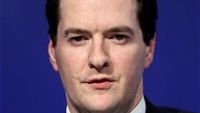
I’m at a loss. How can a government that will raise the national debt to £1.4 trillion be trusted to run the economy? The Daily Politics/Com Res poll shows that Labour is more trusted on the economy than the Tories; it indicts George Osborne’s political performance. As Fraser noted, Osborne blew an unprecedented opportunity on yesterday's Today programme. The danger inherent in a £1.4 trillion national debt is not a difficult argument to make. Tax hikes, inflation and soaring interest rates will be the progeny of Brown’s continued borrowing binge. Yet Osborne confined his attack to valid but esoteric points about credit ratings and a list of acronyms. Ken Clarke would not have made such an elementary political mistake.

A week to forget for Andrew Adonis

From our UK edition

The weekend cannot come quick enough for Andrew Adonis. What an awful week. The BA strike wrecked travel; the absurd Stephen Byers dragged him into the lobbying scandal; the RMT voted in favour of Bob Crow’s surreal steam-era fantasy; and today comes the coup de grace: the High Court decides that the third Heathrow runway is ‘untenable’. Transport is beginning to make Northern Ireland look like a soft brief, but Adonis hides his perturbation. He responded to this morning’s news by saying: "I welcome this court ruling. Heathrow is Britain's principal hub airport. It is vital not only to the national economy but also enables millions of citizens to keep in touch with their friends and family and to take a well-deserved holiday.

What did Darling mean by his “deeper and tougher” cuts claim?

From our UK edition

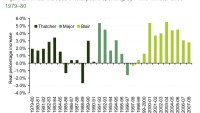
There's been some hubbub on the good ol' blogosphere about Darling's claim that Labour spending cuts would be "deeper and tougher" than Thatcher's.  Did Thatcher actually cut spending?  What would that indicatate about Labour's plans?  And so on. Part of the confusion is caused by the different metrics that are referred to as "spending".  So here's a quick guide to what Darling might have had in mind: OPTION 1: Real-terms total spending.  As the below graph from the IFS shows (taken from this excellent blogpost by the FT's Alex Barker), real-terms total public spending only fell in two years of the Thatcher premiership.  In all the other years it rose.  Indeed, spending increased by an average of 1.

Labour’s spending cuts exposed

From our UK edition

Darling has now exposed as false the Brown/Balls dividing line of "investment vs cuts". If Labour were to win, he said, the cuts would be worse than anything seen under Thatcher in the 1980s. This is Darling's problem: he's a dreadful liar. The IFS today laid out the scale of the cuts that would happen whoever wins the election, and the below graph is worth reprinting. Overall spending falls 12 percent (once dole and debt interest are taken into account). So when Darling says this is worse than anything in the 1980s, he is simply stating a fact. You'd never catch Balls or Brown doing that, by the way, and I hope that, when either pop up for interview, they will be asked if they agree with their Chancellor's assessment.

The two sides of Alistair Darling

From our UK edition

After delivering an insipid, insufficient Budget yesterday, Alistair Darling has now smuggled a little bit of honesty into the fiscal debate.  In interview with Nick Robinson, he has claimed that if Labour is re-elected its spending cuts "will be deeper and tougher" than Thatcher's.  Needless to say, that's a message which will not sit well with his Cabinet colleagues like Ed "investment vs cuts" Balls. And this is precisely why Darling is such a confusing figure.  Yes, he deserves some praise for being more upfront about the public finances than his predecessor ever could be, and for restricting the wilder excesses of Brown and Balls.  But it's hard to forget that he, as Chancellor, hasn't delivered a spending review when we need one most.

Labour’s plans require non-ringfenced Budgets to be cut by 25 percent in the next parliament

From our UK edition

At lunchtime, the press headed off to hear the referee's verdict on the Budget. The Institute for Fiscal Studies is now so respected that its view of the Budget largely determines the news agenda. Its briefings are now so popular that they can no longer be held in their basement. So, journalists, economists and accountants piled into a room at the University of London Union which is normally used for battle of the bands contests rather than Budget analysis. The most striking number the IFS presented was that if Labour ringfences the already protected areas of spending for the whole parliament, other departmental budgets will have to be cut by more than 25 percent. One dreads to think what the consequences of slicing a quarter off the defence Budget would be.

How to foil a Dispatches sting

From our UK edition

The producer and director behind the Dispatches lobbying sting, Philip Clothier, has a snappy article over at Prospect, in which he basically asks the question: how could MPs have been so stupid?  But it's his suggestion that some former ministers may have got off lightly which really caught my eye: "Meanwhile, one former Labour cabinet minister was interviewed, but the sound was so poor that we could only hear appetising phrases. He had the good fortune to be sitting in front of a brightly lit window, over-exposing the shot. And we just couldn't understand much of what another former minister said because of his thick accent." Cue all MPs adopting impenetrable accents, and sitting in front of windows, from now on.

Proscribing legalised drugs

From our UK edition

‘My wife says these drugs turned me into a zombie, but the truth is I wouldn’t know, as I have hardly any memory of the past 40 odd years.’ The Mail printed Keith Andrew’s testimony, a 74-year-old retired electrician who has guzzled prescribed benzodiazepines for nearly half a century. Andrew is one an estimated 1.5 million British people who have been addicted to valium and other tranquilisers. Whether addiction is voluntary or not is irrelevant. Anti-anxiety treatment remains a laxly regulated area of medicine: more than 8 million prescriptions are made each year and there are an estimated 100,000 illicit addicts currently using. In a fascinating piece in the Telegraph, Andrew M Brown outlines the side-effects of long-term ‘Benzos’.

A glass of clear, blue water?

From our UK edition

One of the most eye-catching stories this morning comes courtesy of ConservativeHome: "As part of the pre-election package, ConservativeHome expects Mr Osborne to announce that a Tory government will cancel Labour's National Insurance tax rise. The Tories will announce an alternative way of plugging the hole. Earlier this week Policy Exchange argued that the NI rise was a very damaging way of raising extra revenue." Sure, Cameron has hinted at this before, and there will be questions about how the Tories would fill the fiscal gap.  But that doesn't make this anything less of a smart move.  Not only does it makes sense economically, but it would give the Tories a clear, positive message to deploy on the doorstep.  I'd be astonished if Team Osborne didn't move on it.

Osborne’s weak response

From our UK edition

I was all set up to Fisk the post-Budget analysis which Darling normally gives to the Today programme after the Budget - but he wasn’t there. The Treasury refused to have him debate with Osborne which is what Today (unusually) seems to have assumed. Well, we’d best get used to hearing Osborne post-Budget day. At first, I thought it was a coup for the Tories - but as Evan Davis sharpened his claws, it soon appeared to have been a net negative. Osborne just didn’t sound confident. A series of exchanges left him looking unprepared. His line - that he will eliminate ‘the bulk’ of the annual overspend over the lifetime of the parliament - was challenged: what does it mean?

Darling and Brown get away with it

From our UK edition

Strange days, indeed.  While most of the frontpages today are unflattering for Labour – particularly, and unsurprisingly, those of the Telegraph and the Sun – I imagine that Brown & Co. will be quite pleased with the general tone of the Budget coverage.  Much of it mirrors the Independent's view that Darling "played a weak hand well".  Or, elsewhere, there's a kind of detached indifference about what is described as a "boring" Budget. Yes, if you like, you can take that as proof that the Darling-and-Mandelson approach to the public finances is less politically toxic, and a good degree more sensible, than the Balls-and-Brown approach.

Darling’s nothing budget puts the ball in the Tories’ court

From our UK edition

This year’s Budget was never going to win the election for Labour but it could have lost it. If the markets had reacted really badly to it, warnings about how Britain is in danger of going Greek would have suddenly gained traction. But Darling avoided that fate with a Budget that did little. Listening to it, it was clear that those inside Labour who argued that the strategic imperatives for this Budget had to be appearing credible and not risking an adverse market reaction had prevailed. The mood music was very different from the PBR, with its emphasis on investment versus cuts.

In defence of Alistair Darling

From our UK edition

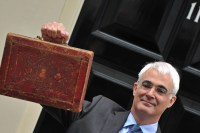
It's unusual for Chancellors to stand with their wives on the steps of the Treasury on budget day, and to see the Darlings together this morning gives an indication of what they have been through. Brown doubtless thought him an automaton when he appointed him to the job - but I was wrong to say that he would be "no more a Chancellor than Captain Scarlett was an actor". He has defied Brown, bringing moderation and much-needed dullness to the worst fiscal crisis in Britain's peacetime history. In James's political column last week he suggested that Darling calls his autobiography "the forces of hell" - that he would defy Brown like that takes some guts. It felt strange to praise Darling in the editorial of tomorrow's magazine, given that he has presided over this fiscal collapse.

Darling, what about the deficit?

From our UK edition

Alistair Darling was terribly proud of the Government's record in his Budget speech today.  But he again dodged the question of how he'll get the deficit under control.  Ruth Lea has called this his "do little" Budget. With the country still facing hundreds of billions in borrowing, the few billion being saved are virtually neglible.  There are huge downside risks for those borrowing forecasts as we get onto the more contentious growth projections from 2011-12 onwards, which are way above City expectations.  And everything will get much worse if borrowing costs rise - Mike Denham has explored the frightening possibilities in a blog for the TPA. We had a proud boast that Britain has "the fastest deficit reduction plan of any G7 country", a massive Brownie.

This budget penalises employment

From our UK edition

Supporting jobs and small businesses - "the backbone of future economic growth", in Alistair Darling's words - was seen as a priority in today's Budget. In his statement the Chancellor highlighted the following measures: •         Extending the young person's guarantee for one year after March 2011 (providing a job, training or work experience for young people who cannot find work). •         Extending the time to pay scheme, which allows businesses to spread tax payments over a timetable they can afford, for the whole of the next Parliament. •         Cutting the business rates facing small businesses for one year from October.

Another dangerous Quango in the offing

From our UK edition

This government’s love of quangos reached new heights in today’s Budget when Darling announced the creation of a ‘credit adjudicator service’. This will allow companies who feel they have been unfairly denied credit by their bank to appeal the decision to the credit adjudicator service which will have the legal power to order the bank to lend the money.    The Treasury is quick to stress that businesses will have to have claims referred to the credit adjudicator service by their regional business body. But this quango, which will cost five million pounds a year to run, strikes me as a quite absurd attempt to second guess commercial lending decisions. It is also unaccountable.

A reassuringly dull budget

From our UK edition

This was a surprisingly subdued Budget, and for that Alistair Darling is to be commended. He must have resisted all manner of pressure from Brown to put in pre-election pyrotechnics. But the budget was what it should be: a punctuation mark on the sentence of the national economy. That sentence says "our finances are going to hell," and the Budget's high point is that we are doing so fractionally slower than we were expecting to last November. Personally, I forgive Darling all the partisan stuff in his speech - this is a pre-election Budget after all. There is no act of wanton vandalism, like the 50p tax. Stamp duty on properties over 1m is rising from 4 percent to 5 percent, but does anyone seriously think this would not have happened under the Tories?