Uk politics

How Charlie Whelan killed New Labour

From our UK edition

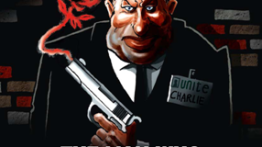
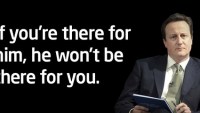
Last summer, The Spectator received a letter from Charlie Whelan's solicitors complaining about this post - where we mention their client's spot of bother with his colleagues at Unite. Carter-Ruck were instructed on one of the no-win-no-fee deals: it cost Whelan nothing to sue, but could cost us £thousands to defend. So the lawyer's letter is, by itself, an effective form of intimidation. A magazine with a small budget obviously faces huge pressure to do what he wanted: apologise, pay up and (suspiciously) undertake not to pursue the story any further. Under the circumstances, The Spectator could do only one thing. Our full investigation into Charlie Whelan is the cover story of tomorrow's magazine (see image, left).

What is ring-fencing in LibDem land?

From our UK edition

On Sunday, on the Politics Show Vince Cable said that David Laws had been wrong to say on Newsnight that the health and international developments budgets were ringfenced. But the Lib Dem manifesto says the Libs Dems will, ‘Increase the UK’s aid budget to reach the UN target of 0.7 percent of GNI by 2013.’ This seemed contradictory to me so I called the Lib Dem press office who told me that you can ‘not ringfence a Budget but still increase it' which left me even more confused about what the Lib Dem position on the DFID budget actually is: will it go up or down?

The future might be yellow

From our UK edition

The Liberal Democrats are doing well. Very well. More voters seem actively to want a hung parliament - they neither hate Labour or love the Tories enough to act decisevely either way - and a vote for Nick Clegg seems a safe, fair choice. A few years ago Paddy Ashdown was over the moon to have won far fewer MPs than the party is hoping for at this election. Then came the "Iraq Bounce" with Charles Kennedy's anti-war stance doing the party well. Many assumed that without a clear-cut issue, and having chosen a leader who looked like David Cameron's younger brother, the Lib Dems might struggle. Instead, the party seems to be fighting off Tory inroads.

The Lib Dems have found their issue

From our UK edition

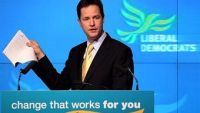
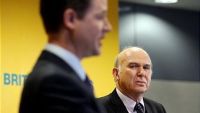
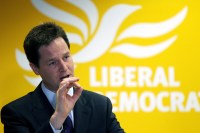
Well, that was quick.  After the Tories' one-hour-and-forty-minutes-long manifesto launch yesterday, and Labour's comparable event the day before, it was quite a relief that the Lib Dems got through theirs in a nerve-soothing 45 minutes.  And that included introductions from Sarah Teather, Danny Alexander and Vince Cable, and a speech from Nick Clegg - all of them short, sharp and snappy.  The only thing which seemed to drag was the Q&A session at the end. But timings aside, it was clear that the Lib Dems have hit on an issue which - they think - separates them from the other parties.  In 2005, it was Iraq.  This time around, deserved or not, it's fiscal responsbility.

Labour’s response to the Tory manifesto

From our UK edition

Anyone else think that Labour's latest poster is like a negative of the Tories' "Vote For Me" effort?  White text on a black background, instead of black text on a white background.  A picture of Cameron, instead of Brown.  I mean, the only thing that isn't swapped over is the tone: both go on the attack, rather than presenting a positive vision. Labour's message here is that the Tories' Big Society manifesto washes its hands of the people.  Which echoes the caricatures - "an agenda for abandonment" - that Peter Mandelson wheeled out yesterday, and which you can expect to hear again and again between now and polling day.  The question is whether this attack will connect at a time when people trust politicians - and their capabilities - less than ever.

The Lib Dems’ turn to convince?

From our UK edition

So now it's the Lib Dems' turn to present their prospectus for the country.  And, in some respects, I expect they'll want a fairly uneventful day.  They have, after all, endured the most topsy-turvy campaign of the three main parties so far.  Brown has given us no more, and no less, than what we expected.  The Tories have been riding the crest of a national insurance wave.  But the Lib Dems have bounced around from the highs of Nick Clegg's performance on Newsnight to the lows of their misleading VAT poster, from their continuing Labservative attacks to Ed Balls describing their schools policy as "creditable" on Sky this morning.

Counting the cost of Labour’s national insurance hike

From our UK edition

Insightful work from the FT's Chris Giles, who has dug out a couple of academic articles - including one co-authored, in 2007, by George Osborne's current chief of staff, Rupert Harrison - to work out how many jobs Labour's national insurance rise might cost the economy.  The results?  Well, according to Giles, one says that 23,000 jobs will be lost, and the other comes up with 22,000. Neither of these are figures that Labour will want to crow about.  But, as Giles points out, they are below the "57,000 jobs in small and medium-sized businesses alone" that the Conservatives predict in their manifesto.

Brown will fear the foreign policy debate most of all

From our UK edition

The Tories’ Invitation to join the Government was never going to dwell on defence. (You can listen to the brief chapter on defence here.)  But that doesn’t mean defence isn’t an election issue. It is, and it's one that the Tories will win. Brown’s defence record is abysmal even by his standards. Former service chiefs have described how Brown ‘guillotined’ defence budgets whilst fighting two wars, and field commanders in Afghanistan have made constant reference to equipment shortages. These accusations were corroborated by facts that Brown then tried to distort before a public inquiry. That’s not all.

Voting blues

From our UK edition

One of the key questions in any election is turnout: whose voters will turn up and whose won’t. People are clearly disappointed in the political class - on a scale from 0 to 10, trust in politicians and parties is hovering around 3 points - but does it mean that they will stay at home, spoil their ballots or opt for fringe parties and single-issue candidates? What about the talk of a hung parliament ? Will it make voters believe that their vote counts - and so bring them to the polling stations -- or make them stay at home, giving up on the idea that any change is possible? In the last three elections turnout was low, relatively speaking: 59 percent of the electorate voted in 2001 and 61 percent went to the polls in 2005.

The return of Chris Grayling

From our UK edition

Adam Boutlon's interview with Chris Grayling this afternoon felt like a pressure valve being released.  Grayling's recent low profile had already become a rolling story, and his absence from the speaking line-up at his party's manifesto launch was bound to fuel more murmuring and speculation – so the Tories clearly decided to wheel him out in front of the cameras to calm things down a bit.  As it happened, Boulton was on combative form – arguing that elected police commissioners would just add "another layer of bureaucracy" to society – but Grayling sounded quite reasonable in response.

Around the Web: Conservative manifesto

From our UK edition

You can read Fraser’s verdict here, but this is what the rest of the Web had to say: Janet Daley described it as ‘the perfect pitch’: 'The Conservatives have just given a launch performance for their manifesto which was as close to perfect as any I have seen. It was clear, coherent and genuinely compelling: the message was simple: people power rather than state power.' Ben Brogan welcomes less, not more: 'Today was also about David Cameron. He made a long speech, too long, and so reminded us that when he is scripted he is less effective.

The Tories’ great manifesto launch

From our UK edition

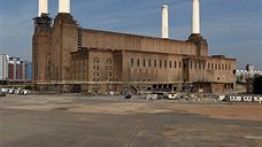
Battersea Power Station is chosen as an allegory for Britain – “a building in need of rejuvenation in a country in need of rejuvenation” says David Cameron. As for Cameron’s speech – great stuff. He delivered the ‘empowerment’ message and gave hard examples, and wrapped it up into a greatest hits of his best soundbites (none the worse for that). It was so up our street that, at times, I thought he was working his way through the leader in the current edition of The Spectator. I’ll save my full verdict on Cameron’s speech and positioning for the magazine this week.  But here’s the rest of the launch. The Tories went for an ensemble, with each of the Shadow Cabinet taking turns to read out the lines.

Tory manifesto launch – live blog

From our UK edition

Stay tuned for live coverage from 1100. 1238: And that's it. Phew - quite a marathon.  A strong central message, I think, but it could have been said in fewer words.  Thanks for tuning in. 1235: The Guardian's Nick Watt asks why the Tories aren't talking more about the extent, and the consequences, of spending cuts.  Cameron's response is that he has "always been frank" with the public. 1233: Key question on whether withdrawing the state will mean worse public services for folk.  Cameron says that he not looking to pull the rug from under people, but just to introduce choice and competition to counter the "dead, dull hand of the state.

Don’t mention ze Europe

From our UK edition

The Conservative Party’s departure from the European People's Party came down to a choice of expediency over principle. If you are inclined to accept that Britain will stay in the EU and that membership helps this country - even if it requires some compromises - you will likely find the move unfortunate. If you are more concerned about the principles at stake – and feel that Britain’s loss of sovereignty has gone too far – and do not care about the loss of influence on the legislative process, you are likely to be in favor of the Tory move.   David Cameron is keen to keep the issue of Europe away from the campaign - and he is likely to succeed.

Where’s the surprise?

From our UK edition

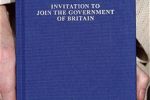
Am I the only one who'd care for a bit more uncertainty and surprise when it comes to the election campaign?  I mean, yesterday, Labour released a manifesto which had been heavily trailed for weeks, even months, in advance.  And, today, it looks as though the Conservatives are going to do likewise – with the political barometer saying that their Invitation to Join the Government of Britain won't contain anything substantially new.  Its cover was even published last night.  And, if you want an sense of what Cameron will say today, then just read his article in this morning's Times. Of course, it's the job of a well-oiled campaign machine to build anticipation in advance, and to keep feeding the media beast along the way.

The Tories invite you to join government

From our UK edition

Battersea Power Station was the site of one of the Tories' most effective publicity stunts of recent months – and it will be the venue for their manifesto launch tomorrow.  Details are already emerging about the document (ConHome has a good summary here), which sounds as though it won't contain much, if anything, that we haven't heard before.  As with Labour earlier, this approach risks an indifferent response from the media and the public.  But at least the Tories have clearer flagship policies to broadcast – the national insurance cut among them. While the manifesto may not contain any new policy, it sounds as though the Tories have gone to town on it presentationally.

Unison enters the political poster fray

From our UK edition

  In which case, two questions for CoffeeHousers to mull over: i) To what extent will union attacks harm the Tories, with the threat of strikes rumbling on in the background? ii) Have Unison read the IFS's research into Labour cuts? The comments section is yours.

Labour’s nuclear no-show

From our UK edition

Today, President Barack Obama hosts leaders from 46 countries for a two-day nuclear security summit that will focus on how to better safeguard weapons materials, both old and new, and to keep them out of the hands of terrorists. Labour’s manifesto was also launched today. What do the two things have in common? Not a lot, really. But they could have had a lot in common – if the Labour government had been willing to be bold. Here's how. As preparation for the summit, the US signed a new treaty with Russia last week to reduce the nuclear stockpiles of both nations, and the Obama administration issued a revised nuclear arms strategy intended to reinforce the nation's nuclear deterrent.