Uk politics

A poster that cuts to the chase

From our UK edition

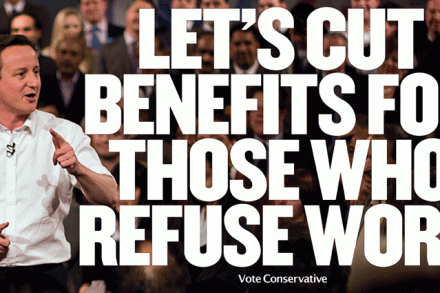
This feels like a first for this election campaign: a poster which gets quite specific on policy - and not another party's policy either.  It comes courtesy of the Conservatives, and, as you can see above, carries the message: "Let's cut benefits for those who refuse work". You can expect plenty of handwringing about whether this message is too tough, or whether it represents the Tories shifting rightwards in the aftermath of the Lib Dem surge.  But I imagine it will play well with the many voters who are frustrated at the unfairnesses and inconsistencies of the welfare system.  And it does, at the very least, present one reason to vote (or not to vote) Conservative.
Grayling wins the perceptions battle

From our UK edition

Another day, another TV debate – only this time it was Alan Johnson, Chris Grayling and Chris Huhne behind the lecterns, talking crime on the Daily Politics.  Just like yesterday's debate, the questions were incisive and insistent.  But the politicians conspired to turn proceedings into a mush.  There was very little clarity, a sizeable dollop of bickering, and proof, were it needed, that Huhne really can go on a bit. To my mind, it all boiled down to likely audience perceptions.

Inflation is the price of Brown’s recklessness

From our UK edition

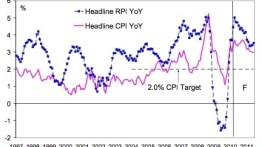
Who would have thunk it? Inflation has again “surprised” on the upside – 3.4 per cent against a 2.0 percent target. Why so high? Even the return of 17.5 percent VAT does not justify this bounce. Might it have something to do with all those bank notes which were being printed by the Bank of England? Might interest rates be going up now to control this inflation – and, if so, what impact would this have on a UK economy which is already the most indebted of any major economy in history? The March figures show Britain has, by some margin, the highest inflation of any major European economy: it’s way higher than that of France (1.7 percent) Spain (1.5 percent) Italy (1.4 percent) or Germany (1.2 percent). And in America, 1.1 percent.

The killer poster

From our UK edition

So, as Daniel Korski wrote earlier, a vote for Nick Clegg keeps Labour in office - surely fertile territory for a killer poster? Here's a selection of CoffeeHousers'  'Vote Nick Get Gordon' posters. Remember him?

Just another politician

From our UK edition

Nick Clegg’s response to Andrew Neil’s question about his expenses at the Lib Dem press conference this morning, highlighted Clegg’s greatest vulnerability: he’s just another politician. As the question pointed out, Clegg’s own expenses were by no means perfect. The danger for Clegg is that many of his new supporters see him as totally different from Brown and Cameron. When they find out that he’s a lobbyist turned Eurocrat turned MEP turned MP who has had problems with his expenses they might not be so keen on him.

Not so squeaky clean

From our UK edition

“All my life, I’ve opposed the old politics,” says Nick Clegg ad nauseam. Not so it seems. Peter Oborne’s Mail column reports that one youthful indiscretion has been omitted from Clegg’s CV: ‘In fact, he has a background as a Westminster lobbyist with the firm GJW, where he worked as an account executive for 18 months. (Something he has omitted from his curriculum vitae on the Lib Dem website).’ So, Clegg glosses over his stint of political kerb-crawling. Hypocrisy always makes a good story but the Tories should, and probably will, shun this story. They have lost the media narrative and the last thing Cameron needs is for the campaign to focus on the leaders’ backgrounds.

Where is the killer poster?

From our UK edition

Most politicos agree that a vote for Nick Clegg will likely prop up a Labour government, even if it will be led by someone else than Gordon Brown. Most voters, however, may not realise this. So what the Tories need is a poster which shows in easy-to-understand ways, the causal link. CoffeeHousers, surely the idea of the Lib Dems propping up Labour lends itself to a number of images - if you have any ideas then either mention them below, or send them in to dblackburn @ spectator.co.uk or phoskin @ spectator.co.uk and we'll post a selection of the best.

Brown’s leadership back under the spotlight

From our UK edition

Things have clearly moved on since I wrote this back in March.  From Rachel Sylvester's column today: "...those close to Mr Clegg have made it clear to senior Labour figures that it would be difficult for the Liberal Democrats to do a deal with a Labour Party led by Mr Brown. 'The whole notion of change is so important to Clegg and Gordon doesn’t represent change,' says one Labour strategist. 'It’s hard to see how they could prop up Brown in a hung Parliament.' With Cabinet ministers openly discussing the prospect of coalition, the question of the Labour leadership is back on the agenda.

Clegg the politician

From our UK edition

Every time a Conservative is asked by the media about Nick Clegg they should reply, ‘Nick Clegg’s a clever politician, a formidable opponent.’ This formulation won’t make the voters think that the Toires are being nasty about their opponent but it will remind them that Clegg is a politician which is a problem for him because so much of his popularity stems from being seen as not just another politician. This, obviously, isn’t the whole answer to stopping and then reversing the surge in Lib Dem support. But it would be of use and, to borrow a phrase, in the current situation every little helps.

Where will Clegg meet his Waterloo?

From our UK edition

The FT’s Jim Pickard writes: ‘Cameron will be cursing the order of the debates. He’d much prefer to be attacking Nick Clegg on domestic issues than foreign affairs on Thursday.’ I’m not so sure. Foreign Policy is the arena where the Tories are concrete, populist and accessible. The same is not true for the Lib Dems. Along with Iain Martin and John Rentoul, Pete noted that Ed Davey is vague on the Lib Dem Trident replacement policy. Davey's vague with good reason: the policy is hopelessly confused. The manifesto says: ‘Rule out the like-for-like replacement of the Trident nuclear weapons system.

No clear winner in the foreign affairs debate

From our UK edition

Only defuse.  That seemed to be the approach of all three participants in the Daily Politics' foreign affairs debate this afternoon.  The frequent questions from Andrew Neil and Mark Urban put David Miliband, William Hague and the Lib Dems' Ed Davey on the collective back foot.  It was all they could do to take some of the sting out of proceedings. In Miliband's case, that meant Iraq and defence spending.  On the former, he started with one of the bluntest statements we've heard from any government minister on the issue: "If we knew then what we know now," he said, "we wouldn't have gone into Iraq."  You can see the thinking: distance the Brown Government from Blair's War.

And so to Brown…

From our UK edition

Haven't we been here before?  Investment versus cuts, I mean.  Because that appears to be the main message of Labour's press conference this moring.  Gordon Brown set about the Tories' Big Society, claiming that it "means big cuts in public services".  Hm. It's certainly a punchier, if similar, message to the "agenda of abandonment" one that Labour roadtested last week.  But will voters listen?  Well, amid all the excitement about Clegg and the Lib Dems, it's easy to forget that Labour are now polling third – with a vote share which recalls the days of Michael Foot's leadership.  They seem to be in a pretty desperate position themselves. This may suit Labour, so far as the chances of a hung parliament are concerned.

Cameron’s two-pronged counterattack

From our UK edition

A freewheeling, shirt-sleeve kind of speech from Cameron in Kennington this morning. But not one that was without substance. His main purpose was, as he put it, to "redouble the positive" - which meant more about the Big Society. Cameron has fashioned a persuasive narrative out of this, but question marks still remain over whether it will mean much to voters who just want CHANGE, without the nuance and jargon. As I suggested earlier, this is perhaps the biggest question hanging over the election campaign right now. The other part to Cameron's speech was a warning about a hung parliament. Or as he put it: "If we get any other result, then we could be stuck with the problems we've got now." I lost count of how many times he used the word "decisive" as part of this.

Can the Tories turn things from personality to policy?

From our UK edition

If the Lib Dem surge shows anything, then it's the growing power of personality politics in this country.  A few days ago, they're languishing in third place with around 20 percent of the vote.  One dose of TV razzmatazz later, and they're topping the polls on over 30 percent.  Yes, even though I admire much of what Nick Clegg has done with his party, there's little doubt that all this has been catalysed by simply putting him in front of the cameras.  Like someone with an okay singing voice reaching the X-Factor final, the Lib Dem leader triumphed in what was essentially a clash of personalities.

YouGov have the Lib Dems on top

From our UK edition

Tonight's YouGov tracker has the Lib Dems on 33 percent (up 4), the Tories on 32 percent (down 1) and Labour on 26 percent (down 4).  So the topsy-turviness continues – but for how long?

Overseas aid could be a Tory winner in Con-Lib fights

From our UK edition

As the Conservatives start looking at areas where the Liberal Democrats are weak, or where differences can be drawn between the parties, they are honing in on international development. In the Independent on Sunday, David Cameron and anti-poverty star Jeffrey Sachs lay out the party's plans if they win power. It includes a commitment to spending 0.7 of GDP on overseas aid, an emphasis "on greater transparency, ensuring the money reaches the people who need it most" and "action on women" as a conduit to development. The op-ed is clearly inspired by the work of Tory aid spokesman, Andrew Mitchell, who has written a piece for ConservativeHome this evening.

How Whelan & Co. exploit Britain’s libel laws

From our UK edition

The Charlie Whelan problem is intensifying for Labour, with more revelations in the Mail on Sunday today taking on from our cover story in this week’s magazine. Whelan’s behaviour may be no worse than that of Ed Balls and Gordon Brown – but he is more careless. Like McBride, he was actually caught: and his tactics documented in a formal seven-page report. Not the sort of document you want surfacing during a campaign. So it's little wonder why Whelan used Carter-Ruck to try and deter The Spectator from any further investigation in the bullying case: it threatens to expose Gordon Brown’s entire modus operandi and the methods which he uses to control the party. And, for that matter, run the country.

How Cameron can stem the Lib Dem tide

From our UK edition

If the Tories are to beat back this Lib Dem surge, there are three things they need to do. First, they need to establish Cameron as the insurgent, anti-establishment candidate. It might seem odd to urge the leader of the Conservative party to be the anti-establishment cadidate, but the establishment in this country is now essentially soft-left. Just look at how senior police chiefs are threatenting to resign over Cameron's plans for elected police commissioners who would be accountable to the public and set the priorities of the local force (another transformative Tory policy that Cameron didn't mention during the debate) Cameron needs to run against these people. He should be the tribune of the people pledging to return power to them from the unaccoountable and the unelectable.